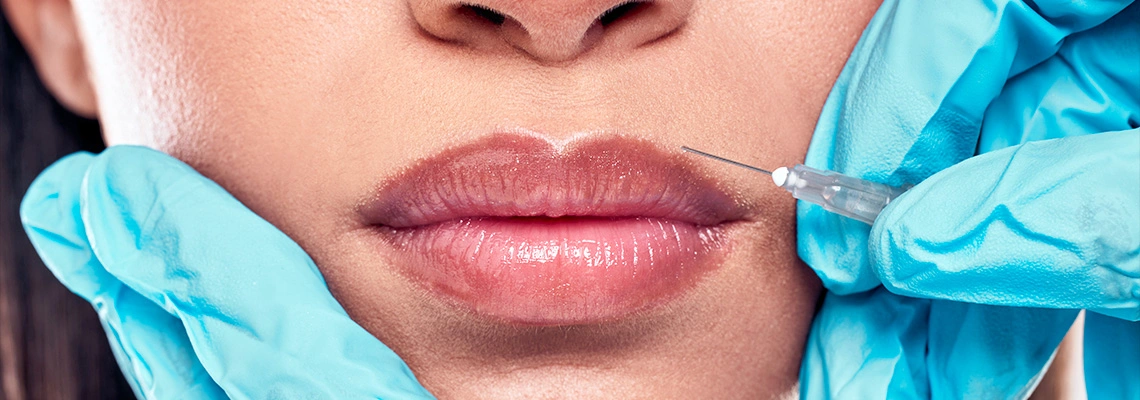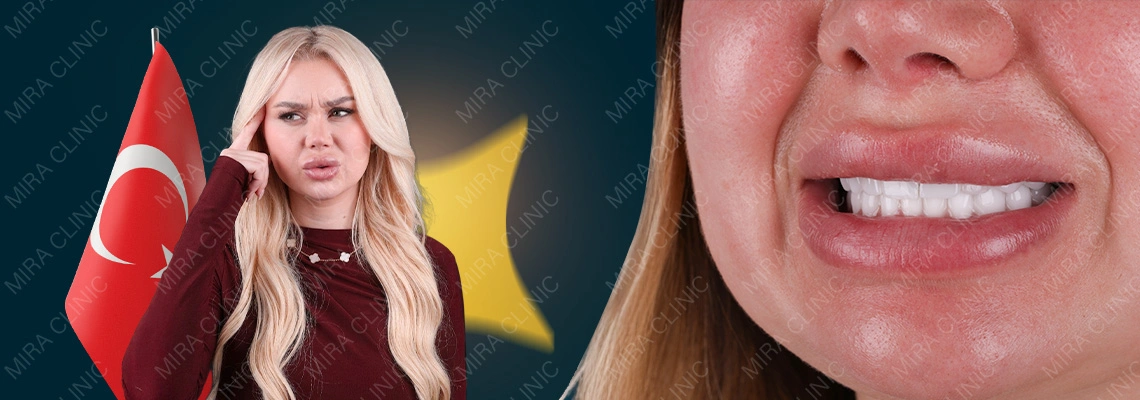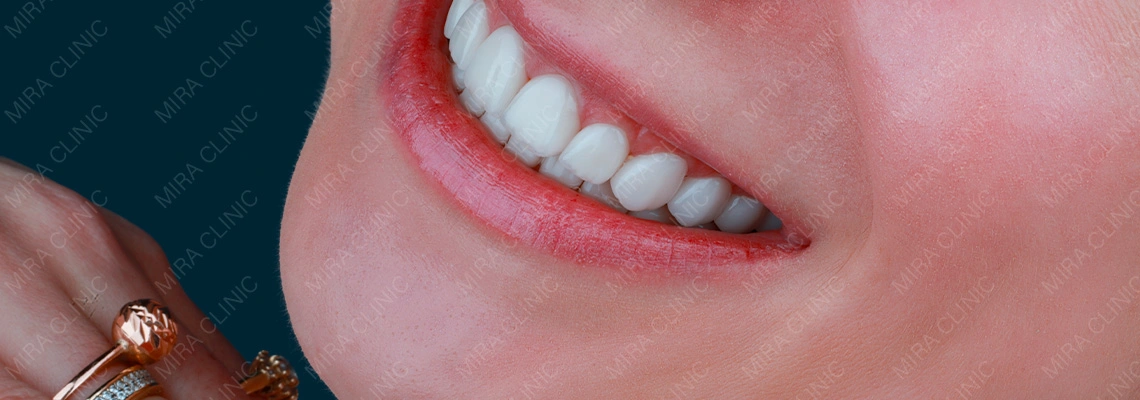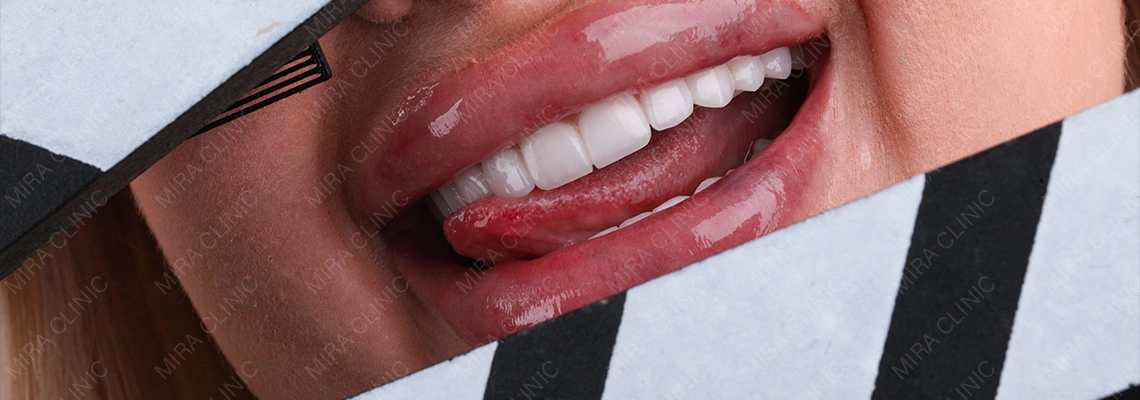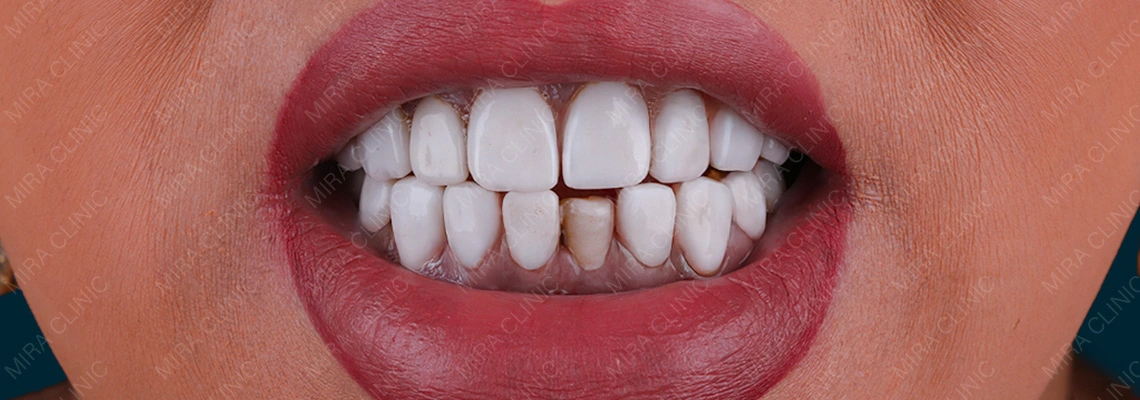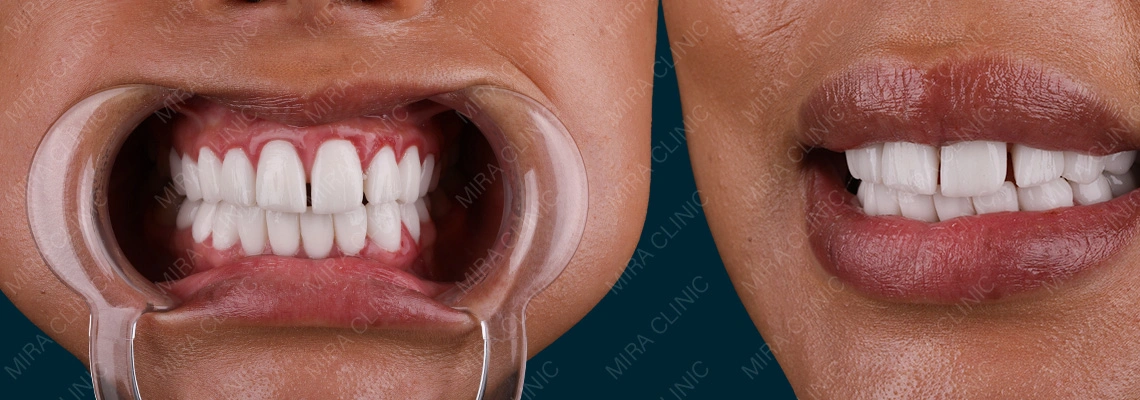
Many patients searching for cosmetic dentistry eventually ask the same uncomfortable question: why veneers look fake in Turkey in some cases, while in other cases they look soft, natural, and almost impossible to detect. The difference is rarely about “Turkey” by itself. More often, it comes down to planning, proportions, shade choice, and whether the treatment was designed for the patient’s face or for a generic trend.
This matters because veneers do not look fake by default. Veneers can look refined, natural, and highly aesthetic when the design is built around the patient’s facial harmony, tooth position, lip movement, and smile line. On the other hand, they can look oversized, bulky, too white, or artificial when the case is rushed, when the design is copied from social media, or when the clinic focuses more on a package than on the person. That is why the right place to begin is with a simple answer about what actually causes unnatural results.
- Quick Answer: Veneers Look Fake When Size, Shape, Shade, and Planning Are Wrong
- Why Some Veneers Look Too Big, Too White, or Too Thick
- How Poor Smile Planning Creates Fake-Looking Results
- Why Bulky Veneers Often Start With the Wrong Tooth Preparation
- How Shade Selection Can Make Veneers Look Artificial
- Why Tooth Shape and Proportion Matter More Than Extreme Whiteness
- When “Turkey Teeth” Results Happen and Why
- Can Crowns Look More Bulky Than Veneers?
- How Dentists in Turkey Create More Natural-Looking Veneers
- What Patients Should Ask Before Approving Veneer Design
Quick Answer: Veneers Look Fake When Size, Shape, Shade, and Planning Are Wrong
Fake-looking veneers are usually a design problem, not a veneer problem
Why veneers themselves are not the real issue
Veneers are only a treatment tool. They do not automatically create an artificial result. A veneer becomes “fake-looking” when its size, color, thickness, or shape does not match the patient’s face, smile width, and natural tooth proportions. In other words, the problem is usually not the existence of veneers, but the way they were planned and executed.
Why planning matters more than the material alone
Patients often assume that the difference between a beautiful result and a poor one comes mainly from material choice. Material matters, but it is not the main driver of naturalness. A well-designed veneer in the right shade and shape can look natural, while a premium material with poor design can still look obviously artificial. This is why the real discussion should move quickly from “what material is this?” to “how was this smile planned?”
The fastest summary: shape, thickness, shade, and smile fit decide the result
What makes veneers look obviously artificial at first glance
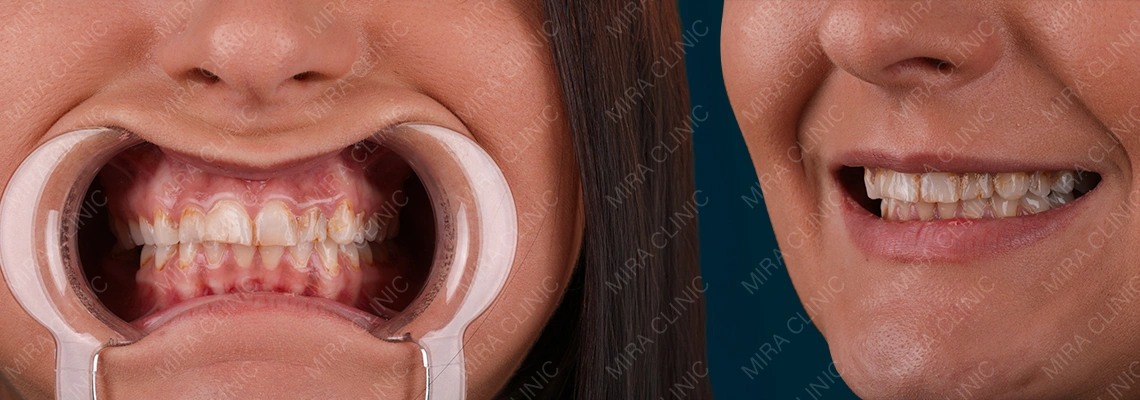
Most fake looking veneers share the same visual traits: they are often too large, too flat, too white, too square, or too thick compared with the lips and face. The smile may look striking in a studio-style photo, but in natural movement it often appears unnatural because the teeth dominate the face rather than complement it.
Why several small design mistakes often happen together
A smile rarely looks fake because of one issue alone. It is usually the accumulation of multiple design errors: shade too bright, width too broad, contour too thick, symmetry too rigid, and fit too heavy near the gums. When these mistakes happen together, the result quickly turns into the “Turkey teeth” look patients want to avoid. That leads directly to the next key principle: natural-looking veneers depend on harmony, not on trend-driven brightness.
Natural-looking veneers depend on facial harmony, not trend aesthetics
Why “whiter” does not always mean better
Teeth that are brighter than the skin tone, age, and facial contrast can look artificial even when the craftsmanship is technically good. Natural smiles usually have brightness, but they also have softness, translucency, and restraint. Extreme whiteness may look dramatic online, but it often looks less believable in daily life.
Why the face should guide the smile design
A natural veneer plan should start from the face, not from a trending before-and-after template. The dentist should consider lip shape, smile width, tooth display, facial symmetry, and even the patient’s age and expression style. Once that is clear, it becomes easier to understand why some veneers end up looking too big, too white, or too thick.
Why Some Veneers Look Too Big, Too White, or Too Thick
Big veneers usually come from oversized dimensions, not just bright color
When teeth are made too long or too wide
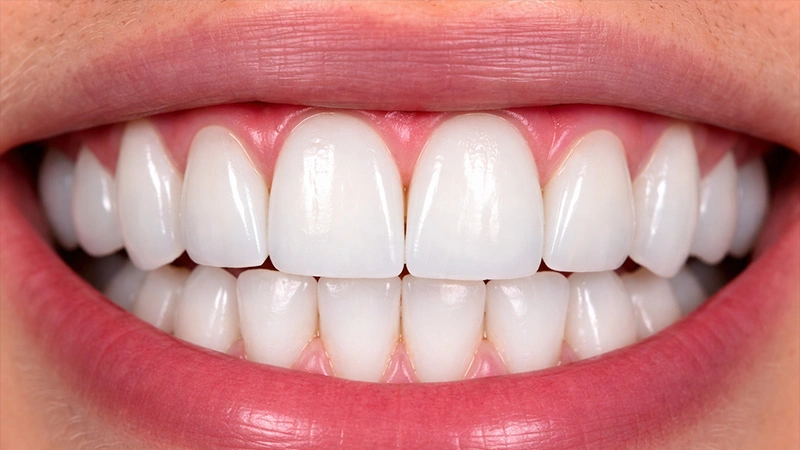
One of the most common reasons veneers look unnatural is simply that they are too large for the patient’s face. Teeth that are lengthened too much or widened too aggressively can dominate the smile and disrupt facial balance. Even if the shade is attractive, oversized teeth can make the whole result feel “done” rather than naturally enhanced.
Why oversized front teeth dominate the smile too much
The central incisors are supposed to lead the smile, but they should not overpower it. When they are designed too broad or too tall, they pull too much attention and make the smile feel heavy, especially in motion or conversation. This is one of the most common reasons big veneers are perceived as fake, which is why size must always be evaluated together with color and thickness.
Veneers that are too white often ignore skin tone and natural enamel behavior
Why flat white shades look artificial
Natural enamel is not a flat sheet of white. It reflects light with depth and variation. When veneers are chosen in a very bright, opaque, uniform shade, they often look more like cosmetic objects than natural teeth. This is why veneers too white is such a common complaint in overdone smile cases.
How brightness becomes unnatural when translucency is missing
A bright smile can still look natural when translucency and internal character are present. The problem starts when whiteness is pushed without preserving the way natural teeth interact with light. This creates a “painted-on” effect that photographs strongly but often appears artificial in real-life settings. Once brightness and size are mismatched, thickness usually becomes the next visible problem.
Thick veneers often happen when the design adds volume instead of balance
Why added thickness changes lip support and profile
Bulky veneers do not only affect the teeth. They can change the way the lips sit over the teeth, making the smile feel fuller, heavier, or less relaxed than before. This often happens when the dentist adds restorative volume instead of first solving the underlying issue, such as protrusion or crowding.
Why “thick” veneers often feel unnatural before they even look unnatural
Many patients with overbuilt veneers notice something feels wrong even before they can describe it visually. The tongue position changes, the lips feel pushed forward, and the smile no longer feels effortless. This is why thickness is not just a cosmetic issue but also a functional and sensory one, which brings us to the planning process behind these results.
How Poor Smile Planning Creates Fake-Looking Results
A smile should be planned around the face, not copied from trends
Why one smile design cannot fit every patient
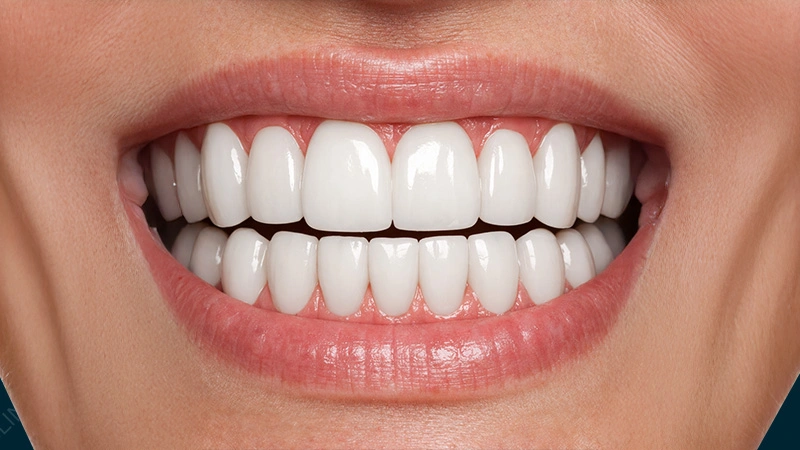
A smile that looks beautiful on one face may look completely wrong on another. Face shape, jaw width, lip line, age, and even speaking style all influence what looks natural. When clinics rely on a repetitive “one design fits all” approach, the result can easily look generic and disconnected from the patient.
Why celebrity-style smiles often fail on the wrong face
Patients sometimes arrive with screenshots of smiles they admire, but copying a celebrity smile without adapting it to the patient’s features often leads to distortion. A treatment plan should borrow direction, not duplicate dimensions. This is why proper smile planning must go beyond taste and into measurable proportion.
Ignoring smile line, lip movement, and tooth display creates imbalance
How smile width changes the number of teeth that need treatment
A smile should not be designed based only on the front four or six teeth if the patient naturally shows more than that when smiling. If the treated zone stops too early, the contrast with untreated teeth becomes obvious. On the other hand, overtreating too many teeth without reason can also create a forced look.
Why teeth that look fine in photos may look wrong in motion
Static images hide many planning mistakes. In motion, you can see if the teeth are too broad, too square, too dominant, or not following the lower lip correctly. This is why smile planning should account for dynamic expression, not just photo-ready symmetry. When these details are rushed, the result may look fake even if the materials are good.
Rushed planning often creates results that look artificial even if the material is good
Why fast package workflows increase cosmetic mistakes
Patients comparing bad veneers Turkey cases often notice a pattern: the plan seems generic, the timeline is compressed, and the consultation is heavily result-driven rather than diagnosis-driven. When the design phase is rushed, proportion and harmony are often the first things to suffer.
Why mock-ups and previews matter before final approval
Mock-ups, digital previews, and smile design discussions allow patients to catch issues with length, width, and style before irreversible steps begin. They do not eliminate all risks, but they reduce the chance of waking up to a smile that looks unlike the one the patient expected. This becomes even more important when bulky results are linked to the way the teeth were prepared in the first place.
Why Bulky Veneers Often Start With the Wrong Tooth Preparation
Minimal-prep or no-prep veneers can look bulky in the wrong case
Why conservative prep is not always the same as correct prep
Patients often hear that minimal-prep or no-prep veneers are automatically better. They can be excellent in selected cases, but they are not the right choice for every smile. If a tooth is already prominent, rotated, or crowded, adding a veneer with too little preparation can create an overcontoured result.
When no-prep veneers add too much thickness
Why veneers look bulky is often tied to this exact problem. If the original tooth does not provide enough space for the veneer, and no preparation is done to create that space, the final restoration sits outward rather than integrating naturally. This makes “conservative” treatment visually less conservative than expected.
Teeth that are already prominent often need a different strategy
Why outward-positioned teeth can look larger after veneers
When teeth already project forward, even a thin veneer can increase that projection enough to change the smile noticeably. In such cases, what the patient sees as a cosmetic enhancement may actually read as more fullness and less elegance. This is why a good plan should evaluate tooth position before promising “minimal prep.”
Why prep must match tooth position, not marketing labels
The safest treatment is not always the one with the smallest advertised prep category. The safest treatment is the one that gives the teeth enough room to look natural while preserving as much healthy structure as possible. When this principle is ignored, the patient may get veneers that are technically conservative but visually overbuilt.
Bulky veneers are often the result of forcing veneers onto unsuitable teeth
Why crowding and protrusion should not always be camouflaged
Some teeth need to be moved, not covered. When veneers are used to hide significant crowding or protrusion without orthodontic correction, the result can look thick and tension-filled rather than smooth and natural.
When orthodontics may be safer than cosmetic camouflage
In certain cases, aligners or braces provide the space needed for more conservative, natural-looking restorations later. This is important because not every “veneer problem” is solved by choosing a different veneer—it may require a different treatment sequence altogether. The same principle applies to shade selection, which can make or break the realism of a smile.
Read more: Hollywood Smile Risks in Turkey: What Can Go Wrong and How to Reduce the Risk
How Shade Selection Can Make Veneers Look Artificial
The wrong shade can make even a well-made veneer look fake
Why ultra-white shades rarely look natural in real life
A very bright smile may look impressive in advertising, but it often looks less convincing in person. The brighter and more opaque the chosen shade is, the more likely the smile is to lose the subtle depth that makes natural teeth believable.
Why camera lighting hides shade problems
Studio lighting, filters, and edited before-and-after images often make extreme shades look cleaner and more polished than they appear in ordinary daylight. This is one reason patients sometimes approve a bright design online and later feel it looks too intense in daily life.
Natural enamel is not one flat color
Why translucency matters as much as whiteness
Natural teeth have character. They are not uniformly white from edge to gum line. There is often a mix of brightness, translucency, and slight optical depth that gives real teeth their believable appearance. Good veneer design mimics that instead of flattening it.
Why depth and variation make teeth look real
When veneers are designed with no variation, they can look like objects placed over teeth rather than like enhanced teeth themselves. This is why unnatural veneers often look “plastic” or overly polished in a way that catches the eye immediately.
Shade should match the patient, not the trend
How age, skin tone, and face shape affect shade choice
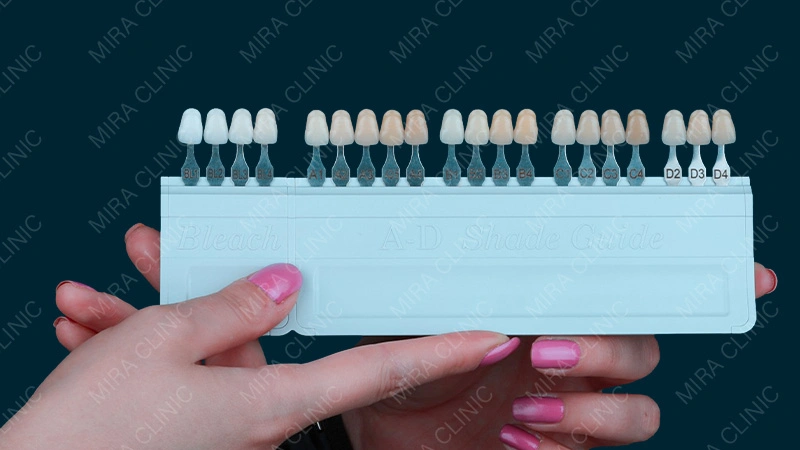
The same veneer shade can look elegant on one patient and artificial on another. Skin undertone, facial contrast, age, and lip color all influence what level of brightness reads as natural. A realistic smile should look like it belongs to the face it sits in.
Why “Hollywood white” is not the right goal for everyone
The term “Hollywood Smile” often pushes patients toward extreme white teeth, but many of the best cosmetic results are the ones that look quietly healthy and refined rather than overtly “done.” That is why shape and proportion become even more important than whiteness when aiming for naturalness.
Read more: Natural Hollywood Smile Results in Turkey: How to Avoid Fake-Looking Veneers
Why Tooth Shape and Proportion Matter More Than Extreme Whiteness
Shape usually affects naturalness more than color does
Why square teeth often look harsher and more artificial
Teeth with very flat, square outlines can make the smile look rigid and uniform. In some faces this may work, but in many cases it creates a harsher, more manufactured aesthetic than patients intended.
Why rounded edges usually create a softer result
Subtle rounding, edge variation, and more organic contouring tend to make veneers feel more lifelike. This does not mean every smile should be soft and rounded, but it does mean tooth geometry should reflect the face rather than a fashion template.
Tooth proportion controls balance across the smile
How central incisors influence the whole smile design
The front two teeth play a dominant role in smile design. If they are too wide, too long, or too dominant, the whole smile feels exaggerated. This is why their proportion must be controlled very carefully.
Why lateral teeth help prevent the “block teeth” effect
Lateral incisors and surrounding teeth create rhythm and hierarchy in the smile. If every tooth is made to look equally dominant, the smile can start to resemble a row of identical units rather than a natural arrangement. This is one of the main reasons fake looking veneers often seem “too perfect” in the wrong way.
A natural smile needs hierarchy, not identical teeth
Why every tooth should not look exactly the same
Natural smiles have differences in width, edge shape, and visual emphasis. Total uniformity may sound ideal in theory, but it often reads as unnatural in practice. Dentistry that aims for beauty should preserve controlled variation, not eliminate it.
How small differences create a more realistic smile
Tiny design choices—slightly softened laterals, slightly more dominant centrals, subtle edge contour—help the smile feel integrated into the face. This is exactly why the “Turkey teeth” look has become recognizable: it usually reflects the opposite design philosophy.
Read about: Angela’s Veneers Review in Istanbul | Patient Testimonials
When “Turkey Teeth” Results Happen and Why
The “Turkey teeth” look usually comes from planning mistakes, not geography
Why the term is really about overdone design
When people say turkey teeth look fake, they are usually referring to a very specific type of result: ultra-white, oversized, blocky restorations with little individuality or harmony. That look is not caused by Turkey as a location. It is caused by over-treatment and trend-driven design.
Why country-level assumptions miss the real issue
A clinic in Turkey can produce natural-looking, elegant veneers. A clinic anywhere else can also produce poor, exaggerated results. The real issue is not the map—it is whether the smile was designed for the patient or for a package.
Ultra-white, square, oversized restorations create the stereotype
Why trend-driven design ages badly
Smiles designed to follow a short-term aesthetic trend often lose appeal faster than smiles designed around facial harmony. Extremely white, boxy, high-impact teeth can quickly start to feel unnatural as trends and personal preferences change.
Why social media exaggerates this style
Short-form visual content rewards dramatic contrast. The brighter and more transformed the result looks, the more likely it is to attract attention. But attention is not the same as naturalness, and patients looking for a long-term smile should keep that distinction very clear.
The real risk is choosing a package smile instead of a patient-specific smile
Why fixed-number veneer packages often mislead patients
Packages that promise a “Hollywood Smile” with a fixed number of restorations may sound simple, but they can ignore smile width, facial proportion, tooth position, and bite. That is how patients end up with smiles designed around a product instead of a face.
Why natural results need individualized planning
Patients who want natural looking veneers Turkey should judge clinics by the depth of their planning process, not just by the deal, the speed, or the before-and-after gallery. This becomes even more important when crowns enter the discussion, because many patients assume crowns automatically look more bulky.
Can Crowns Look More Bulky Than Veneers?
Crowns can look bulkier when they are used where veneers would have been enough
Why crowns usually need more reduction and more material volume
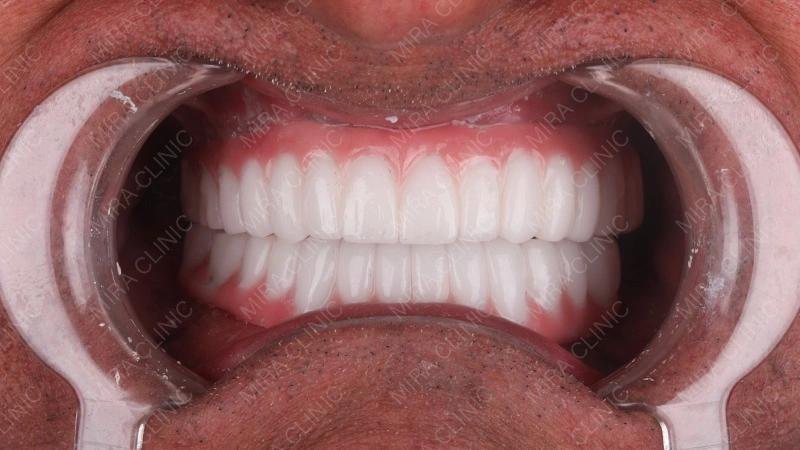
Crowns cover the whole tooth, which often requires more tooth reduction and more restoration volume than veneers. If that extra coverage is not truly needed, the result can feel visually heavier, especially in the smile zone.
When crowns become visually heavier in the smile zone
On front teeth, even small changes in contour matter. A crown that is too full at the facial surface or near the gumline can create the same sort of visual thickness patients complain about with bulky veneers. In these cases, the problem is not simply “crown versus veneer,” but whether the right restoration was chosen for that tooth.
Crowns are not automatically unnatural, but they require stricter design control
When crowns can still look very natural
Modern crowns can look highly natural when they are placed for the right reason and designed with attention to contour, proportion, and shade layering. They are not automatically less aesthetic than veneers.
Why material and contour matter more with crowns
Because crowns wrap the tooth more fully, any excess in thickness or shape is more likely to affect both appearance and feel. That is why crown design must be especially controlled in cosmetic zones.
The real question is not crowns vs veneers, but case suitability
When crowns are actually the safer option
If the tooth is heavily restored, fractured, endodontically treated, or structurally weak, a crown may be the more responsible option despite its greater restorative footprint. In that context, choosing a veneer for the sake of “conservatism” may actually increase risk.
Why using crowns for convenience can increase aesthetic risk
Crowns should not be used simply because they are easier to standardize in a fast cosmetic workflow. If a veneer would have achieved the result more naturally and conservatively, then the crown becomes the more invasive and potentially bulkier choice. This brings us to the most constructive part of the discussion: how good dentists avoid all of these mistakes.
Read more: How Long Do Veneers Last in Turkey? Lifespan, Maintenance, and When Replacement Is Needed
How Dentists in Turkey Create More Natural-Looking Veneers
Good clinics start with facial analysis and smile planning
Why face shape and smile line are part of veneer design
A natural smile begins with analyzing lip line, tooth display, smile width, facial symmetry, and how much of the teeth show in motion. This prevents the design from becoming disconnected from the face.
Why digital planning improves predictability
Digital smile design, mock-ups, and structured planning make it easier to test the direction before final restorations are made. These tools are not a guarantee, but they are one of the strongest safeguards against obviously artificial results.
Mock-ups, previews, and design approval reduce the risk of fake results
Why patients should see the direction before bonding
Patients should not be expected to approve a smile only after final restorations are already made. Previews make it easier to catch issues with length, whiteness, squareness, and overall tone before they become permanent.
What a useful preview should actually show
A useful preview should reveal how the smile relates to the lips, face, and expression—not just how the teeth look when isolated. The more realistic the preview process is, the easier it becomes to avoid overdesigned smiles.
Natural-looking veneers come from restraint, not exaggeration
Why subtle design often looks more premium
Many of the most elegant cosmetic results do not look “dramatic” at first glance. They look balanced, believable, and expensive in the right way because they avoid obvious signals of over-treatment.
Why less aggressive smiles usually age better
A restrained design tends to stay attractive longer because it is less tied to trends and less likely to feel overwhelming in daily life. This is exactly why patients should know how to judge a design before they approve it.
What Patients Should Ask Before Approving Veneer Design
Ask how shape, shade, and tooth size were chosen for your face
Why you should never approve shape without explanation
Patients should ask why the proposed teeth are that length, that width, and that style. If the clinic cannot explain how the design relates to the face, then the plan may be more generic than personalized.
Why “I want natural” should be translated into specifics
Natural can mean many things. Softer edges, reduced brightness, less square shape, smaller visual dominance, or more age-appropriate proportion. The clearer these preferences are made, the safer the aesthetic outcome becomes.
Ask whether a preview or mock-up is available before final bonding
Why previews matter more than before-and-after photos
Before-and-after photos show what happened to other people. A mock-up or preview shows what may happen to you. That makes it much more useful for decision-making.
What to check before saying yes to the final design
Patients should look at overall harmony, not just tooth color. Does the smile fit the face? Do the teeth seem too broad, too long, too bright, or too similar? These questions matter before approval, not after bonding.
Ask what is being done to avoid bulk, excessive whiteness, or artificial symmetry
How this question reveals planning quality
A clinic that has thought carefully about naturalness should be able to explain how it will avoid overcontouring, shade exaggeration, and overuniform design. If the answer is vague, that is useful information.
Why clear answers are a sign of a safer clinic
Detailed answers usually indicate real planning. Generic reassurances often indicate a more template-driven workflow. This is why consultation questions matter so much in commercial investigation, and why the remaining concerns are best addressed through the most common patient FAQs.