A Hollywood Smile can look dramatic in before-and-after photos, but the real question most patients ask before booking is simpler: is it safe, and what can go wrong? This is especially true for patients researching Hollywood Smile risks in Turkey, where fast treatment timelines and package-style marketing can make the process feel easier than it really is.
The truth is that the biggest risk is usually not Turkey itself. The biggest risk is a poor diagnosis, the wrong treatment choice, or overly aggressive preparation for a result that could have been achieved more conservatively. Veneers and crowns can both work well when they are used for the right patient, on the right teeth, with the right planning. Problems tend to begin when the treatment plan is built around speed, fixed packages, or unrealistic cosmetic goals rather than tooth condition, bite, and gum health. That is why the safest place to start is with a clear answer about what the real risk actually is.
- Quick Answer: The Real Risk Is Not Turkey Itself, but the Wrong Treatment Plan
- What Can Actually Go Wrong With a Hollywood Smile?
- When Veneers Create Problems Instead of Solving Them
- When Crowns Carry More Risk Than Veneers
- How Bite Problems, Grinding, and Weak Teeth Increase the Risk
- Why Some Results Look Bulky, Too White, or Artificial
- How Poor Planning Leads to Sensitivity, Gum Irritation, or Shorter Lifespan
- How Dentists Reduce Hollywood Smile Risk Before Treatment Starts
- What Patients Should Ask Before Agreeing to Veneers or Crowns in Turkey
- Who May Need Treatment First Before a Hollywood Smile
Quick Answer: The Real Risk Is Not Turkey Itself, but the Wrong Treatment Plan
The country is not the main variable
When patients search for Hollywood Smile safety Turkey, they often imagine that risk comes mainly from traveling abroad. In reality, the main source of complications is not geography. It is whether the clinic diagnoses the case properly, chooses veneers or crowns appropriately, and plans the smile around the patient’s teeth and bite rather than around a standard package.
A well-planned case in Turkey can be safer than a poorly planned case anywhere else. This matters because it shifts the conversation away from fear-based assumptions and toward the real clinical questions that determine success.
The biggest problems usually start before treatment begins
Many Hollywood Smile complications are set in motion before the first tooth is prepared. If the patient has gum inflammation, heavy grinding, weak teeth, deep staining, unstable bite contacts, or unrealistic expectations, those factors need to shape the plan from the beginning. When they are ignored, the result may still look attractive in a photo at first, but the long-term outcome becomes more fragile.
That is why the next question is not whether Hollywood Smile treatment is dangerous in theory, but what can actually go wrong in practice.
A 60-second risk check
The biggest risk in a Hollywood Smile is usually not the veneer or crown material itself. It is wrong case selection, rushed treatment, excessive tooth reduction, and poor bite planning. Veneers can create problems when they are used on teeth that need orthodontics, gum treatment, or stronger restorations first. Crowns can create larger long-term trade-offs when they are chosen mainly for convenience rather than real structural need. Once that principle is clear, it becomes easier to understand what patients should really be watching for.
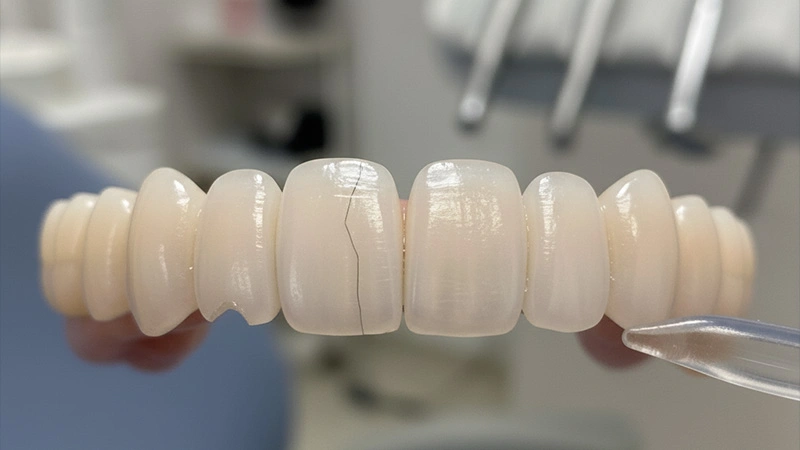
What Can Actually Go Wrong With a Hollywood Smile?
Cosmetic problems are only one part of the picture
When people think about Hollywood Smile risks, they often focus on obvious visible issues such as teeth that look too white, too long, or too uniform. Those are real concerns, but they are not the only ones. A smile can look visually “good” in a photo and still create problems with comfort, speech, hygiene, or long-term durability.
That is why a realistic risk discussion should include not just appearance, but also function and tissue response.
Functional and biological issues matter just as much
The most common clinical problems linked to rushed or unsuitable treatment include:
- post-treatment sensitivity
- gum irritation around margins
- bite discomfort or jaw strain
- fractures or chipping
- difficulty cleaning around restorations
- early failure when the underlying tooth was not a good candidate
These are the issues patients usually discover after treatment, especially once they return home. That is why understanding where veneers help and where they create problems is such an important next step.
The wrong treatment can solve one issue and create another
A patient may begin treatment hoping to improve color, shape, or alignment. But if veneers or crowns are used to cover deeper problems rather than address them, the cosmetic result may come at the cost of comfort or longevity. In that sense, the risk is not simply “having work done,” but having the wrong kind of work done for the wrong reason.
This is where veneers deserve a closer look, because they are often seen as the default cosmetic option even when they are not.
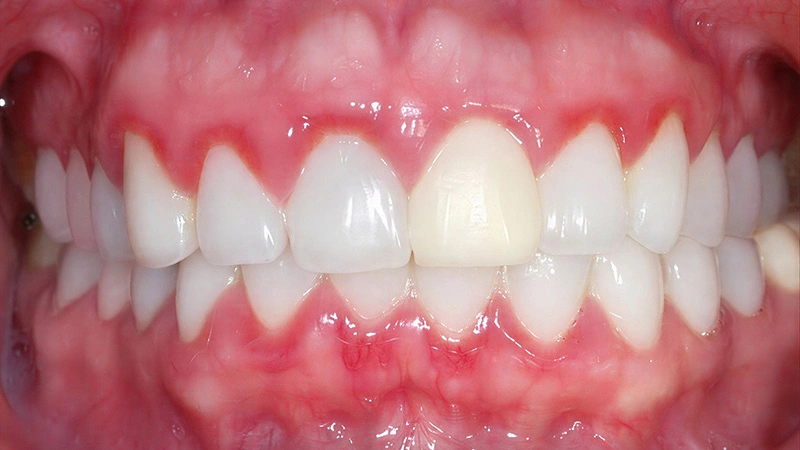
When Veneers Create Problems Instead of Solving Them
Veneers are not suitable for every patient
Veneers are excellent for many cosmetic cases, but they are not universal. They work best when teeth are structurally sound, enamel is present, the bite is reasonably stable, and the goal is mainly aesthetic improvement rather than major structural correction. When these conditions are present, veneers can improve shape, color, and minor asymmetries conservatively.
The problem begins when veneers are asked to solve issues that really belong to orthodontics, periodontal treatment, or full reconstruction.
Some cases need more than cosmetic camouflage
Examples of cases where veneers may be risky or inappropriate include:
- significant crowding or rotation
- unstable bite or edge-to-edge contact
- active gum disease
- severe bruxism without a protection plan
- teeth with large restorations or cracks
- deep discoloration that may require a different strategy
In these situations, veneers may hide the appearance of the problem without correcting the cause. This can lead to veneer complications in Turkey or elsewhere, especially if the treatment is compressed into a short travel schedule.
“Fast aesthetics” can become long-term maintenance
When veneers are used mainly to speed up the cosmetic result, the patient may get a straighter-looking smile quickly, but with more preparation, more bulk, or less forgiveness in the bite. Over time, that can translate into chipping, debonding, edge wear, or dissatisfaction with the shape. That is why some cases are safer with crowns, while others are actually made worse by them.
To understand that distinction, it helps to compare the risks crowns carry relative to veneers.
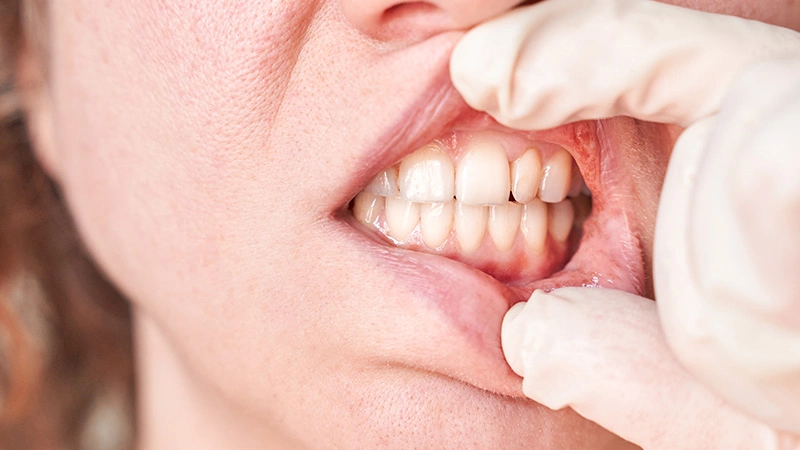
When Crowns Carry More Risk Than Veneers
Crowns usually involve more tooth reduction
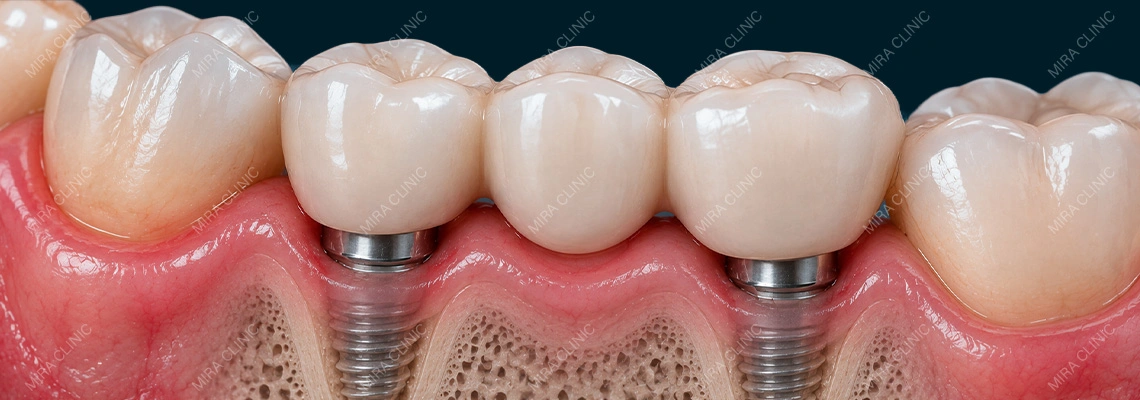
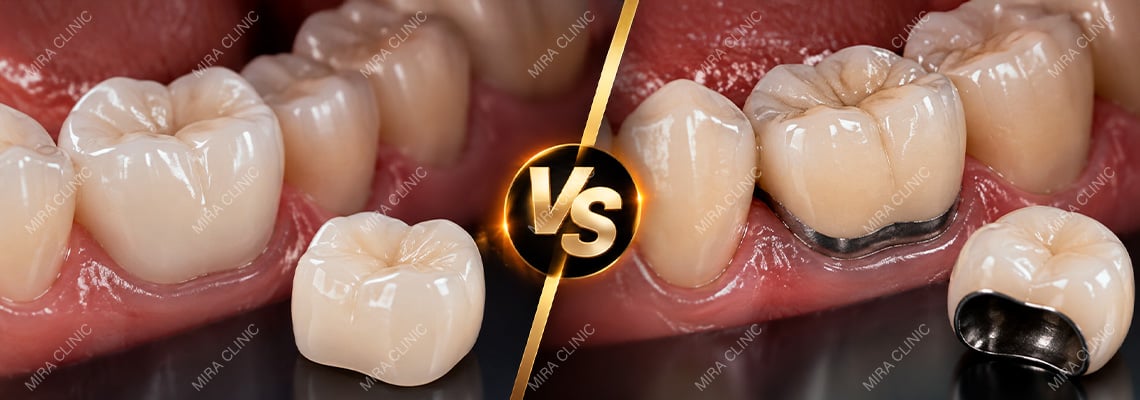
One of the most important differences in crowns vs veneers risks is the amount of tooth structure removed. Veneers usually affect the front surface of the tooth and aim to preserve as much enamel as possible. Crowns typically require reduction around the entire tooth, which makes them more invasive by nature.
That extra reduction is not automatically wrong. It can be necessary and beneficial in the right case. But when crowns are used mainly to simplify a cosmetic workflow, the biological trade-off becomes much larger.
Crowns are safer only when the tooth truly needs full coverage
Crowns are often the better option when teeth are heavily restored, structurally weakened, cracked, worn down, or have had endodontic treatment. In these cases, full coverage can protect the remaining tooth. The risk comes when crowns are used on teeth that could have been treated more conservatively with veneers or other options.
This is why the question should never be “Which one is better overall?” but “Which one is safer for this tooth?” That depends heavily on bite, tooth strength, and parafunctional habits.
More reduction means different long-term trade-offs
Because crowns involve more preparation, they can also mean:
- greater dependence on the restoration long-term
- higher sensitivity risk if planning is poor
- more difficult future revision if the aesthetic design is unsatisfactory
- more structural commitment from the first day
These are not reasons to avoid crowns categorically. They are reasons to use them selectively. Once bite forces and tooth strength enter the discussion, the risk picture becomes much clearer.
Read more: Hollywood Smile vs Veneers vs Crowns: How Dentists Decide What You Actually Need
How Bite Problems, Grinding, and Weak Teeth Increase the Risk
Bite stability can determine whether a case succeeds
A smile that looks beautiful on screen may still fail in the mouth if the bite is unstable. If the patient has heavy front-tooth contact, deep overbite, edge-to-edge function, or asymmetrical pressure during chewing, veneers and crowns are exposed to repeated stress. This is where even well-made restorations can chip, debond, or cause jaw discomfort.
That is why bite assessment is not a technical extra. It is one of the core safety factors in Hollywood Smile planning.
Grinding multiplies the risk of damage
Bruxism is one of the most important hidden drivers of what can go wrong with veneers. Patients who clench or grind can still receive cosmetic restorations, but only if the design, material selection, and protective strategy are adjusted for that risk. Without those changes, the chance of fracture, wear, or discomfort rises significantly.
A night guard is often part of the answer, but not the whole answer. The design itself must also account for the way the patient bites and functions.
Weak teeth cannot be treated as cosmetic-only teeth
Teeth with large fillings, cracks, loss of enamel, previous trauma, or root canal treatment are not the same as intact cosmetic teeth. If these structural conditions are not respected, the restoration may fail even if it looks attractive at first. This is why proper case selection matters more than any “package offer,” and also why some smiles end up looking artificial even before functional problems appear.
At this point, it becomes easier to see why bulky or fake-looking results are usually design problems, not just material problems.
Read more: Patient Testimonial: A Hollywood Smile Review in Istanbul from Rodgers Luke Steven
Why Some Results Look Bulky, Too White, or Artificial
Fake-looking veneers are usually overdesigned
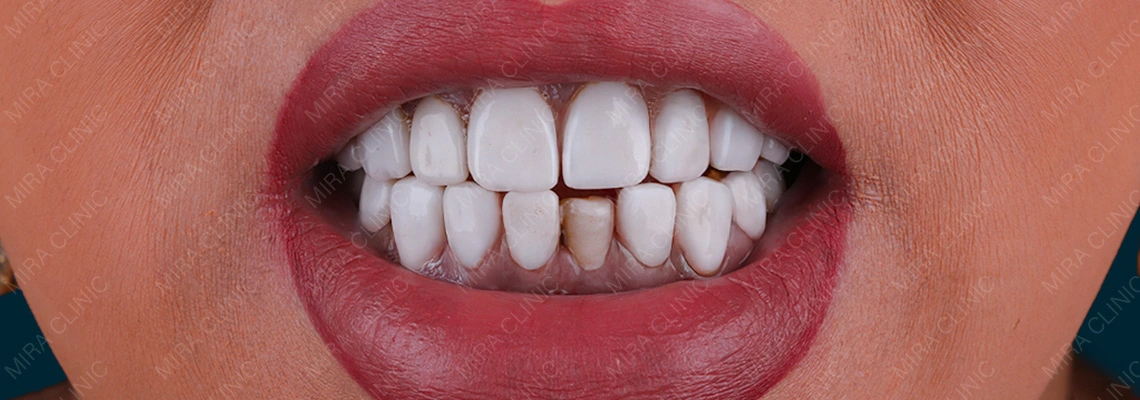
Patients often search for how to avoid fake veneers because they have seen smiles that look flat, square, overfilled, or unnaturally bright. These results are often caused by one of three things: excessive bulk added to cover misalignment, poor proportion planning, or a shade that ignores facial harmony.
The issue is rarely that the material is inherently bad. It is usually that the restoration was designed without enough respect for the patient’s natural smile dynamics.
Too much thickness creates the “bulky veneer” effect
Bulky veneers often happen when the dentist tries to hide crowding, rotation, or protrusion without adequate alignment correction or proper preparation design. Instead of following the tooth’s natural contour, the veneer adds volume, and the result can make the teeth look larger, more prominent, or harder to close the lips around comfortably.
That is why “natural results” depend on planning before prep, not just polishing after placement.
Overly white smiles often ignore the face
Another common risk in Turkey teeth risks discussions is the ultra-white, opaque smile that looks striking online but unnatural in daily life. Teeth that are much brighter than the skin tone, age, and facial structure can quickly look artificial. A good plan aims for brightness with realism, not brightness alone.
Once design quality is understood as part of safety—not just aesthetics—it becomes easier to see how poor planning contributes to sensitivity, gum irritation, and shorter restoration lifespan.
Read more: Hollywood Smile in Turkey: The Step-by-Step Process From Consultation to Final Fit
How Poor Planning Leads to Sensitivity, Gum Irritation, or Shorter Lifespan
Sensitivity often begins with preparation choices
Post-treatment sensitivity is one of the most common concerns in Hollywood Smile complications. It may happen when too much enamel is removed, dentin is exposed unnecessarily, or preparation is performed aggressively on teeth that were already vulnerable. Sensitivity is not inevitable, but it becomes more likely when the plan is invasive without good reason.
That is why conservative planning is one of the best ways to reduce discomfort before it ever starts.
Poor margins can create gum problems
When restorations are too bulky, poorly contoured, or finished with margins that are difficult to clean, plaque retention increases and gum irritation becomes more likely. This can lead to redness, bleeding, swelling, and long-term aesthetic problems such as recession or uneven gingival display. In many cases, patients think the issue is “the veneer,” when the real issue is how the restoration was planned and fitted.
This makes margin design and hygiene planning part of risk prevention, not just cosmetic detail.
Shorter lifespan usually reflects a compromised plan
When patients ask why some veneers last much longer than others, the answer is often found in the starting plan. Restorations placed on unstable bites, unhealthy gums, weak teeth, or poorly selected cases face more stress from day one. That is why a safer Hollywood Smile in Turkey always starts before treatment, not at the bonding stage.
To see what that safer path looks like, it helps to review the specific steps dentists take to reduce risk before treatment begins.
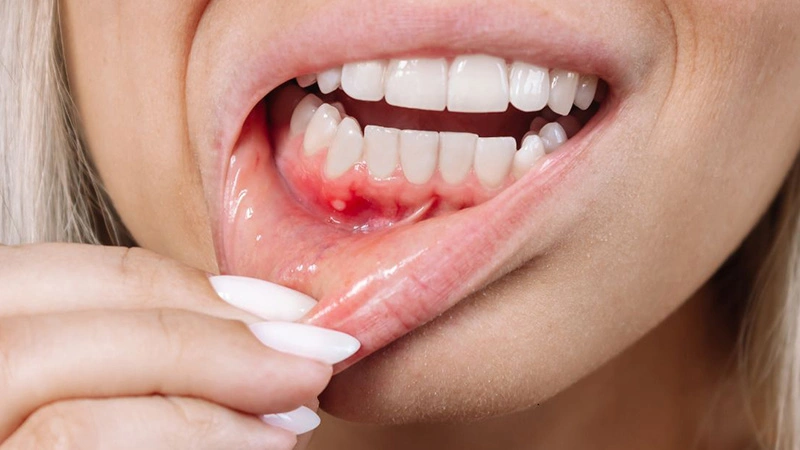
How Dentists Reduce Hollywood Smile Risk Before Treatment Starts
Good clinics begin with records, not promises
A safe treatment plan begins with:
- detailed photos
- clinical examination
- X-rays or CBCT when indicated
- bite analysis
- gum evaluation
- review of previous dental work
These steps allow the dentist to decide whether veneers, crowns, or another sequence of treatment is appropriate. They also help prevent overtreatment by revealing when a cosmetic plan is being forced onto a structurally unsuitable case.
Smile planning should be realistic, not generic
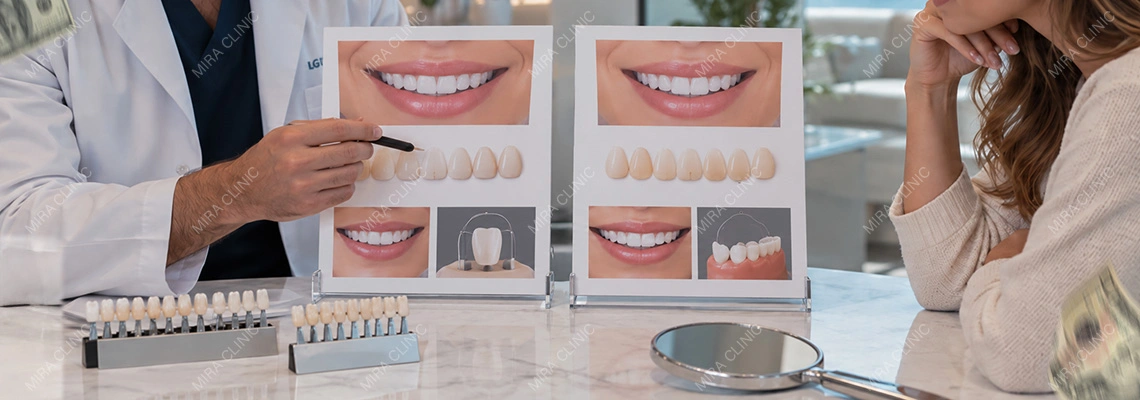
A reliable smile plan should account for facial proportions, lip movement, the smile line, tooth visibility, and the patient’s preference for a natural or brighter result. This may include digital smile previews, mock-ups, or discussion of what the final design should and should not look like. The goal is not to “sell a package” but to make the treatment more predictable.
This planning stage is one of the biggest differences between safe cosmetic dentistry and rushed cosmetic dentistry.
Case selection matters more than speed
Some patients are immediately good candidates for cosmetic work. Others need fillings, gum treatment, bite stabilization, endodontic care, or a more conservative option first. The safest clinics in Turkey are usually the ones willing to slow down the case rather than push straight into veneers or crowns.
This is why patients should judge clinics by their planning depth, not just by price or social media photos. That also means asking better questions before agreeing to treatment.
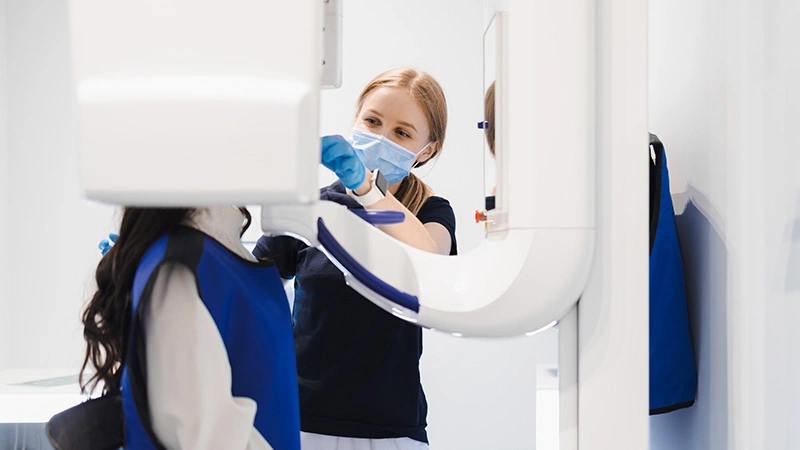
What Patients Should Ask Before Agreeing to Veneers or Crowns in Turkey
Ask why this treatment is being recommended
Patients should ask: Why veneers and not crowns, or why crowns and not veneers? The answer should relate to enamel, tooth strength, restorations, bite, and smile goals—not just convenience or price. A specific explanation is a sign that the clinic is thinking clinically rather than generically.
This question also reveals whether the clinic is individualizing the case or just fitting it into a package.
Ask what risks apply specifically to your case
A useful consultation should explain not just the benefits, but the case-specific risks. Patients should ask whether there are concerns related to grinding, gum health, color masking, old fillings, or the amount of tooth reduction expected. This helps frame the treatment as a medical plan rather than a cosmetic transaction.
The more tailored the explanation, the lower the chance of misunderstanding later.
Ask what happens if something feels wrong after treatment
A patient traveling abroad should know:
- how bite adjustments are handled
- what follow-up is available remotely
- whether a night guard will be recommended
- what happens if sensitivity or discomfort appears later
This is especially important in veneers complications Turkey scenarios, because issues are more stressful once the patient has already flown home. These questions are also useful for identifying patients who should not start cosmetic treatment immediately.
Who May Need Treatment First Before a Hollywood Smile
Gum disease should be stabilized first
If the gums are inflamed, bleeding, infected, or already receding, cosmetic treatment should not move forward as if the tissues are healthy. A Hollywood Smile placed on unstable gums is much more likely to lead to poor aesthetics, irritation, and long-term maintenance problems. In many cases, periodontal care must come first so the tissues can support the final restorations properly.
Healthy gums are not a cosmetic detail. They are part of the foundation of the smile.
Existing decay, failing fillings, or endodontic issues must be addressed
Teeth with active caries, leaking restorations, or untreated pulpal problems are poor candidates for immediate cosmetic treatment. Covering these teeth without resolving the underlying issue often shortens restoration life and increases the risk of pain or re-treatment later. This is why some patients need restorative or endodontic work first.
Cosmetic dentistry works best when it is built on stable teeth, not used to cover instability.
Bite stabilization may need to come before aesthetics
Patients with heavy wear, unstable contacts, clenching, or significant functional imbalances may need bite management before the cosmetic phase. This does not mean they cannot have a Hollywood Smile. It means the smile will be safer if the functional environment is controlled first.
Once that principle is clear, the most common remaining concerns are best addressed directly through the questions patients ask most often.
Read more: Natural Hollywood Smile Results in Turkey: How to Avoid Fake-Looking Veneers