Dental Implants in Turkey: Treatment Options, Process and Results
Dental implants can replace a single missing tooth, several teeth, or a complete dental arch. Depending on the clinical situation, treatment may involve a single implant-supported crown, an implant-supported bridge, or a full-arch restoration such as All-on-4 or All-on-6. The appropriate approach depends on the condition of the jawbone and gums, the remaining teeth, the bite, and the planned final restoration.
At Mira Clinic in Istanbul, implant placement and the final crowns, bridges, or full-arch restorations are planned together as one treatment process. International patients receive a personalized plan covering the recommended treatment, implant system, temporary teeth when appropriate, expected timeline, number of visits, and estimated cost. Preliminary planning can begin online, while the final plan is confirmed after a clinical examination and diagnostic imaging in Istanbul.
- How Much Do Dental Implants Cost in Turkey?
- What's Included in Dental Implant Packages in Turkey?
- Dental Implant Treatment Options at Mira Clinic
- What Are the Benefits of Dental Implants?
- Who Is a Suitable Candidate for Dental Implants?
- Why Choose Turkey for Dental Implants?
- Why Choose Mira Clinic for Dental Implants?
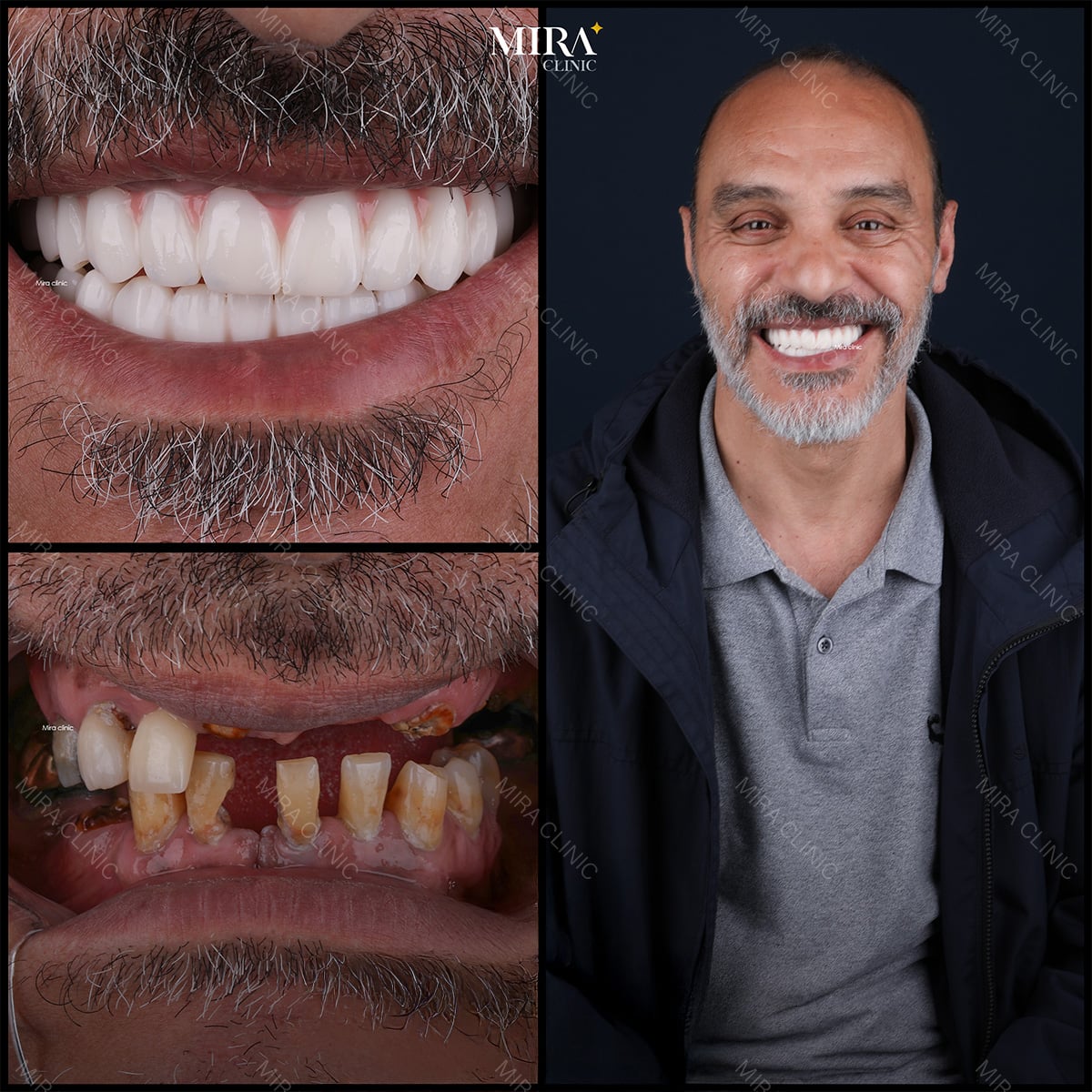
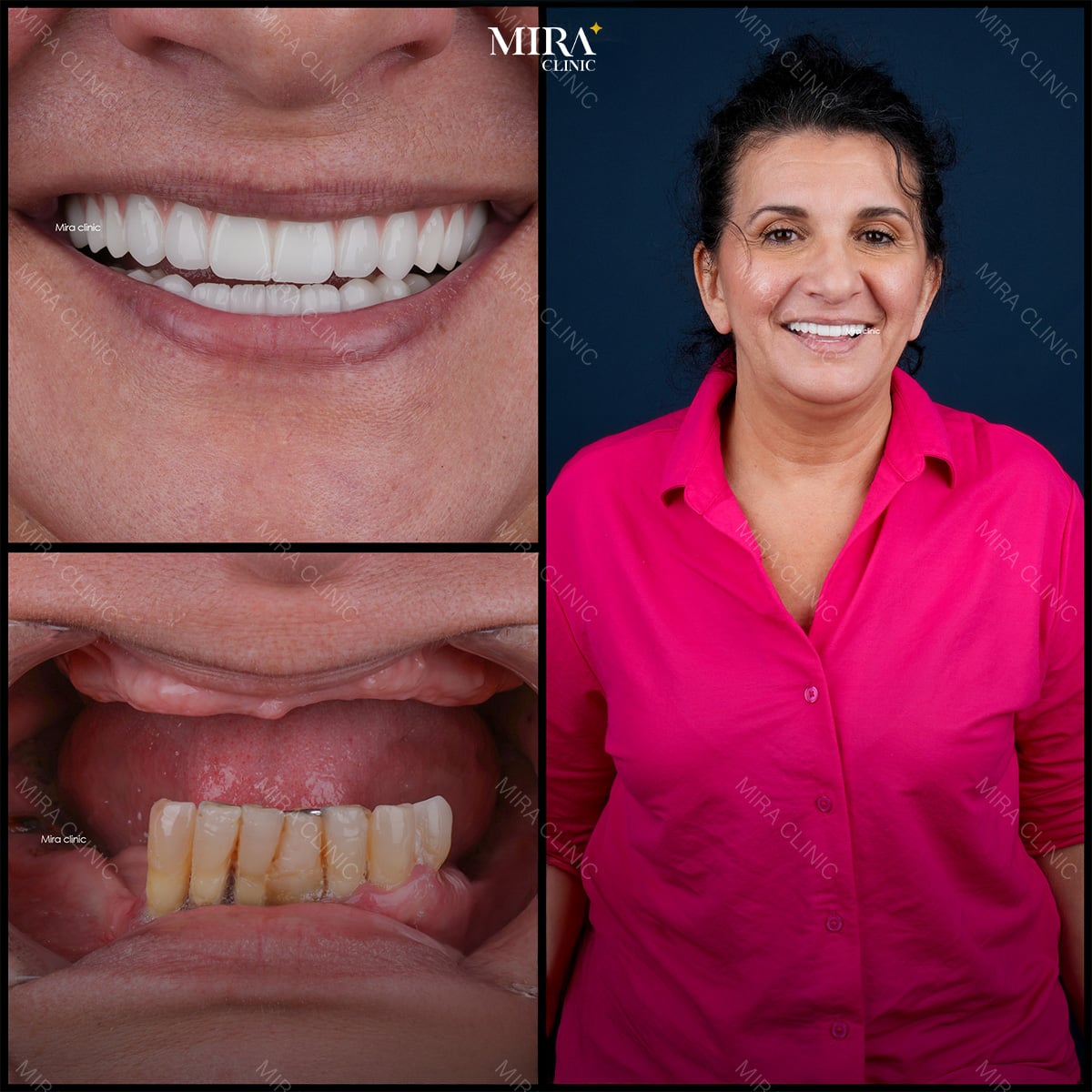
- Dental Implants Before and After – Real Patient Results
- Dental Implant Results and Longevity
- How Does Dental Implant Treatment in Turkey Work?
- Dental Implant Recovery, Risks and Aftercare
How Much Do Dental Implants Cost in Turkey?
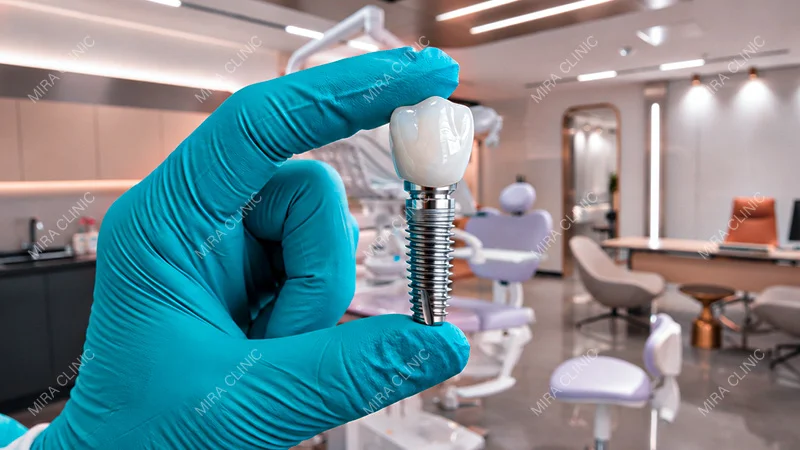
Dental implants in Turkey can be more affordable than comparable treatment in the UK and Western Europe. At Mira Clinic, individual implant systems cost approximately €400–€1500, depending on the brand.
The final treatment cost varies based on the number of implants, restoration type, and any additional procedures required. As the implant price may not include the abutment, crown, or other treatments, a personalised assessment helps determine the total cost.
What's Included in Dental Implant Packages in Turkey?
Dental implant packages can combine treatment with travel-related services, helping international patients organise their visits to Istanbul. Exact inclusions depend on the agreed treatment plan.
Dental Treatment and Restorations
Depending on your quotation, clinical services may include:
- Initial dental consultation and examination.
- Diagnostic X-rays or other required imaging.
- Dental implant placement.
- Abutments and planned crowns or bridges.
- Temporary restorations, when included.
- Follow-up appointments and adjustments.
Your treatment plan should identify the implant brand, restoration materials, and services included in each visit.
Accommodation, Transfers and Patient Support
Mira Clinic assists international patients with treatment coordination. Depending on the package, arrangements may include:
- Accommodation: Hotel stays for the agreed number of nights.
- Airport transfers: Transportation between the airport and accommodation.
- Clinic transfers: Transport for scheduled appointments.
- Patient support: Assistance with appointment scheduling and travel arrangements.
Confirm all included services before making your travel reservations.
What's Not Included in the Package?
Package inclusions depend on the individual treatment plan and written quotation. Unless specifically listed, additional costs may include:
- International flights and additional accommodation nights.
- Bone grafting, sinus lifting, or tooth extractions.
- Additional surgical or restorative procedures not included in the original quotation.
- Medications or temporary restorations not specified in the package.
- Material upgrades requested by the patient.
- Additional treatment identified during the in-person clinical assessment.
Before confirming your trip, review the written quotation to understand which treatments and travel services are included and under what circumstances the final cost may change.
Dental Implant Treatment Options at Mira Clinic
Dental implants can replace a single tooth, several teeth, or an entire arch. The appropriate treatment depends on your jawbone, remaining teeth, bite, and overall oral health.
Single Tooth Dental Implants
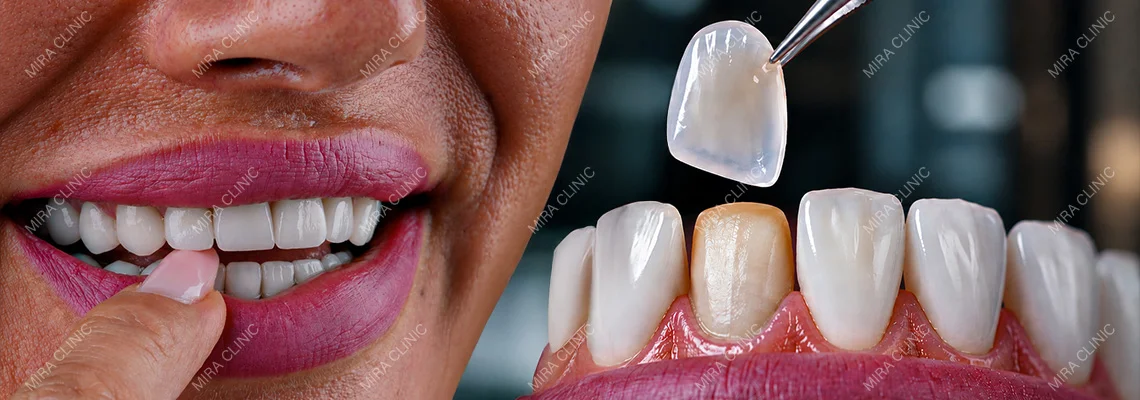
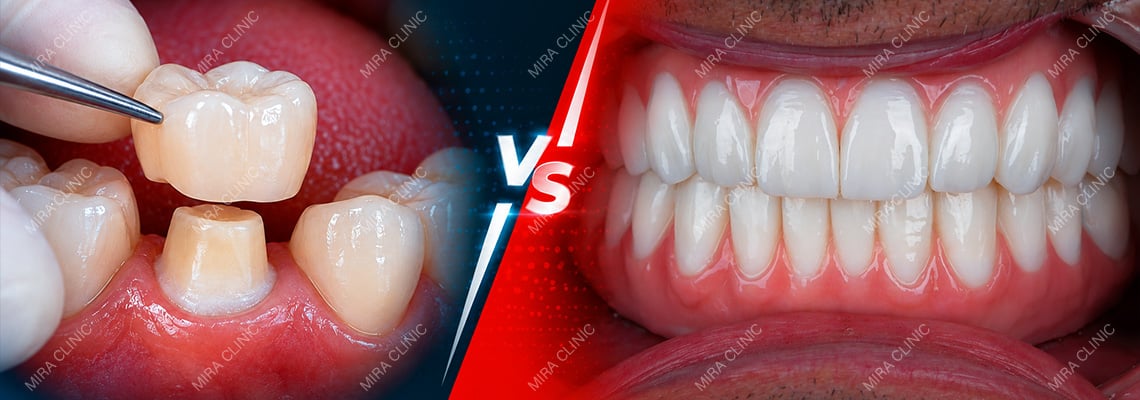
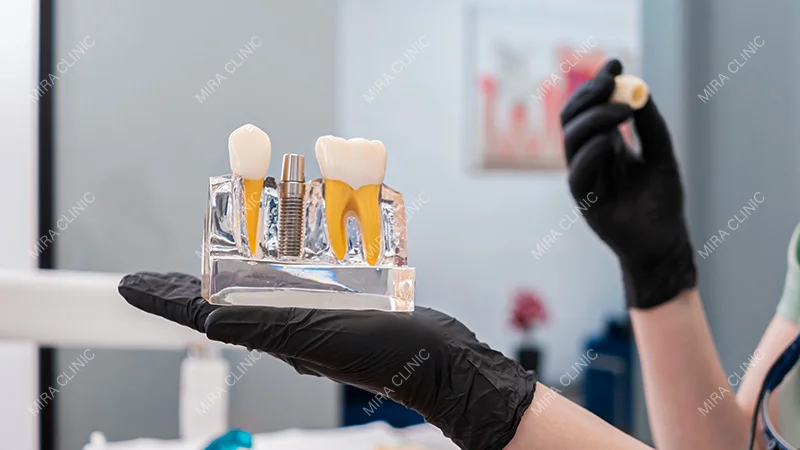
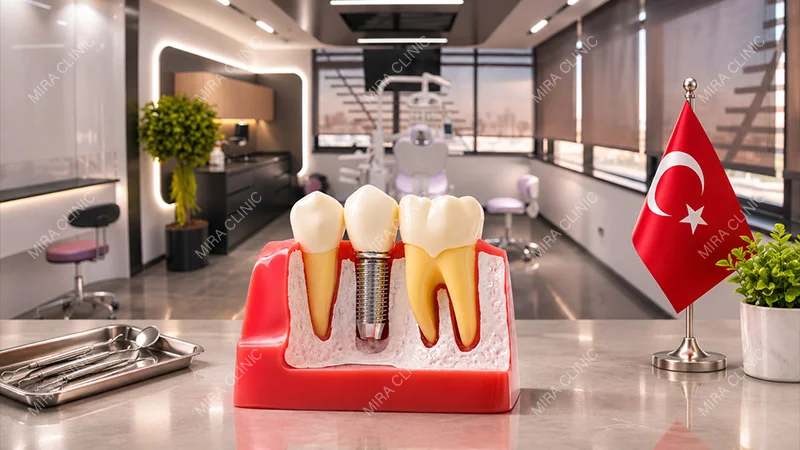
A single dental implant replaces one missing tooth using an implant fixture, an abutment, and a custom crown.
Key advantages include:
- Replacing a missing tooth without preparing neighbouring healthy teeth for a conventional bridge.
- Restoring the appearance of the tooth and surrounding smile.
- Providing fixed support for comfortable chewing.
Suitability depends on healthy surrounding tissues, sufficient bone support, and adequate space for the implant and final crown.
Multiple Teeth Dental Implants
If you have several missing teeth, dental implants can restore your smile with secure, natural-looking replacements. Depending on the number and location of the gaps, your dentist may recommend individual implants or an implant-supported bridge.
An implant-supported bridge can replace several adjacent teeth without requiring an implant for every missing tooth. This provides a fixed alternative to removable partial dentures while preserving healthy neighbouring teeth. The most suitable option depends on your jawbone, bite, and individual treatment needs.
Full-Arch and Full-Mouth Dental Implants
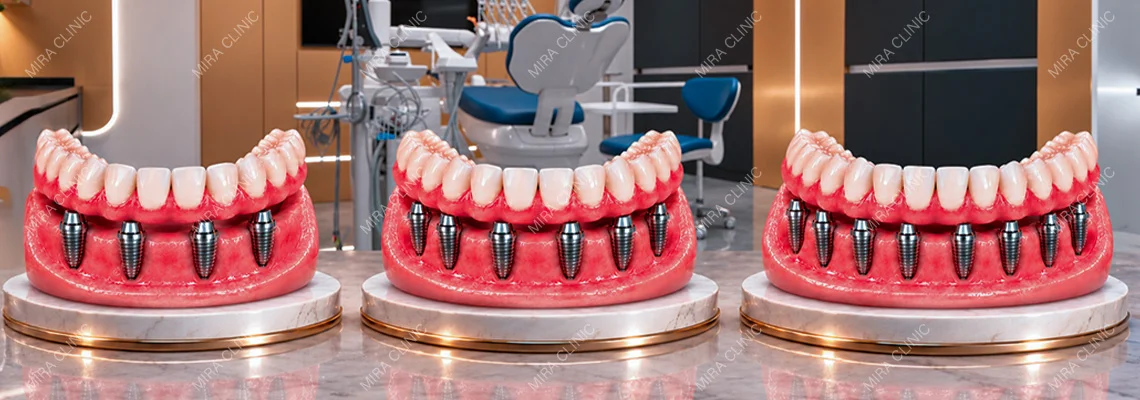
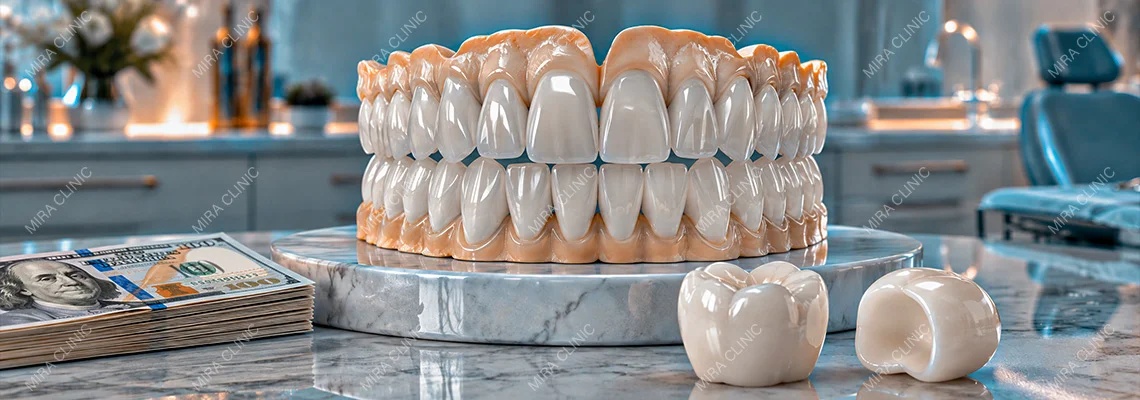
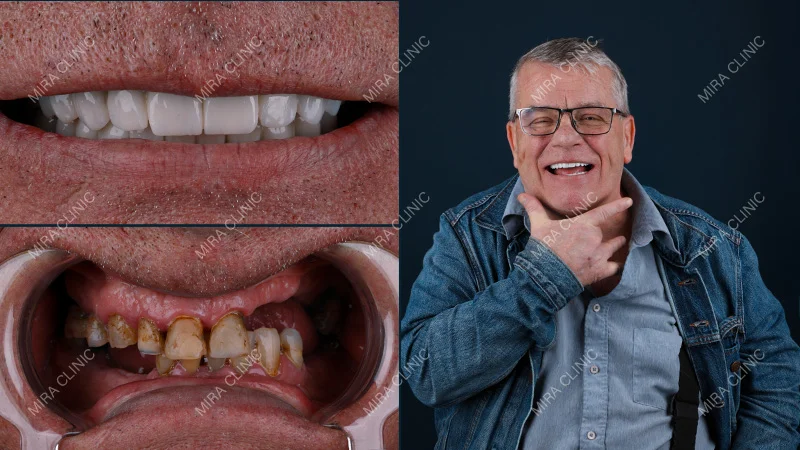
Full-arch dental implant treatment replaces all or most teeth in one jaw, while full-mouth rehabilitation involves both the upper and lower jaws. These terms describe the extent of treatment rather than a specific implant technique.
Depending on the condition of the jawbone, remaining teeth, bite, and planned restoration, a full arch may be supported by All-on-4, All-on-6, All-on-8, or another implant configuration. Some patients require extractions, bone grafting, or a staged treatment plan before the final fixed teeth are placed.
Full-arch or full-mouth treatment may be considered for patients who:
- Have lost most or all of their teeth.
- Have severely damaged teeth that cannot be predictably restored.
- Experience problems with loose or uncomfortable dentures.
- Require comprehensive restoration of their bite and chewing function.
All-on-4, All-on-6 and All-on-8 Dental Implants
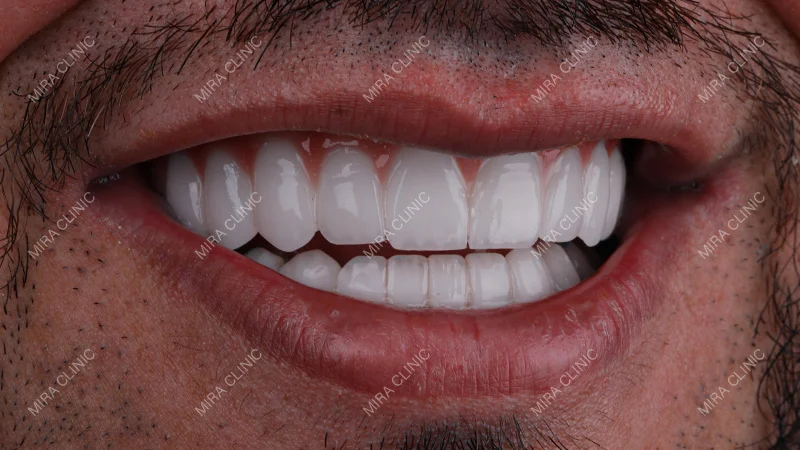
All-on-4, All-on-6 and All-on-8 are full-arch treatment approaches in which four, six or eight implants support a fixed arch of replacement teeth.
The choice depends on implant distribution, available bone, bite forces, anatomical structures, and the design of the final restoration.
With All-on-4, the posterior implants may be placed at an angle to make better use of available bone, potentially reducing the need for bone grafting in selected cases. All-on-6 provides additional support points to help distribute chewing forces, while All-on-8 may be considered when the restoration requires further implant support and sufficient bone is available.
Temporary fixed teeth may be placed shortly after surgery when adequate implant stability is achieved. The permanent restoration is normally completed after the implants have integrated with the jawbone.
No single approach is automatically better. The most suitable option depends on the patient’s individual clinical needs and treatment plan.
What Are the Benefits of Dental Implants?
Dental implants can offer several benefits compared with living with missing teeth or using certain removable alternatives.
- Natural-looking smile: Custom restorations can complement your remaining teeth.
- Improved chewing: Stable replacement teeth may make eating more comfortable.
- Better stability: Implant-supported restorations can reduce movement associated with some dentures.
- Preservation of neighbouring teeth: Single implants can avoid preparing healthy adjacent teeth.
- Jawbone support: Implants may help limit bone loss around missing-tooth sites.
Together, these benefits make dental implants a practical option for restoring missing teeth while supporting everyday comfort, confidence, and oral health.
Who Is a Suitable Candidate for Dental Implants?
Many adults with missing teeth may qualify for dental implants. A clinical assessment is necessary to determine whether treatment is appropriate and identify any additional procedures.
What Factors Determine Eligibility for Dental Implants?
The dentist evaluates several factors:
- Gum health: Active gum disease or infection may need treatment first.
- Jawbone: Sufficient bone is required for the planned implant positions.
- Medical history: Certain conditions and medications may affect healing.
- Smoking: Tobacco use increases the risk of complications.
- Teeth grinding: Excessive bite forces can affect implant restorations.
- Oral hygiene: Daily cleaning and regular maintenance are essential.
Having a medical condition does not automatically rule out implants. Eligibility depends on individual clinical circumstances.
Can You Get Dental Implants If You Have Bone Loss?
Bone loss does not always prevent implant placement. Depending on the amount and location of remaining bone, possible solutions include:
- Bone grafting: Rebuilding bone where additional support is needed.
- Sinus lifting: Increasing available bone height in selected upper-jaw areas.
- Alternative implant positioning: Using suitable areas of existing bone.
These options may increase treatment time and cost. Not every patient with bone loss requires grafting.
Why Choose Turkey for Dental Implants?
Turkey has become an established destination for dental implant treatment by combining competitive costs, modern dental technology, and services designed for international patients. Istanbul also offers convenient travel connections and an extensive medical tourism infrastructure.
However, the value of treatment depends on the complete clinical and restorative plan rather than the advertised implant price alone.
Competitive Dental Implant Costs
Lower operating and laboratory costs allow clinics in Turkey to provide dental implant treatment at prices that are often lower than those in the UK and Western Europe.
A complete quotation should account for:
- Implant surgery and implant components.
- Temporary and permanent restorations.
- Diagnostic imaging.
- Additional procedures, when required.
- Accommodation, transfers, and return visits.
Comparing complete treatment plans provides a more accurate picture than comparing the price of an implant fixture alone.
Implant Experience and Digital Treatment Planning
Dental clinics in Istanbul regularly treat international patients requiring single implants, implant-supported bridges, and full-arch rehabilitation.
Modern implant planning may include:
- Digital dental imaging.
- Three-dimensional assessment of the jawbone.
- Digital impressions.
- Computer-assisted implant positioning.
- Digital planning of crowns, bridges, and full-arch restorations.
These technologies help connect implant placement with the design of the final restoration, allowing the surgical and prosthetic stages to be planned as one treatment process.
Why Choose Mira Clinic for Dental Implants?
At Mira Clinic in Istanbul, we assist international patients with dental implant assessments, treatment planning, and coordination throughout their visits.
Dental Implant Team and Clinical Expertise
At Mira Clinic, dental implant treatment is planned according to each patient’s oral health, jawbone condition, bite, and restorative needs. Our dental team evaluates both the surgical placement of the implants and the design of the final crowns, bridges, or full-arch restoration.
Treatment planning includes an assessment of:
- Jawbone volume and gum health.
- Remaining teeth and bite alignment.
- Implant positions and restoration requirements.
- The potential need for extractions, bone grafting, or sinus lifting.
- The expected stages and timeline of treatment.
This coordinated approach allows the surgical and restorative stages to be planned as parts of one complete treatment process.
Implant Brands and Treatment Technology
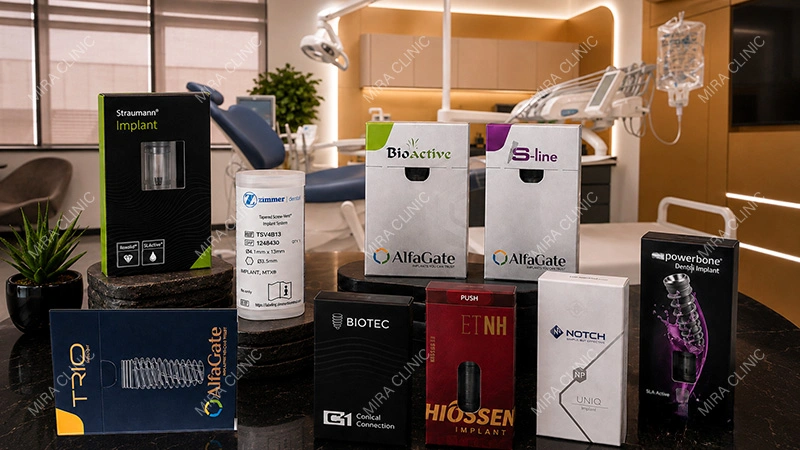
At Mira Clinic, available implant systems include:
- Straumann
- Nobel Biocare
- Zimmer Biomet
- Hiossen
- Alfa Gate (M+ and Trio implant systems)
The implant system is selected according to the patient’s bone condition, implant position, restoration design, and overall treatment plan. Dental imaging and digital planning technologies help the dentist evaluate the jawbone and determine suitable implant positions before surgery.
Patients receive information about the selected implant system and planned restoration as part of their treatment documentation.
Personalised Treatment Planning and International Patient Support
Our international patient coordination process helps you prepare for treatment before arriving in Istanbul.
This may involve:
- Initial assessment: Share dental X-rays, photographs, and treatment goals.
- Treatment options: Discuss potential implant solutions.
- Cost estimate: Receive a preliminary quotation.
- Travel planning: Coordinate appointment and travel arrangements.
- Clinical confirmation: Finalise treatment after your in-person examination.
Dental Implant Warranty and Coverage
Warranty conditions may differ depending on the implant manufacturer and restoration type.
Before treatment, obtain written information covering:
- Coverage: Which components and procedures are included.
- Duration: How long the warranty applies.
- Exclusions: Circumstances that may affect eligibility.
- Maintenance: Required dental reviews and care.
- Claims: How to report problems and request assistance.
Manufacturer warranties do not necessarily include travel expenses, clinical treatment, or replacement restorations.
Dental Implants Before and After – Real Patient Results
Explore before-and-after photographs of dental implant treatments performed at Mira Clinic in Istanbul. These patient cases show the visible results of different treatments, from single-tooth replacements to full-arch restorations.
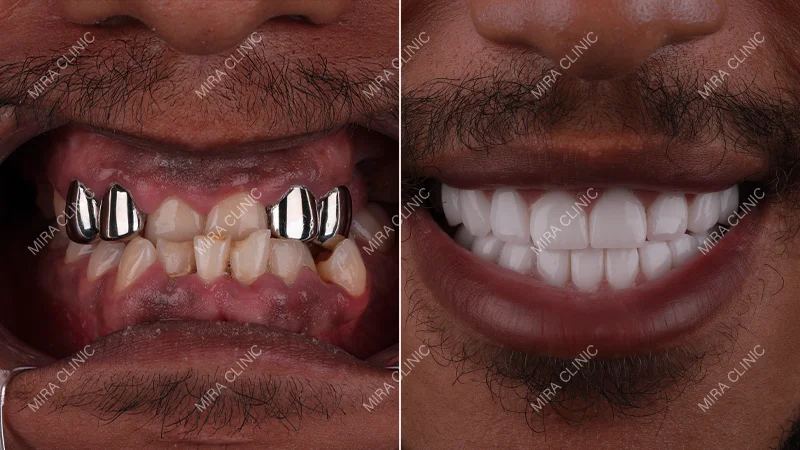
Each patient's treatment and results are unique. Outcomes depend on individual dental conditions, treatment requirements, and healing.
Dental Implant Results and Longevity
Dental implant treatment aims to restore missing teeth with stable, functional, and natural-looking restorations. The result depends not only on successful implant integration but also on gum and bone health, implant positioning, bite planning, and the design of the final crown, bridge, or full-arch restoration.
What Functional and Aesthetic Results Can You Expect?
From a functional perspective, dental implants can provide stable support for chewing and replace teeth without relying on removable restorations. In full-arch cases, implant-supported teeth may also improve comfort and stability compared with loose dentures.
Aesthetic results depend on the condition of the gums and bone, as well as the shape, shade, and position of the final restoration. The goal is to create teeth that suit the patient’s smile and facial proportions while allowing comfortable function and daily cleaning.
Results vary between patients.
How Long Do Dental Implants and Restorations Last?
Dental implants are designed for long-term use and may remain stable for many years or decades. However, the implant fixture and the visible restoration do not necessarily have the same lifespan.
Even when the implant remains securely integrated with the jawbone, the crown, bridge, or full-arch restoration may eventually require adjustment, repair, or replacement because of normal wear or changes in the surrounding tissues.
Long-term results depend on:
- Daily oral hygiene.
- Healthy gums and supporting bone.
- Regular dental examinations.
- Smoking habits and general health.
- Bite forces and teeth grinding.
- Proper maintenance of crowns, bridges, or full-arch restorations.
No implant treatment can be guaranteed to last for life. Regular monitoring helps identify problems early and protect both the implants and their restorations.
How Does Dental Implant Treatment in Turkey Work?
Dental implant treatment generally involves assessment, surgery, healing, and permanent restoration. Many international patients plan two visits to Turkey, although additional stages may be required.
Initial Online Consultation and Treatment Planning
The process begins with sharing dental photographs, available X-rays, medical information, and treatment goals.
Our team can discuss possible treatments, preliminary costs, and anticipated appointments. A final clinical examination in Istanbul confirms the treatment plan.
First Visit to Turkey – Implant Placement
During the first visit, your dentist:
- Examines your teeth and gums.
- Reviews the necessary diagnostic imaging.
- Confirms the implant positions and surgical plan.
- Places the implants, usually under local anaesthesia.
- Provides recovery and aftercare instructions.
Tooth extractions or bone grafting may be required depending on your condition.
Temporary Teeth During the Healing Period
Temporary replacement teeth may be available while the implants heal.
Options can include:
- Removable temporary dentures.
- Provisional crowns or bridges.
- Fixed implant-supported temporary teeth in suitable cases.
The choice depends on implant stability, bone condition, and treatment design. Temporary fixed restorations are not suitable for everyone.
Healing Period and Osseointegration
After surgery, the bone heals around the implants through a process called osseointegration.
Healing commonly takes approximately three to six months, although this varies by patient.
Bone grafting, additional procedures, or healing complications may extend the timeline. Follow your dentist's cleaning, diet, and review instructions during this period.
Second Visit – Permanent Teeth Placement
Once healing is sufficient, the dentist completes the final restoration stage:
- Takes impressions or digital scans.
- Prepares the permanent crown, bridge, or full-arch restoration.
- Checks the fit, bite, and appearance.
- Makes adjustments when needed.
- Explains cleaning and long-term maintenance.
Additional appointments may be necessary depending on restoration complexity.
Dental Implant Recovery, Risks and Aftercare
Recovery varies according to the number of implants, surgical complexity, and any additional procedures. Following your dentist's instructions helps support healing and reduce complications.
What to Expect After Dental Implant Surgery
Some swelling, tenderness, bruising, or mild bleeding is common after surgery.
Your dentist may recommend:
- Eating soft foods during initial recovery.
- Taking prescribed or recommended medication as directed.
- Cleaning the surgical area carefully.
- Avoiding smoking.
- Temporarily limiting strenuous exercise.
- Avoiding unnecessary pressure on healing implants.
Follow your individual postoperative instructions.
Possible Risks and Complications
As with other surgical procedures, dental implants carry potential risks.
These include:
- Infection or delayed healing.
- Failure of implant integration.
- Injury to nearby nerves or sinus structures.
- Gum inflammation or bone loss.
- Loosening or damage to restoration components.
Seek prompt clinical advice if you experience worsening pain, fever, increasing swelling, discharge, unexpected numbness, or implant movement.
Aftercare and Follow-Up After Returning Home
Long-term maintenance is essential for protecting dental implants.
Important steps include:
- Daily cleaning: Brush and use recommended cleaning tools.
- Regular check-ups: Attend professional dental reviews.
- Treatment records: Keep details of your implant systems and restorations.
- Follow-up planning: Clarify which appointments can be completed near home.
- Complication management: Seek timely dental assessment if symptoms develop.
Before leaving Istanbul, request written aftercare instructions, treatment records, and a contact route for concerns.
Before & After Dental Implants in Turkey: Treatment Options, Process and Results