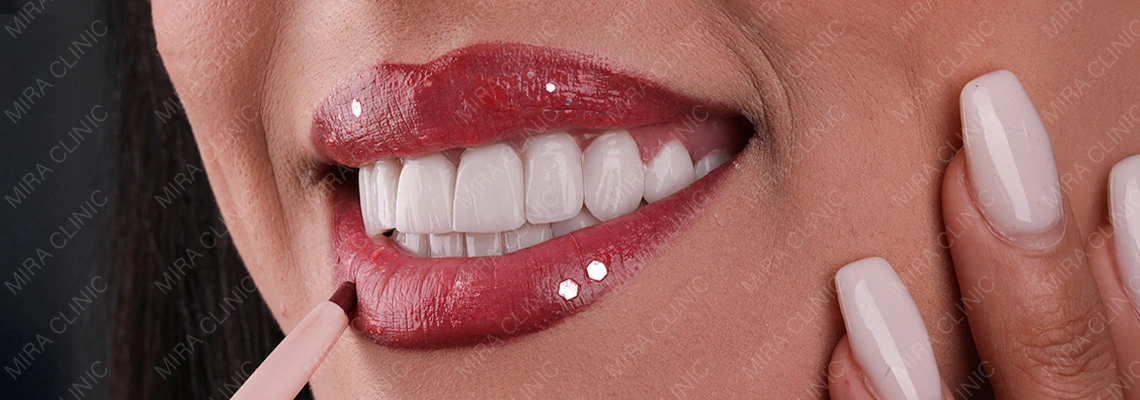
A new Hollywood Smile can change much more than teeth. It can change the way you speak, smile in photos, meet people, and feel about yourself every day. But once the treatment is complete, the next phase becomes just as important as the design itself: protecting the result so it stays beautiful, stable, and comfortable for years.
That is where Hollywood Smile aftercare becomes essential. Veneers and crowns are not high-maintenance in the dramatic sense, but they do require smart, consistent habits. A Hollywood Smile is an investment in confidence and appearance, and long-term success depends on how well you protect that investment through daily hygiene, careful eating habits, bite protection, and regular professional reviews. For patients who want their new smile to remain bright and natural-looking for as long as possible, aftercare is not an extra step. It is part of the treatment itself.
- Quick Answer: A Hollywood Smile Can Last 10+ Years — but Aftercare Matters Every Day
- The First 48 Hours: Setting the Foundation for Success
- Daily Hygiene: The Non-Abrasive Secret to Longevity
- Dietary Habits: Eating and Drinking with Veneers
- Protecting Your Smile from Stress: Bruxism, Clenching, and Night Guards
- What Can Shorten the Life of a Hollywood Smile?
- Professional Maintenance: The Mira Clinic Standard
- Longevity Factors: Why High-Quality Materials and Good Aftercare Work Together
- When You Should Contact the Clinic After a Hollywood Smile
- Final Verdict: A Smile That Grows with You
Quick Answer: A Hollywood Smile Can Last 10+ Years — but Aftercare Matters Every Day
A well-planned Hollywood Smile can often last more than 10 years, especially when quality materials, accurate bite design, and good daily care work together. But even premium restorations do not protect themselves. Their long-term success depends on how the patient brushes, flosses, eats, drinks, manages clenching or grinding, and attends professional maintenance over time.
This is why veneer maintenance tips matter as much as the material itself. E-max and other high-quality ceramics can support long-lasting results, but they still depend on healthy gums, clean margins, and a stable bite. In other words, dentistry creates the result, but daily habits protect it.
The most important message for patients is reassuring: you do not need perfection. You need consistency. Small, smart habits repeated every day usually matter more than occasional overcorrection or panic. That long-term mindset starts from the first 48 hours after treatment.
The First 48 Hours: Setting the Foundation for Success
The first 48 hours after bonding are an adjustment period. The smile is new, the bite may feel unfamiliar at first, and mild sensitivity is not unusual. Most patients do not need to worry during this stage, but they do need to be careful. Early habits help the veneers settle into normal use without unnecessary stress.
Managing sensitivity after bonding
Some patients notice mild sensitivity to hot or cold drinks in the first day or two after treatment. This does not automatically mean that something is wrong. The teeth and surrounding tissues may simply be adjusting after the bonding process, especially if preparation or cementation caused temporary sensitivity.
Why mild hot and cold sensitivity can be normal at first
After veneers or crowns are placed, the teeth may be more aware of temperature changes for a short period. This is often temporary and tends to improve as the teeth settle and the patient resumes a normal routine. It becomes more concerning only if the sensitivity is intense, increasing, or not improving gradually.
When sensitivity should start improving
In many cases, early sensitivity begins to calm within days rather than worsening. If it remains strong, interferes with eating, or feels sharp and persistent, the clinic should be informed. This is why early observation matters just as much as early caution.
The soft food rule and why early pressure matters
The first two days are not the right time to test the strength of the new smile. Patients often feel excited and want to “try” the veneers immediately with firmer foods, but the smartest approach is gentler. Softer textures reduce unnecessary pressure during the immediate adjustment phase.
Why very hard textures should be avoided in the first two days
Very hard foods can place stress on a smile that still feels unfamiliar in the mouth. The issue is not that veneers are fragile by default, but that the patient is still adapting to a new bite and new contours. A softer diet briefly helps that transition happen more smoothly.
Why you should not “test” the veneers by biting forcefully
Many early problems happen not because the restorations were weak, but because the patient treated the first two days like a stress test. A Hollywood Smile should enter normal function gradually, not through aggressive biting on hard foods, nuts, or crusty textures on day one.
What is normal in the first two days — and what is not
The first 48 hours often come with heightened awareness of the smile. That is normal. Patients may notice slight sensitivity, a new feeling in the bite, or increased attention to the veneers because they are new.
Common early symptoms that do not usually indicate a problem
Mild sensitivity, a sense that the teeth feel “different,” or being more conscious of the veneers during speech or eating can all belong to the early adaptation phase. These usually settle as the patient becomes used to the new smile.
When to contact the clinic early
If a veneer feels clearly unstable, if the bite feels sharply wrong rather than simply new, or if discomfort is increasing rather than improving, the clinic should be contacted. Early communication protects the result and prevents a small issue from becoming a bigger one.
Daily Hygiene: The Non-Abrasive Secret to Longevity
The long-term success of a Hollywood Smile depends heavily on daily cleaning habits. This is one of the most important parts of cleaning porcelain veneers correctly: keeping the smile clean without damaging surfaces, irritating the gums, or wearing the margins with overly aggressive products or techniques.
Choosing the right toothbrush and brushing technique
A toothbrush seems like a simple daily item, but it affects veneer longevity more than many patients realize. The wrong brush or the wrong technique can create unnecessary wear at the gumline and around the margins where veneers meet natural teeth.
Why a soft-bristled toothbrush is essential
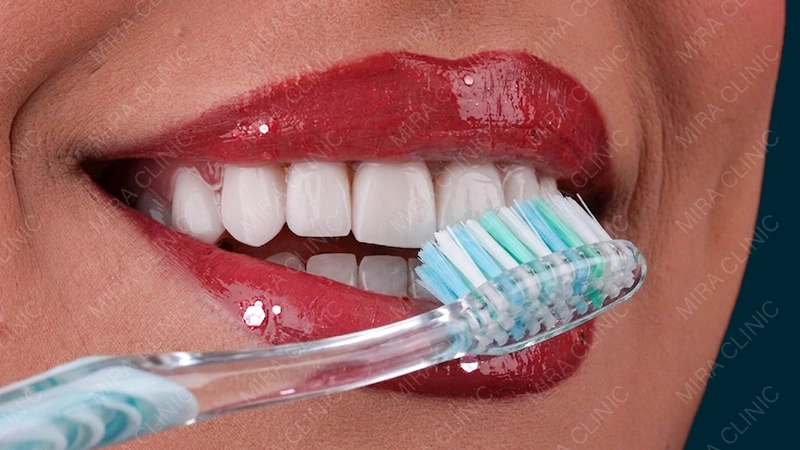
A soft-bristled brush is usually the safest choice because it cleans effectively while being gentler on the gums and margins. Hard bristles do not clean “better.” They often just add mechanical stress to areas that should be treated carefully.
How aggressive brushing can affect the gingival margin
The gingival margin, where the restoration meets the natural tooth and gum, is one of the most important areas to protect. Overbrushing can irritate the gums, encourage recession, and create problems around the edges of otherwise healthy veneers. Good aftercare is not about brushing harder. It is about brushing smarter.
Why non-abrasive toothpaste matters
Toothpaste choice matters because some products marketed for whitening or intense stain removal can be too abrasive for long-term cosmetic work. They may not destroy veneers, but they can gradually affect surface polish or create unnecessary wear around the margins.
Why whitening toothpaste is not always safe for porcelain glaze
Many whitening toothpastes rely on abrasive particles rather than true chemical whitening. These abrasives may be too harsh for routine use on a Hollywood Smile, especially when the goal is to preserve shine and surface smoothness over the years.
How to protect surface shine over time
Patients who want their smile to stay polished and refined should choose gentler, non-abrasive products and avoid assuming that stronger cleaning always means better care. Surface preservation is part of the veneer longevity guide that many patients overlook.
How to floss around veneers safely
Flossing is still essential after a Hollywood Smile. Veneers do not replace the need for gum care. In fact, the health of the tissue around veneers often plays a major role in how long the smile stays attractive and stable.
How to clean around the margins without stressing the bond
Floss should be used gently and carefully around each tooth, cleaning the contact area without snapping aggressively into the gumline. The goal is to remove plaque and food debris without turning flossing into a mechanical stress point.
Why daily flossing still matters for gum health
A Hollywood Smile can still fail aesthetically if the gums become inflamed, puffy, or receded. Good flossing protects the frame around the smile, and that frame matters just as much as the veneers themselves.
Do you need a special mouthwash after a Hollywood Smile?
Patients often ask whether veneers require a specific mouthwash. In most cases, the answer is not that one special product is mandatory, but that harsh products should be avoided if they irritate the tissues or dry the mouth.
What kind of mouthwash is usually suitable
A gentle, non-irritating mouthwash that supports oral hygiene without causing dryness or discomfort is usually appropriate. The focus should be on gum health and overall cleanliness, not dramatic claims.
What to avoid if the formula is too harsh
If a mouthwash stings strongly, worsens dryness, or makes the tissues feel irritated, it may not be the best choice for long-term aftercare. Comfort and consistency are usually more valuable than intensity.
Dietary Habits: Eating and Drinking with Veneers
One of the most common aftercare questions is whether life with veneers must become restrictive. In most cases, it does not. Patients can usually eat and drink normally, but they need to understand which habits protect the smile and which habits create avoidable risk over time.
What drinks and foods can affect the look of your smile over time
Porcelain veneers are more stain-resistant than natural teeth, but that does not mean diet becomes irrelevant. Coffee, tea, wine, and strongly pigmented foods still matter because the natural teeth around the veneers, the bonding areas, and the overall visual harmony of the smile can still be affected.
Why coffee, tea, wine, and berries still matter
These items may not stain high-quality porcelain the same way they stain natural enamel, but they can still affect surrounding teeth and make the overall smile look less even with time. This matters especially in mixed smiles where not every visible tooth is restored.
How natural teeth and bonding areas may discolor differently
A patient may feel that the veneers look stable while nearby teeth slowly deepen in shade. This can create subtle mismatch over the years. Good hygiene and professional maintenance help control this and keep the smile looking harmonious.
Why porcelain resists stains better than natural teeth
Porcelain is valued partly because it is smoother and more resistant to surface staining than natural enamel. That is one reason it remains such a strong choice in smile design.
Why porcelain itself is more stain-resistant
Its polished, dense surface does not absorb pigment the same way porous or rougher surfaces do. This helps the restorations remain visually stable even in a normal diet.
Why surrounding teeth still influence the overall smile color
Even if the veneers remain bright, the smile is judged as a whole. That is why protecting a Hollywood Smile includes protecting the natural teeth around it and maintaining the color balance across the visible smile zone.
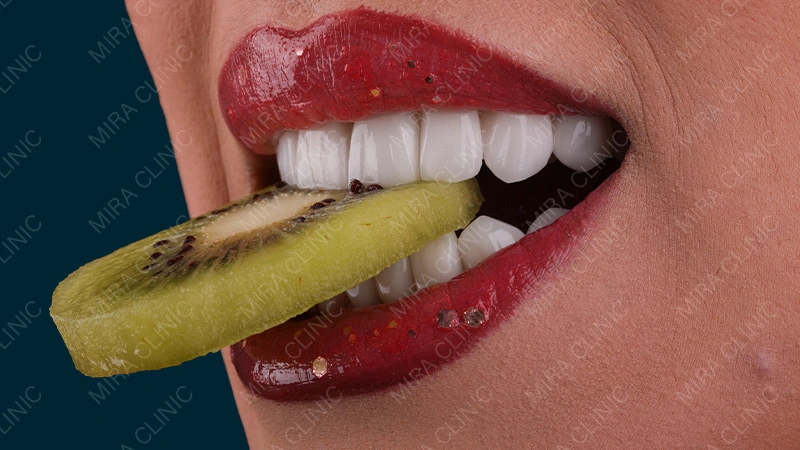
The “no-bite” list: what your teeth should never be used for
A Hollywood Smile is designed for eating, smiling, and speaking — not for acting as a tool. One of the simplest and most important veneer maintenance tips is avoiding unnecessary force.
Why opening packages with teeth is risky
Using the teeth to open packaging, tear objects, or grip non-food items places completely avoidable stress on restorations. These habits can turn a beautiful smile into a preventable repair case.
Why biting ice, bones, or very hard objects can shorten veneer life
Direct force on very hard objects increases the risk of chipping, especially over time. A Hollywood Smile is strong enough for normal life, but it should not be treated carelessly.
Protecting Your Smile from Stress: Bruxism, Clenching, and Night Guards
One of the biggest threats to long-term veneer survival is not coffee, not brushing, and not even occasional hard foods. It is grinding and clenching. Bruxism places repeated pressure on restorations, often at night when the patient is not aware of it.
Why grinding is one of the biggest causes of veneer failure
Grinding creates repeated stress on edges, surfaces, and bite contacts. Even premium ceramics can suffer if they are exposed to chronic force patterns without protection.
How bruxism places repeated pressure on restorations
The problem is not only one dramatic grinding event. It is the accumulation of pressure night after night. This can shorten the lifespan of otherwise excellent work.
Why even beautiful veneers can fail under stress
A smile can be perfectly designed and still fail if the bite environment keeps overloading it. This is why protecting a Hollywood Smile means protecting it from forces as much as from stains or plaque.
Why a custom night guard matters after a Hollywood Smile
A custom night guard is often one of the smartest long-term protections for patients who grind, clench, or are even suspected of doing so. It acts as a protective barrier during sleep, when the bite is least controlled.
How a night guard helps protect the bite overnight
It reduces direct force between teeth and distributes stress more safely. This helps protect both the veneers and the natural teeth supporting the overall bite.
Why custom protection is better than generic options
A custom-made guard fits more precisely, works more predictably, and is usually more appropriate for a carefully designed cosmetic case than a generic over-the-counter version.
How clenching can damage even high-quality restorations
Patients often think of bruxism only as night grinding, but daytime clenching matters too. It may be quieter and less obvious, yet still damaging if it becomes habitual.
Why day clenching matters too
Repeated tension, especially during stress, can overload the smile over time. This is one reason long-term maintenance depends partly on behavior and awareness, not only on materials.
What warning signs may suggest bite-related stress
Jaw tension, morning tightness, edge wear, or unexplained pressure on the teeth can all suggest that stress on the bite is becoming a factor. These signs should not be ignored.
What Can Shorten the Life of a Hollywood Smile?
Patients often ask how to make veneers last longer, but a useful way to answer that is also to explain what shortens their life. A Hollywood Smile usually lasts better when avoidable damage is reduced early.
Hard foods, bad habits, and using teeth as tools
Everyday misuse is one of the most preventable reasons restorations fail earlier than they should.
Why daily habits often matter more than one-time accidents
A single accident can happen to anyone, but routine misuse — biting hard foods carelessly, tearing things with the teeth, or clenching repeatedly — does more long-term damage than many patients realize.
How repeated misuse affects long-term stability
Small repeated stresses can gradually weaken the practical life of the work. Longevity is often lost through accumulation, not drama.
Aggressive brushing and abrasive products
Aftercare mistakes do not always come from neglect. Sometimes they come from trying too hard.
How overbrushing can affect the margins
Brushing too aggressively can irritate the gums and contribute to margin problems even in patients who believe they are being “extra careful.”
Why “stronger cleaning” is not always better cleaning
The healthiest long-term care is usually gentle, precise, and consistent. Over-cleaning can create its own problems.
Skipping maintenance or ignoring small warning signs
Many major corrective cases begin as small signs that were ignored too long.
Why minor issues can become bigger problems
A tiny chip, a slight bite discomfort, or low-grade gum irritation may not seem urgent at first, but these details often matter more than patients think.
Why early review often protects the smile
Reviewing a small issue early is usually easier, safer, and less expensive than correcting a larger problem later.
Why a beautiful smile can still fail without protection
Aesthetic success does not guarantee long-term success by itself.
Why aesthetics alone do not guarantee longevity
A smile can look excellent on delivery day but still need proper maintenance to remain that way. Beauty is the start, not the whole story.
How discipline influences real lifespan
This is why Hollywood Smile aftercare is so important. The life of the smile is shaped not only by dentistry, but by what the patient does every day afterward.
Read more: Hollywood Smile Risks in Turkey: What Can Go Wrong?
Professional Maintenance: The Mira Clinic Standard
Home care is essential, but professional maintenance remains part of long-term success. Veneers and crowns still live in a biological environment, and that environment needs professional review from time to time.
Why professional scaling and polishing still matter
A Hollywood Smile does not eliminate the need for hygiene visits. Professional cleaning helps control plaque, supports gum stability, and keeps margins healthier over time.
Why veneers do not remove the need for hygiene visits
Restorations do not make the mouth immune to plaque, inflammation, or gum issues. The tissues still need care, and professional maintenance remains part of that care.
How clean margins support gum stability
Healthy margins help the smile look natural and feel comfortable. This is one reason dental aftercare in Turkey should not end when the patient leaves the clinic.
How often patients should schedule maintenance visits
A six-month recall is often a practical standard, although some patients may need closer review depending on their gums, bite habits, or overall oral health.
Why 6-month reviews are a practical standard
They allow the smile to be checked before small issues become larger ones and help maintain consistency in cleaning and monitoring.
When some patients may need closer monitoring
Patients with bruxism, gum sensitivity, or more complex restorative cases may benefit from shorter review intervals.
How remote follow-up helps international patients protect their results
For international patients, follow-up can include structured remote communication in addition to local hygiene care. This supports continuity even after returning home.
Why virtual reviews can support long-term monitoring
A patient can raise concerns early, share photos when needed, and get guidance before a minor issue becomes a major concern.
How international aftercare stays structured after returning home
Good aftercare for international patients combines home care, local maintenance where appropriate, and clinic-level support when needed.
Read more: Hollywood Smile Revision: How to Fix or Replace Failing Veneers in Turkey
Longevity Factors: Why High-Quality Materials and Good Aftercare Work Together
Material quality matters, but materials do not work in isolation. Longevity comes from the combination of strong materials, accurate technique, and disciplined aftercare.
Why E-max and premium materials usually perform better long term
Higher-quality ceramics often provide better aesthetics, surface stability, and predictable long-term performance than weaker or cheaper alternatives.
How material quality affects durability and appearance
Better materials tend to hold polish and beauty more consistently, which helps the smile remain natural-looking over time.
Why cheaper alternatives may age differently
Not all restorations behave the same way as years pass. This is why material choice still matters even in a strong aftercare protocol.
Why material quality alone is not enough
Even the best material can be shortened by poor habits, skipped maintenance, or ignored bite problems.
How technique, bite, and maintenance shape long-term outcomes
A premium material placed poorly or maintained badly will not necessarily outperform a well-planned, well-maintained case with discipline behind it.
Why premium materials still need proper care
The idea that “high quality means no maintenance” is one of the biggest myths in aesthetic dentistry.
How aftercare supports long-term smile stability
Aftercare protects the environment around the restorations, and that environment is crucial for long-term success.
Why daily protection preserves major aesthetic work
The cost and effort of smile design deserve equally thoughtful long-term care. This is the practical core of the veneer longevity guide idea.
How long-term stability depends on behavior as well as dentistry
Dentistry delivers the smile, but behavior helps keep it stable.
When You Should Contact the Clinic After a Hollywood Smile
Patients should not feel that they are overreacting by reporting small changes. Early communication often protects the smile.
If a veneer feels loose or changes position
A veneer should not feel mobile or altered in a noticeable way.
Why this should not be ignored
Movement, instability, or a clear change in how the veneer sits may indicate a problem that deserves prompt attention.
What to do before the issue worsens
The patient should avoid forcing it, chewing carelessly on it, or waiting too long to ask for guidance.
If you notice a chip, crack, or bite discomfort
Small chips or bite changes can affect the health and comfort of the whole case if they are left unresolved.
Why small changes in the bite matter
Even a small imbalance can create stress elsewhere in the smile or jaw over time.
When a review is more important than waiting
If the change feels new, noticeable, or uncomfortable, a review is usually wiser than delay.
If gum irritation or sensitivity does not settle
Some early adaptation is normal, but prolonged irritation should not simply be accepted.
Why prolonged symptoms deserve attention
Persistent gum irritation, discomfort, or sensitivity may indicate that something needs assessment rather than patience alone.
How early intervention protects the result
The earlier a problem is identified, the more conservative the solution often is.
Read more: Hollywood Smile Risks in Turkey: What Can Go Wrong and How to Reduce the Risk
Final Verdict: A Smile That Grows with You
A Hollywood Smile does not stay beautiful for years by accident. It stays beautiful because small daily habits protect a major aesthetic investment. That is why aftercare should never feel like an afterthought. It is the long-term strategy behind the result.
Why small daily habits protect major aesthetic work
Soft brushing, gentle flossing, smart food choices, and bite protection may seem simple, but they are exactly what help preserve high-level cosmetic dentistry.
Why consistency matters more than perfection
Patients do not need a flawless routine every day. They need a reliable one. Long-term success usually comes from steady good habits, not intense short bursts of effort.
How good aftercare supports long-lasting smile results
When quality materials, proper technique, and thoughtful aftercare work together, a Hollywood Smile can remain bright, healthy-looking, and stable for many years.
Read more: Hollywood Smile Review 2026: How Elizabeth Dmitruk Left Years of Dental Pain Behind in Istanbul