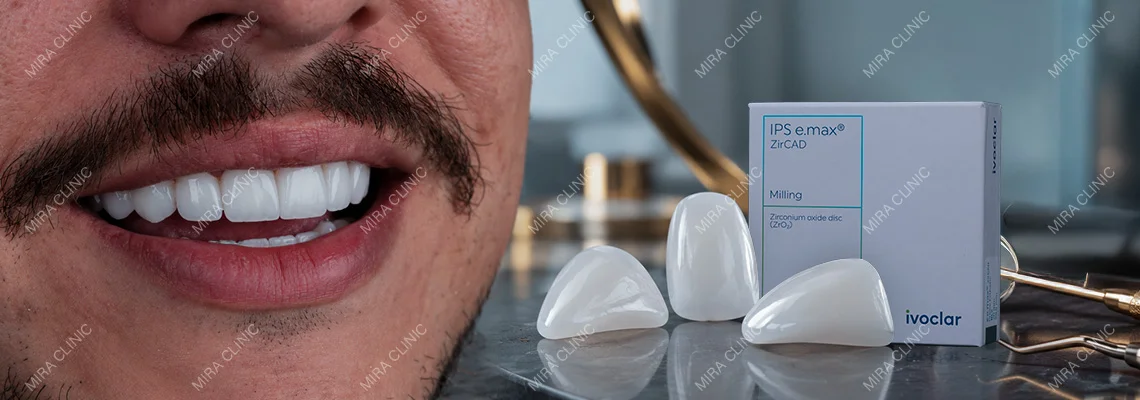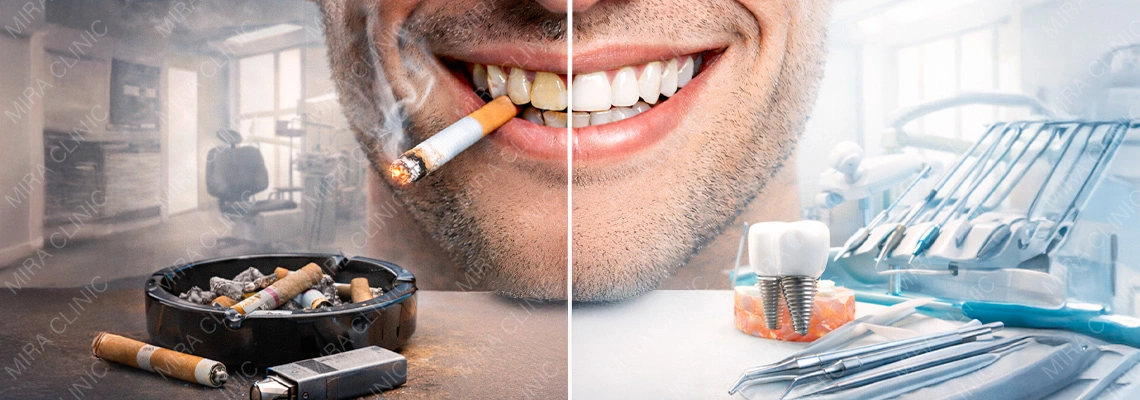
For many patients, the question is not whether they want a better smile. It is whether they can realistically maintain one while still smoking. This is the smoker’s dilemma: you want a bright, polished Hollywood Smile, but you also know that smoking affects teeth, gums, healing, and long-term maintenance.
The good news is that smoking does not automatically disqualify you from treatment. Many smokers still get excellent cosmetic results. But the plan must be smarter. Material choice matters more, gum health matters more, and aftercare matters more. That is why a Hollywood Smile for Smokers in Turkey should never be approached like a standard veneer package. It should be planned around biology, staining risk, bite forces, and long-term maintenance from the very beginning.
- Quick Answer: Yes, Smokers Can Get a Hollywood Smile ,But Material Choice and Gum Health Matter More
- The Smoker’s Dilemma: Bright Teeth, Smoking Habits, and Long-Term Aesthetics
- Material Science: Why Smokers Usually Need Porcelain-Based Restorations, Not Composite
- The Real Enemy of a Smoker’s Smile: Gum Recession, Inflammation, and Tissue Damage
- Veneers vs Crowns for Smokers: When Material and Coverage Need to Change
- Which Material Is Better for Smokers: E-max, Zirconia, or Other Porcelain Options?
- The 2026 Maintenance Protocol for Smokers
- Cost-Benefit Analysis: Is a Hollywood Smile Worth It for a Smoker?
- Clinical Perspective from Mira Clinic’s Medical Team
Quick Answer: Yes, Smokers Can Get a Hollywood Smile ,But Material Choice and Gum Health Matter More
Why smoking does not automatically rule out veneers or crowns
Many patients assume that smoking means cosmetic dentistry is pointless. That is not true. Smokers can still receive veneers or crowns and achieve strong aesthetic results, especially when the teeth are restored with high-quality ceramics and the gums are stable enough to support the treatment.
The key difference is that the case must be managed with more attention to tissue health and long-term maintenance. Smoking changes the risk profile, but it does not automatically remove the possibility of treatment.
Why candidacy depends on the mouth, not just the smoking habit
A patient who smokes but has stable gums, decent hygiene, and a realistic maintenance plan may still be a suitable candidate. The more useful question is not “Do you smoke?” but “What is smoking already doing to your teeth, gums, and bite environment?”
Why smokers need a more careful material and maintenance plan
Smoking changes both the biological and cosmetic environment of the mouth. It affects blood flow to the gums, increases plaque and stain accumulation, and may contribute to delayed healing or tissue instability over time.
That means smokers often need:
- more stain-resistant materials
- closer gum monitoring
- more frequent cleaning
- stricter aftercare than non-smokers
Why premium ceramics matter more in smoker cases
When maintenance demands are higher, the material has to work harder for the patient. That is why porcelain-based restorations often become more important in smoker cases than they are in lower-risk patients.
The short truth: the biggest risk is not yellow veneers, but unhealthy gums and poor maintenance
Most patients worry first about color. They ask whether the veneers will turn yellow. That is a reasonable concern, but it is not the most important one. The bigger long-term risk is often gum recession, inflammation, and neglected maintenance, because these can age the smile even when the restorations themselves stay bright.
Why a white restoration can still sit in an unhealthy smile
A veneer can remain lighter than the natural teeth around it, but if the gums recede, dark spaces appear, or inflammation develops, the overall smile may still look less healthy and less attractive. That is why the smoker’s dilemma is not just about shade. It is about the whole environment of the smile.
The Smoker’s Dilemma: Bright Teeth, Smoking Habits, and Long-Term Aesthetics
Why many patients want a Hollywood Smile before they are ready to quit smoking
This is a real and common situation. Many patients want a more confident smile now, even though they are not ready to stop smoking completely. They may reduce smoking for a period around treatment, or they may simply want to know whether the treatment is still worth doing if they continue.
From a clinical perspective, that conversation should be handled honestly. Smokers can still get good results, but the treatment must be planned with that reality in mind instead of pretending the risk does not exist.
Why realistic planning matters more than ideal behavior
Not every patient arrives in an ideal biological situation. Good dentistry does not ignore that. It plans around it as responsibly as possible.
Why the smile can stay bright while the surrounding tissues still suffer
This is one of the most misunderstood points in smoker cases. High-quality ceramic veneers do not behave like natural enamel or composite. They are much more resistant to external staining. But the surrounding mouth still reacts to smoking.
That means:
- gums may heal more slowly
- inflammation may persist more easily
- plaque and smoke film may build faster
- recession may change the smile line over time
Why the restoration and the tissues age differently
The ceramic may stay visually stable while the gumline and supporting tissues show the effects of smoking. This creates a mismatch that can make the smile feel older even if the veneers themselves still look bright.
Why smoking changes the aftercare rules from day one
Smokers do not just need treatment. They need a more structured maintenance system. The same Hollywood Smile that might remain stable with routine 6-month care in one patient may need more frequent cleaning and more active gum monitoring in another.
Why maintenance starts immediately after treatment
The aftercare plan is not a backup. It is part of the treatment itself, especially for smokers. This becomes even more important when choosing the right restorative material.
Material Science: Why Smokers Usually Need Porcelain-Based Restorations, Not Composite
Composite resin: why it stains faster in smokers
Composite resin can be useful in certain conservative or budget-conscious cases, but it is often a weak long-term aesthetic choice for smokers. It is more porous and more prone to absorbing pigments, which makes it more vulnerable to nicotine and tar staining over time.
This is why smokers who choose composite often notice earlier discoloration, more maintenance demands, and a shorter window before the smile loses its original freshness.
Why composite is more vulnerable to nicotine and tar
Composite is simply less resistant to the type of external film and staining environment that smoking creates. Even if the result looks good at first, the surface is usually less forgiving over time.
Why smoker cases often outgrow composite quickly
For smokers, composite can become a maintenance-heavy solution rather than a stable one. That is why ceramic-based options are usually the better discussion.
Porcelain and E-max: why they resist surface staining far better
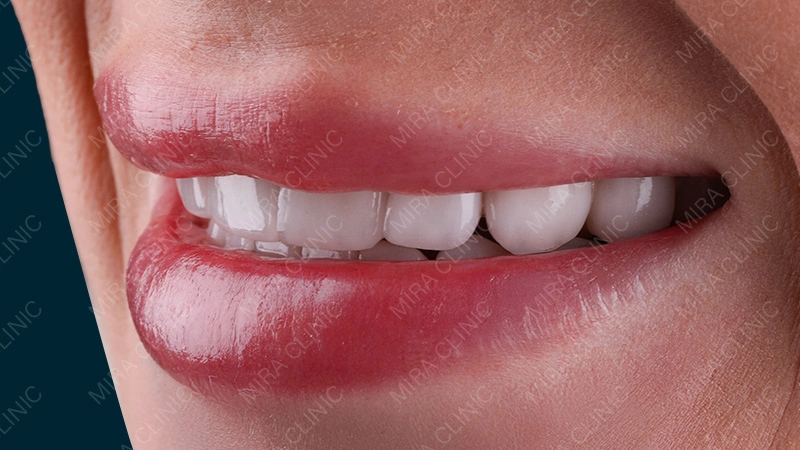
Porcelain-based materials, including E-max, are much more stain-resistant than composite. They are smoother, less porous, and far less likely to absorb external pigments into the material itself.
This does not mean smokers can ignore maintenance, but it does mean the restoration is much better equipped to stay visually stable in a more challenging oral environment.
Why non-porous ceramics hold brightness better over time
Because the surface is denser and less absorbent, smoke-related discoloration is more likely to remain superficial rather than becoming embedded in the restoration.
Why premium ceramics perform better in smoker cases
In smokers, choosing a material with stronger resistance to staining is not just a luxury. It is often part of basic long-term risk management.
Why stain resistance is not the only material question
Even though stain resistance matters, it is not the only issue in smoker cases. Gum stability, bite forces, hygiene, and the way the material behaves in the patient’s specific mouth are all still important.
Why material alone cannot protect a smoker’s smile
A patient can choose the best ceramic available and still run into aesthetic decline if gum health is poor or aftercare is weak. This is why the real enemy of a smoker’s smile is often not staining alone.
The Real Enemy of a Smoker’s Smile: Gum Recession, Inflammation, and Tissue Damage
Why nicotine affects blood flow and gum response
Nicotine restricts blood flow to the soft tissues. That matters because healthy blood supply supports tissue stability, healing, and resistance to inflammation. When circulation is compromised, the gums may not respond as well after cosmetic treatment or during long-term maintenance.
This can make smoking a tissue problem even when the restorations themselves are stable.
How smoking changes healing and tissue stability
Healing may be slower, inflammation may be harder to control, and the gum margin may become less predictable over time in heavy smoker cases.
Why gum changes can age a smile faster than stain changes
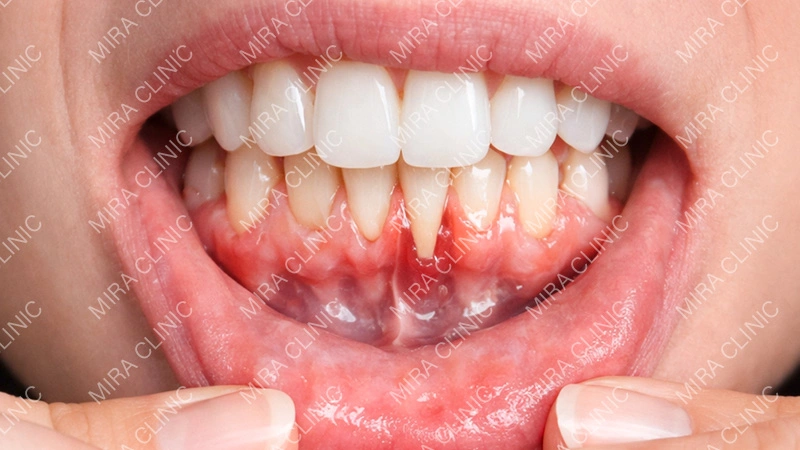
A smile can still look old or unhealthy even when the teeth stay white if the gums begin to recede, darken, or lose symmetry.
How black triangles and gum recession affect expensive veneers
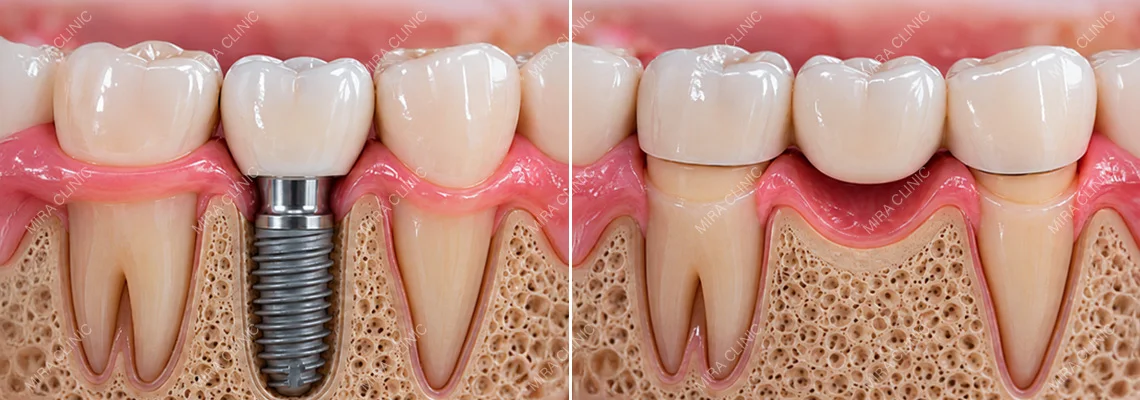
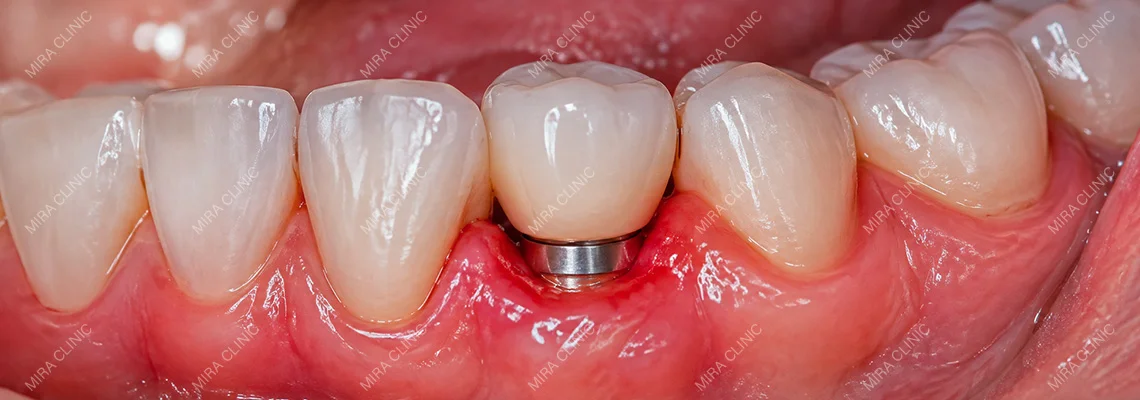
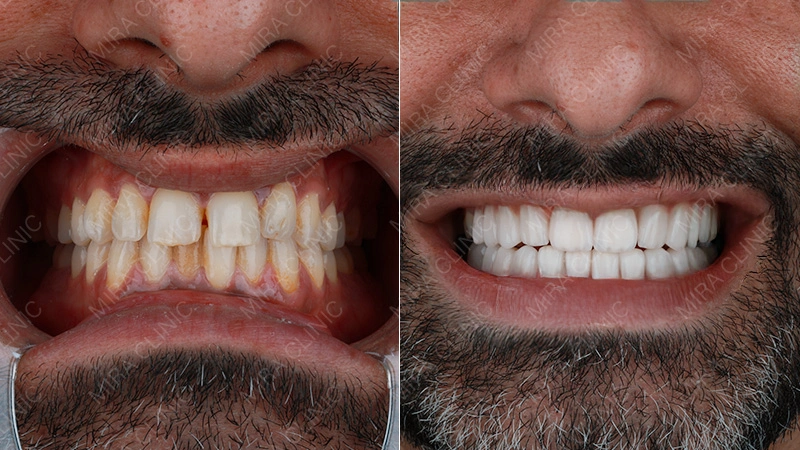
Patients sometimes assume that if the veneers themselves do not stain, the smile is protected. But recession can expose spaces between teeth, change the smile frame, and create what patients often call “black triangles.” These changes can undermine the aesthetics of even premium restorations.
Why the tooth may stay bright while the smile still looks older
The ceramic may remain visually stable, but the loss of gum support and tissue harmony can make the overall smile look less youthful and less polished.
How tissue loss can expose aesthetic weaknesses
A smile designed without enough attention to gum health can begin to show disproportion or spacing problems later if recession develops.
Why heavy smokers may need gum therapy before cosmetic treatment
Some patients should not move straight into veneers or crowns. If the gums are inflamed, unstable, or already showing signs of smoking-related damage, periodontal support may be needed first.
Why healthy tissue matters before smile design begins
A Hollywood Smile is only as stable as the tissue framing it. Good gums are not optional in premium aesthetics.
How pre-treatment periodontal care protects results
By stabilizing the gums before cosmetic work begins, the clinic reduces the chance that the final smile will be compromised by inflammation or recession shortly after placement.
Veneers vs Crowns for Smokers: When Material and Coverage Need to Change
When veneers are still the better choice for smokers
Smokers are not automatically crown candidates. If the teeth are structurally sound and the cosmetic goal is mainly shape and color improvement, veneers may still be the more conservative and aesthetic choice.
Why front-tooth aesthetics may still favor E-max or porcelain
In the visible smile zone, veneers often provide better enamel-like beauty than full-coverage crowns when the teeth are suitable.
When conservative cosmetic treatment remains realistic
If the gums are stable, the teeth are strong, and the bite is manageable, a smoker may still be a good veneer candidate.
When crowns may be safer in smoker cases
If the tooth is already compromised—heavily restored, cracked, worn, or structurally weak—a crown may be the safer route. This is especially relevant if smoking is combined with clenching or bruxism.
Why weak teeth or heavy bruxism may change the recommendation
A tooth that needs structural support should not be forced into a veneer plan just because veneers sound more cosmetic.
When full coverage becomes the safer option
Crowns may be a better answer when strength and protection matter more than minimal reduction.
Why marginal fit matters more in smokers
In smoker cases, precision at the margin becomes even more important. Poorly fitting restorations trap more plaque, stain film, and debris, which can worsen both tissue health and long-term aesthetics.
How poor margins trap stain and plaque more quickly
Smoking increases the likelihood that plaque and film will build up faster. If the margins are rough or imprecise, the problem becomes harder to control.
Why precise lab work helps reduce long-term complications
Good fit is not only about appearance. It helps reduce tissue irritation and makes long-term maintenance more realistic for smoker patients.
Read more: Hollywood Smile vs Veneers vs Crowns: How Dentists Decide What You Actually Need
Which Material Is Better for Smokers: E-max, Zirconia, or Other Porcelain Options?
When E-max is the better option for smoker cases
E-max is often a strong option for the visible front teeth when the patient wants a natural-looking result and the bite conditions allow it. Its aesthetic performance and stain resistance make it attractive in smile-zone restorations.
Why E-max stain resistance matters to smokers
High-quality E-max does not absorb smoke staining the way composite can, which helps protect long-term brightness.
Why aesthetics still matter even in smoker cases
Smokers do not need to accept a lower-level result. They simply need a material and plan that respect their risk profile.
When zirconia may be more suitable for heavy-force or complex cases
Zirconia may become more attractive when smokers also grind their teeth, have higher bite demands, or need more structural confidence in selected teeth.
Why heavier-force cases may lean toward zirconia
The more demanding the function, the more strength may need to enter the material decision.
Why smokers with complex wear patterns may need a different approach
A patient who smokes and grinds is not the same as a smoker with stable function. The plan should reflect that.
Why the best veneers for smokers are chosen tooth by tooth, not by trend
There is no universal “best veneer for smokers.” The best material depends on:
- the tooth position
- the bite
- gum condition
- the patient’s maintenance commitment
- the cosmetic goal
Why a one-material answer is often too simple
Different teeth in the same mouth may need different answers. This is why a case-based plan always beats a trend-based one.
Read more: E-max vs Zirconia Veneers: 2026 Clinical Comparison
The 2026 Maintenance Protocol for Smokers
Why smokers usually need more frequent professional cleaning
Smokers often accumulate stain film and plaque more quickly, which is why many need professional hygiene care more often than non-smokers.
Why 4-month intervals may be better than waiting 6 months
A shorter cleaning interval can help control buildup before it begins to affect the gums or the appearance of the smile.
How regular maintenance reduces film buildup and gum stress
Frequent reviews allow the team to protect both the ceramic surfaces and the surrounding tissues more consistently.
What kind of home care is safer for porcelain restorations
Smokers should use home care that removes film without damaging the ceramic glaze.
Why non-abrasive toothpaste matters
Highly abrasive products may scratch or dull polished surfaces over time, especially in cosmetic work.
How to remove smoker’s film without damaging ceramic glaze
The goal is controlled cleaning, not aggressive scrubbing. The restoration should stay smooth while the film is managed safely.
Why smoking habits after treatment affect the long-term result
Even when the materials are premium, smoking patterns still influence the biological environment of the smile.
Why the first 48 hours matter after bonding or cementation
Early healing and tissue response are important, so temporary smoking reduction right after treatment is often advised.
How delayed staining and tissue stress build over time
The issue is usually cumulative. The more consistently smoking affects the gums and maintenance pattern, the more likely long-term changes become.
Cost-Benefit Analysis: Is a Hollywood Smile Worth It for a Smoker?
Whitening cycles vs a more stable ceramic-based smile plan
Some smokers spend years repeating whitening that never lasts the way they want. For the right candidate, a ceramic-based smile plan can offer more consistent visual stability than repeated whitening alone.
Why whitening may not solve the full smoker problem
Whitening affects natural teeth, but not the underlying gum risks or shape concerns that often matter just as much.
Why a ceramic plan may create a more stable visual outcome
When the case is planned correctly, ceramic restorations can deliver a cleaner and more durable aesthetic base.
Why premium materials may offer better long-term value for smokers
Choosing stronger, more stain-resistant materials often reduces the risk of earlier aesthetic disappointment or more frequent revision.
Why cheaper materials often cost more later in smoker cases
If a material stains faster or needs more frequent correction, the initial savings may disappear quickly.
Why long-term value depends on matching the material to the risk
The smartest investment is not the cheapest one. It is the one most likely to stay attractive and healthy in the patient’s real lifestyle.
Why smoking increases maintenance cost, not just treatment risk
Smokers should think in terms of total upkeep, not just treatment price. More frequent cleaning, more active gum monitoring, and possible protective measures all affect the long-term picture.
How upkeep changes the real ROI over time
The return on investment depends not only on how the smile starts, but on how well it holds up with the patient’s habits.
Why realistic planning matters more than optimistic promises
A strong clinic should explain what smoking changes, not pretend those changes do not exist.
Read more: How NOEL Saved €10,000 on Veneers: 10 Days in Turkey vs €16,000 in Dublin (2026)
Clinical Perspective from Mira Clinic’s Medical Team
How Dr. Muhammed Nur ELMEDENİ approaches smoker cases
According to the clinical approach followed by Dr. Muhammed Nur ELMEDENİ and Mira Clinic’s medical team, smoker cases need more than a standard smile design. They require an honest balance between aesthetics, gum biology, maintenance reality, and long-term stability.
Why Digital Smile Design helps plan around gum and smile risks
Digital planning helps the team study smile line, tooth display, and gum frame more carefully before treatment begins.
Why long-term harmony matters more than short-term brightness
A bright smile that loses tissue support or ages badly is not a successful result. Stability matters as much as whiteness.
Why smoker cases need realistic planning, not just bright veneers
A good plan for a smoker does not pretend smoking has no consequences. It builds around them intelligently.
How Mira Clinic balances material choice, gum health, and maintenance
The goal is to choose materials and designs that work with the patient’s reality while still protecting aesthetics as much as possible.
Why the goal is a smile that stays attractive, not just a smile that starts white
The best cosmetic result is not the one that looks brightest on day one. It is the one that still looks balanced, healthy, and refined later.
Read more: The Gummy Smile Solution: Combining Laser Gum Contouring with Veneers