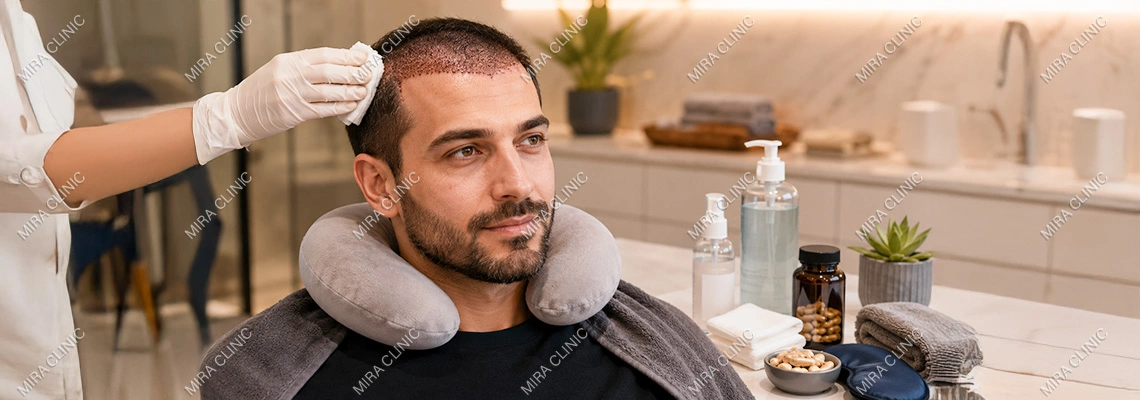
A successful hair transplant does not end when the grafts are placed. The first days after surgery are when those grafts need the most protection, and that is the stage where many patients misunderstand what actually matters. Most do not lose graft security because they skipped a vitamin. They risk it because of friction, scratching, early sweating, poor washing technique, or using products too aggressively before the scalp is ready. ISHRS patient guidance emphasizes that early post-op handling, washing, and grooming behavior are critical because newly transplanted grafts can be disturbed if treated roughly.
That is why a real post-op “survival kit” should not be understood as a shopping list. It should be understood as a recovery framework. Yes, shampoos and nutrition can support healing, but they sit behind the true first priorities: protecting the scalp, following the washing timeline, avoiding unnecessary trauma, and staying in contact with the clinic during recovery. Evidence on post-transplant shampoo use supports mild, non-irritating formulas for sensitive post-op scalp care, while broader supplement evidence shows that vitamins may help when a true deficiency exists, but many hair supplements are heavily marketed despite limited evidence for routine benefit in everyone.
- Quick Answer: To Secure Grafts After Hair Transplant, the First Priority Is Protection, Then Supportive Care
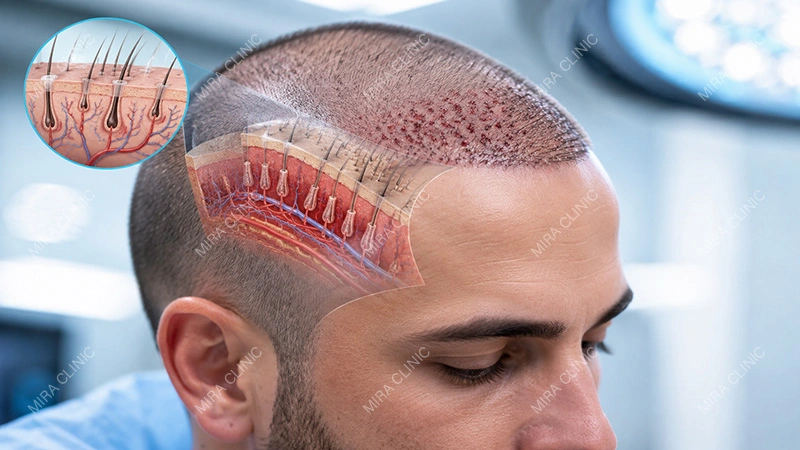
- What “Securing Grafts” Really Means After a Hair Transplant
- The First 10 Days: The Real Foundation of Graft Security
- Best Shampoos After Hair Transplant: What Actually Matters
- Best Vitamins for Grafts: What Supports Recovery and What Is Overstated
- The Real Post-Op Survival Kit: What Helps More Than Products Alone
- What Can Damage Grafts Even If You Use the Right Vitamins and Shampoo
- When to Worry: Signs Your Grafts or Scalp Need Review
- Long-Term Graft Care: How the Clinic Stays Involved After Surgery Day
- Final Verdict: Graft Security Comes from Protection First, Products Second
Quick Answer: To Secure Grafts After Hair Transplant, the First Priority Is Protection, Then Supportive Care
The most important way to secure grafts after hair transplant is to protect the scalp physically during the first 7 to 10 days, wash only as instructed, avoid rubbing or scratching, and use only gentle products that do not irritate healing skin. Vitamins and shampoos can support recovery, but they do not “lock in” grafts by themselves.
In the first days, patients should focus on what helps grafts settle:
- avoiding friction and pressure
- following the clinic’s first-wash instructions
- sleeping carefully
- avoiding sweating and early gym activity
- not picking crusts or scabs
- not introducing harsh shampoos or cosmetic products too early
Vitamins and supportive nutrition matter more as part of healing support than as direct graft-security tools. A supplement may be useful if the patient has a deficiency, but there is no good evidence that random high-dose supplementation guarantees better graft survival. That is why the authority-based way to think about best vitamins for grafts is simple: helpful when clinically indicated, but secondary to disciplined aftercare.
What “Securing Grafts” Really Means After a Hair Transplant
When patients say they want to secure grafts, they usually mean they want to make sure the newly transplanted follicles stay in place, heal properly, and move into the normal shedding and regrowth cycle without being disturbed. That is exactly the right concern. Early graft care is mostly about protection, not stimulation. ISHRS guidance for post-surgical hair care specifically warns that combing, washing, and handling must be done carefully early on to avoid accidentally pulling grafts out.
When grafts are most vulnerable
The most vulnerable period is the immediate post-op phase, especially the first 72 hours and the first week. During this window, unnecessary pressure, scratching, forceful washing, tight headwear, or careless grooming can create avoidable problems. This is why clinics put so much emphasis on sleeping position, first washing technique, and activity restriction.
The first 72 hours
This is the period where the scalp is still fresh, the grafts are newly placed, and the patient should behave most carefully. Rest, protection, and correct hygiene timing matter more than any product choice.
The first 7 to 10 days
By this phase, the grafts are more stable than on day one, but the scalp is still healing. Patients often make mistakes here by assuming they are “safe enough” to resume normal habits too early. That is one reason the first 10 days are often the true foundation of hair transplant graft care.
What helps grafts settle properly
The key supports are simple and not glamorous:
- protecting the scalp from rubbing
- washing gently and on schedule
- avoiding early sweating
- sleeping carefully
- following the clinic’s recovery timeline exactly
Scalp protection
The scalp needs a calm environment more than stimulation. That means no scratching, no aggressive towel drying, and no “checking” the grafts with your fingers.
Gentle hygiene
Washing matters, but technique matters more than lather quality in the first phase. The wrong shampoo with the right technique is still not ideal, but the best shampoo with rough washing is worse.
Following clinic instructions
Hair transplant practice guidelines emphasize variability between clinics and cases, which means the treating surgeon remains best positioned to guide post-op care for that specific patient. That is why generalized internet advice should never override the clinic’s instructions.
What can disturb graft healing
The most common threats are usually behavioral.
Sweating too early
Heavy sweating can increase irritation and complicate the early healing environment, especially if it leads to friction or touching.
Smoking
Smoking can negatively affect healing more broadly, which is one reason clinics commonly advise avoidance in the early recovery phase. Supplement articles and dermatology literature also emphasize that good healing depends on the whole physiologic environment, not just topical care.
Picking scabs
Crusts and scabs are part of healing. Removing them forcefully too early is one of the most preventable mistakes patients make.
Harsh products
Aggressive shampoos, strong anti-dandruff products, and heavily fragranced formulas can be too much for healing skin in the first phase. A post-transplant shampoo study found better compatibility with mild surfactants, calming ingredients, and the absence of potentially irritating components.
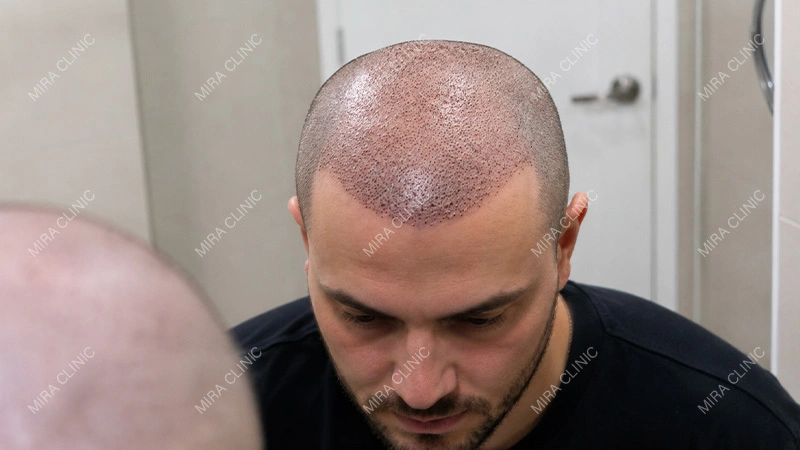
The First 10 Days: The Real Foundation of Graft Security
Most patients want to know when they can stop being careful. The better question is when careful behavior matters most. The answer is the first 10 days.
How to sleep, wash, and move safely
This phase is about giving the grafts a stable healing environment. Head elevation, gentle movement, and careful hygiene all matter here. Even general graft-healing guidance for head wounds emphasizes that sleeping elevated and avoiding pressure can help protect healing tissue.
Head elevation
Sleeping with the head elevated can help reduce swelling and keep pressure off the operated area.
Avoiding impact and rubbing
Avoiding accidental bumps, rubbing from bedding, hats, or hands is one of the most direct ways to protect newly placed grafts.
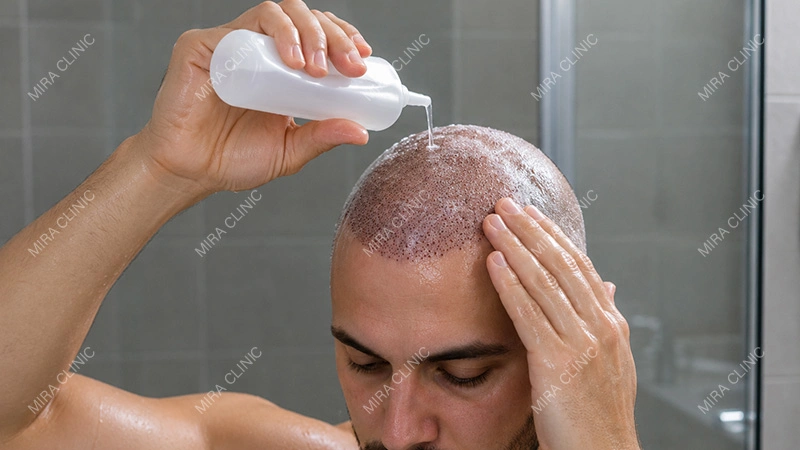
Safe shower timing
The first wash timing should come from the clinic. Early showering is not automatically dangerous, but unsupervised or rough washing can be.
Why the first wash matters more than most products
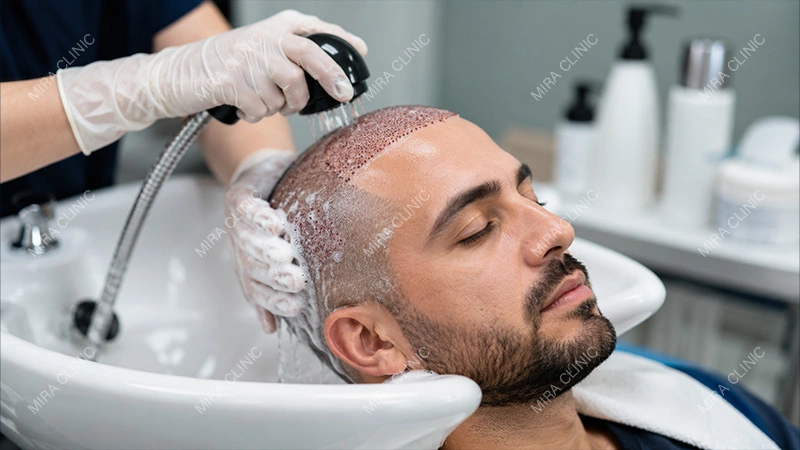
Patients often focus on what shampoo they should buy, but the first wash matters more because it teaches the handling method. The technique used to apply water, foam, and pressure determines much of the early safety profile. ISHRS patient information specifically highlights the importance of washing and combing instructions to avoid dislodging grafts.
How the washing method protects grafts
A gentle, clinic-guided method helps soften crusts gradually without forcing them off or traumatizing the scalp.
Why technique matters more than foam quality
Mild shampoo supports healing, but rough fingertips, direct rubbing, or premature scrubbing can do more harm than the choice between two decent shampoos.
When grafts are considered more stable
Patients should still be cautious after the first few days, but the level of vulnerability does gradually shift.
What changes after day 7
By the end of the first week, the grafts are generally more secure than during the first 72 hours, but that is not the same as “back to normal.” The scalp may still have crusting, redness, and sensitivity.
What still needs caution after day 10
Even after the most fragile stage passes, patients should remain careful about harsh scalp products, vigorous scratching, and overly early return to intense exercise or styling.
Best Shampoos After Hair Transplant: What Actually Matters
There is no single magical shampoo that secures grafts. The best shampoo is the one that helps the scalp stay clean without irritation during healing.
What kind of shampoo is safest in the early phase
The strongest evidence supports mild, non-irritating formulas that are suited to sensitive post-procedure scalp. A published evaluation of a post-hair-transplant shampoo found good compatibility and reduced scabs and erythema, linking those benefits to mild surfactants, calming ingredients, and the absence of potentially irritating substances.
Gentle
A shampoo should cleanse without forcing the scalp into irritation. Mild formulas are preferable early.
Non-irritating
Post-op scalp is not the moment for strong “deep cleansing” products.
Fragrance-light or low-residue formulas
The study on post-transplant shampoo performance specifically points toward the value of avoiding potentially irritating ingredients in early scalp healing.
What ingredients or product types patients should avoid
Patients should be careful with products designed for cosmetic performance rather than healing support.
Harsh detergents
Strong cleansing agents may be too aggressive in the immediate recovery phase.
Strong anti-dandruff actives too early
These may be useful later for specific scalp conditions, but early use should be guided by the clinic rather than assumed to be helpful.
Heavy fragranced or aggressive cosmetic formulas
Heavily fragranced formulas may add irritation potential when the scalp is trying to settle.
When patients can return to normal shampoo
This depends on the healing stage and the clinic’s protocol.
Early healing phase
Use only what the clinic recommends. That is the safest default.
Transition phase
As crusts clear and the scalp normalizes, a broader range of shampoos may become acceptable.
Long-term scalp care
Longer-term hair care should focus on scalp health and minimizing damage, which aligns with broader AAD guidance that hair-care behavior affects overall hair health.
Do medicated shampoos help secure grafts
Not directly. Medicated shampoos may help with specific scalp problems when indicated, but they do not replace correct early graft care.
When they may help scalp health
If the patient later develops dandruff or scalp irritation, medicated care may play a role under guidance.
Why they are not a replacement for technique and timing
A good shampoo cannot compensate for rough washing, sweating too early, or repeated scalp trauma.
Best Vitamins for Grafts: What Supports Recovery and What Is Overstated
Patients often ask about best vitamins for grafts, but supplements should be discussed with discipline rather than hype.
Do vitamins help graft survival directly
The most honest answer is: not directly in the simplistic way many ads suggest. Vitamins support the body’s healing systems and overall hair health, but there is not strong evidence that routine supplements by themselves “secure” grafts. ISHRS notes the importance of nutrients for hair health generally, but dermatology reviews also stress that evidence is limited for many marketed supplements and that benefit is strongest when there is a true deficiency or indication.
Why nutrition supports healing
Healing depends on overall physiologic health, and adequate nutrition is part of that.
Why no vitamin can “lock in” grafts by itself
Grafts are secured by surgical placement and protected by good aftercare. Supplements do not replace those fundamentals.
Which vitamins are most often discussed after hair transplant
Several nutrients are commonly discussed in the hair-health context, including biotin, vitamin D, vitamin C, zinc, and iron when clinically indicated. ISHRS patient education also discusses vitamins and minerals in relation to hair growth and overall hair health.
Biotin
Biotin is one of the most marketed hair supplements, but broad supplement reviews caution that routine use is often not evidence-based unless deficiency or specific indication exists.
Vitamin D
Vitamin D status may matter for general health and possibly hair biology in some patients, but supplementation should still be need-based.
Vitamin C
Vitamin C plays a role in normal healing physiology, but again, that does not make high-dose supplementation automatically necessary for everyone.
Zinc
Zinc is often included in hair supplements, though real benefit depends on the patient’s baseline nutritional status.
Iron when clinically indicated
Iron is especially important to consider only when deficiency is relevant, not as a default supplement for all patients.
When supplementation makes sense and when it does not
The most evidence-based view is that supplementation makes more sense when it responds to an identified need rather than a marketing trend.
Deficiency-based support
If a patient has a deficiency, targeted supplementation may support broader hair and healing health.
Why random high-dose supplementation is not always useful
Reviews of skin, hair, and nail supplements warn that evidence is sparse for many products and that indiscriminate supplement use is not automatically safe or beneficial.
How to think about vitamins in an authority-based way
The best framework is simple.
Support recovery
Nutrition matters for healing.
Do not replace medical aftercare
Supplements support recovery; they do not substitute for scalp protection.
Use based on need, not hype
That is the most medically responsible way to discuss best vitamins for grafts.
The Real Post-Op Survival Kit: What Helps More Than Products Alone
The best post-op kit is practical, not glamorous.
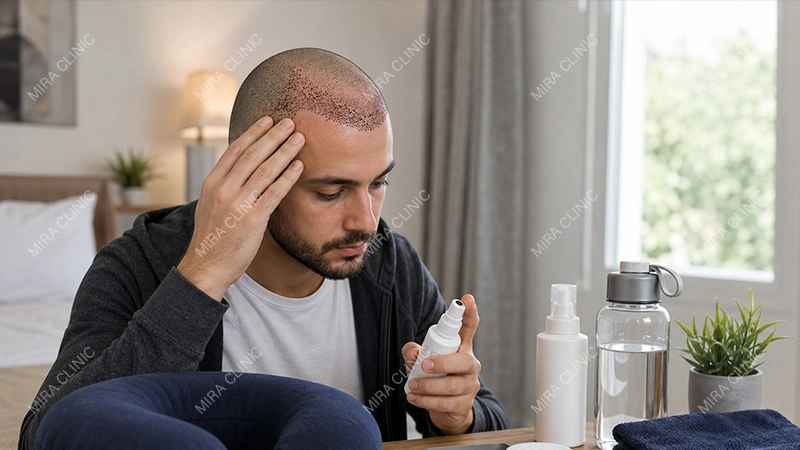
The essential medical aftercare items
Most patients benefit more from simple, clinic-directed tools than from elaborate product stacks.
Clinic-approved shampoo
A mild shampoo is often the most important scalp product early on.
Saline or spray if advised
Use only if part of the clinic’s specific protocol.
Medication schedule
Pain relief and other prescribed medications matter when indicated, and following the schedule helps keep recovery controlled.
Clean pillow setup
A calm sleep environment and clean pillowcase help support careful early healing. General head-graft care guidance also supports sleeping elevated and minimizing pressure.
The lifestyle factors that protect grafts
These are often more important than products.
Hydration
General post-op recovery is supported by normal hydration and overall health maintenance.
Sleep
Good rest supports overall healing behavior.
Avoiding smoking and alcohol early
These are commonly restricted early because healing conditions matter more than short-term comfort habits.
Avoiding gym and sweating too soon
Early sweating and friction risk are practical threats to a healing scalp.
The recovery habits patients often underestimate
The most underestimated habits are usually the simplest.
Not touching the grafts
Still one of the most important rules.
Not panicking at scabs
Crusting is often part of normal healing.
Following the timeline exactly
The clinic’s timing matters more than internet improvisation.
What Can Damage Grafts Even If You Use the Right Vitamins and Shampoo
Even the right products cannot rescue poor aftercare behavior.
Mechanical damage
Physical disruption remains one of the clearest avoidable risks.
Scratching
This can traumatize healing sites.
Rubbing
Rough towel use, pillow friction, or fingers can all create problems.
Tight hats too early
Anything that compresses or rubs the grafted area too early should be approached cautiously and only with clinic guidance.
Biological and behavioral risks
Some risks are not about products at all.
Poor healing habits
Ignoring washing instructions or resuming routine too quickly can undermine good surgery.
Smoking
Smoking may undermine the healing environment more broadly.
Ignoring inflammation or infection signs
Early communication matters if the scalp looks wrong rather than simply “post-op normal.”
Why products cannot compensate for poor aftercare
This is the main authority point of the whole article.
Supplements are supportive
They may help the body, not replace proper recovery conduct.
Healing discipline is foundational
That is what truly helps secure grafts after hair transplant.
Read more: Sapphire FUE vs. Traditional FUE in Turkey: Why Blade Precision Matters for Healing and Results
When to Worry: Signs Your Grafts or Scalp Need Review
Patients should know the difference between normal recovery and warning signs.
What is normal after surgery
Several findings are commonly expected early on.
Scabbing
Usually normal in the early stage.
Redness
Often expected to some degree.
Mild tenderness
ISHRS notes that most patients report no more than mild discomfort after surgical hair restoration.
What may need clinic review
Some findings deserve attention rather than passive waiting.
Persistent bleeding
This should be discussed with the clinic.
Pus or unusual discharge
This is not typical and should be reviewed.
Severe swelling
Marked swelling beyond expected recovery should be reported.
Unexpected pain
Worsening or disproportionate pain deserves assessment.
Why early communication matters
Timely follow-up helps protect both the grafts and the patient’s confidence.
Protecting graft health
Small problems are easier to manage early.
Reducing anxiety
Post-op worry is common, and direct review prevents guesswork.
Preventing small issues from growing
That is part of good hair transplants after care.
Read more: Why Do Hair Transplants Fail? 5 Critical Mistakes to Avoid Before Flying to Turkey
Long-Term Graft Care: How the Clinic Stays Involved After Surgery Day
A good clinic should not disappear once the grafts are placed.
Why a good clinic should guide the whole recovery timeline
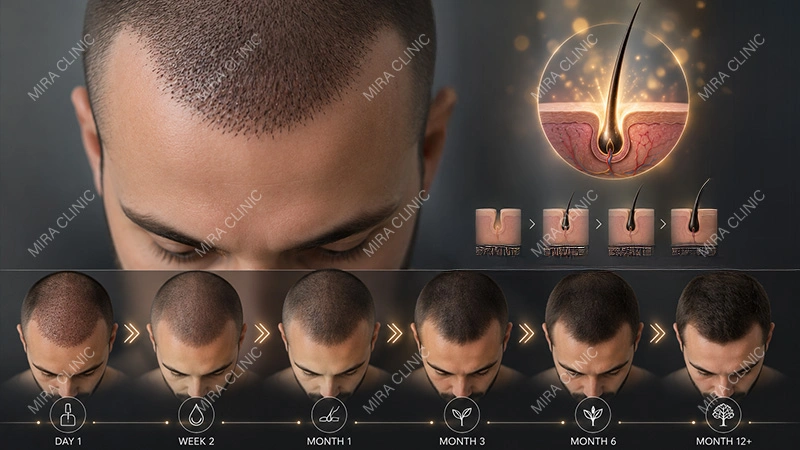
Hair restoration is a staged process that includes healing, shedding, and regrowth, not only surgery day. ISHRS patient materials and recent clinical pathway work both support the value of structured post-op education and follow-up.
Not just day-of-surgery care
Patients need guidance after they leave the procedure room.
Support through shedding and regrowth
The shock-loss phase is often emotionally difficult, and strong follow-up helps patients understand what is normal.
How follow-up supports confidence and better decisions
Post-op questions often involve products, timeline, and normal recovery behavior.
Product guidance
This prevents patients from overusing trendy supplements or harsh shampoos.
Recovery review
Photo-based or visit-based review helps keep recovery on track.
Timeline reassurance
Patients benefit from knowing that shedding, delayed growth, and gradual change are part of the expected process.
Why long-term partnership matters in hair restoration
This article’s core idea is exactly that: the clinic should be a long-term partner, not a one-day surgery provider.
Healing
Good support protects healing quality.
Growth
The visible result takes months, not days.
Maintenance planning
Hair restoration is strongest when the clinic helps patients think beyond the immediate procedure.
Final Verdict: Graft Security Comes from Protection First, Products Second
The most important message is simple: graft security after hair transplant comes from physical protection first, supportive care second. The scalp needs calm handling, correct washing, patience, and disciplined aftercare far more than it needs an impressive supplement stack.
Shampoos and vitamins can help when they are chosen sensibly. A mild shampoo can support healing comfort, and supplements may support recovery when they match a real need. But neither can compensate for friction, early sweating, poor washing, or ignoring the clinic’s instructions.
That is why the best clinics do more than perform surgery. They guide the patient through the entire recovery arc. In hair restoration, the strongest long-term partner is the clinic that helps you protect the grafts after surgery day, not just place them during it.
Read more: DHI vs FUE for Hair Density: Which Technique Gives Thicker Results in Turkey