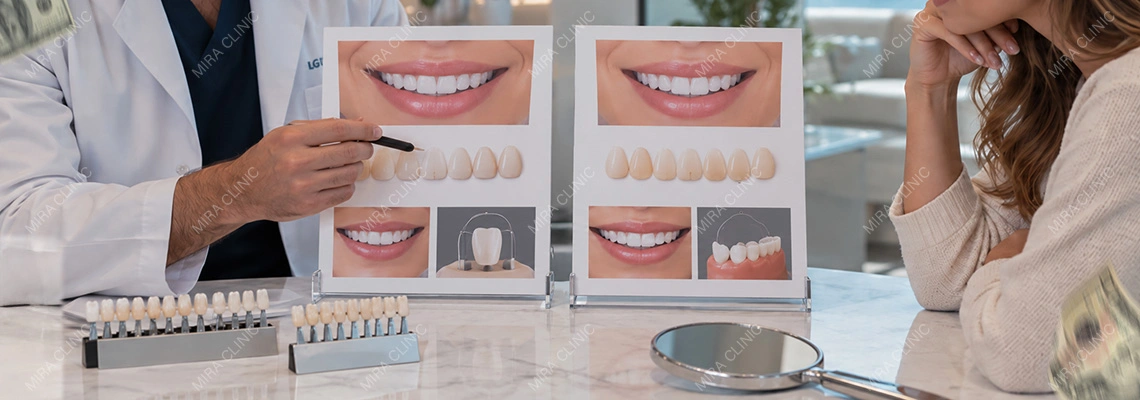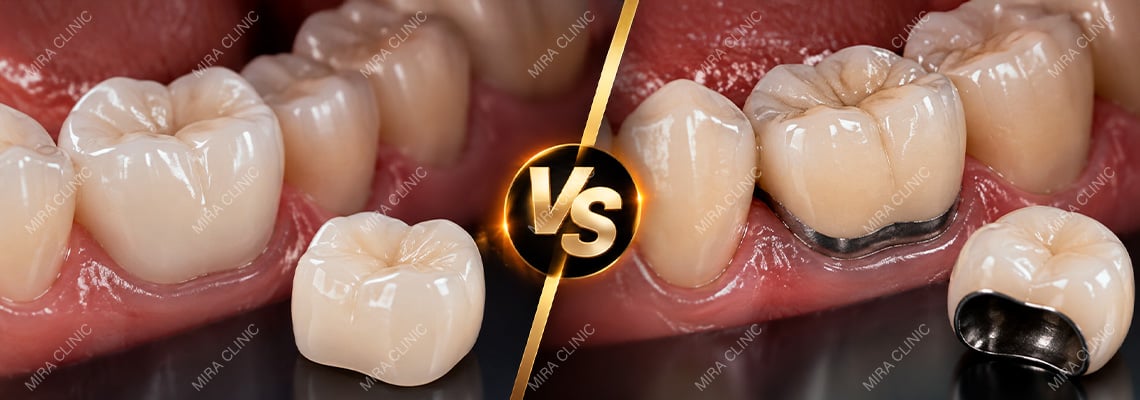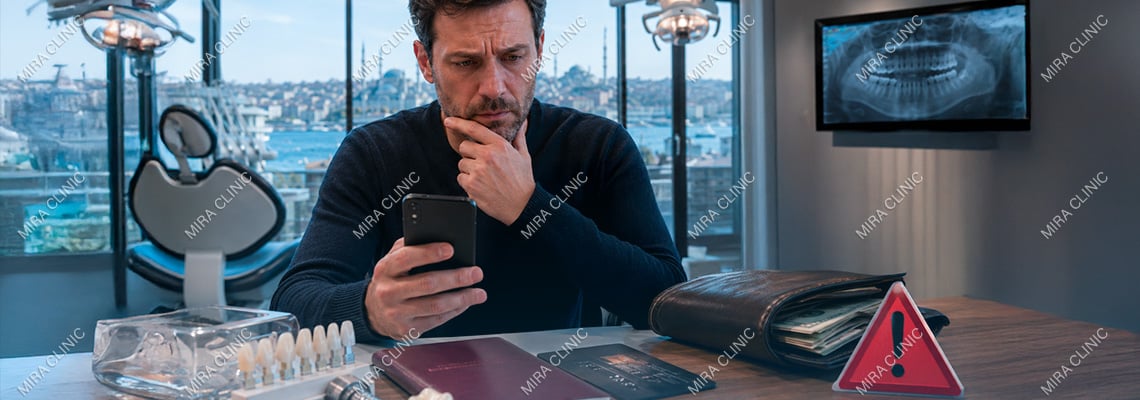
A low dental quote is not automatically a bad sign. Many patients travel to Turkey because they are looking for better value, not because they want to take medical risks. That is a reasonable goal. But the problem begins when price becomes the only thing being compared. In cosmetic and restorative dentistry, the cheapest-looking quote can sometimes be the least clear, the least complete, and the least medically reliable.
This is why patients should treat a dental quote as a medical planning document, not as a shopping receipt. A proper quote should explain what treatment is being proposed, why it is being recommended, what materials will be used, what diagnostics are included, and what may change after clinical evaluation. A weak quote, by contrast, often looks simple, attractive, and easy to understand at first glance, but leaves out the details that matter most once treatment actually begins.
- Quick Answer: A Cheap Dental Quote Is Not Always Unsafe — but Missing Clinical Detail Is a Major Warning Sign
- The “Marketing Quote” vs. the “Medical Quote”: What Is the Difference
- Red Flag #1: A Fixed Price Before Proper Diagnosis
- Red Flag #2: Vague Material Specifications
- Red Flag #3: Missing Essential Clinical Costs
- Red Flag #4: Unrealistic Timelines and the “Express Smile” Promise
- Red Flag #5: The Disappearing Warranty
- Broker Quote vs Clinic Quote: Why the Source of the Price Matters
- What a Professional Dental Quote Should Include
- How to Vet a Clinic in Istanbul Beyond Instagram Photos
- Why Quality Dentistry Has a Floor Price
- Final Verdict: A Safe Quote Should Explain the Medicine, Not Just the Price
Quick Answer: A Cheap Dental Quote Is Not Always Unsafe — but Missing Clinical Detail Is a Major Warning Sign
A cheap quote does not automatically mean the clinic is unsafe. In some cases, a clinic may simply have lower overhead, stronger internal efficiency, or a more competitive pricing model. The real warning sign is not low price by itself. The real warning sign is a quote that is too vague, too fixed, too fast, or too incomplete for real medical planning.
Patients should be cautious if the quote does not clearly explain:
- how the treatment was decided
- whether X-rays or scans were reviewed
- what materials and brands are being used
- what is included and what is extra
- how many visits or days are required
- what happens if the plan changes after diagnosis
- whether warranty terms are written clearly
That is the key difference between a marketing quote and a medical quote. A serious clinic should help the patient understand the plan, not just react to a price.
The “Marketing Quote” vs. the “Medical Quote”: What Is the Difference
One of the best ways to judge a dental quote is to ask what kind of quote it really is. Some quotes are created mainly to attract attention. Others are created to guide treatment safely.
What a marketing-driven quote usually looks like
A marketing quote often focuses on simplicity and speed. It may present a single attractive number, a short package description, and a promise of an easy smile transformation. This can look appealing, especially to international patients who are comparing several clinics quickly.
Package language
These quotes often use phrases such as:
- full smile package
- all-inclusive deal
- VIP treatment offer
- fixed veneer package
The problem is not the packaging itself. The problem is when the packaging replaces medical detail.
Vague promises
A marketing quote may promise:
- perfect Hollywood Smile
- full transformation
- premium veneers
- natural white smile
without explaining what those words mean clinically.
No clear diagnosis
If no one has reviewed your scans, photos, bite, gum condition, or existing dental work properly, then the quote may not reflect your real needs at all.
What a medical quote should look like
A medical quote may be less exciting at first glance, but it is usually more useful and more trustworthy. It should explain the proposed treatment in a structured way and show that the clinic is thinking clinically, not only commercially.
Clinical assessment
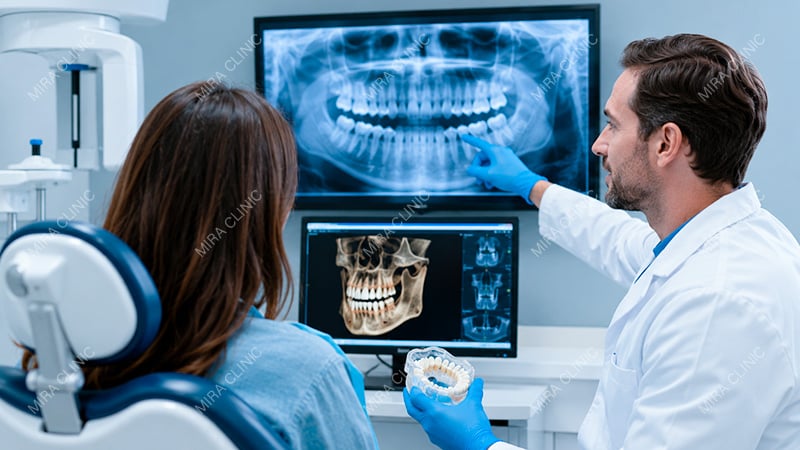
A proper quote should reflect actual case evaluation, whether from X-rays, intraoral scans, photos, or a combination of these.
Defined treatment scope
It should state what is being proposed clearly:
- veneers or crowns
- number of teeth
- any gum treatment
- any extractions
- any root canal or restorative work if needed
Clear inclusions and exclusions
A trustworthy quote should make it easier to understand what you are paying for and what may be billed separately if the diagnosis changes.
Why this difference matters more in dental tourism
This distinction matters in any country, but it matters even more in Turkey dental travel because the patient is often:
- booking from abroad
- making decisions fast
- comparing multiple clinics remotely
- working within a short travel window
Travel risk
If the quote is weak, the patient may only discover the real treatment complexity after arrival.
Limited treatment window
A short travel plan increases the pressure. That means vague quotes become more dangerous, not less, because there is less time to recover from confusion.
Red Flag #1: A Fixed Price Before Proper Diagnosis
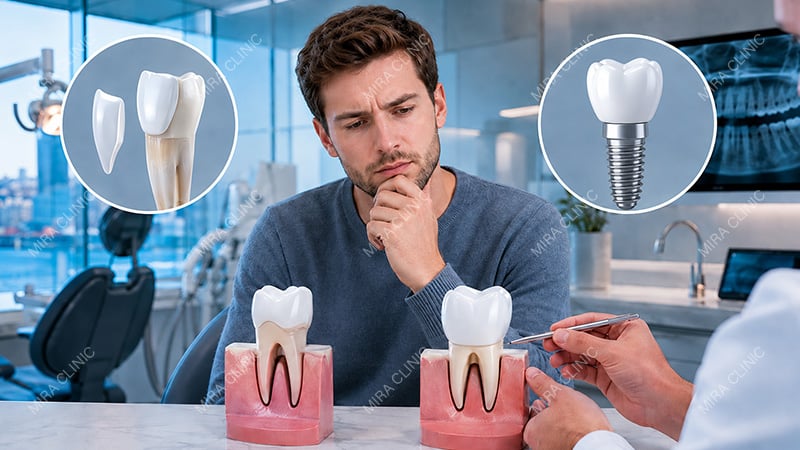
One of the clearest warning signs is a clinic offering a fully fixed treatment price before properly evaluating your case.
Why no responsible clinic should finalize treatment without clinical review
Dentistry is not one-size-fits-all. Even patients asking for the “same” treatment may need very different clinical plans depending on the condition of their teeth, gums, restorations, bite, and bone support.
X-rays
Without X-rays, a clinic may miss:
- hidden decay
- root problems
- bone issues
- previous dental work complications
Scans
Intraoral scans help show alignment, spacing, tooth position, and how a smile design may actually sit in the mouth.
Tooth and gum condition
Healthy-looking teeth in photos may still have clinical issues that affect whether veneers, crowns, or other treatment is appropriate.
Why bone, bite, and existing restorations can change the plan
Some patients need only cosmetic treatment. Others may need:
- bite correction
- fillings first
- gum contouring
- replacement of old restorations
- root canal treatment before cosmetic work
Why your quote may change after diagnosis
A quote changing after proper diagnosis is not always a red flag. Sometimes it is a sign that the clinic is finally working from real information rather than assumptions.
Why that is not always a bad sign
A realistic revised quote is often safer than a suspiciously fixed one. Good dentistry adapts to the patient, not to the advertising template.
Read more: Biomimetic Dentistry in Turkey: How Mira Clinic Preserves Your Natural Enamel
Red Flag #2: Vague Material Specifications
If a quote only says “porcelain,” “veneers,” or “ceramic” without further detail, patients should pause.
Why “porcelain” or “veneers” is not enough information
These labels are too broad. They do not tell you what material is actually being used, what level of quality is expected, or how that material may perform over time.
Material type
Different types of ceramics behave differently in:
- translucency
- strength
- longevity
- aesthetic realism
Brand
Brand traceability matters because it helps patients and clinicians understand what was used and why.
Lab quality
A good material can still perform poorly if the laboratory work is weak.
Why brand traceability matters in aesthetic dentistry
Aesthetic dentistry depends on consistency, predictability, and future maintenance planning.
Durability
Material quality can affect how restorations wear, chip, or hold polish over time.
Matching
If one restoration needs replacement later, known materials make shade and fit matching easier.
Future maintenance
A clinic that cannot explain the material clearly may also struggle to support long-term follow-up confidently.
How unclear materials can affect long-term results
Weak material communication often means weak transparency elsewhere too.
Breakage risk
Low-grade or unclear ceramics may be less predictable in demanding cosmetic cases.
Gum response
Poor fit or poor finishing may irritate the gums, even if the material name sounded acceptable.
Appearance over time
A restoration that looks fine at first may age poorly in texture, brightness, or realism if the material and lab quality were not strong.
Read more: E-max vs Zirconia Veneers: 2026 Clinical Comparison
Red Flag #3: Missing Essential Clinical Costs
Some quotes look cheap because they leave out parts of the treatment that many patients assume are already included.
The diagnostic trap: Are scans and consultations included
A low quote may exclude the very steps needed to make the treatment safe.
X-rays
If X-rays are not included, patients should ask whether diagnosis is actually part of the plan.
3D scans
Modern planning often benefits from detailed digital evaluation, especially in cosmetic cases.
Smile planning
Smile design is not only about color and shape. It is also about fit, bite, and facial integration.
The temporary teeth factor
In many cosmetic cases, especially when lab work takes time, temporary restorations are part of the treatment journey.
What happens while the final restorations are being made
Patients may need temporaries for comfort, appearance, and function.
Why temporaries should be explained clearly
If temporary teeth are not mentioned, the patient should ask whether they are included, optional, or billed later.
Medications and aftercare costs
Aftercare is part of treatment, not a side issue.
Pain management
Patients should know whether basic pain relief is part of the treatment package or not.
Antibiotics
When antibiotics are clinically appropriate, their cost and role should be explained clearly.
Post-op instructions
A good clinic provides more than medicine. It provides clear aftercare guidance too.
What other hidden costs often appear later
Some quotes exclude additional procedures that may become “suddenly necessary” after arrival.
Additional treatments
These may include unplanned restorative work before the cosmetic phase begins.
Extractions
If hopeless teeth need removal, that changes both the price and the treatment logic.
Gum contouring
Smile design sometimes requires soft tissue work, but not every quote includes it upfront.
Root canal or fillings if needed
These are important because they can significantly change both time and cost.
Red Flag #4: Unrealistic Timelines and the “Express Smile” Promise
A quote can also be suspicious if the timeline sounds too fast for the biology involved.
Why biology still matters even in cosmetic dentistry
Cosmetic dentistry may look quick in advertising, but real tissues still need proper sequencing and respect.
Soft tissue healing
If gum treatment is involved, the timing between procedures may matter.
Adjustment periods
A bite sometimes needs adaptation and refinement, not instant finalization.
Proper staging
Some cases need to be staged carefully rather than rushed into a perfect smile package.
Why some full-smile promises are too fast to be clinically believable
When a clinic promises a full Hollywood Smile in an extremely compressed timeline for every patient, that should raise questions.
Treatment sequencing
Not every patient can safely move through the same sequence at the same speed.
Lab time
Good lab work takes time, especially when adjustments are needed.
Healing time when extra procedures are involved
If gum contouring, extractions, or other biological procedures are included, rushed scheduling may become a warning sign.
When a short timeline is realistic and when it is a warning sign
Short timelines are not automatically wrong. Some cases are simple and suitable for efficient treatment windows.
Simple cases
A straightforward veneer case may genuinely fit a short international treatment schedule.
Complex cases
A complex restorative case presented as a “fast cosmetic package” deserves much closer scrutiny.
Red Flag #5: The Disappearing Warranty
Patients often hear reassuring words about warranty before booking, but what matters is not the promise itself. It is the documentation behind it.
Why a verbal promise is not the same as a written warranty
Many patients hear phrases like:
- guaranteed smile
- lifetime quality
- full support
- long-term protection
These sound reassuring, but they do not mean much unless they are written clearly.
Marketing language
Marketing language is designed to persuade. It is not the same as a defined clinical or legal document.
Actual documentation
A serious clinic should be able to explain what is covered, for how long, and under what conditions.
What a serious warranty discussion should include
A proper warranty conversation should be specific rather than emotional.
Coverage
What does the clinic actually cover: breakage, debonding, remakes, or only limited situations?
Conditions
What does the patient need to do to keep the terms valid?
Time frame
How long does coverage last for the specific restorations being proposed?
What voids it
Patients should know what kinds of misuse, neglect, or external treatment may invalidate it.
Why international patients need written clarity
Travel patients face extra complexity if a problem appears later.
Remote follow-up
Can the clinic assess issues remotely first before asking the patient to travel again?
Travel-based complications
Who covers what if a review is needed after the patient has returned home?
Who pays for what
This matters more than the existence of a “warranty” word in a brochure.
Read more: Hollywood Smile Aftercare: The Professional 10-Year Maintenance Protocol
Broker Quote vs Clinic Quote: Why the Source of the Price Matters
Another major warning sign is not only what the quote says, but who it comes from.
When the quote is coming from a sales team, not a dentist
Some quotes are created by sales coordinators, brokers, or agencies before a dentist has truly reviewed the case.
Clinical blind spots
If no clinician has reviewed the case properly, important dental realities may be missing.
Overpromising risk
A sales-first quote may sound confident because it is optimized for conversion, not for treatment safety.
Why broker-driven package quotes can miss medical details
Broker-led systems often rely on standard package assumptions rather than individual diagnosis.
Generic treatment assumptions
They may assume all patients wanting a Hollywood Smile need the same thing.
Limited customization
This becomes risky when the real case needs a different material, a different number of teeth, or additional treatment first.
How to tell whether you are speaking to a clinic or an intermediary
Patients should not feel awkward asking who is actually responsible for the quote.
Who signs the plan
A real clinic should be able to show who is clinically responsible for the plan.
Who answers medical questions
If every answer sounds commercial but no one can explain the treatment medically, that is important information.
What a Professional Dental Quote Should Include
A good quote is not only about avoiding danger. It should also help the patient feel informed and grounded.
Diagnosis and imaging
The quote should reflect that the clinic has considered your actual dental condition, not just your aesthetic goal.
Exact treatment scope
It should define:
- how many teeth
- what type of restorations
- what additional procedures may be needed
Material and brand details
The quote should identify the material clearly enough that the patient understands the plan.
Timeline and number of visits
A trustworthy quote explains how many appointments or days may be needed and why.
Temporary restorations if applicable
If temporary teeth are part of the process, that should be stated clearly.
Medication and aftercare
Aftercare should not feel like an afterthought added after arrival.
Warranty or revision terms
These should be written clearly rather than mentioned vaguely.
Clear exclusions and possible additional costs
Patients should know what is not included and under what circumstances the quote might change.
How to Vet a Clinic in Istanbul Beyond Instagram Photos
Many patients begin with social media, but photo quality is not treatment quality.
Why before-and-after photos are not enough
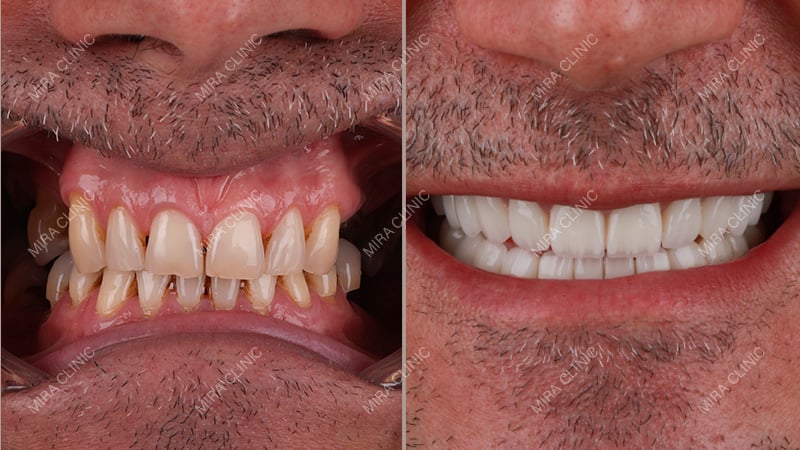
Photos can be useful, but they are limited.
Editing
Images can be filtered, brightened, or selectively presented.
Selective cases
A gallery may show only the easiest or most dramatic wins.
No clinical context
Photos rarely tell you what treatment was actually done, what the materials were, or how the result aged over time.
What real trust signals look like
Stronger trust signals go beyond polished social presentation.
Licensed clinic identity
Patients should know the actual clinic they are dealing with.
Named clinicians
A trustworthy clinic should not hide who is clinically responsible.
Real patient videos
Video testimonials often reveal more than edited still images.
Case-based explanations
Clinics that can explain the logic behind cases usually inspire more trust than those showing only aesthetic outcomes.
How to ask smarter questions before booking
Better questions often produce better clarity than simply asking “What is your price?”
Who designed the plan
Was it a dentist, a coordinator, or a broker?
What is included
Patients should ask for itemized clarity, not only package language.
What happens if the plan changes
This is one of the most important questions in dental tourism.
Why Quality Dentistry Has a Floor Price
Healthcare can be competitively priced. But there is still a practical lower limit below which the quote should be examined much more carefully.
What real cosmetic dentistry actually costs
A proper cosmetic case includes more than visible final veneers or crowns.
Diagnostics
Scans, X-rays, photos, and planning all cost time and resources.
Materials
Quality ceramics and restorative systems are not interchangeable with vague low-cost substitutes.
Lab work
Strong lab work is one of the biggest quality factors in aesthetic dentistry.
Sterilization
Safe dentistry requires more than technical skill. It requires controlled medical standards too.
Experienced clinicians
Skill, judgment, and planning expertise are part of the real cost of treatment.
Why very low pricing often signals hidden compromise
An extremely low quote does not always prove danger, but it should trigger more questions, not fewer.
Cheap materials
This is one possible hidden compromise.
Minimal diagnostics
Another is reducing planning to keep the price attractive.
Weak lab quality
Poor lab work can affect fit, appearance, and longevity.
Overtreatment or rushed treatment
Sometimes low prices are balanced by speed, volume, or excessive treatment recommendations.
Why value matters more than the lowest number
Price matters, but value matters more.
Long-term cost
A weak treatment that needs revision later may become more expensive than the better quote you rejected.
Revision risk
Compromised treatment planning often creates higher correction risk.
Biological safety
The lowest quote is not a good deal if it ignores the health of your teeth, gums, or bite.

Final Verdict: A Safe Quote Should Explain the Medicine, Not Just the Price
The best quote is not always the cheapest one. It is the one that explains the treatment clearly, uses transparent language, defines its materials and terms, and makes the patient feel more informed rather than more confused.
Why the best quote is not always the cheapest
A very low number can be attractive, but if it hides uncertainty, missing steps, or vague materials, it may not represent value at all.
Why good clinics explain treatment, materials, and limits clearly
Good clinics know that trust grows from clarity. They do not need the quote to sound artificially simple if the real case is more complex.
Why a trustworthy dental quote should reduce confusion, not create it
A proper dental quote should leave the patient with a better understanding of their case, their options, and the likely treatment journey. If the quote creates more uncertainty than confidence, that is often the first warning sign of all.
Read more: In-House Dental Lab vs. Outsourcing: Why Precision Starts Inside the Clinic