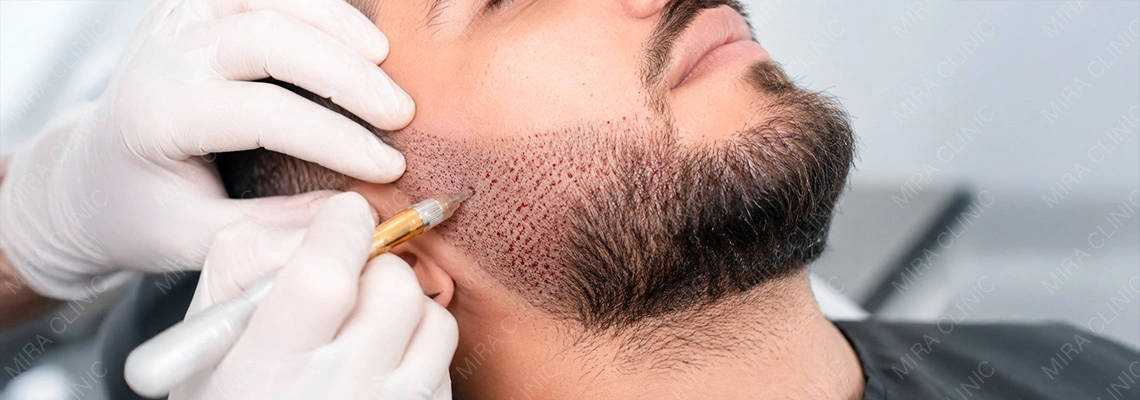
A beard is no longer a minor style detail. For many men, it is part of identity, presence, and facial definition. A stronger beard line can sharpen the jaw, balance facial proportions, and create a more mature and masculine profile. That is why patchy growth often feels more personal than people expect. The issue is not only missing hair. It is the feeling that the beard never fully matches the image the patient wants to project.
This is one reason beard transplant Istanbul searches have grown so quickly. Men are not only looking for hair transfer. They are looking for a beard that looks naturally theirs, not implanted, artificial, or overly dense in the wrong places. In that sense, beard restoration is not just a medical procedure. It is an exercise in facial design. At Mira Clinic, the approach is built around that principle: a beard transplant should be treated as an art form guided by surgical precision, not as a simple graft-count exercise.
- Quick Answer: A Natural Beard Transplant Depends More on Angle, Design, and Graft Placement Than on Graft Count Alone
- The Evolution of the Modern Beard Profile
- Why Precision Matters Most in Facial Hair Restoration
- DHI vs Sapphire FUE: Choosing the Best Tool for Your Beard
- Designing the Perfect Beard Line at Mira Clinic Istanbul
- The Experience for International Patients in Turkey
- Recovery and Growth: What to Expect Post-Procedure
Quick Answer: A Natural Beard Transplant Depends More on Angle, Design, and Graft Placement Than on Graft Count Alone
A beard transplant can create a fuller, stronger-looking beard, but the most natural results do not come from placing the most grafts possible everywhere. They come from placing the right grafts in the right direction, at the right density, and along the right facial lines. That is why men who want natural beard transplant results should care as much about beard design and graft direction as they do about the number of follicles being moved.
In practical terms, a natural beard result depends on:
- proper beard-line design
- correct cheek and jawline flow
- careful use of single-hair grafts in visible zones
- matching the natural exit angle of facial hair
- balanced density across the mustache, chin, jawline, and sideburns
This matters because facial hair is judged differently from scalp hair. A hair transplant on the scalp can hide small technical compromises more easily. A beard cannot. The beard sits in the center of the face, close to the skin, and visible from conversation distance. That is why precision matters more here than many patients realize.
The Evolution of the Modern Beard Profile
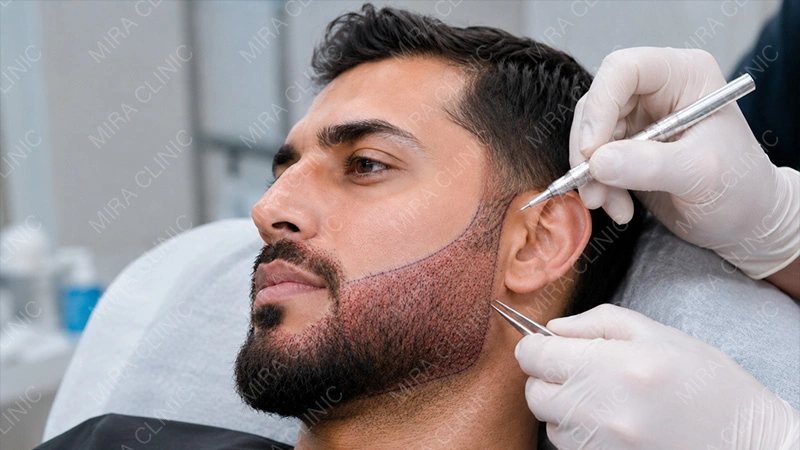
The modern beard has become one of the clearest grooming markers of masculine styling. For some men it creates maturity. For others it improves facial framing or helps define the chin and jawline. In either case, beard density now carries both aesthetic and psychological weight. When the beard grows unevenly or appears patchy, the problem often feels more frustrating than cosmetic.
Many men with inconsistent beard growth try to solve the issue with trimming tricks, beard products, or strategic styling. Sometimes that helps, but it does not fix missing density. That is why patchy beard fix Istanbul has become a real treatment-driven search intent rather than a styling question. Patients want permanent improvement, not temporary camouflage.
Istanbul has become a major center for facial hair restoration partly because international patients now want specialized aesthetic work rather than basic transplantation. In beard cases especially, men are not looking only for coverage. They want shape, flow, definition, and a beard that looks believable in real life. At Mira Clinic, that is why beard restoration begins with facial analysis and design logic rather than just donor counting.
Why Precision Matters Most in Facial Hair Restoration
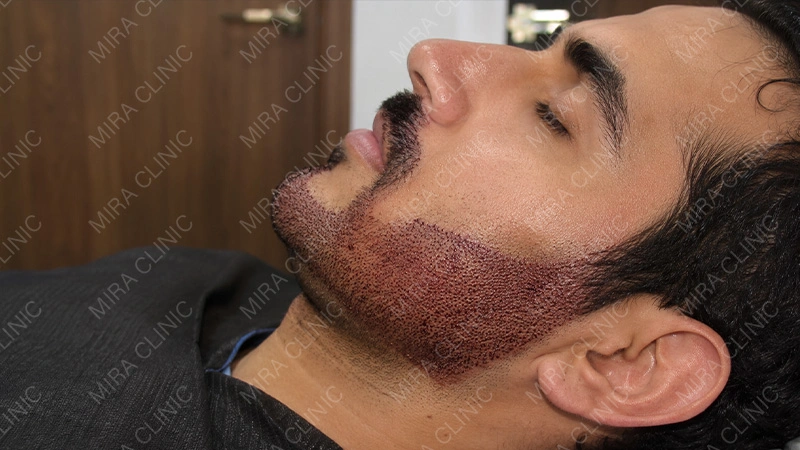
Facial hair restoration is less forgiving than many other transplant procedures because every technical detail is visible. A beard that is too dense in the wrong area, too straight in angle, or too uniform in pattern can look artificial immediately. That is why beard transplantation depends heavily on surgical finesse.
Why facial hair behaves differently from scalp hair
Facial hair does not grow with the same visual pattern as scalp hair. The density transitions, directional flow, and follicular arrangement across the cheeks, chin, sideburns, and mustache all behave differently. Beard restoration must respect those transitions if the final result is going to look natural rather than stamped onto the face.
The beard also sits closer to visual landmarks such as the lips, jawline, and cheek contour. That means any inconsistency in direction or density becomes easier to detect than it would on the scalp.
Why graft sorting matters for a natural beard look
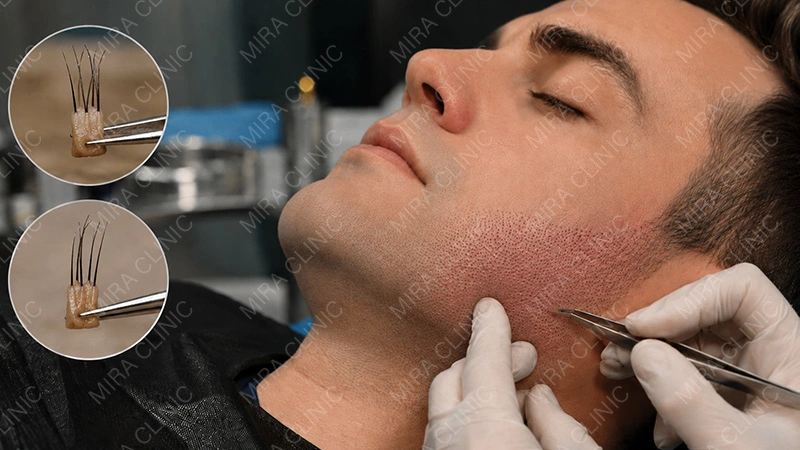
One of the most important technical steps in beard restoration is graft sorting. In the most visible parts of the beard, especially the upper cheek line and transition edges, single-hair grafts are usually essential for realism. Multi-hair grafts placed carelessly in those areas can create a pluggy or heavy appearance.
This is one reason Mira Clinic beard restoration emphasizes design and graft selection together. The goal is not just to implant follicles. It is to choose the right follicular units for the exact facial zone where they will sit.
Why beard graft direction changes everything
Among all technical factors, beard graft direction may be the most important in achieving a natural-looking result. Facial hair exits the skin at very specific angles depending on the area:
- the cheek line tends to lie flatter
- the jawline often follows a different directional sweep
- the mustache and chin have their own growth logic
- sideburns transition into beard growth differently again
If these angles are ignored, the result may look visibly unnatural even if the density is high. A beard is not convincing because it is full alone. It is convincing because it grows in a way that matches facial structure and natural hair behavior.
DHI vs Sapphire FUE: Choosing the Best Tool for Your Beard
A beard transplant is not improved by using a fashionable technique name without a reason. The best method depends on the beard pattern, the skin, the amount of missing density, and the degree of precision needed.
Why DHI is often preferred for detailed facial density work
DHI beard transplant Turkey searches are common because DHI is often associated with high precision. In beard restoration, that precision can be especially useful in visible facial zones where placement angle, spacing, and control matter greatly. The direct implantation workflow can support careful insertion in areas that require refined density rather than broad surface coverage.
This often makes DHI a strong option for:
- filling patchy cheek areas
- refining a beard line
- increasing density in smaller high-visibility zones
- blending between existing facial hairs
Why Sapphire FUE still matters in beard design
Sapphire FUE also plays an important role, especially when the case requires extremely fine site creation and controlled placement planning. One of its strengths is the ability to create very small, precise recipient sites that support clean implantation with minimal visible aftermath when managed properly.
For patients concerned about facial appearance during recovery, this matters because the beard area is not easy to hide in the same way as the scalp.
Why technique choice should follow the beard pattern, not marketing
At Mira Clinic, the technique is selected according to the patient’s beard pattern rather than promotional trends. Some men need dense filling in compact areas. Others need broader reconstruction of cheek or jawline distribution. Some need a highly refined artistic hairline effect. Others need more foundational coverage. The technique should serve the design, not the other way around.
Designing the Perfect Beard Line at Mira Clinic Istanbul
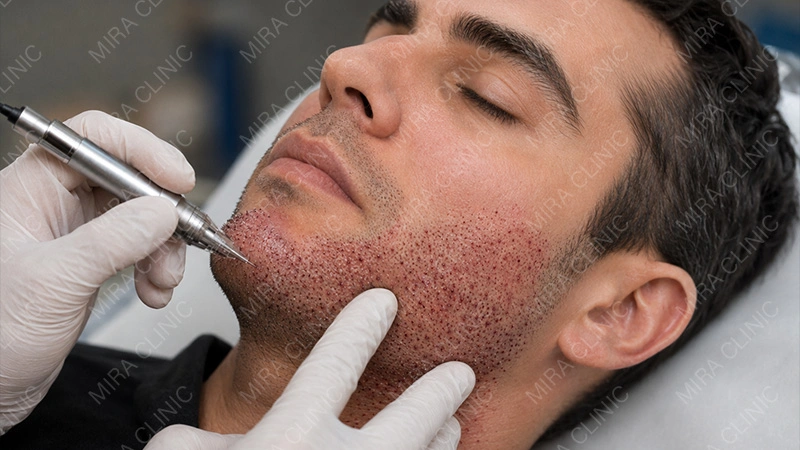
A natural beard transplant begins before the first graft is implanted. It begins with design. That design must respect the patient’s facial anatomy, age, style goals, and natural masculine proportions.
Why beard design is an artistic phase, not just a surgical one
A beard line cannot be copied from another patient’s face. The cheek line, the jawline border, the mustache density, and the chin projection all need to fit the person wearing them. This is why the design phase is one of the most important parts of the process.
The goal is not to create an obviously “done” beard. It is to create a beard that looks as though it should always have belonged to that face.
How density is balanced across the beard zones
A good beard does not have identical density everywhere. Different zones need different intensity:
- the cheek may require softer transitions
- the jawline may need stronger definition
- the chin often carries more visual weight
- the mustache must blend rather than float separately
- the sideburns must transition naturally into the rest of the beard
This is why natural beard transplant results come from balanced distribution rather than aggressive overfilling.
Why symmetry matters without making the beard look artificial
Symmetry matters in male facial aesthetics, but perfect geometric symmetry is not the goal. A natural beard should look balanced, not artificially drawn. That means creating harmony across both sides of the face while still respecting the subtle irregularities that make facial hair look real.
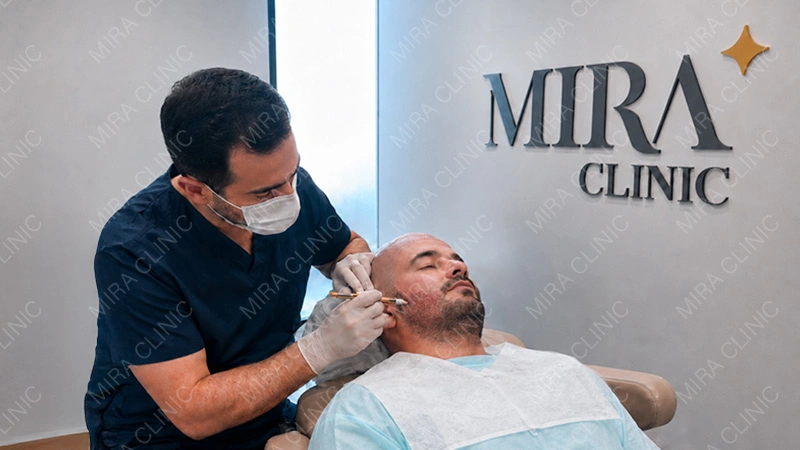
The Experience for International Patients in Turkey
For international patients, beard restoration is not just about the surgery day. It is about the full treatment journey, from arrival in Istanbul to recovery planning and final follow-up.
Why international coordination matters in facial procedures
Facial procedures create a different kind of anxiety than scalp procedures because the result will sit directly on the most visible part of the body. Patients want a clear timeline, a professional setting, and confidence that every stage is organized carefully.
This is one reason beard transplant Istanbul has become more than a procedure search. It is also a travel-confidence search.
The advantage of a clinic environment designed for aesthetic work
A well-run environment matters because beard restoration is highly visual and detail-driven. Patients benefit from:
- structured consultation
- precise facial planning
- careful immediate aftercare
- reassurance about redness and healing
- clear grooming restrictions during recovery
This supports not only comfort but confidence in the whole process.
Why combining beard and scalp treatment in one trip can be valuable
Some patients travel to Turkey with more than one concern. When medically appropriate, combining a beard transplant with a scalp transplant in one treatment journey can make logistical and financial sense. It can also help patients address overall facial and hairline identity in one coordinated plan rather than through separate trips.
Read more: Why Do Hair Transplants Fail? 5 Critical Mistakes to Avoid Before Flying to Turkey
Recovery and Growth: What to Expect Post-Procedure
Patients choosing beard restoration want to know two things after the design is complete: how long recovery takes and when the beard starts looking real.
What the early healing phase usually looks like
In the first days after the procedure, mild redness, tiny crusts, and visible graft placement are expected. This usually belongs to normal healing rather than a sign of a problem. Because the beard area is on the face, patients often notice the early stage more intensely than they would after a scalp procedure.
That is why clear aftercare instructions matter so much. Healing in facial zones needs patience and discipline, especially around touching, washing, and shaving.
Understanding shock loss in facial hair
The shock loss phase can happen in beard transplantation as well, and it often worries patients if they were not prepared for it. The important point is that early shedding does not mean the follicle is lost. It usually means the hair shaft has entered a temporary shedding phase while the follicle remains under the skin preparing for later growth.
This is one of the most important reassurance points in beard restoration, because many patients panic at exactly the stage that actually belongs to normal progress.
When the new beard starts taking shape
Visible growth usually requires time. The early months are more about healing and follicular transition than immediate beard styling. As growth begins, the beard often looks uneven before it looks complete. That is normal. Facial hair needs time to mature in density, texture, and length before the final look becomes clear.
Practical shaving and grooming advice in the first months
Patients must be especially careful about shaving too early or treating the beard like a finished result before the grafts and skin have stabilized. Early grooming should follow the clinic’s guidance closely. The point is not only protecting the grafts, but also allowing the beard to emerge naturally without unnecessary irritation or friction.
Read more: The True Cost of Hair Transplants in Turkey (2026): Beyond the “All-Inclusive” Buzzword