Temporary dental prostheses after implant surgery may be considered high risk when implants lack sufficient initial stability, jawbone support is limited, or the temporary restoration places excessive pressure on healing tissues. Additional risk factors include significant bone grafting, uncontrolled medical conditions, teeth grinding, and poor oral hygiene.
However, temporary dental prostheses are not inherently unsafe. Fixed temporary implant bridges, provisional crowns, and removable dentures can all be suitable when carefully selected and designed. The safest option depends on implant stability, available bone, healing conditions, and whether the prosthesis will place functional pressure on the implants.
At Mira Clinic in Istanbul, dentists assess these factors through clinical examination, CBCT imaging when indicated, surgical stability evaluation, and coordinated prosthetic planning. The objective is to select a temporary restoration that protects healing while maintaining appropriate appearance and function.
- What Is a Temporary Dental Prosthesis After Implant Surgery?
- Which Cases Make Temporary Dental Prostheses High Risk?
- What Complications Can Temporary Implant Prostheses Cause?
- Are Temporary Teeth Riskier With All-on-4 and All-on-6?
- What Are the Safer Alternatives for High-Risk Implant Patients?
- How Do Dentists Reduce Risks Before Placing Temporary Prostheses?
- How Long Should You Wear Temporary Teeth Before the Final Prosthesis?
What Is a Temporary Dental Prosthesis After Implant Surgery?
A temporary dental prosthesis is a short-term restoration used while dental implants and surrounding tissues heal before the final crown, bridge, or full-arch restoration is fitted.
Temporary prostheses may help patients maintain their smile, speech, and selected chewing functions during the healing period. However, not all temporary teeth function in the same way.
The dentist must determine whether the temporary restoration will be supported by implants, neighboring natural teeth, or the gums.
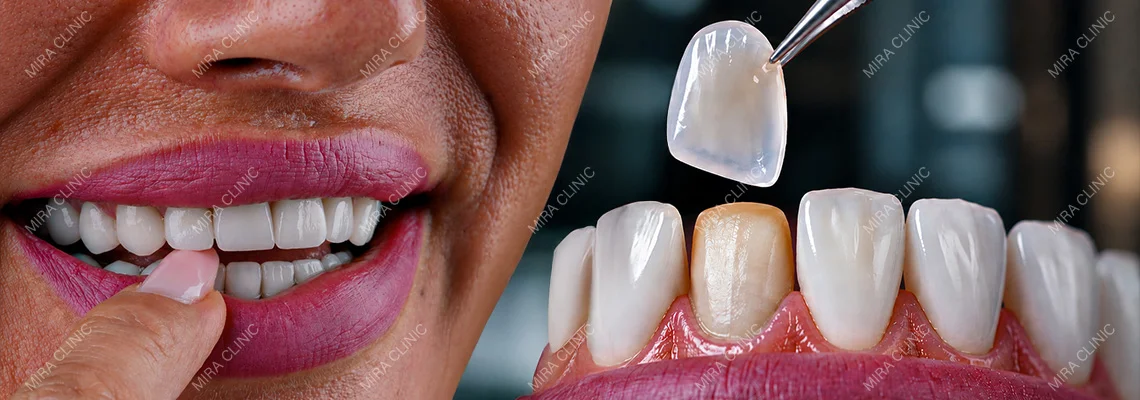
Temporary Implant Crown
A temporary implant crown replaces the visible part of one missing tooth during healing.
In selected cases, the dentist may attach a provisional crown shortly after implant placement, particularly when replacing a front tooth.
The crown may be designed to avoid contact with the opposing teeth during chewing. This helps maintain appearance while limiting forces on the healing implant.
However, even a temporary crown kept out of direct bite contact may receive incidental forces. Patients must follow the dentist's restrictions.
Fixed Temporary Implant Bridge
A fixed temporary implant bridge connects several replacement teeth to dental implants.
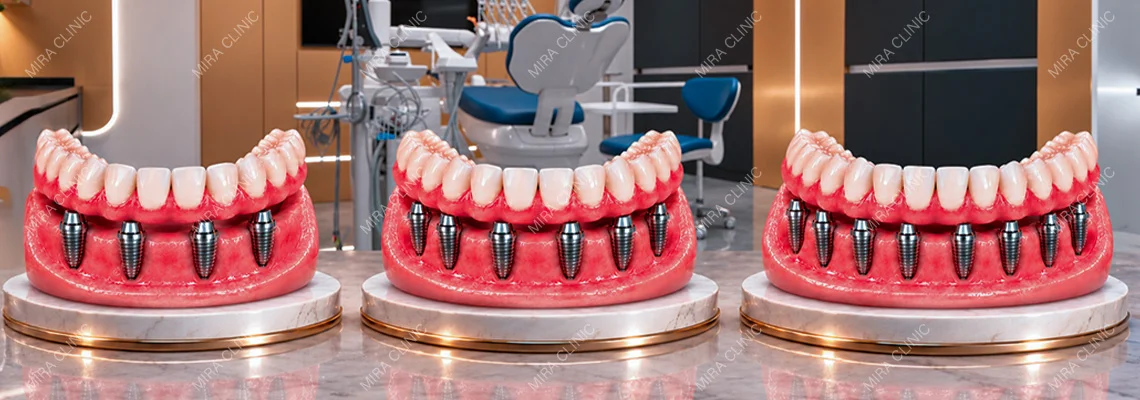
These restorations are commonly used in selected All-on-4 and All-on-6 treatments.
A temporary bridge may allow patients to leave the clinic with fixed teeth after surgery, but this requires suitable implant stability and careful control of chewing forces.
The dentist must evaluate implant distribution, bridge rigidity, abutments, bite contacts, and cleaning access before approving this option.
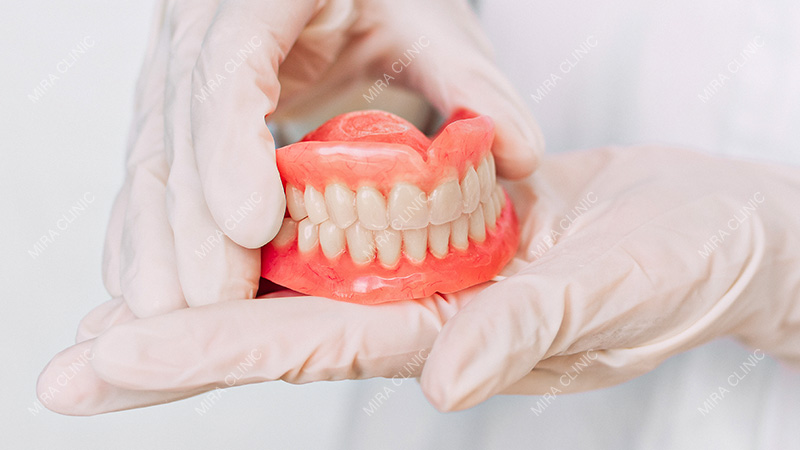
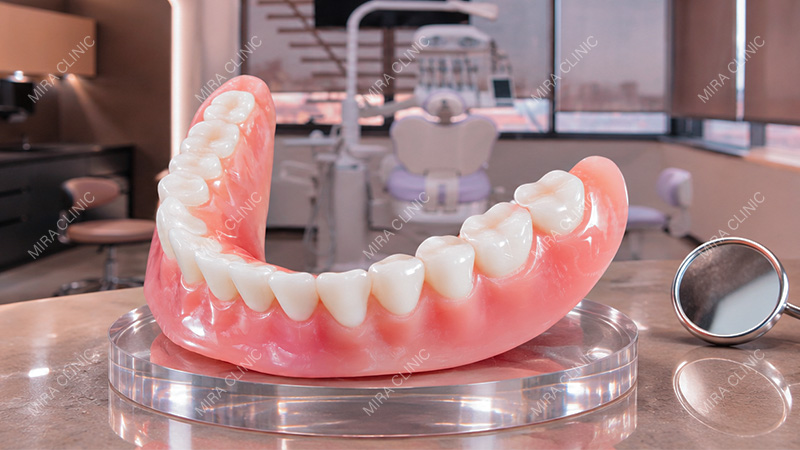
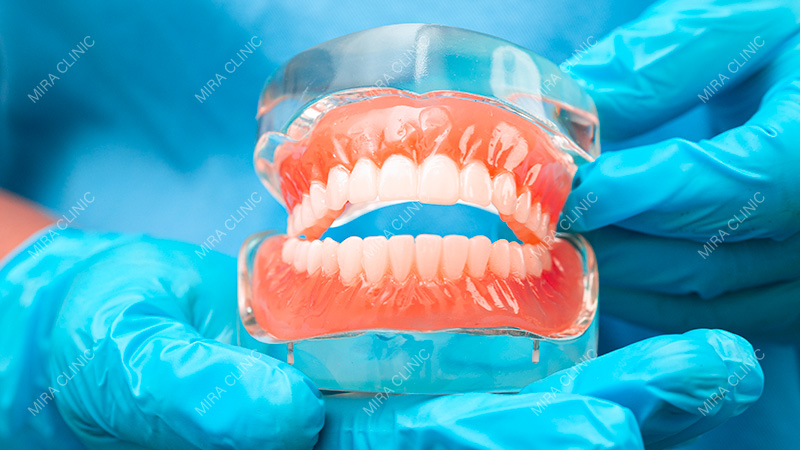
Removable Temporary Denture
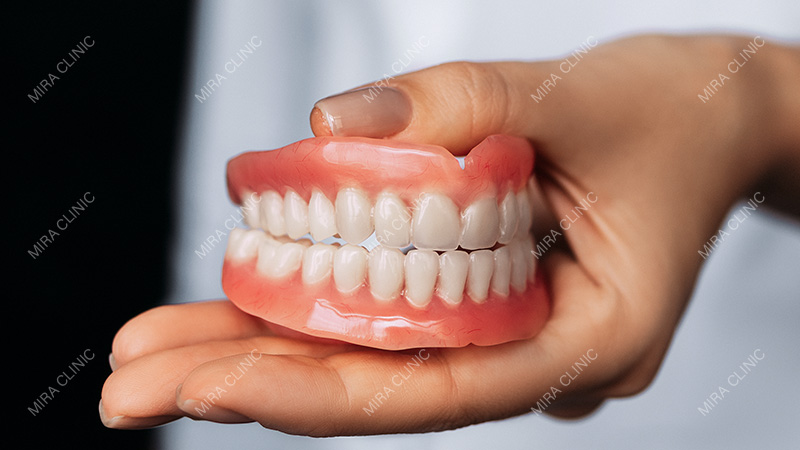
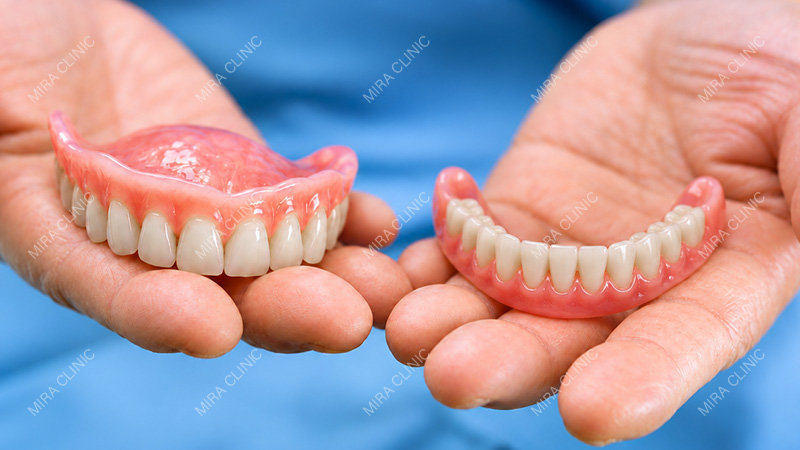
A removable temporary denture may be used when an implant-supported temporary restoration is unsuitable.
Unlike a fixed temporary bridge, a removable denture may rest on the gums rather than being attached directly to the implants.
However, it can still cause problems if it presses against fresh surgical wounds, grafted bone, or implant sites.
The denture may need adjustment, relining, or relief to prevent unwanted pressure during healing.
The choice between fixed and removable temporary teeth should therefore be based on clinical suitability rather than appearance or convenience alone.
Which Cases Make Temporary Dental Prostheses High Risk?
Temporary dental prostheses become higher risk when the patient's bone, implant stability, healing capacity, or bite conditions cannot safely support the planned restoration.
A patient may qualify for dental implant surgery but still be unsuitable for immediate implant loading.
Insufficient Primary Implant Stability
Primary stability refers to the mechanical stability achieved when the dental implant is first placed into the jawbone.
It is particularly important when a temporary crown or bridge will be connected shortly after surgery.
If an implant lacks adequate stability, functional loading may create unwanted movement during healing.
The dentist may recommend allowing the implant to integrate with the bone before attaching a functional prosthesis.
This decision is based on clinical assessment and, when appropriate, implant stability measurements.
Severe Bone Loss or Limited Jawbone Support
Patients who have been missing teeth for many years may have reduced jawbone height or width.
Limited bone support can affect implant positioning and the stability achieved during surgery.
A CBCT scan helps the dentist assess bone anatomy, available implant positions, and nearby structures.
However, CBCT imaging alone cannot determine whether temporary implant teeth are safe. The surgeon must also evaluate the actual stability of the implants during placement.
Bone Grafting and Sinus Lift Procedures
Bone grafting or sinus augmentation may be necessary when the jawbone cannot adequately support the proposed implants.
Significant bone augmentation can complicate immediate loading because the surgical site requires healing and the available bone may not provide sufficient initial implant stability.
In these cases, a staged treatment plan may be safer.
Patients may still receive an appropriate temporary replacement, but it must be designed to avoid interfering with the healing implants or grafted tissues.
Bruxism and Excessive Bite Pressure
Patients who grind or clench their teeth may expose temporary restorations to considerable force.
This can increase the risk of bridge fracture, screw loosening, and excessive loading on healing implants.
A patient with strong bite forces may need additional precautions, changes to the temporary restoration design, or delayed loading.
A night guard may be considered in selected cases, but its use and design must be approved by the treating dentist.
Uncontrolled Medical Conditions and Poor Healing
Certain medical and behavioral factors can affect dental implant healing.
These may include poorly controlled diabetes, smoking, active oral infections, and medications or conditions that interfere with normal healing.
Such factors do not automatically prevent every patient from receiving temporary teeth.
However, they can influence the decision about immediate loading, the design of the temporary prosthesis, and the frequency of follow-up examinations.
The appropriate treatment should reflect the patient's complete medical and dental condition.
What Complications Can Temporary Implant Prostheses Cause?
Temporary implant prostheses may develop biological or mechanical complications during healing.
Biological complications affect the gums, bone, or surrounding tissues. Mechanical complications involve the bridge, crown, screws, or other prosthetic components.
These problems do not always mean that the dental implants have failed, but they require appropriate evaluation.
Excessive Pressure on Healing Implants
Dental implants require suitable conditions for osseointegration, the process through which the surrounding bone establishes a stable connection with the implant surface.
An incorrectly designed or overloaded temporary prosthesis may transmit excessive forces to the implants.
Potential problems include unwanted implant movement, discomfort, or compromised healing.
The dentist must therefore control the bite and decide whether the temporary prosthesis should carry functional chewing forces.
Temporary Bridge Fracture
Temporary implant bridges may be manufactured from materials such as acrylic or other provisional restorative systems.
These materials are designed for a limited treatment period and may not have the same mechanical characteristics as the final prosthesis.
A temporary bridge can fracture because of heavy chewing, grinding, insufficient material thickness, or unfavorable stress distribution.
Repeated fractures should prompt an examination of the bite and prosthetic design rather than simple replacement without investigating the cause.
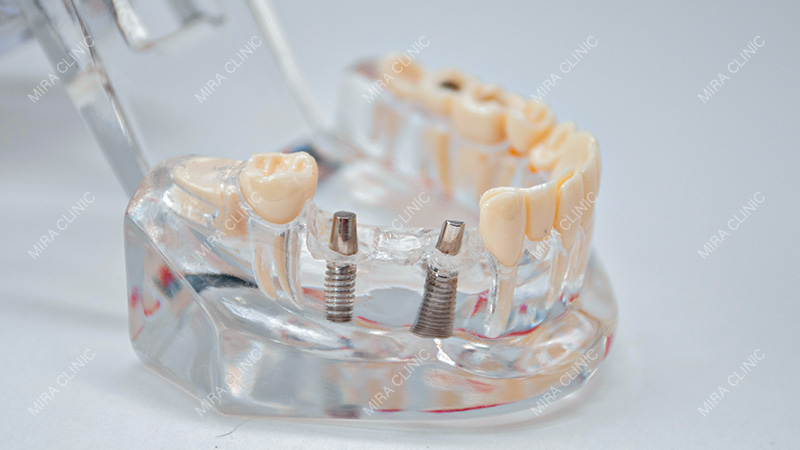
Loose Abutments or Prosthetic Screws
A temporary implant bridge may be connected to implants through abutments and prosthetic screws.
If one of these components loosens, the patient may notice movement, clicking, or a change in how the teeth meet.
A loose prosthetic component is not the same as a loose implant.
However, it should be assessed promptly because continued movement may damage the restoration or create additional stress.
Patients should never attempt to tighten, glue, or repair implant components themselves.
Gum Irritation and Soft-Tissue Pressure
Temporary prostheses can irritate the gums when their contours are bulky, poorly adjusted, or difficult to clean.
Removable dentures may also press against surgical sites if they have not been properly relieved.
Possible symptoms include tenderness, redness, localized swelling, or ulceration.
The dentist may need to adjust the prosthesis to reduce pressure and improve tissue comfort.
Food Trapping and Inflammation
Food debris and plaque can collect underneath implant-supported bridges.
If cleaning access is limited, the surrounding gum tissue may become inflamed.
Patients may experience bleeding, swelling, unpleasant taste, or persistent discomfort.
Temporary bridges should be designed to allow appropriate hygiene, and patients should receive instructions suited to their restoration and healing stage.
Are Temporary Teeth Riskier With All-on-4 and All-on-6?
All-on-4 and All-on-6 treatments may allow patients to receive fixed temporary teeth shortly after dental implant surgery.
This approach is often called immediate loading or same-day teeth, although the precise loading protocol depends on how and when the prosthesis is connected and whether it receives functional bite forces.
Immediate loading can be appropriate for carefully selected full-arch patients.
However, having four or six implants does not automatically make immediate loading safe.
All-on-4 Temporary Teeth
All-on-4 uses four dental implants to support a full-arch restoration.
When the implants achieve suitable primary stability and are distributed appropriately, a fixed temporary bridge may be considered.
The dentist must assess bone support, implant positioning, the final bridge design, and the forces created during chewing.
If the conditions are unsuitable, the patient may need a different temporary restoration or a delayed loading plan.
All-on-6 Temporary Teeth
All-on-6 uses six implants to support a full-arch restoration.
The additional implant positions may improve support distribution in certain cases, but they do not eliminate the need for clinical assessment.
For example, six implants with inadequate stability may not be suitable for immediate loading.
The dentist must evaluate the stability of the implants, bridge design, bite forces, and overall healing conditions.
Does Having More Implants Make Temporary Teeth Safer?
Not automatically.
The distribution and stability of implants are often as important as the total number.
A well-planned All-on-4 restoration may be suitable for immediate loading, while an All-on-6 case involving extensive bone augmentation may require delayed loading.
The surgeon must determine whether each implant can participate safely in supporting the restoration.
The final choice should follow the anatomical findings and prosthetic plan rather than the assumption that more implants always provide greater safety.
What Are the Safer Alternatives for High-Risk Implant Patients?
When immediate implant-supported temporary teeth are unsuitable, dentists can consider other ways to maintain appearance and selected functions while protecting healing.
The appropriate alternative depends on whether the patient needs one tooth, several teeth, or a complete arch replaced.
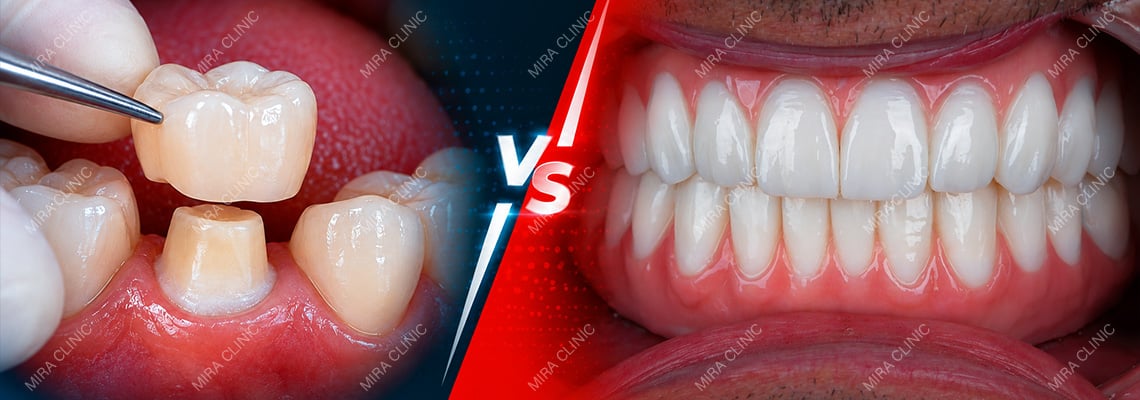
Fixed vs Removable Temporary Prostheses: Which Is Safer?
Neither fixed nor removable temporary prostheses are universally safer.
A fixed temporary bridge offers stability and avoids the need for the patient to remove the restoration, but it requires suitable implant support and carefully controlled loading.
A removable temporary denture does not necessarily transmit chewing forces directly through the implants. However, it may place pressure on the gums and surgical sites.
The dentist must consider where the denture rests and whether it could interfere with healing.
For some patients, a carefully adjusted removable prosthesis may be appropriate. For others, a fixed restoration with controlled loading may offer greater comfort without compromising the treatment.
Delayed Loading of Dental Implants
Delayed or conventional loading allows dental implants to heal before a functional prosthesis is attached.
This approach may be recommended when primary stability is inadequate, extensive grafting has been performed, or the clinical conditions do not support immediate loading.
The patient may use a suitable provisional tooth replacement during the healing period.
Waiting does not mean that the implant procedure has failed. It can be a planned measure to protect osseointegration.
Temporary Teeth Supported by Natural Teeth
In selected partially edentulous cases, a temporary tooth replacement may be supported by neighboring natural teeth rather than the newly placed implant.
This approach can help maintain appearance while avoiding direct loading of the healing implant.
However, the dentist must check the condition of the supporting teeth and ensure the provisional restoration is appropriate.
It may not be suitable when the adjacent teeth are weak or when the patient needs a complete arch restored.
Healing Without a Functional Temporary Prosthesis
Some patients may benefit from a period without a functional replacement over the implant site.
This may be considered when the risk of pressure or movement is greater than the immediate benefit of temporary teeth.
For visible front-tooth areas, the dentist may explore cosmetic provisional options that avoid loading the implant.
The patient's comfort and appearance remain important, but they should not override essential healing requirements.
Adjusting the Loading Protocol
A dentist may recommend an immediate nonfunctional provisional restoration, early loading, or conventional loading depending on clinical findings.
These approaches are not interchangeable.
The timing and level of functional contact must be selected according to implant stability and the prosthetic plan.
A patient should not assume that receiving temporary teeth immediately means being able to chew normally immediately.
How Do Dentists Reduce Risks Before Placing Temporary Prostheses?
Reducing complications starts with treatment planning before implant surgery.
The dentist evaluates the jawbone, implant positions, gum condition, medical history, and intended temporary restoration.
For full-mouth dental implants, the surgical and prosthetic stages must be planned together.
Clinical Examination and CBCT Planning
A clinical examination helps the dentist assess gum health, remaining teeth, bite forces, and potential sources of infection.
CBCT imaging may be used to evaluate jawbone anatomy and the available positions for dental implants.
The final plan considers where implants can safely be placed and how they will support the temporary and permanent restorations.
Assessing Implant Stability
After surgery, the dentist evaluates the stability achieved by the implants.
Insertion torque and resonance frequency analysis may contribute to this assessment.
However, no single measurement should be interpreted as a universal guarantee that immediate loading will succeed.
If clinical conditions are unsuitable, the dentist may postpone functional loading and select a safer provisional approach.
Temporary Bridge Design and Bite Control
The temporary prosthesis must fit the implants accurately and distribute forces appropriately.
The dentist and laboratory consider material thickness, bridge rigidity, implant spacing, abutments, and bite relationships.
At Mira Clinic in Istanbul, the in-house dental laboratory supports communication between the implant surgeons, restorative dentists, and technicians during this process.
This coordination can help with temporary bridge design, fitting, adjustments, and preparation for the final restoration.
Patient Instructions and Follow-Up
Patients also play an important role in protecting healing implants.
Depending on the procedure, instructions may include:
- Following a prescribed soft-food diet
- Avoiding hard or sticky foods
- Cleaning the restoration as directed
- Avoiding smoking
- Taking prescribed medications correctly
- Attending scheduled follow-up appointments
- Reporting unusual pain, swelling, or movement promptly
The instructions should be individualized because a temporary crown, fixed All-on-4 bridge, and removable denture have different care requirements.
Consistent follow-up helps identify problems before they become more complicated.
How Long Should You Wear Temporary Teeth Before the Final Prosthesis?
Temporary dental prostheses are used until the implants and surrounding tissues are ready for definitive restoration.
For many staged dental implant procedures, the healing period is approximately three to six months.
However, the timeline depends on implant stability, bone condition, surgical complexity, and the loading protocol.
Temporary Teeth During Osseointegration
During osseointegration, the bone heals around the implant surface.
Patients may use a provisional restoration throughout this period when clinically appropriate.
For selected full-arch cases, a fixed temporary bridge may be fitted during the initial treatment visit.
Other patients may use a removable provisional denture or wait before receiving an implant-supported restoration.
The temporary prosthesis should be maintained and checked during healing.
When Are Permanent Teeth Fitted?
Before fitting the final prosthesis, the dentist evaluates implant stability, gum health, and the condition of the surrounding tissues.
Digital scans or conventional impressions are then used to design the final crown or bridge.
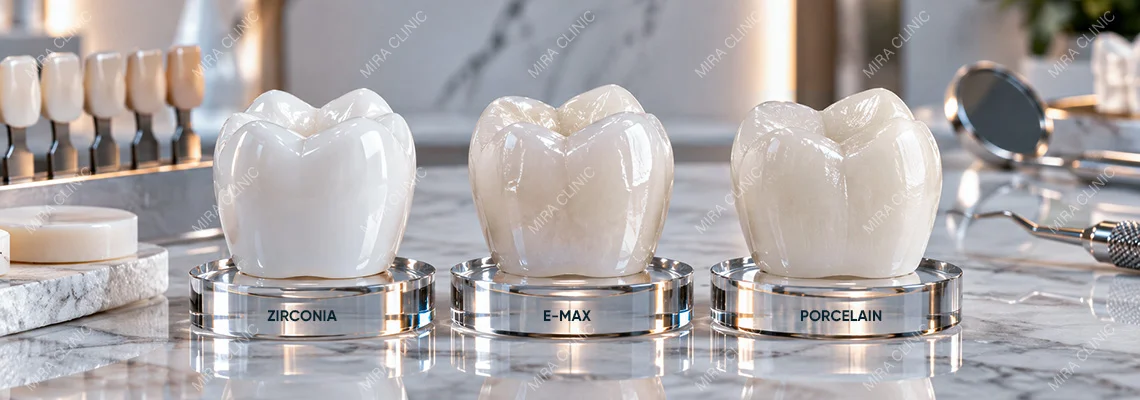
The definitive restoration may be manufactured from zirconia or another material selected according to the treatment plan.
The dentist checks fit, bite, aesthetics, and cleaning access before completing the restoration.
Can Temporary Teeth Be Worn Longer Than Planned?
Sometimes the dentist may extend the provisional stage because additional healing or treatment is required.
However, temporary restorations can wear, fracture, or loosen over time.
Patients should avoid treating the provisional prosthesis as a permanent replacement without professional evaluation.
Regular monitoring is particularly important if the patient is returning to Istanbul for the final stage after a healing period abroad.
Read more: How Long After a Dental Implant Can You Get a Crown? Healing Time and Procedure
Final Verdict: Choosing the Safest Temporary Dental Prosthesis After Implants
Temporary dental prostheses can provide valuable support during dental implant treatment, but they must be selected according to the patient's bone condition, implant stability, bite, healing capacity, and restoration requirements.
A fixed temporary bridge may be suitable when implants can safely support the intended loading protocol. A removable temporary denture may be more appropriate in some high-risk cases, provided it does not place harmful pressure on the surgical sites. Delayed loading may be necessary when additional healing is required.
At Mira Clinic in Istanbul, implant treatment planning combines clinical examination, CBCT imaging when indicated, surgical stability assessment, and in-house dental laboratory coordination. These steps help the team decide whether fixed temporary teeth, removable prostheses, or a staged approach is appropriate.
The safest temporary restoration is not necessarily the fastest or most expensive option. It is the one that protects implant healing while maintaining appropriate function, comfort, and appearance until the final teeth can be fitted.
Read more: All-on-4 vs All-on-6 vs All-on-8: How Bone Loss Affects Your Implant Choice