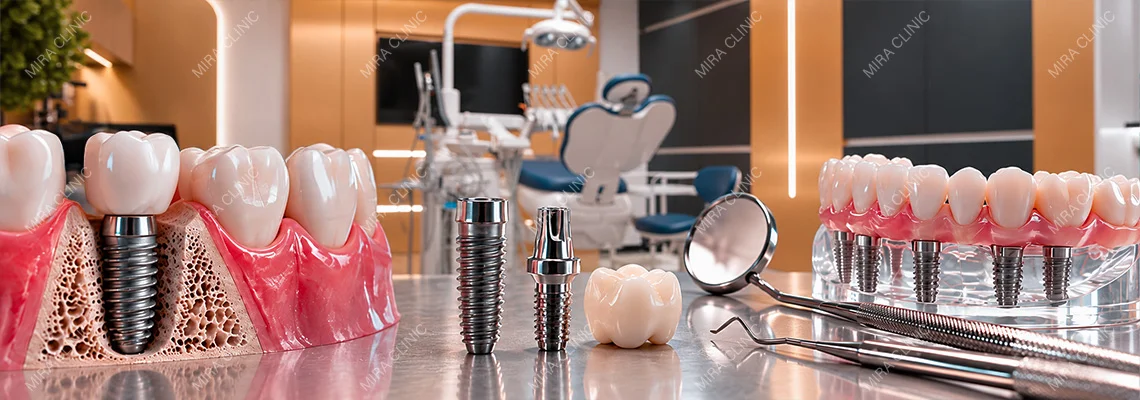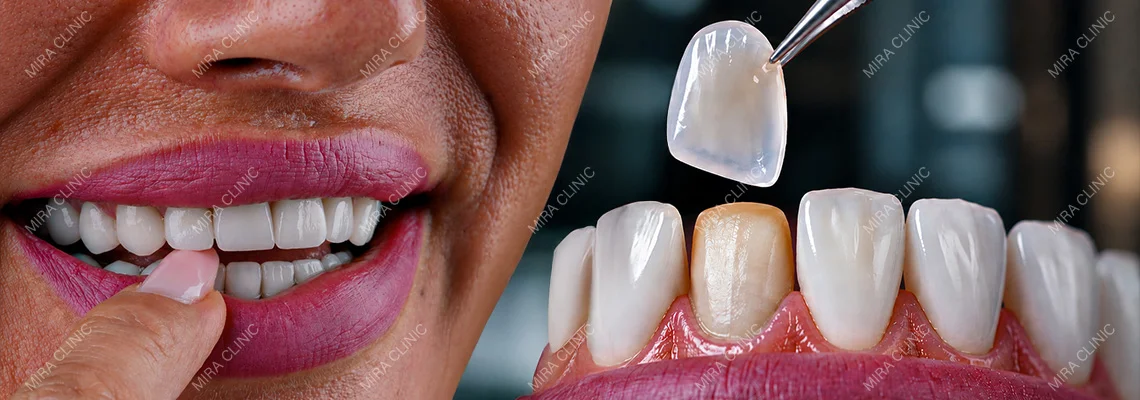
Veneer preparation usually involves removing a small amount of enamel from the front surface of a tooth to create space for a thin porcelain or ceramic restoration. However, deep tooth preparation is not routinely necessary for veneers. The amount of enamel removed depends on tooth position, discoloration, existing restorations, bite alignment, and the final smile design.
Some patients are suitable for minimal-preparation or no-preparation veneers, while others may need more tooth reduction to achieve the intended shape and appearance. When preparation extends beyond enamel into dentin, the risks of sensitivity, bonding complications, and future restorative treatment may increase.
Before starting a Hollywood Smile or veneers treatment in Istanbul, patients should understand how their natural teeth will be prepared, how much tooth structure will be removed, and whether a more conservative option is available.
At Mira Clinic, veneer preparation is part of the wider smile restoration plan, where tooth health, enamel preservation, bite relationships, and material selection are considered before the final restorations are produced.
- What Is Veneer Preparation and Why Is It Necessary?
- How Much Tooth Enamel Is Removed for Veneers?
- When Is Deep Tooth Preparation Necessary for Veneers?
- How Does the Veneer Preparation Procedure Work?
- What Are the Risks of Deep Veneer Preparation?
- Can You Get Veneers Without Shaving Your Teeth?
- How Do Dentists Plan Safe Veneer Preparation in Istanbul?
What Is Veneer Preparation and Why Is It Necessary?
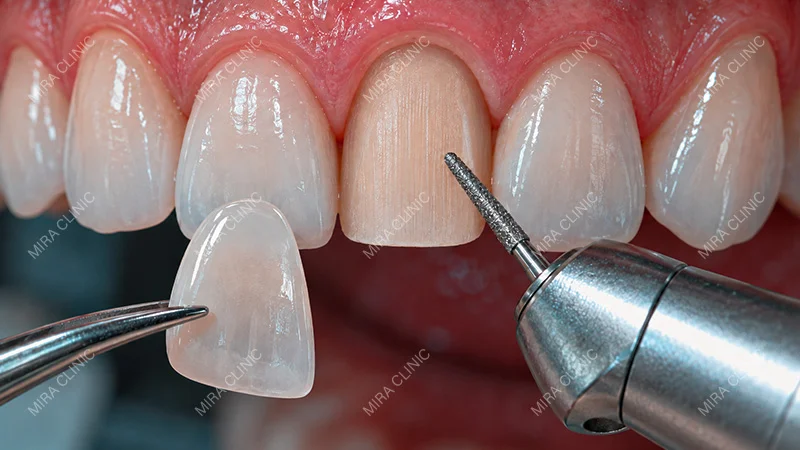
Veneer preparation is the process of modifying the front surface and sometimes the edges of a natural tooth before placing a veneer.
The main purpose is to create sufficient space for the restoration while maintaining a natural tooth shape and a predictable bonding surface.
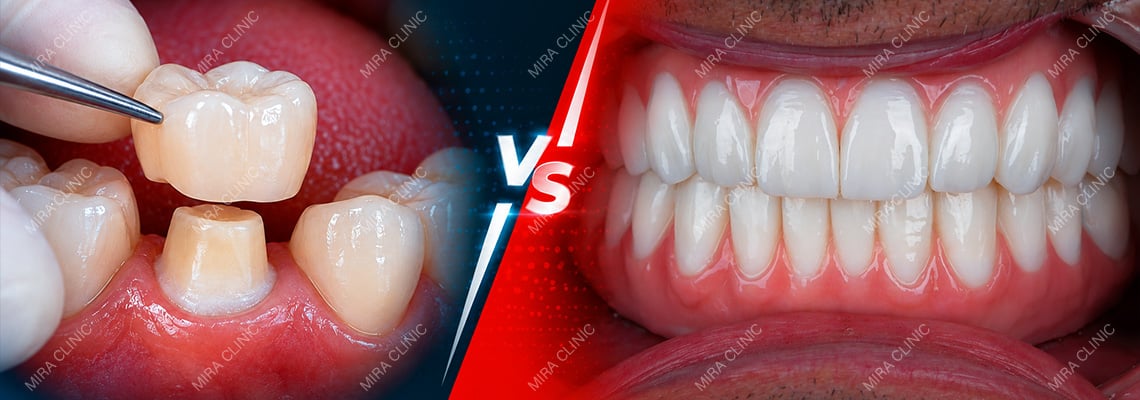
A dental veneer is different from a crown. A veneer generally covers the front surface of a tooth, while a crown surrounds the visible tooth structure more extensively.
This difference makes conservative preparation especially important for veneers.
Why Do Dentists Prepare Teeth Before Veneers?
A dentist may remove a controlled amount of enamel to accommodate the veneer without making the restored tooth appear bulky.
Preparation can also help establish a suitable finishing margin, improve the transition between the veneer and the natural tooth, and correct minor surface irregularities.
For example, a patient with slightly protruding front teeth may need limited reduction to achieve the planned final contours.
A patient with small teeth and sufficient space may require little or no reduction.
The preparation should reflect the planned final tooth shape rather than following the same reduction pattern for every patient.
What Happens to the Natural Tooth?
Enamel is the hard outer layer of the tooth. Unlike many other tissues, removed enamel does not naturally regenerate.
When enamel is reduced for veneers, that change is generally irreversible.
This is why patients should understand the proposed preparation before treatment begins.
A veneer can restore the appearance and protect the prepared surface, but the tooth may require future maintenance or replacement of the restoration.
How Much Tooth Enamel Is Removed for Veneers?
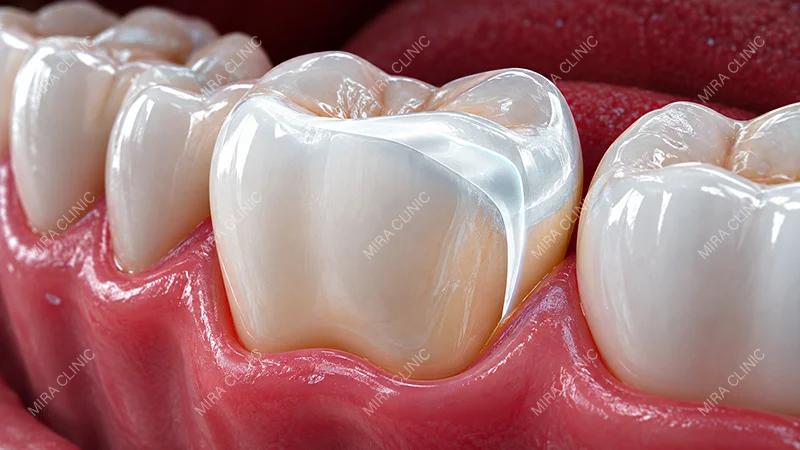
The amount of enamel removed during veneer preparation varies according to tooth anatomy, veneer design, and clinical requirements.
In many conventional cases, preparation is measured in fractions of a millimeter. Some designs may involve approximately 0.3–0.7 mm of facial reduction, but these figures are general references rather than a fixed requirement for every tooth.
The appropriate depth must be determined individually.
Minimal-Preparation Veneers
Minimal-preparation veneers aim to preserve most of the natural enamel.
They may be suitable when the teeth are already reasonably aligned and only need changes in shade, shape, or surface appearance.
The dentist evaluates the final veneer thickness and whether enough space exists without excessive tooth reduction.
When appropriate, preserving enamel can support reliable adhesive bonding.
Conventional Veneer Preparation
Conventional preparation may involve controlled reduction across the facial surface and, in some designs, modification of the incisal edge.
This creates space for the ceramic while maintaining suitable contours and preventing an excessively bulky restoration.
The dentist must consider the thickness of enamel, particularly near the gumline, where enamel may be thinner.
Preparation should not be based only on an estimated average depth.
Deep Veneer Preparation
Deep preparation means removing more natural tooth structure than would be required for a conservative veneer design.
In some situations, this may expose dentin, the softer tissue located beneath enamel.
Dentin can be bonded to restorative materials, but ceramic veneer bonding is generally more predictable when a substantial enamel surface remains.
Therefore, deeper reduction should require specific clinical justification.
It should not be presented as the standard approach for achieving white or symmetrical teeth.
When Is Deep Tooth Preparation Necessary for Veneers?
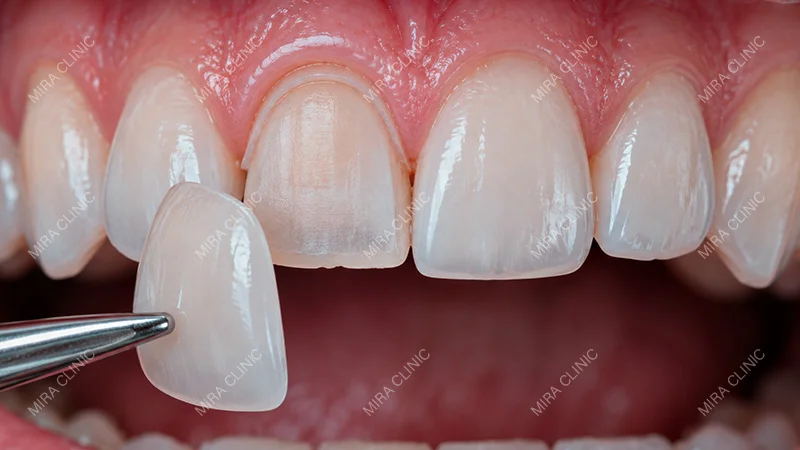
More extensive tooth preparation may be considered when the existing tooth position, color, or restorations create significant limitations for a conservative veneer.
However, a need for substantial tooth reduction should also trigger reconsideration of whether veneers are the most appropriate treatment.
Some patients may benefit more from orthodontics, composite bonding, whitening, or crowns.
Severe Tooth Discoloration
Deeply discolored teeth can be difficult to mask with highly translucent veneers.
A dentist may consider additional restorative thickness or a different ceramic opacity to achieve the desired shade.
However, deeper preparation is not always the best solution.
Material choice, internal shade management, whitening where appropriate, and the design of the restoration may reduce the need for unnecessary enamel removal.
The dentist should explain the trade-off between the desired whiteness and preservation of the natural tooth.
Protruding or Misaligned Teeth
Teeth that extend outward may require more reduction if veneers are used to create a straighter-looking smile.
However, aggressively reducing protruding teeth can sacrifice substantial enamel or expose dentin.
For patients with significant crowding, rotation, or protrusion, orthodontic treatment before veneers may be more conservative.
Aligning the teeth first can sometimes reduce the amount of preparation needed for the final aesthetic restoration.
Teeth With Existing Fillings or Restorations
A patient may have old composite fillings, damaged enamel, or existing veneers requiring replacement.
These cases may need additional preparation to remove defective restorative material or establish a suitable bonding surface.
However, extensive fillings and substantial structural loss may make a crown or another restoration more appropriate than a veneer.
The dentist should evaluate how much sound natural tooth remains before recommending treatment.
Changes in Tooth Length or Shape
Some veneer designs require modification of the biting edge to improve tooth length, symmetry, or proportions.
The extent of preparation depends on the bite and the intended design.
If the patient has severe tooth wear, heavy grinding, or major bite discrepancies, the dentist may need to address the underlying functional problem before proceeding.
More tooth reduction does not automatically create a more natural smile.
How Does the Veneer Preparation Procedure Work?
Veneer preparation is one stage of a complete cosmetic dental treatment.
A predictable result requires clinical examination, treatment planning, accurate preparation, laboratory production, and final bonding.
Step 1: Dental Examination and Smile Assessment
Before preparation begins, the dentist evaluates tooth health, gum condition, enamel quality, existing restorations, and bite relationships.
Dental photographs, digital scans, and X-rays when indicated help identify conditions that may affect treatment.
Active decay or gum disease should be addressed before placing permanent veneers.
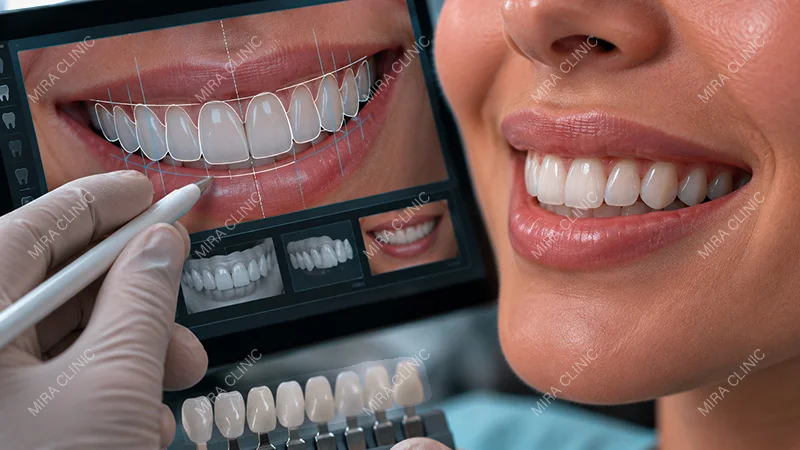
Step 2: Digital Smile Design and Preparation Planning
Digital smile design can help patients understand the proposed changes in tooth shape, length, width, and smile proportions.
The dentist may use photographs, digital models, diagnostic wax-ups, or mock-ups to evaluate the planned result.
A mock-up is especially useful because it can show whether additional tooth volume is possible without extensive reduction.
This planning may help determine whether minimal preparation, conventional veneers, or another treatment is preferable.
Step 3: Tooth Preparation
If preparation is necessary, the dentist carefully reduces the planned areas of the tooth.
Local anesthesia may be used depending on the extent of preparation and patient sensitivity.
The goal is to create enough space for the restoration while avoiding unnecessary enamel removal.
Step 4: Digital Scanning and Temporary Veneers
After preparation, the dentist records the tooth shape using digital scanning or conventional impressions.
These records are sent to the dental laboratory, where the final veneers are manufactured.
Temporary veneers may be provided when needed to protect prepared teeth and help evaluate the appearance and comfort of the proposed smile.
Step 5: Final Veneer Bonding
Once the final veneers are ready, the dentist checks their shade, shape, fit, and relationship with surrounding teeth.
The tooth and ceramic bonding surfaces are treated according to the selected adhesive system before the veneers are bonded.
The dentist then checks the bite, removes excess bonding material, and provides care instructions.
Successful veneer treatment depends on both preparation quality and the final adhesive procedure.
What Are the Risks of Deep Veneer Preparation?
Deep veneer preparation can increase treatment complexity because it removes more natural tooth structure and may expose dentin.
Not every patient experiences complications, but the risks should be discussed before treatment.
Tooth Sensitivity After Preparation
Removing enamel may increase sensitivity, especially when underlying dentin becomes exposed.
Patients may notice discomfort when consuming cold or hot foods or during the temporary veneer stage.
Some sensitivity resolves after the final restoration is bonded, but persistent or worsening pain requires dental assessment.
Exposed Dentin and Bonding Complications
Enamel provides a favorable surface for bonding ceramic veneers.
When preparation exposes larger areas of dentin, bonding becomes more technique-sensitive, and long-term results may be less predictable.
Possible complications include veneer debonding, marginal leakage, discoloration around restoration edges, and the need for replacement.
The risk depends on the amount of exposed dentin, adhesive technique, tooth condition, and functional forces.
Pulp Irritation and Root Canal Risk
Excessive tooth reduction can increase the risk of irritating the dental pulp, which contains nerves and blood vessels.
In severe cases, the pulp may become irreversibly inflamed, and root canal treatment may be necessary.
This is not a routine outcome of correctly performed veneer preparation, but it is an important potential consequence of excessive reduction or treating already compromised teeth.
Veneer Fracture or Debonding
Poor preparation design, insufficient bonding support, incorrect material thickness, and excessive bite pressure can contribute to veneer complications.
Patients who grind their teeth may have additional risks and could require a night guard.
Aesthetic treatment should therefore consider chewing and bite forces, not only tooth appearance.
Higher Long-Term Treatment Costs
Excessive tooth preparation can make future restoration more complicated.
If a veneer repeatedly fails or the remaining tooth structure becomes unsuitable for another veneer, the patient may eventually need a crown or another treatment.
In more severe cases involving deep decay or structural damage, root canal treatment or extraction may become necessary.
This is why veneer preparation quality affects not only the final appearance but also the long-term cost of dental care.
Read more: Do Veneers Damage Teeth? What Really Happens to Enamel and Tooth Prep (Turkey Guide 2026)
Can You Get Veneers Without Shaving Your Teeth?
Yes, some patients can receive no-preparation veneers or very conservative restorations.
However, no-prep veneers are not suitable for every smile. Their success depends on tooth alignment, available space, shape, shade, and bite relationships.
No-Prep Veneers
No-prep veneers are designed to fit over the tooth without intentional enamel reduction.
They may be appropriate for selected patients with small teeth, favorable alignment, or spaces that can be corrected by adding material.
However, placing veneers without preparation on already prominent teeth may create excessive thickness or bulky contours.
The dentist must confirm that the final restorations can fit naturally without compromising gum health or cleaning access.
Composite Bonding
Composite bonding may offer a more conservative solution for small chips, minor gaps, or tooth shape irregularities.
The dentist applies tooth-colored resin to modify the visible surface.
Some cases require little or no enamel removal.
However, composite restorations may require more frequent polishing, repair, or replacement compared with certain ceramic restorations.
Orthodontics Before Veneers
Patients with protruding, crowded, or rotated teeth may benefit from orthodontic alignment before cosmetic restoration.
Correcting tooth position can reduce the need to remove healthy enamel to create the appearance of straight teeth.
This can be especially useful when patients want a Hollywood Smile but have otherwise healthy teeth.
Whitening or Enamel Treatments
If the main concern is tooth color rather than shape, whitening may be a more conservative starting point.
Certain enamel discolorations may also respond to resin infiltration or other minimally invasive treatments.
The dentist should determine whether a cosmetic restoration is actually required.
Read more: Hollywood Smile Risks in Turkey: What Can Go Wrong and How to Reduce the Risk
How Do Dentists Plan Safe Veneer Preparation in Istanbul?
Patients considering veneers in Istanbul should choose treatment based on diagnosis, material selection, tooth preservation, and laboratory quality rather than the advertised number of veneers or package price.
A well-designed smile makeover should be customized for the patient's natural teeth.
Conservative Preparation at Mira Clinic
At Mira Clinic in Istanbul, veneer treatment planning can include assessment of enamel condition, tooth alignment, bite, gum health, and aesthetic expectations.
The clinical objective should be to determine which teeth genuinely need veneers and how much preparation is required for each tooth.
Not every tooth in a smile needs the same preparation depth.
Some may need minimal reduction, while others may be better treated with a different restoration.
E-max Veneers and Material Selection
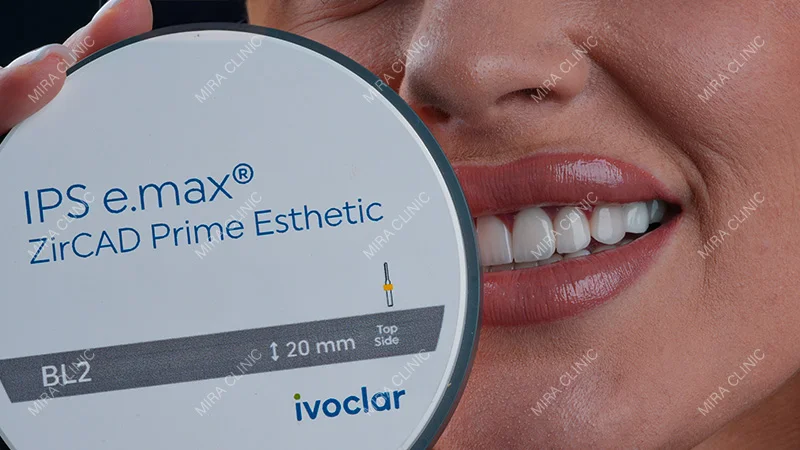
E-max veneers are commonly considered for aesthetic smile restoration because lithium disilicate ceramic can provide natural-looking translucency and suitable mechanical properties for selected cases.
However, the choice of material should reflect the underlying tooth shade, remaining enamel, bite, and restorative design.
A darker tooth may require different shade management from a healthy tooth receiving a subtle cosmetic improvement.
The correct material can help achieve the intended appearance without relying unnecessarily on deeper preparation.
The Role of Mira Clinic's In-House Dental Lab
Mira Clinic's in-house dental laboratory supports coordination between dentists and technicians during smile design and restoration manufacturing.
This communication can assist with veneer thickness, shade selection, tooth proportions, temporary restorations, and fitting adjustments.
Planning the final veneer shape before preparation is particularly valuable because it helps the dentist evaluate the space actually needed for the ceramic.
An in-house lab does not eliminate all clinical risks, but it can support a more closely coordinated restorative workflow.
Final Verdict: How Much Tooth Preparation Is Really Necessary?
Veneer preparation should remove only the amount of tooth structure needed for a clinically appropriate restoration.
Minimal preparation is often preferable when the teeth are healthy and favorably aligned. Deeper preparation may occasionally be considered for difficult restorative situations, but it should not be the default approach to a Hollywood Smile.
Patients should understand that excessive enamel removal can increase the risk of sensitivity, bonding complications, pulp irritation, and future restorative costs.
At Mira Clinic in Istanbul, smile restoration planning is supported by clinical assessment, material selection, and an in-house dental laboratory. The objective is to achieve natural-looking veneers while preserving as much healthy tooth structure as clinically possible.
The best veneer treatment is not defined by how much the teeth are reshaped. It is defined by how carefully the dentist balances aesthetics, function, and long-term dental health.
Read more: Veneer Complications: Why Fixing Failed Veneers Can Cost More Than Treatment