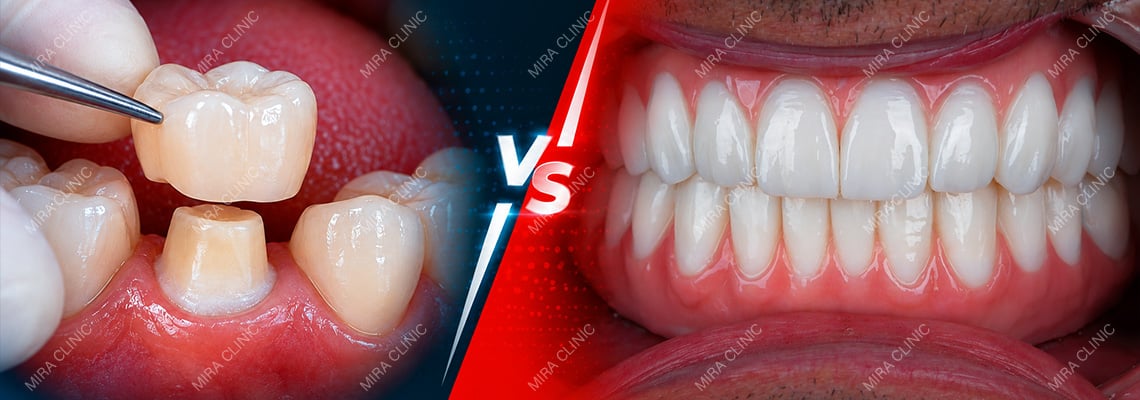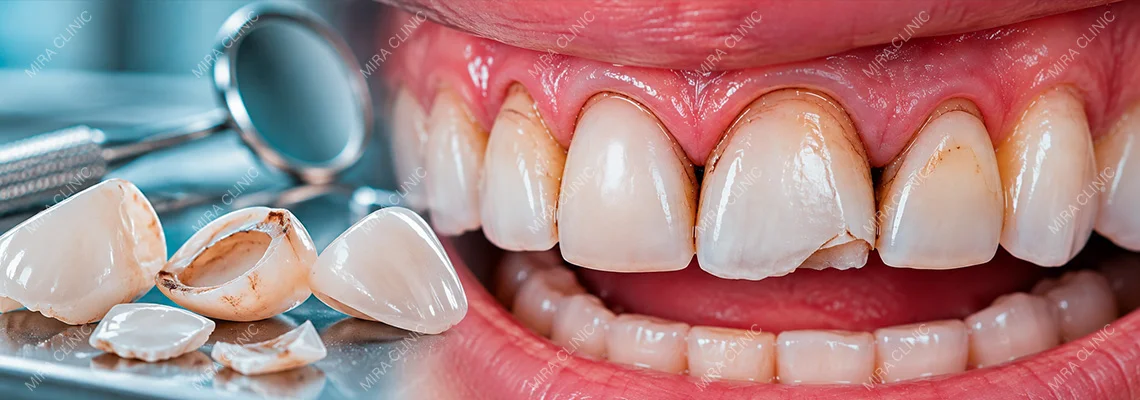
Most patients receive their final dental implant crown approximately 3–6 months after implant placement, although some cases can be restored sooner. The waiting period depends on bone quality, implant stability, gum healing, surgical complexity, and whether additional procedures such as bone grafting or sinus lifting are needed.
Some patients may receive temporary teeth immediately after surgery, but this does not necessarily mean the implant is ready for a permanent crown. The final restoration is generally fitted when the dentist confirms sufficient implant stability and healthy surrounding tissues.
For international patients planning dental implants in Turkey, understanding this waiting period is essential before booking flights, hotel accommodation, or treatment packages.
At Mira Clinic in Istanbul, implant and crown treatment planning considers the surgical procedure, healing requirements, and final restoration together so patients can understand their treatment timeline before travelling.
- How Long Do You Wait Between Dental Implant Surgery and Crown Placement?
- What Determines When an Implant Is Ready for a Crown?
- Can You Get a Temporary or Permanent Crown Immediately After Implant Surgery?
- How Do Bone Grafting, Sinus Lifts, and Health Conditions Affect Healing?
- What Happens During Dental Implant Crown Placement?
- How Many Visits to Turkey Are Needed for Implants and Crowns?
- How Do You Know Your Implant Is Ready for the Final Crown?
How Long Do You Wait Between Dental Implant Surgery and Crown Placement?
The waiting period between implant surgery and final crown placement commonly ranges from three to six months. However, this is not a fixed rule for every patient.
The purpose of waiting is to allow the implant to establish sufficient stability within the jawbone through a biological process called osseointegration.
During this period, the surrounding bone heals and remodels around the implant surface. The implant must become stable enough to support the planned restoration and chewing forces.
Typical Dental Implant Healing Timeline
|
Treatment stage |
Approximate timing |
|---|---|
|
Implant surgery |
First treatment appointment |
|
Initial gum healing |
First 1–2 weeks |
|
Bone integration and healing |
Commonly 3–6 months |
|
Final assessment and scans |
After sufficient healing |
|
Abutment and final crown placement |
When implant and tissues are ready |
These stages vary according to the patient's health, implant location, stability, and treatment complexity. Some carefully selected implants can be restored earlier.
Does the Upper Jaw Need More Healing Time?
Healing requirements can differ between the upper and lower jaws.
The upper jaw sometimes has less dense bone, particularly in posterior regions, which may affect initial implant stability.
The lower jaw often has denser bone, but it also contains important anatomical structures, including nerves that must be considered during implant planning.
The dentist should assess each implant site rather than promising one waiting period for every tooth.
Why Is Waiting Important?
Placing a definitive crown before the implant can support the intended forces may expose it to unnecessary movement or mechanical stress.
The risk depends on the implant's stability, bite conditions, and the type of restoration.
Waiting is not simply a scheduling delay. It may be an essential part of creating suitable conditions for the final implant crown.
What Determines When an Implant Is Ready for a Crown?
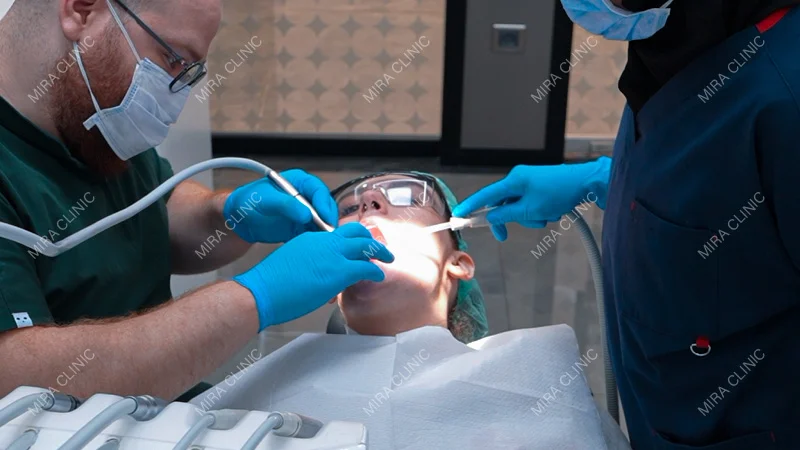
The main factors affecting dental implant crown placement are implant stability, bone support, healing progress, gum condition, and the forces the final restoration will receive.
Two patients receiving the same implant brand may have different treatment timelines because their anatomical and medical conditions are different.
Osseointegration and Implant Stability
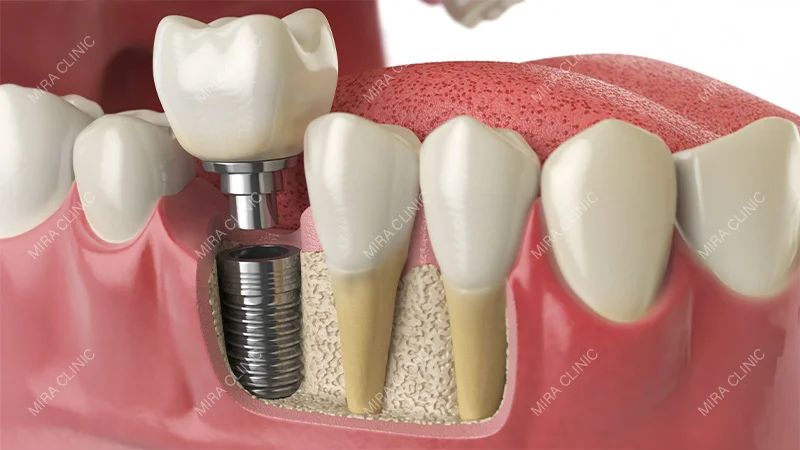
Osseointegration is the process through which bone establishes a stable biological connection with the implant surface.
Immediately after placement, the implant relies on primary stability, which is the mechanical stability achieved within the bone during surgery.
As healing progresses, biological integration contributes to the implant's stability.
Dentists may evaluate stability using clinical findings and specialized measurements, such as resonance frequency analysis, when appropriate.
A comfortable, pain-free implant does not automatically prove that osseointegration is complete.
Bone Quality and Implant Position
An implant placed in adequate, healthy bone may have a different healing requirement from one placed in a region with limited bone volume or extensive previous tooth loss.
Implant dimensions, available bone, insertion stability, and planned loading conditions can all affect when the final crown should be fitted.
Gum Healing Around the Implant
Healthy gum tissue contributes to proper implant restoration.
Before final crown placement, the dentist assesses tissue healing, inflammation, hygiene access, and the shape of the gum surrounding the implant.
In visible front-tooth areas, additional time may be useful to develop a natural-looking gum contour around the final restoration.
Can You Get a Temporary or Permanent Crown Immediately After Implant Surgery?
Yes, some patients can receive temporary teeth immediately after implant placement. However, immediate restoration is not appropriate for every case, and a temporary crown should not be confused with a definitive crown.
Clinical implant protocols distinguish between immediate, early, and conventional loading.
Immediate Loading: Same-Day Teeth
Immediate loading refers to connecting a restoration that receives functional bite contact within approximately the first week after surgery.
It may be considered when the implant achieves suitable primary stability and the bone, bite, and prosthetic conditions support the approach.
This is sometimes used for selected single-tooth implants or full-arch implant treatments.
However, immediate loading requires careful case selection and should not be promised to every patient.
Temporary Crown vs Permanent Crown
A temporary implant crown may be fitted mainly to maintain appearance, support soft-tissue shaping, or provide limited function during healing.
In some cases, temporary restorations are deliberately kept out of heavy bite contact.
A permanent crown is designed for longer-term function and is fitted according to the implant's stability, gum condition, bite, and restorative plan.
For patients replacing a visible front tooth, temporary teeth may help maintain appearance while osseointegration continues.
When Is Delayed Crown Placement Better?
Conventional loading is often more appropriate when implant stability is limited, significant bone augmentation has been performed, or patient-specific conditions affect healing.
For these cases, a staged approach can be preferable to immediate loading.
The dentist should explain the reason for the selected timeline rather than recommending the fastest option automatically.
How Do Bone Grafting, Sinus Lifts, and Health Conditions Affect Healing?
The waiting period before dental implant crown placement can become longer when additional surgery or healing-related risk factors are involved.
Understanding these factors is especially important for patients travelling abroad, because an unexpected second healing stage may affect flight arrangements and treatment costs.
Bone Grafting Before Dental Implants
Bone grafting may be necessary when the jawbone does not provide sufficient support for an implant.
In some cases, the graft and implant can be placed during the same procedure.
In others, the graft must heal before implant placement can begin.
This distinction matters because the total treatment timeline may involve both a graft-healing period and an implant-integration period.
A patient with significant bone loss should not assume their crown can be fitted on the same schedule as a patient with healthy bone.
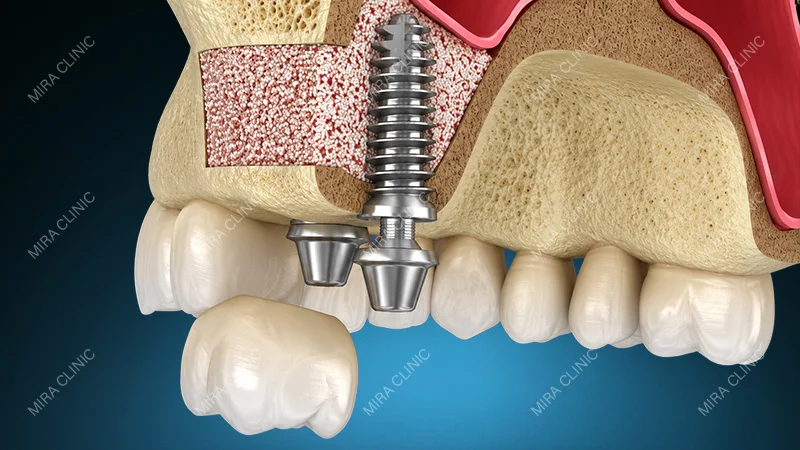
Sinus Lift and Upper Jaw Implants
A sinus lift may be required when there is insufficient bone height in the upper posterior jaw.
The procedure creates additional bone support for implant placement.
Depending on existing bone height and stability, the implant may be placed during the sinus lift or in a separate appointment after graft healing.
When procedures are staged, the overall treatment may take longer.
Smoking, Diabetes, and Healing Capacity
Smoking can affect wound healing and increase implant-related complications.
Diabetes may also influence healing, particularly when blood glucose is poorly controlled.
Other conditions, medications, gum disease, and immune-related factors may require additional assessment.
These conditions do not automatically prevent dental implants, but they can influence surgical planning, follow-up, and the decision about crown loading.
Infection or Complications After Surgery
Infection, persistent inflammation, inadequate tissue healing, or concern about implant stability may delay final crown placement.
Warning signs include increasing swelling, pus, persistent worsening pain, unusual bleeding, or mobility of an implant component.
Patients should contact their dentist promptly if these symptoms develop rather than waiting for the planned crown appointment.
What Happens During Dental Implant Crown Placement?
Once the implant has healed sufficiently, the restorative stage begins.
This usually involves checking the implant, confirming the soft-tissue condition, recording the implant position, selecting the abutment, and manufacturing the final crown.
The process may require several appointments depending on the restoration and laboratory workflow.
Implant Healing Assessment
The dentist checks the implant's clinical stability, surrounding gum tissue, bite requirements, and imaging where indicated.
If the implant is covered by gum tissue, a minor procedure may be required to expose it and place a healing abutment.
Additional soft-tissue healing may be needed before the final impression or scan.
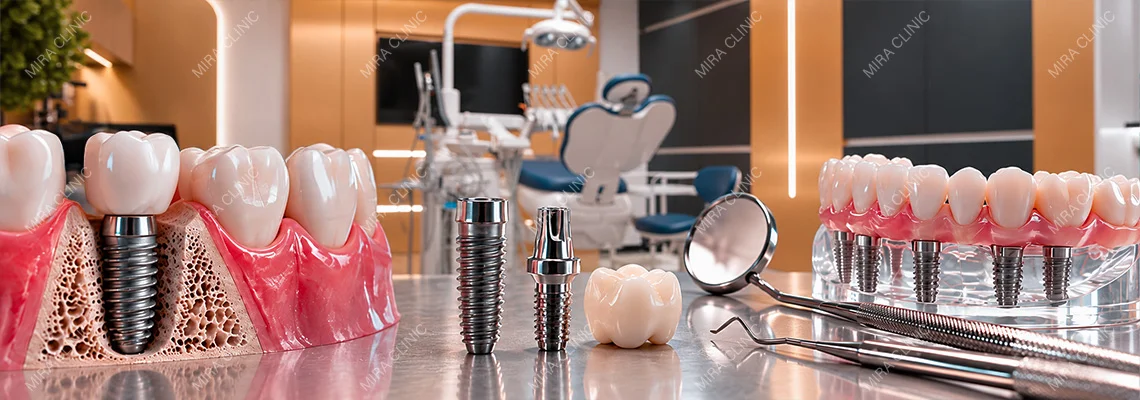
What Is a Dental Implant Abutment?
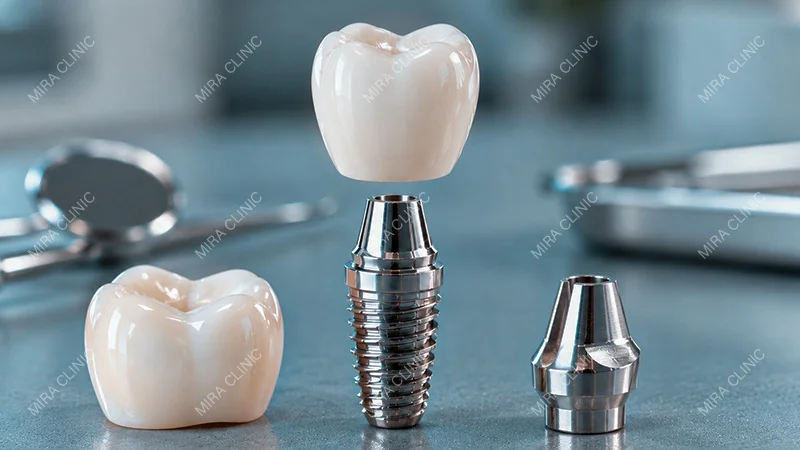
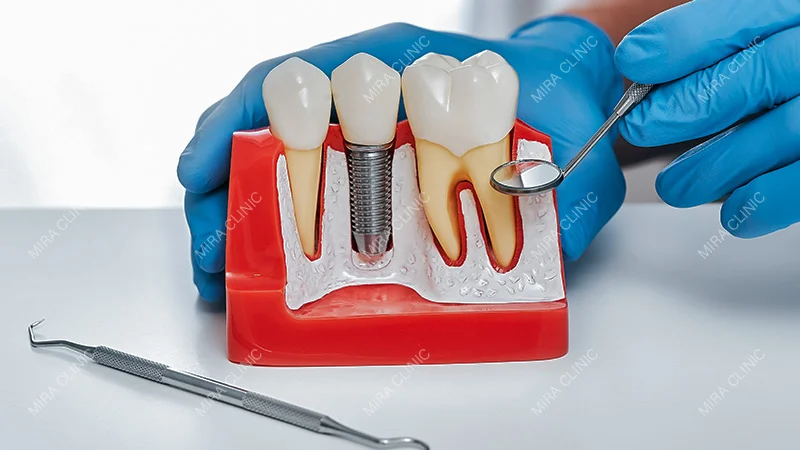
The dental implant abutment is the component that connects the implant body to the final crown.
Some patients receive a standard abutment, while others may need a customized component based on implant position, gum shape, and aesthetic requirements.
The abutment influences the shape and support of the final restoration.
This is why patients should confirm whether the abutment is included in their dental implant package.
Digital Scans and Crown Design
After the implant is ready, the dentist records the implant position and surrounding teeth using a digital scan or conventional impression.
The dental lab uses these records to design the implant crown.
Zirconia and other ceramic materials may be considered according to tooth location, bite forces, aesthetic expectations, and the selected restorative system.
At Mira Clinic, the in-house dental laboratory allows the dental team and technicians to coordinate implant crown design, shade selection, fitting, and adjustments within the same facility.
Final Crown Fitting
During the final appointment, the dentist evaluates the crown's fit, appearance, contact points, and bite.
The crown may be screw-retained or cement-retained, depending on the clinical design.
After fitting, the patient receives instructions about cleaning around the implant and maintaining the restoration.
Final crown placement completes the restorative stage, but ongoing dental maintenance remains necessary.
Read more: Are Dental Crowns in Turkey Worth It? Cost, Quality, and How to Choose the Right Clinic
How Many Visits to Turkey Are Needed for Implants and Crowns?
Patients travelling to Istanbul for dental implants often need to arrange treatment in two visits, particularly when conventional healing is planned.
The exact schedule depends on whether extractions, grafting, temporary teeth, or other procedures are required.
First Visit: Dental Implant Surgery
The initial visit may include consultation, CBCT imaging, treatment planning, extraction when needed, implant placement, and temporary restorations where suitable.
Patients should also allow enough time for postoperative assessment before travelling home.
The duration of the stay depends on the surgical plan rather than the implant procedure alone.
Healing Period Between Visits
After the first visit, patients generally return home while the implants integrate with the bone.
In many staged treatment plans, this interval is approximately three to six months.
For some Mira Clinic full-arch packages, the planned healing period is approximately three to four months, subject to clinical assessment.
Patients may use temporary teeth during this stage if their treatment plan allows.
Second Visit: Abutment and Crown Placement
The second visit may include evaluation of implant healing, digital scans, abutment selection, final crown production, fitting, and bite adjustment.
Patients requiring multiple implant crowns or full-arch restorations may need additional appointments for trials and modifications.
What Should You Confirm Before Booking?
Before booking an implant package in Turkey, patients should clarify:
- Whether one or two treatment visits are planned
- The expected healing interval
- Whether temporary teeth are included
- Whether abutments and final crowns are included
- How long the second visit may take
- Whether additional bone treatment could change the timeline
- How the clinic handles delayed healing
- What follow-up care is available after returning home
These questions can prevent misunderstandings about package prices and treatment scheduling.
Read more: Full Set of Dental Crowns Cost in Turkey: Zirconia, Porcelain & Packages
How Do You Know Your Implant Is Ready for the Final Crown?
Patients cannot reliably determine crown readiness simply because the gum has healed or the implant no longer feels sore.
The final decision requires clinical evaluation.
The dentist assesses implant stability, tissue health, symptoms, the original surgical findings, and the intended bite forces.
Signs of Satisfactory Healing
A favorable healing assessment may include healthy surrounding gum tissue, an absence of concerning pain or infection, stable implant findings, and sufficient support for the planned restoration.
However, these findings must be interpreted by the treating dentist.
Even if the surgical site looks completely healed, deeper bone integration may still be progressing.
Can the Crown Placement Be Delayed?
Yes. If implant stability is uncertain, the gums remain inflamed, or additional healing is required, the dentist may postpone final crown placement.
This is not necessarily a sign that the implant has failed.
A delayed crown may simply reflect a more cautious treatment approach.
Patients should not pressure the dentist to deliver the final crown before the clinical conditions are suitable solely to match a flight reservation.
Final Verdict: Plan the Crown Around Healing, Not Only Travel Dates
The waiting period before dental implant crown placement depends on bone integration, implant stability, gum health, surgical procedures, and individual healing conditions.
Many patients receive their final crowns after approximately three to six months, but immediate, early, and longer staged approaches may be appropriate in selected cases.
At Mira Clinic in Istanbul, dental implant treatment combines clinical assessment, imaging, surgical planning, and in-house dental laboratory coordination to support both implant placement and final restoration.
For international patients, the best approach is to obtain a clear two-stage treatment plan before booking. A well-planned schedule should explain what happens during the first visit, what must heal before the second visit, and when the final crown can safely be fitted.
The goal is not simply to receive the crown as quickly as possible. It is to complete the restoration when the implant is ready to support it.
Read more: Crown Fell Off With Root Decay: Can the Tooth Still Be Saved?