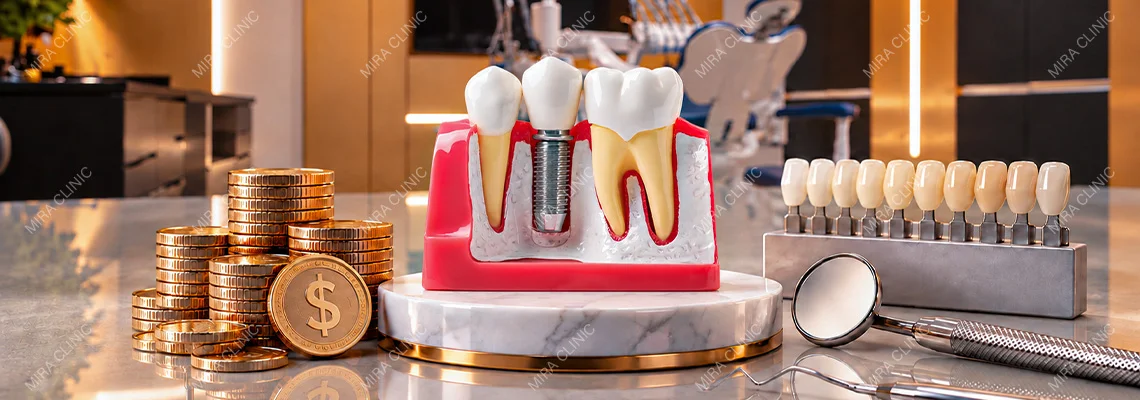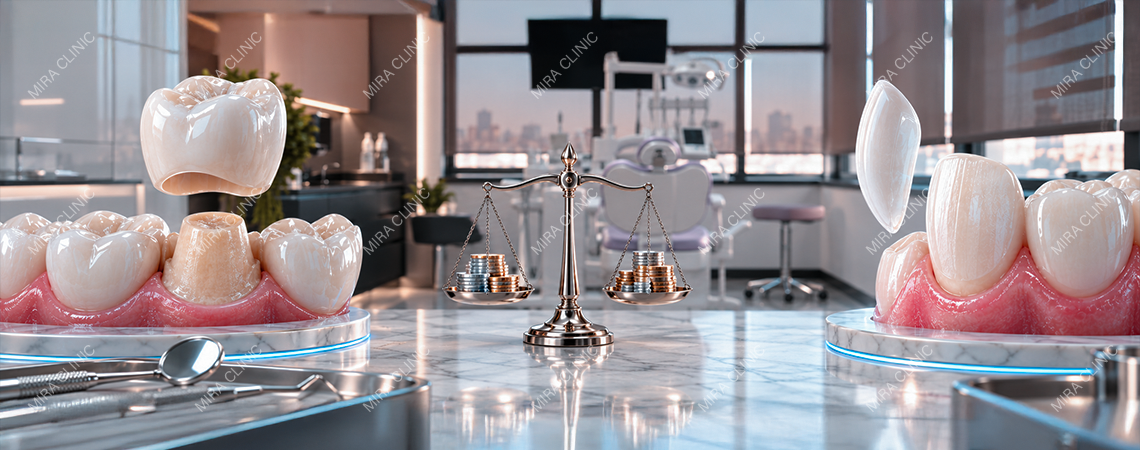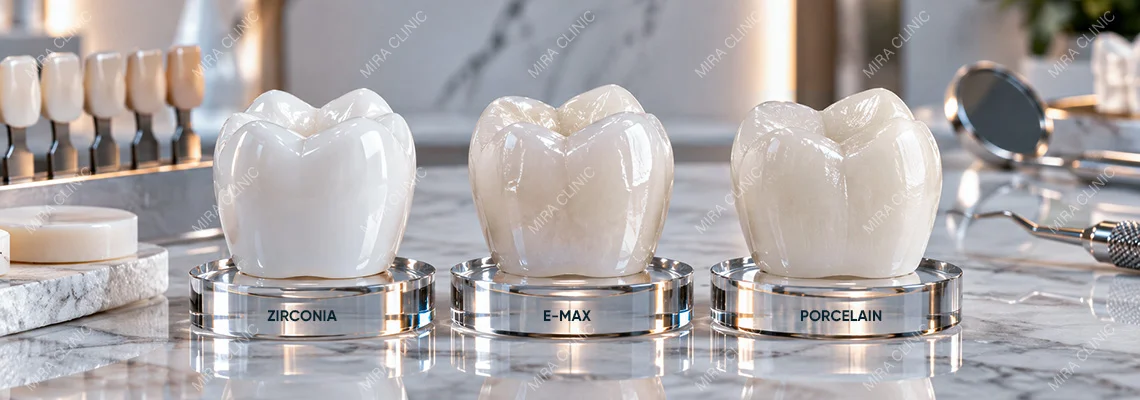
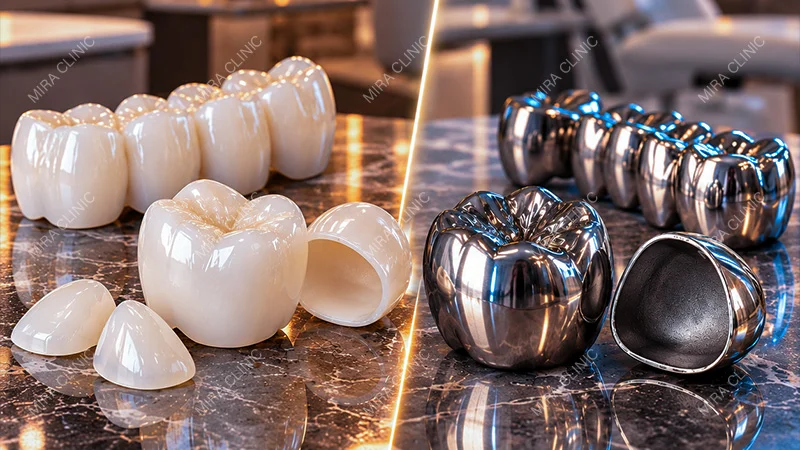
The most common dental crown types include zirconia, E-max, porcelain-fused-to-metal, all-ceramic, and metal crowns. Each material has different advantages in strength, appearance, cost, and suitability for front or back teeth. In Turkey, dental crown prices commonly range from approximately €120 to €350 per tooth, although premium materials and complex cases may cost more.
Zirconia crowns are often selected for teeth exposed to stronger chewing forces, while E-max crowns are frequently considered for front teeth where natural translucency is important. Porcelain-fused-to-metal crowns may provide a more affordable alternative in selected cases, and metal crowns remain useful where durability matters more than appearance.
However, choosing the right dental crown involves more than comparing material prices. The dentist must evaluate how much natural tooth remains, whether the tooth has undergone root canal treatment, its position in the mouth, and whether additional procedures are necessary.
At Mira Clinic in Istanbul, dental crown treatment planning considers these factors before recommending a single crown, multiple restorations, or a comprehensive smile restoration.
- What Are the Different Types of Dental Crowns?
- How Much Does Each Type of Dental Crown Cost?
- Which Dental Crown Type Is Best for Front Teeth, Back Teeth, and Damaged Teeth?
- How Many Dental Crowns Do You Need?
- What Additional Treatments Can Affect Dental Crown Cost?
- How Does the Dental Crown Procedure Work?
- How to Choose Affordable Dental Crowns Without Compromising Quality
- Final Verdict: Which Dental Crown Type Is Worth the Cost?
What Are the Different Types of Dental Crowns?
Dental crowns are custom-made restorations designed to cover and protect teeth that are damaged, weakened, extensively filled, or structurally compromised.
The materials used to manufacture a crown influence its appearance, strength, preparation requirements, and cost.
Zirconia Dental Crowns
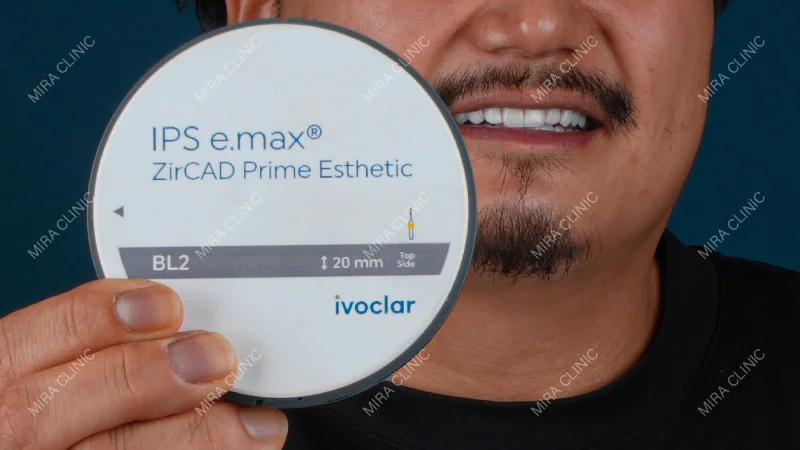
Zirconia crowns are manufactured from zirconium dioxide, a strong ceramic material commonly used in restorative dentistry.
They are popular for back teeth, heavily restored teeth, and multiple-crown treatments because they offer high fracture resistance.
Modern zirconia materials can also provide attractive tooth-colored results, although translucency varies by formulation.
Advantages: High strength, metal-free construction, and suitability for many restorative applications.
Limitations: Some formulations may appear less translucent than glass ceramics, while poor surface finishing or incorrect bite adjustment can contribute to wear-related problems.
Zirconia is often a practical choice when the dentist prioritizes both strength and appearance.
E-max Dental Crowns
E-max crowns commonly refer to lithium disilicate ceramic restorations.
They are frequently selected for visible front teeth because they can reproduce natural-looking translucency, shade, and light reflection.
E-max may also be suitable for selected premolars and other teeth when the remaining structure and bite conditions support its use.
Advantages: Excellent aesthetic potential, metal-free construction, and natural-looking translucency.
Limitations: Not every preparation or high-load situation is appropriate for lithium disilicate. Material thickness and bonding or cementation technique matter.
For patients comparing E-max vs zirconia crowns, the correct choice depends on tooth location and restorative requirements rather than appearance alone.
Porcelain-Fused-to-Metal Crowns
Porcelain-fused-to-metal crowns, often abbreviated as PFM crowns, have a metal framework covered by tooth-colored porcelain.
They have been used for many years and remain an option for selected restorative situations.
Advantages: Established clinical use, useful mechanical properties, and potentially lower pricing than some premium ceramic options.
Limitations: The metal framework may affect translucency, porcelain can chip, and a darker margin may become visible if the gums recede.
Patients should also disclose known metal allergies before selecting a metal-containing restoration.
All-Ceramic and Porcelain Crowns
All-ceramic crowns contain no metal framework. This category includes different ceramic materials with varying levels of translucency and strength.
The term “porcelain crown” is sometimes used broadly, so patients should ask whether the proposed restoration is lithium disilicate, zirconia, feldspathic porcelain, or another ceramic system.
Material identification matters because not all all-ceramic crowns have the same properties or price.
Gold and Metal Crowns
Metal crowns are produced from dental alloys, including gold-containing and other metal formulations.
They can offer high durability and may require relatively conservative preparation in suitable cases.
Their main limitation is appearance, making them more appropriate for less visible areas when the patient accepts a metallic restoration.
Gold-alloy costs may fluctuate according to the material and laboratory charges.
How Much Does Each Type of Dental Crown Cost?
Dental crown cost by type depends on material, tooth location, dentist experience, laboratory production, and the amount of restorative work needed before fitting the crown.
In Turkey, published 2026 prices vary between providers, so patients should view advertised figures as market estimates rather than guaranteed treatment quotations.
Dental Crown Cost by Material in Turkey
|
Dental crown type |
Approximate cost per tooth |
|---|---|
|
Porcelain-fused-to-metal crown |
€120–€200 |
|
Standard zirconia crown |
€180–€300 |
|
Aesthetic or multilayer zirconia crown |
€220–€350 |
|
E-max crown |
€220–€400 |
|
Other all-ceramic crown |
€200–€400 |
These are broad indicative Turkish market ranges. They are not Mira Clinic's official crown prices and may not represent equivalent package inclusions.
A crown quote should specify whether the price covers the restoration alone or also includes consultation, imaging, preparation, temporary teeth, laboratory work, and final fitting.
Why Are Some Crown Types More Expensive?
Material production is one factor, but the final cost also depends on manufacturing complexity and clinical requirements.
For example, an aesthetic front-tooth crown may require detailed shade characterization and additional laboratory work.
A posterior crown may require material selection and design focused on chewing forces.
The cost may also increase if a dentist needs to remove an old restoration, rebuild the underlying tooth, or treat infection.
Is the Cheapest Dental Crown Worth Choosing?
A lower-cost crown can provide good value when the material is clinically appropriate and the preparation and fitting are performed correctly.
However, the cheapest crown is not necessarily the most affordable over time.
A restoration that develops repeated problems may require adjustments, replacement, or treatment of the underlying tooth.
The better comparison is the complete cost of restoring and maintaining the tooth—not simply the price of the ceramic or metal crown.
Which Dental Crown Type Is Best for Front Teeth, Back Teeth, and Damaged Teeth?
The best dental crown type depends on where the tooth is located, how much natural structure remains, and what forces the restoration must tolerate.
A material that works well for a front tooth may not be the preferred choice for a heavily loaded molar.
Best Dental Crowns for Front Teeth
Front teeth are highly visible, so tooth shape, translucency, shade, and gum integration are important.
E-max or other aesthetic ceramic crowns may be appropriate when the dentist needs to reproduce the appearance of natural enamel.
Aesthetic zirconia can also be considered when the tooth needs greater masking ability or different strength characteristics.
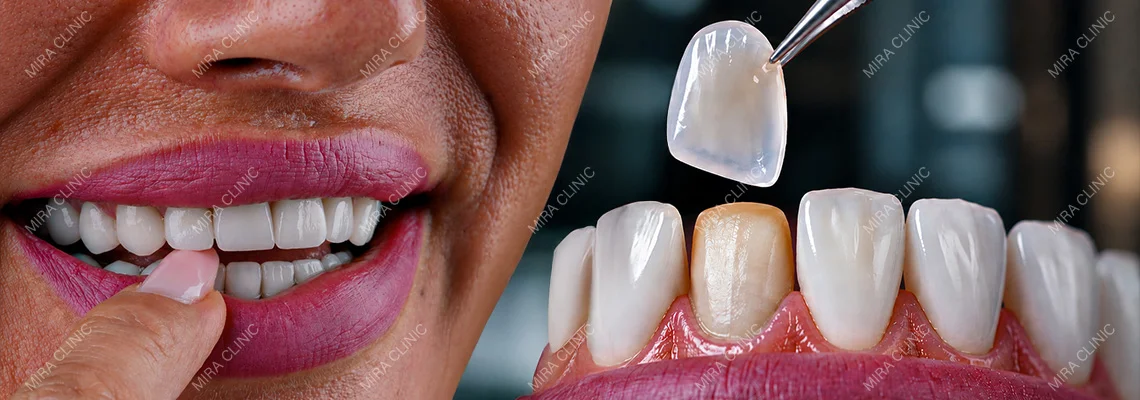
However, if the front tooth is largely healthy and only needs minor cosmetic changes, a veneer or another conservative treatment may be preferable to a crown.
Best Dental Crowns for Back Teeth
Molars and premolars are exposed to substantial chewing forces.
Zirconia is frequently considered for posterior crowns because of its mechanical properties.
Metal crowns may also remain useful for selected back teeth, especially where appearance is less important.
The dentist should check bite forces, grinding habits, available restorative space, and remaining tooth structure before recommending a material.
Best Crowns for Root Canal-Treated Teeth
Some root canal-treated teeth require crowns, particularly when they have large fillings or significant structural loss.
The important factor is not simply whether the tooth has received root canal treatment.
It is how much sound tooth structure remains and whether the tooth needs cuspal coverage or additional protection.
A dentist may recommend a crown, onlay, or another restoration depending on the case.
Crowns for Teeth With Severe Discoloration or Old Fillings
Teeth with extensive restorations, dark discoloration, or weakened enamel may need full coverage.
Zirconia or another suitable ceramic may help mask the underlying tooth while restoring its shape.
However, discoloration alone does not always justify crowning a healthy tooth.
The dentist should discuss whitening, veneers, and other alternatives when appropriate.
How Many Dental Crowns Do You Need?
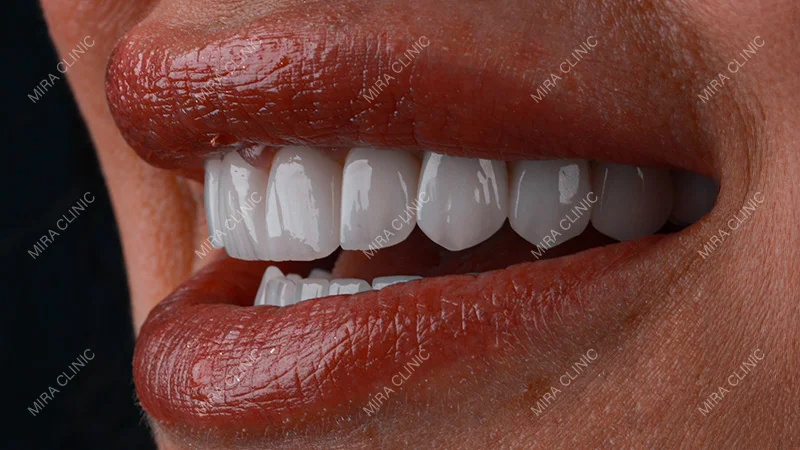
The number of crowns should be determined by examining each tooth individually.
Some patients need only one crown to restore a damaged tooth. Others may require several crowns because of widespread tooth wear, old restorations, or structural problems.
A full set should never be recommended solely because the patient wants a brighter smile.
Case 1: One Broken Molar
A patient has one fractured molar with a large existing filling.
If the root is healthy and sufficient tooth structure remains, a single crown may be suitable.
Healthy neighboring teeth should not require crowns simply because one molar is damaged.
This is often the most conservative and economical restorative approach.
Case 2: Four Teeth With Extensive Restorations
A patient has four teeth with failing old fillings and repeated fractures.
After examination and radiographs, the dentist may find that several crowns are necessary.
Other teeth may still be restored with smaller fillings or onlays.
In this situation, the treatment plan could include different restorations rather than placing crowns on every tooth.
Case 3: Extensive Tooth Wear and Multiple Damaged Teeth
A patient has severe wear affecting the front and back teeth, reduced tooth anatomy, and several failing restorations.
The dentist may consider a more comprehensive restorative plan involving multiple crowns.
However, the bite must be evaluated carefully before determining the number of restorations.
The goal is to restore function, not simply produce a uniform white smile.
Case 4: Missing Teeth and Existing Damaged Teeth
A patient is missing two posterior teeth and also has several heavily damaged natural teeth.
Crowns may be appropriate for the remaining restorable teeth, but missing teeth cannot be replaced using standalone crowns.
The patient may need an implant-supported crown, traditional bridge, or another tooth replacement option.
This distinction is important when comparing dental crown packages with full-mouth dental implant treatment.
Read more: Zirconia vs Porcelain-Fused-to-Metal Crowns for Back Teeth: Which Handles Chewing Better?
What Additional Treatments Can Affect Dental Crown Cost?
A crown may be only one part of the final treatment plan.
Some teeth need additional procedures before a crown can be fitted safely.
These treatments can increase the total cost, number of appointments, and sometimes the overall treatment timeline.
Root Canal Treatment Before a Crown
If the dental pulp is irreversibly inflamed or infected, root canal treatment may be necessary before restoring the tooth.
However, root canal treatment is not required for every crown.
The dentist should evaluate symptoms, clinical findings, and radiographs before deciding.
Patients should confirm whether endodontic treatment is included in the crown quotation or billed separately.
Post and Core Build-Up
When a tooth has lost substantial structure, a core build-up may be necessary to support the final crown.
A post may be used in selected root canal-treated teeth when additional retention is needed for the core.
Posts do not automatically strengthen a tooth, and not all root canal-treated teeth require one.
The type of reconstruction depends on the remaining healthy tooth structure.
Crown Lengthening
If decay or a fracture extends below the gumline, crown lengthening may sometimes expose enough healthy tooth structure for a predictable restoration.
However, this procedure is not appropriate for every tooth.
The dentist must evaluate root length, bone support, the future crown margin, and whether the tooth remains worth preserving.
Gum Treatment and Deep Decay Removal
Inflamed gums, active periodontal disease, or deep decay may need treatment before crown preparation and fitting.
A crown placed over an untreated problem may fail to protect the tooth adequately.
These procedures should be included in the final treatment plan when clinically necessary.
Dental Crown Cement and Adhesive
Dental crown cement is the material used to retain many crowns on prepared teeth or abutments.
The cementation or bonding technique depends on the crown material, tooth preparation, available retention, and restorative design.
For example, certain ceramic crowns can benefit from adhesive bonding protocols, while other restorations may be conventionally cemented when appropriate.
The correct cement and application technique matter because poor retention, excess cement, or inadequate margin control may contribute to crown complications.
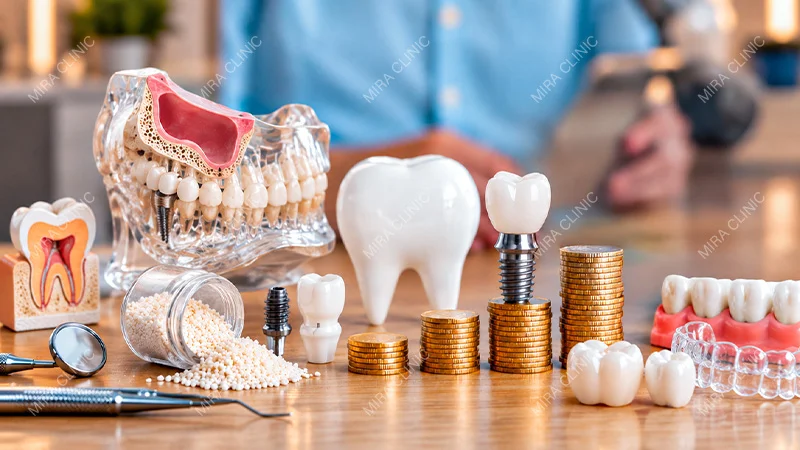
Implant Crowns and Bridges
A crown placed over a dental implant is different from a crown on a natural tooth.
An implant restoration requires implant components and a compatible connection system.
A traditional dental bridge may also involve crowns on supporting teeth.
Patients should clarify whether their quotation covers a crown on a natural tooth, a crown on an implant, or a multi-unit bridge.
How Does the Dental Crown Procedure Work?
Dental crown treatment usually follows several stages, from diagnosis to final fitting.
The process may involve more visits when the tooth needs root canal treatment, gum care, or complex reconstruction.
Dental Examination and Imaging
The dentist first evaluates tooth condition, gum health, bite, and existing restorations.
X-rays may help identify decay, infection, root problems, and supporting bone conditions.
CBCT is not routinely required for a straightforward crown but may be indicated for selected complex cases or implant planning.
Tooth Preparation
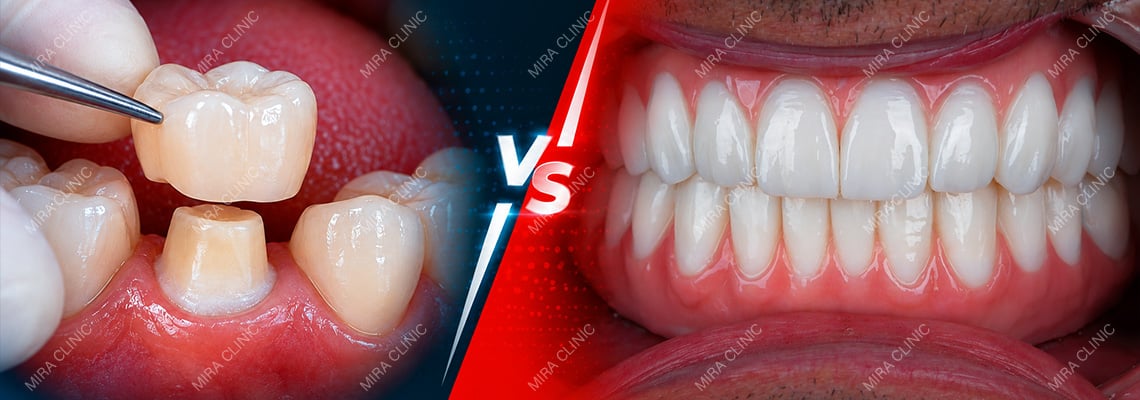
The tooth is prepared to create space for the selected crown material.
The preparation must provide adequate material thickness and suitable retention while preserving as much healthy tooth structure as clinically possible.
Removing too much natural structure can increase sensitivity and reduce future restorative options.
Digital Scans and Temporary Crowns
After preparation, the dentist takes a digital scan or conventional impression.
Temporary crowns may protect prepared teeth while the permanent restorations are produced.
They can also help evaluate appearance and comfort during treatment.
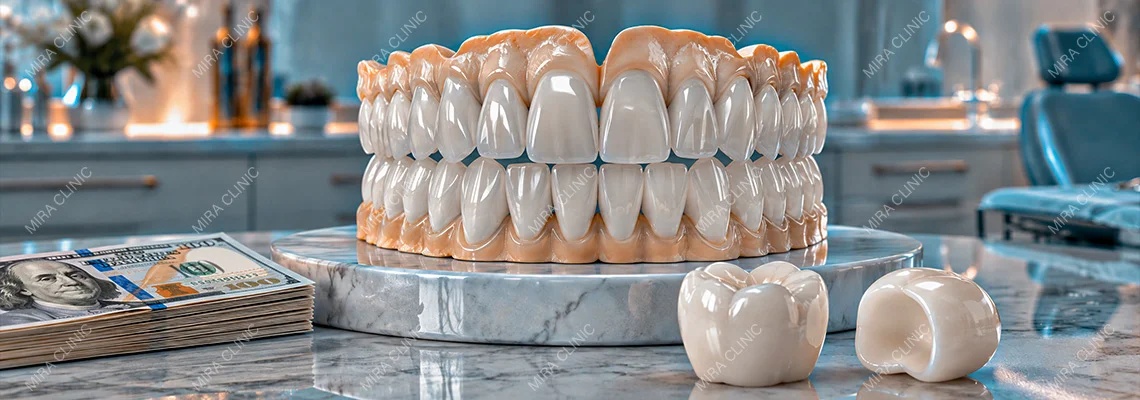
Dental Laboratory Production
The laboratory manufactures the crown according to the clinical records.
Crown anatomy, shade, contacts, and marginal adaptation must match the planned restoration.
At Mira Clinic, the in-house dental laboratory allows dentists and technicians to communicate directly about design, material selection, fitting, and necessary adjustments.
Final Crown Fitting and Bite Adjustment
Before permanent cementation or bonding, the dentist checks the crown's fit, shade, margins, and contact with neighboring teeth.
Bite adjustment is important because a crown that receives excessive force may cause discomfort or mechanical complications.
Patients then receive instructions about cleaning, eating, and maintaining the restoration.
Read more: Root Canal and Crown vs Dental Implant: Can the Natural Tooth Still Be Saved?
How to Choose Affordable Dental Crowns Without Compromising Quality
Affordable dental crowns should provide suitable clinical protection at a transparent price.
The objective is not to choose the most expensive material or automatically select the cheapest crown.
It is to choose a restoration that matches the tooth's actual needs.
Compare the Full Treatment Cost
A complete dental crown quotation should identify:
- Crown material and number of crowns
- Consultation and imaging
- Tooth preparation
- Temporary restorations
- Laboratory work
- Final fitting and cementation
- Additional treatments, if necessary
- Aftercare and guarantee conditions
Patients travelling to Turkey should also check whether accommodation, transfers, and other travel-related services are included.
An advertised per-tooth price may not reflect the full treatment cost.
Understand the Disadvantages of Dental Crowns
All crown materials have limitations.
Ceramic crowns can fracture or chip, metal-containing restorations may have aesthetic or sensitivity considerations, and crowns on natural teeth require preparation of the existing tooth structure.
Other potential problems include sensitivity, decay around crown margins, cement failure, gum irritation, or bite discomfort.
Appropriate clinical planning and maintenance can help reduce these risks, but no material eliminates them completely.
Consider Long-Term Value
Crown longevity depends on oral hygiene, bite forces, grinding habits, gum health, material choice, and the condition of the underlying tooth.
Patients should also consider whether the tooth may need future root canal treatment or replacement.
A well-made crown can provide long-term service, but all restorations require monitoring and may eventually need repair or replacement.
Choosing a suitable material and preserving healthy tooth structure are central to long-term value.
Read more: E-max vs Zirconia Crown Cost: What Are You Actually Paying For?
Final Verdict: Which Dental Crown Type Is Worth the Cost?
There is no single crown material that is best for every patient.
Zirconia may be a suitable choice for teeth requiring high strength. E-max may provide excellent aesthetic results for selected visible teeth. Porcelain-fused-to-metal crowns may offer an alternative when clinical requirements and budget support their use. Metal crowns remain useful for certain posterior restorations.
The number of crowns and any necessary additional procedures should be determined by the actual condition of the teeth, not by a standard package.
At Mira Clinic in Istanbul, dental crown treatment is supported by individualized diagnosis, material selection, and an in-house dental laboratory. This allows the restorative team to coordinate the preparation, design, shade, and final fitting of each restoration.
For patients comparing dental crown types and costs in Turkey, the strongest choice is the one that preserves the natural tooth wherever possible while providing appropriate function, appearance, and long-term care.
Read more: Dental Crown vs Onlay for a Cracked Back Tooth: Does the Whole Tooth Need Covering?