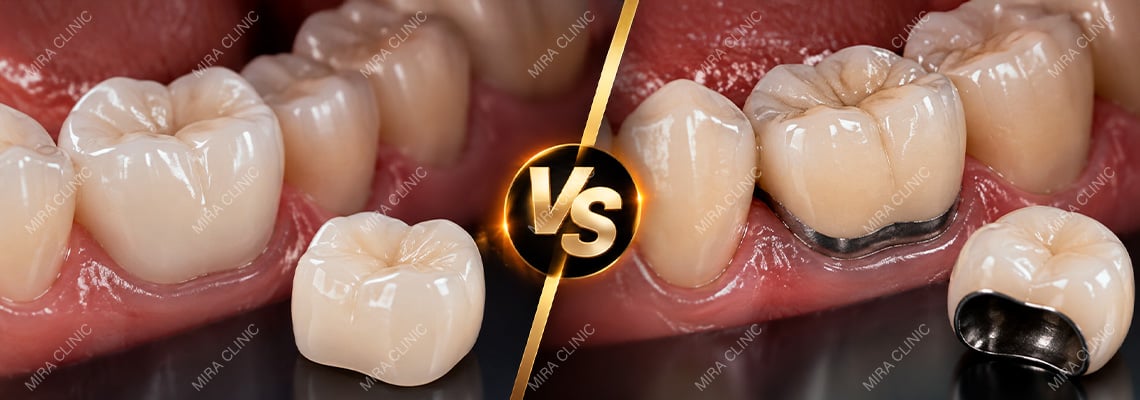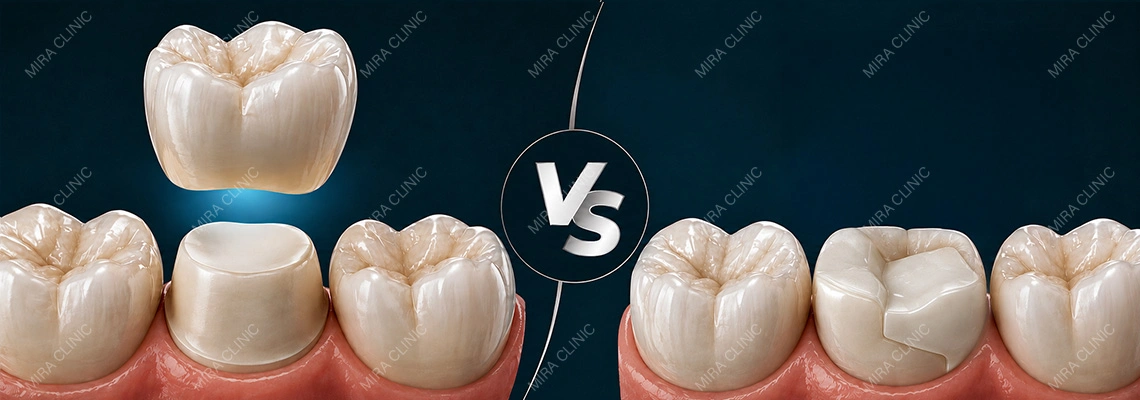
Patients comparing crown vs onlay usually have a cracked back tooth, a large old filling, or moderate tooth structure loss. The direct answer is that an onlay may preserve more natural tooth when the damage is limited to part of the tooth, while a crown may be needed when the whole tooth is weakened and needs full coverage.
An onlay covers and rebuilds the damaged chewing surface or weakened cusps without covering the entire tooth. A crown covers the full visible part of the tooth. The right choice depends on how much healthy tooth structure remains, where the crack is, how strong the tooth walls are, and how much chewing pressure the back tooth carries.
|
Treatment |
Best For |
Tooth Coverage |
|---|---|---|
|
Onlay |
Moderate damage |
Partial coverage |
|
Crown |
Weak tooth |
Full coverage |
|
Filling |
Small damage |
Local repair |
|
Final choice |
Case-based |
Exam + X-ray |
The goal is not to choose the treatment that sounds smaller or cheaper. The goal is to protect the cracked back tooth while preserving as much healthy structure as possible.
- Crown vs Onlay
- What Is a Dental Onlay?
- What Is a Dental Crown?
- Dental Onlay vs Crown for a Cracked Tooth
- When Is an Onlay for a Back Tooth Enough?
- When Does a Cracked Back Tooth Need a Crown?
- Does the Whole Tooth Need Covering?
- Crown vs Onlay Cost: What Affects the Price?
- How Dentists Decide Between Crown or Onlay
- Questions to Ask Before Choosing a Crown or Onlay
- Why Choose Mira Clinic for Cracked Back Tooth Treatment?
Crown vs Onlay
A dental onlay may be better when the cracked back tooth still has enough strong natural structure and only part of the chewing surface or cusps need coverage. A dental crown may be better when the tooth is heavily cracked, weakened, root canal-treated, or missing too much structure to support a partial restoration safely.
|
Question |
Onlay |
Crown |
|---|---|---|
|
Covers whole tooth? |
No |
Yes |
|
Preserves more tooth? |
Usually yes |
Less conservative |
|
Protects weak cusps? |
Yes |
Yes |
|
Best for severe damage? |
Not always |
Often yes |
|
Used for back teeth? |
Yes |
Yes |
|
Decision based on |
Structure |
Strength |
An onlay is often the middle option between a filling and a crown. It can provide more protection than a filling but may preserve more natural tooth than a full crown.
What Is a Dental Onlay?
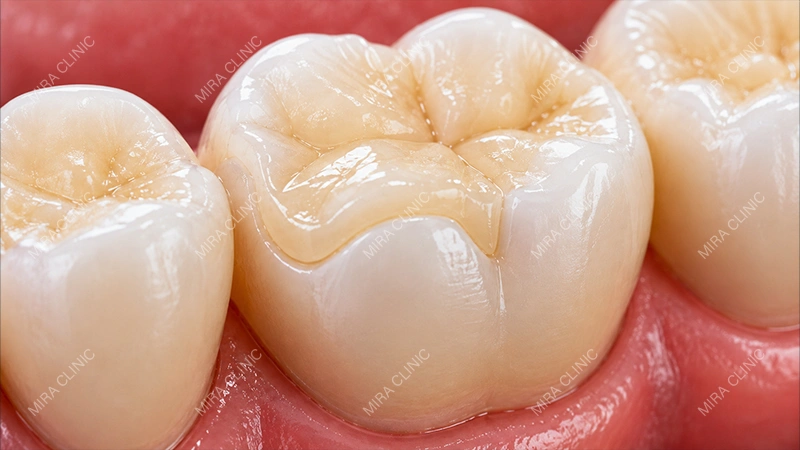
A dental onlay is an indirect restoration used to repair a damaged tooth when a filling may not be strong enough, but a full crown may not be necessary. It is usually made outside the mouth and then bonded or cemented to the tooth.
An onlay may cover one or more cusps of a back tooth. Cusps are the raised biting points on molars and premolars. When these cusps are cracked, thin, or weakened, an onlay can help rebuild the chewing surface while preserving the healthy parts of the tooth.
An onlay may be considered when:
- The damage is larger than a small filling
- One or more cusps need protection
- The tooth still has strong walls
- A large old filling needs replacement
- The crack is limited
- The dentist wants to preserve more natural tooth
This makes the onlay useful for moderate damage, especially when the tooth does not need full coverage.
What Is a Dental Crown?
A dental crown is a full-coverage restoration that covers the visible part of the tooth. It is used when the tooth needs stronger protection than a filling or onlay can provide.
A crown may be recommended when a back tooth has major structure loss, several weak walls, deep cracks, root canal treatment, or a high risk of fracture under chewing pressure. Because molars and premolars handle strong bite forces, a crown can help hold the tooth together when partial coverage is not enough.
A crown may be considered when:
- The tooth is heavily cracked
- Several cusps are weak
- A large part of the tooth is missing
- The tooth has a very large old filling
- The tooth had root canal treatment
- The remaining walls are thin
- The bite force is high
A crown is less conservative than an onlay because it usually requires more tooth preparation. However, it may be the safer option when the tooth needs full protection.
Dental Onlay vs Crown for a Cracked Tooth
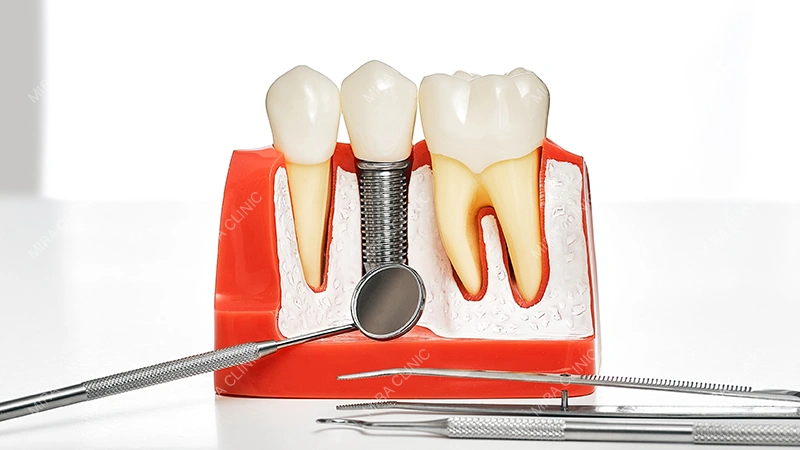
The choice between dental onlay vs crown for a cracked tooth depends on the crack pattern and the remaining tooth structure. A small or controlled crack may be treated differently from a crack that weakens the whole tooth.
An onlay may be suitable when the crack affects part of the chewing surface but the tooth still has enough stable structure. A crown may be needed when the crack involves several walls, extends deeper, or creates a risk that the tooth could split under chewing pressure.
|
Tooth Condition |
Possible Treatment Direction |
|---|---|
|
Small chip |
Filling or bonding |
|
Moderate cusp damage |
Onlay |
|
Large old filling |
Onlay or crown |
|
Multiple weak walls |
Crown |
|
Deep crack |
Crown or other treatment |
|
Split tooth |
May not be restorable |
A cracked back tooth should be evaluated carefully because the visible crack is not always the full problem. Pain when biting, sensitivity, old filling size, and X-ray findings all help guide the decision.
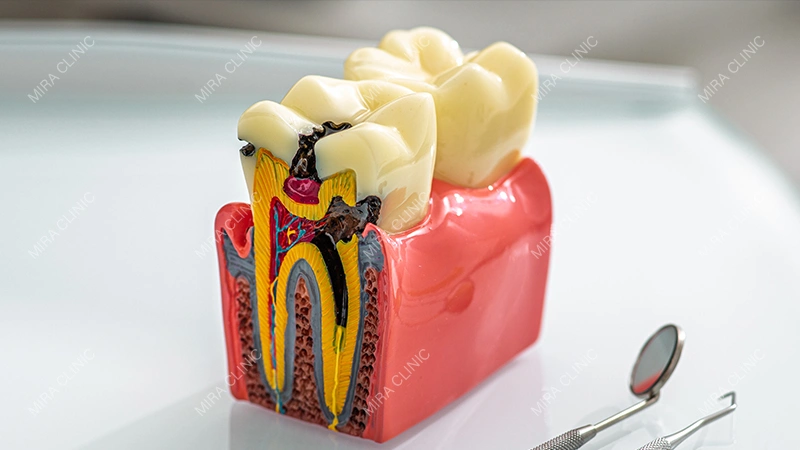
When Is an Onlay for a Back Tooth Enough?
An onlay for back tooth treatment may be enough when the tooth has moderate damage but still has strong healthy structure. This is common when the damage is too large for a simple filling but not severe enough for a full crown.
An onlay may work well when:
- One cusp is damaged
- The tooth walls are strong
- The crack is limited
- The old filling is large but controlled
- The bite can be adjusted safely
- The tooth does not need full coverage
- The patient wants a conservative restoration
The onlay can rebuild the damaged part while preserving more enamel and dentin. This is why many patients ask about onlays when they want to avoid unnecessary full-tooth coverage.
However, an onlay is not chosen only because it preserves more tooth. It must also provide enough strength for chewing. If the remaining tooth is too weak, a conservative restoration may become risky.
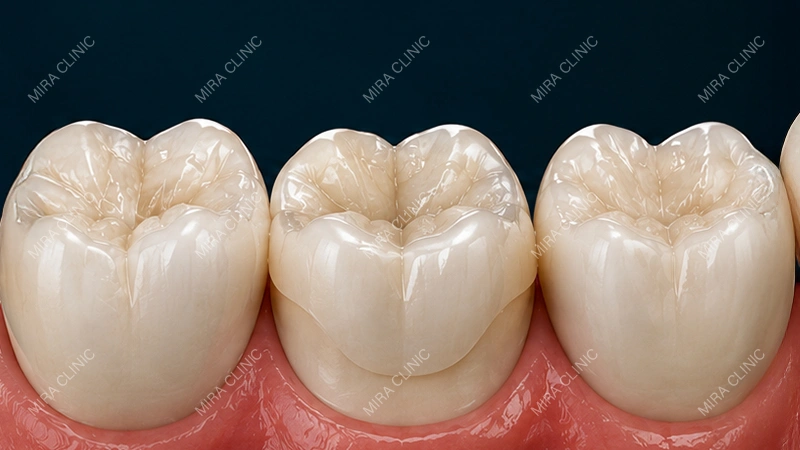
When Does a Cracked Back Tooth Need a Crown?
A cracked back tooth may need a crown when partial coverage would not protect the tooth predictably. This is more likely when the crack weakens multiple parts of the tooth or when a large filling has already removed too much structure.
A crown may be recommended when:
- Several cusps are weak
- The crack extends across the tooth
- The tooth has deep structural damage
- The remaining walls are thin
- The tooth had root canal treatment
- The bite pressure is high
- The tooth is at risk of splitting
The purpose of the crown is to cover and protect the tooth from further fracture. This does not mean every cracked tooth needs a crown, but when the tooth is structurally weak, full coverage may be safer than partial repair.
The dentist should explain why full coverage is needed instead of simply saying that a crown is stronger.
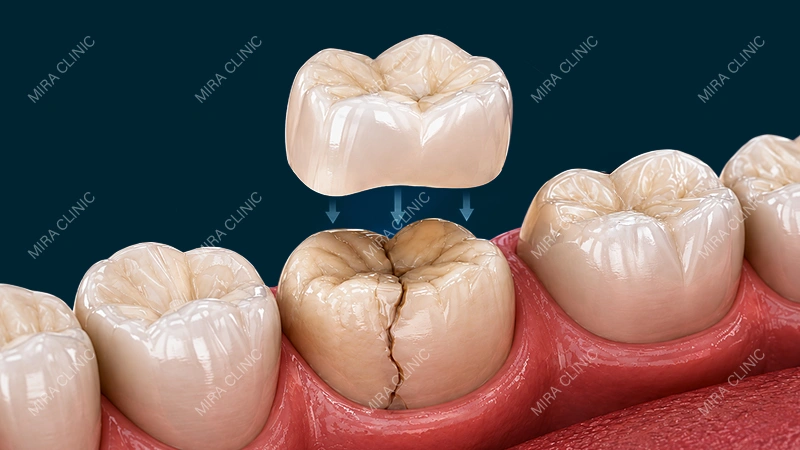
Does the Whole Tooth Need Covering?
The whole tooth needs covering only when the tooth cannot be protected safely with a smaller restoration. If enough healthy tooth remains, an onlay may cover only the damaged cusps or chewing surface. If the tooth is weakened more widely, a crown may be needed to cover the entire visible part of the tooth.
The decision depends on:
- Amount of remaining tooth structure
- Number of weakened cusps
- Crack direction
- Depth of damage
- Size of old filling
- Bite pressure
- Tooth position
- Root canal history
A crown is not automatically better because it covers more. An onlay is not automatically better because it removes less. The better treatment is the one that protects the tooth while avoiding unnecessary removal of healthy structure.
Read more: Root Canal and Crown vs Dental Implant: Can the Natural Tooth Still Be Saved?
Crown vs Onlay Cost: What Affects the Price?
The cost of a crown vs onlay depends on the material, tooth location, damage size, laboratory work, bite adjustment, and whether other treatment is needed first. A crown may cost more in some cases because it covers the whole tooth and may require more preparation. An onlay can also involve laboratory work and precision bonding, so it is not always a “cheap filling.”
|
Treatment |
Cost Direction |
Main Reason |
|---|---|---|
|
Filling |
Lower |
Direct repair |
|
Onlay |
Middle |
Partial lab restoration |
|
Crown |
Higher |
Full coverage |
|
Final cost |
Case-based |
Exam + X-ray |
Patients should ask whether the quote includes examination, X-rays, tooth preparation, temporary restoration if needed, final material, fitting, bite adjustment, and follow-up.
Cost should not be the only reason to choose a crown or onlay. A cheaper restoration that fails early can become more expensive later.
Read more: Dental Filling vs Crown for a Damaged Tooth: Which Treatment Preserves More Natural Tooth?
How Dentists Decide Between Crown or Onlay
Dentists decide between crown or onlay after checking whether the tooth can be protected with partial coverage or needs full coverage. The decision is based on structure and function, not only on appearance or price.
The dentist may evaluate:
- Crack location
- Number of weak cusps
- Size of old filling
- Remaining enamel
- Remaining dentin
- Bite force
- Root canal history
- Tooth sensitivity
- Gum and bone support
- Material options
If the tooth still has strong walls and only part of the chewing surface needs rebuilding, an onlay may be enough. If the tooth is weak around most of its structure, a crown may be more predictable.
The right treatment should preserve healthy tooth where possible while protecting the tooth from future fracture.
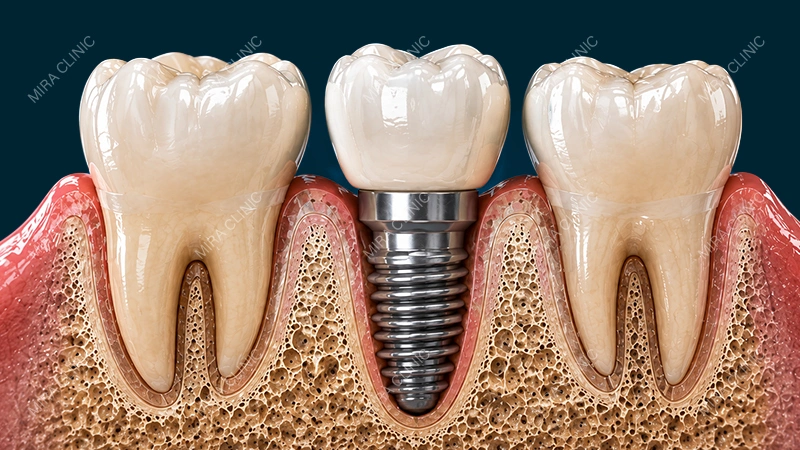
Questions to Ask Before Choosing a Crown or Onlay
Before treatment, patients can ask:
- How much healthy tooth structure remains?
- Which cusps are weak or cracked?
- Is the crack limited or deep?
- Can an onlay protect this tooth safely?
- Why do you recommend a crown instead of an onlay?
- Is a filling too small for this damage?
- What material will be used?
- Do I need root canal treatment first?
- What happens if the onlay fails?
- What happens if I delay treatment?
These questions help patients understand whether the recommendation is based on tooth preservation, fracture risk, or long-term strength.
Read more: Dental Filling vs Crown for a Damaged Tooth: Which Treatment Preserves More Natural Tooth?
Why Choose Mira Clinic for Cracked Back Tooth Treatment?
Mira Clinic in Istanbul, the best dental clinic which evaluates cracked and damaged back teeth based on clinical examination, X-rays, bite pressure, remaining tooth structure, old filling size, crack risk, and restoration options.
For patients comparing crown vs onlay, the goal is to preserve as much natural tooth as possible while choosing a restoration strong enough for daily chewing. Some cracked back teeth may be restored with an onlay, while others may need a full crown for protection.
The right plan should protect the tooth, restore comfort, and avoid unnecessary overtreatment.
Read more: How Can You Save €10,000 on Dental Implants Without Choosing Lower-Quality Treatment?