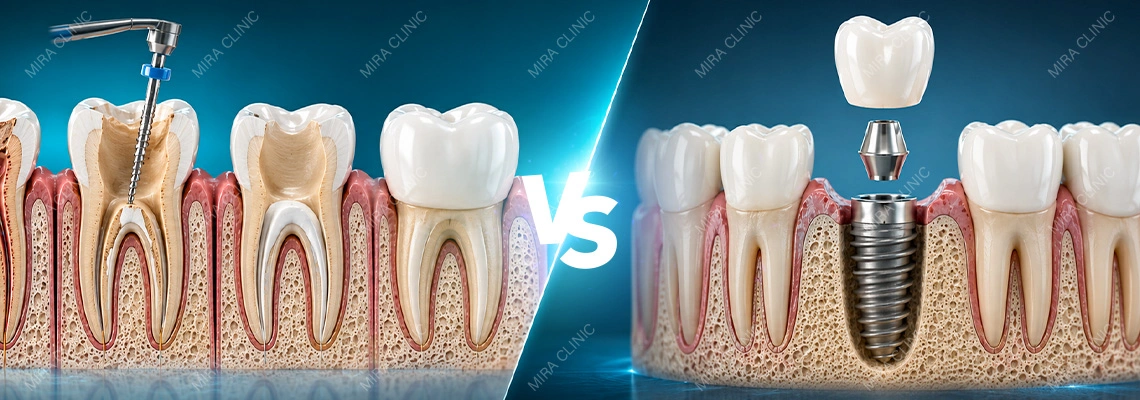
Patients comparing root canal vs dental implant usually have one urgent question: should the natural tooth be saved with root canal treatment and a crown, or should it be removed and replaced with an implant? The direct answer is that saving the natural tooth is often preferred when the root, bone support, and remaining tooth structure are still strong enough. A dental implant becomes the better option when the tooth cannot be predictably restored.
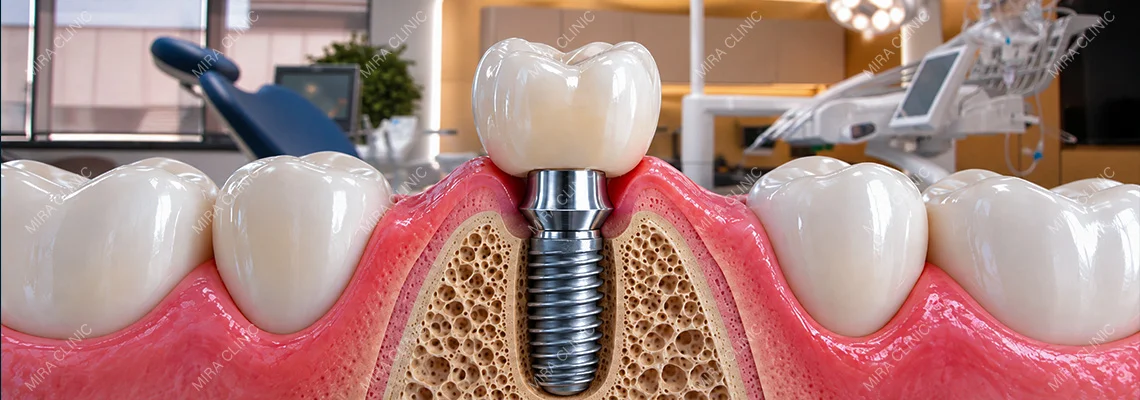
Root canal treatment removes infection from inside the tooth. A crown then protects the weakened tooth so it can continue functioning. A dental implant replaces the tooth after extraction by placing an artificial root in the jawbone and restoring it with a crown, bridge, or larger prosthesis.
|
Option |
Best For |
Main Goal |
|---|---|---|
|
Root canal and crown |
Restorable natural tooth |
Save the tooth |
|
Extraction and implant |
Non-restorable tooth |
Replace the tooth |
|
Final decision |
Case-based |
Exam + X-ray |
The goal is not to choose the most advanced treatment. The goal is to choose the option that gives the patient the most predictable long-term function with the least unnecessary intervention.
- Root Canal vs Dental Implant: Quick Answer
- What Does Root Canal and Crown Treatment Mean?
- What Does Extraction and Dental Implant Treatment Mean?
- Can the Natural Tooth Still Be Saved?
- Root Canal and Crown vs Implant: Which Is Better?
- When Is Root Canal and Crown the Better Choice?
- When Is Extraction and Dental Implant the Better Choice?
- Root Canal Retreatment vs Implant
- Cost of Root Canal and Crown vs Dental Implant
- How Dentists Decide: Save Tooth or Get Implant?
- Questions to Ask Before Deciding
- Why Choose Mira Clinic for Root Canal, Crowns, and Dental Implants?
Root Canal vs Dental Implant: Quick Answer
Root canal and crown treatment may be better when the natural tooth can still be saved. A dental implant may be better when the tooth is fractured below the gum, has severe bone loss, cannot support a crown, or has an infection that cannot be treated predictably.
|
Question |
Root Canal + Crown |
Dental Implant |
|---|---|---|
|
Keeps natural tooth? |
Yes |
No |
|
Requires extraction? |
No |
Yes |
|
Treats infected pulp? |
Yes |
No |
|
Replaces missing tooth? |
No |
Yes |
|
Needs enough tooth structure? |
Yes |
No |
|
Needs enough bone? |
Less directly |
Yes |
|
Best when |
Tooth is restorable |
Tooth cannot be saved |
If the tooth can be cleaned, sealed, restored, and protected with a crown, saving it may be the more conservative option. If the tooth is structurally hopeless, an implant may offer a more predictable replacement.
What Does Root Canal and Crown Treatment Mean?
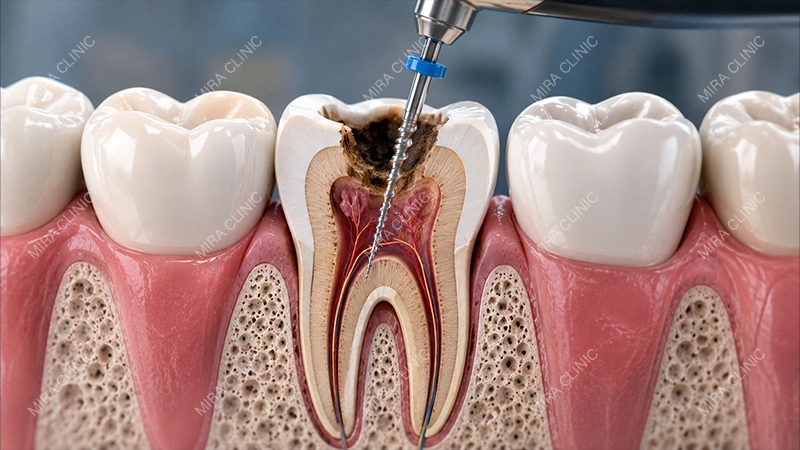
Root canal treatment is used when the inside of the tooth, called the pulp, becomes infected or inflamed. This can happen because of deep decay, repeated dental work, cracks, trauma, or a leaking old restoration.
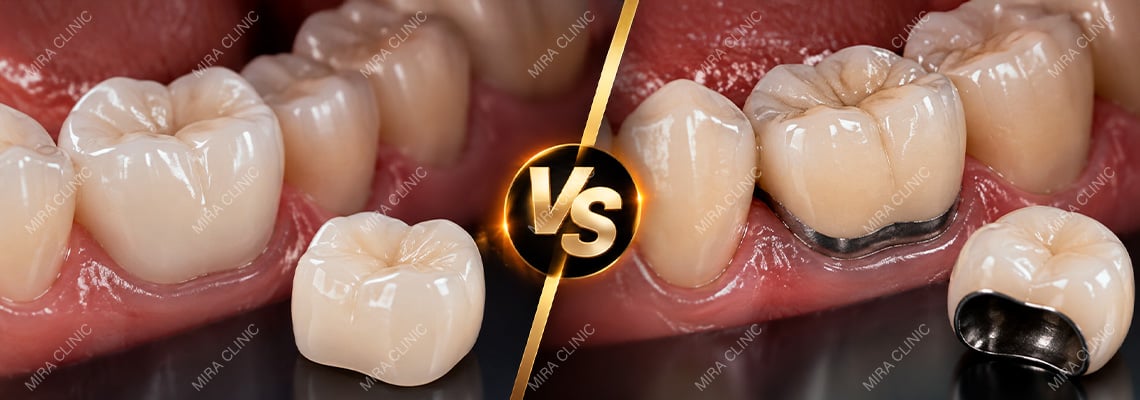
During root canal treatment, the dentist removes the infected tissue from inside the tooth, cleans the canals, disinfects the area, and seals the tooth. After that, a crown may be recommended, especially for back teeth or teeth with large structural damage.
A crown is often added because a root canal-treated tooth may be weaker if much of the natural structure has already been lost. The crown covers and protects the tooth so it can handle chewing pressure more safely.
Root canal and crown treatment may be suitable when:
- The tooth root is stable
- The crack does not make the tooth hopeless
- Enough tooth remains for a crown
- Bone support is acceptable
- The infection can be treated
- The tooth can be sealed properly
- The patient wants to keep the natural tooth
This treatment is mainly about preserving the tooth, not replacing it.
What Does Extraction and Dental Implant Treatment Mean?
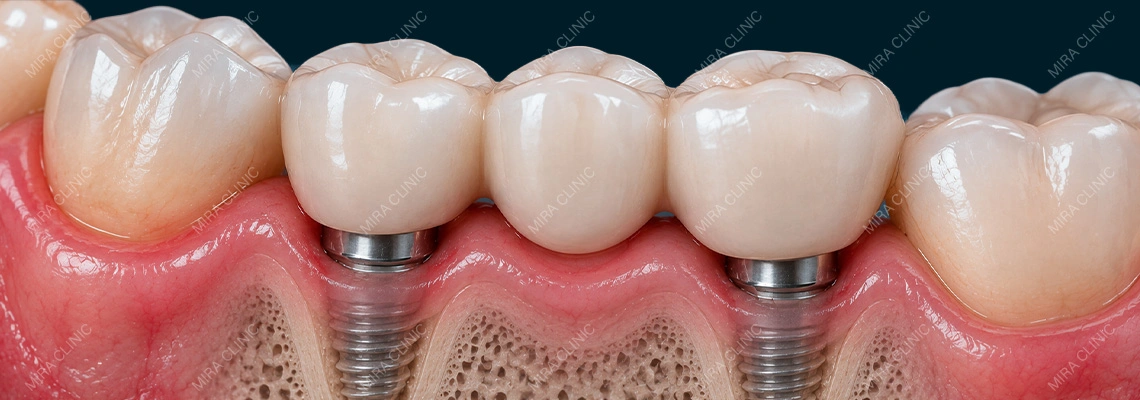
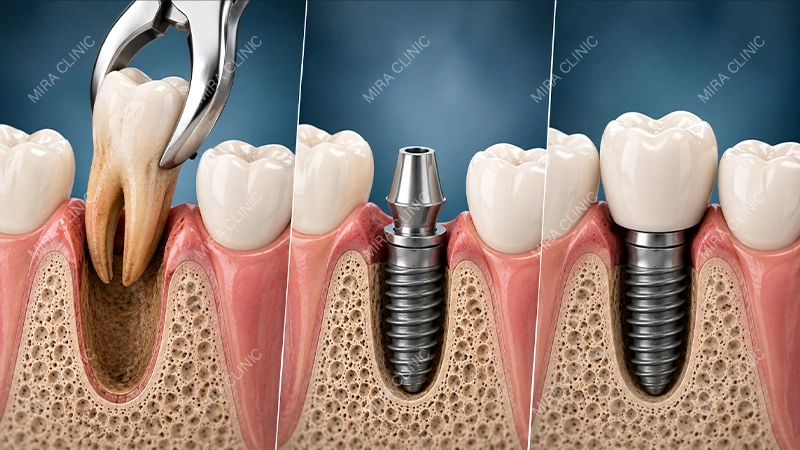
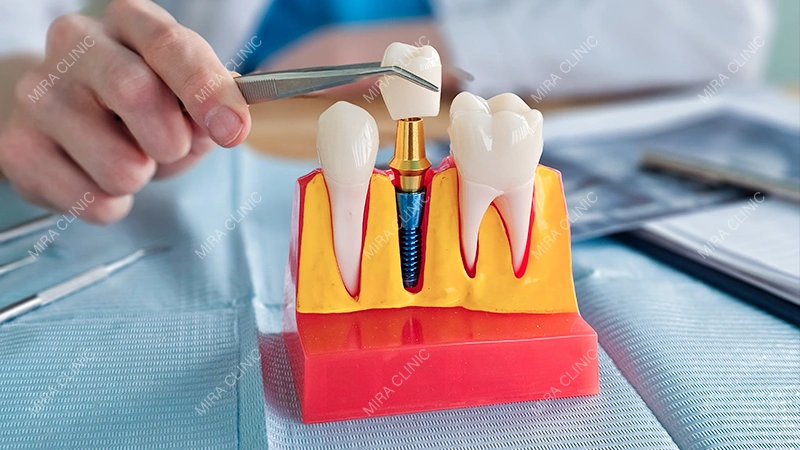
A dental implant is used after a tooth is removed or already missing. The implant is placed in the jawbone to act as an artificial root. After healing, the implant can support a crown, bridge, or full-arch restoration depending on the case.
Extraction and implant treatment may be recommended when the tooth cannot be saved predictably. This may happen if the tooth is fractured too deeply, has severe decay below the gum, has poor bone support, or cannot hold a crown.
Dental implant treatment may be suitable when:
- The natural tooth cannot be restored
- The root is fractured
- The tooth has severe mobility
- Decay extends too far below the gum
- There is advanced bone loss
- Previous root canal treatment has failed and retreatment is not suitable
- The patient needs a fixed replacement after extraction
An implant can be an excellent solution when saving the natural tooth is no longer realistic. However, it is still a replacement for a lost tooth, not a way to repair the original tooth.
Can the Natural Tooth Still Be Saved?
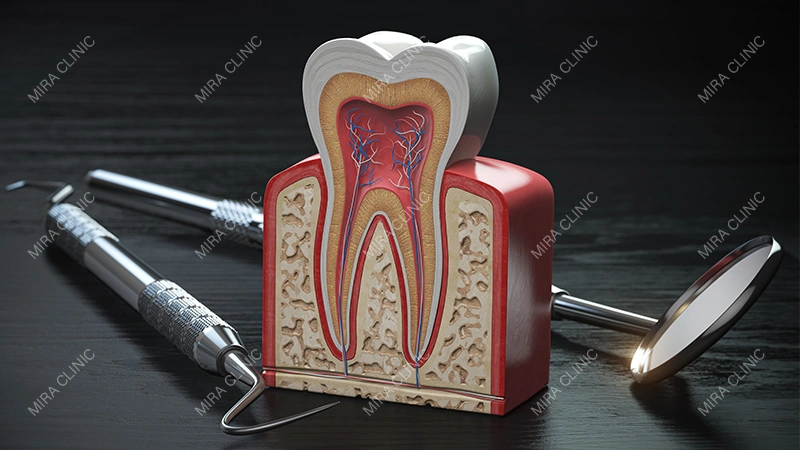
The natural tooth may still be saved if the dentist can remove the infection, seal the canals, rebuild the tooth, and protect it with a crown. The key question is whether the tooth is restorable.
A tooth is more likely to be saved when:
- The root is not fractured
- The tooth has enough remaining structure
- The gum line allows proper crown placement
- Bone support is acceptable
- The infection can be controlled
- The tooth is not severely loose
- The bite can be adjusted safely
- The patient can maintain good oral hygiene
Saving the tooth may be less predictable when:
- The tooth is split vertically
- The crack extends below the gum
- Decay reaches too far under the gum
- There is severe bone loss
- The tooth cannot support a crown
- There is repeated infection after previous treatment
- The tooth has poor long-term prognosis
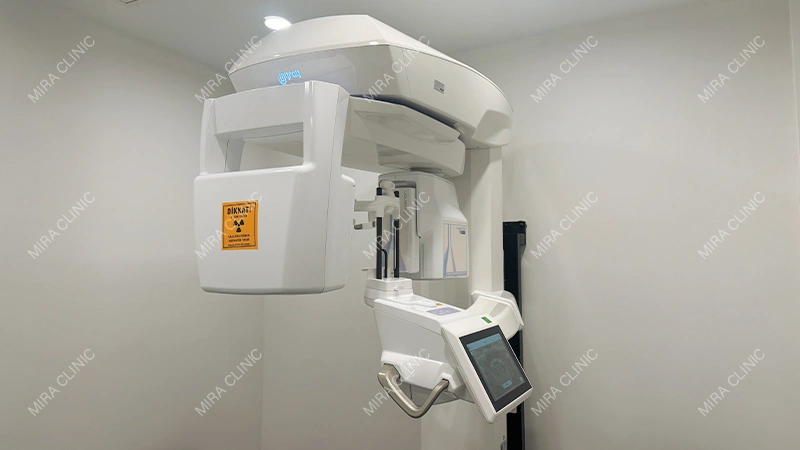
The decision should be based on clinical examination, X-rays, and sometimes CBCT imaging. Pain alone does not decide whether the tooth should be extracted. Some painful teeth can be saved, while some painless teeth may be structurally hopeless.
Root Canal and Crown vs Implant: Which Is Better?
Neither treatment is automatically better. Root canal and crown treatment is better when the tooth can still be saved predictably. A dental implant is better when the natural tooth is no longer restorable.
|
Factor |
Root Canal + Crown |
Dental Implant |
|---|---|---|
|
Natural tooth preservation |
Yes |
No |
|
Treatment purpose |
Save tooth |
Replace tooth |
|
Best for |
Restorable infection |
Non-restorable tooth |
|
Needs crown support? |
Yes |
Implant crown needed |
|
Bone requirement |
Existing tooth support |
Implant bone support |
|
Treatment timing |
Often shorter |
May be staged |
|
Main risk |
Reinfection/fracture |
Implant healing issues |
A root canal and crown can be the more conservative treatment because it keeps the natural root. But if the remaining tooth is too weak, trying to save it may lead to repeated pain, fracture, or future extraction.
A dental implant can be more predictable when the tooth has a poor prognosis. But it usually involves extraction, healing, implant placement, and final restoration steps.
The better treatment is the one that matches the diagnosis, not the one that sounds more advanced.
Read more: Dental Filling vs Crown for a Damaged Tooth: Which Treatment Preserves More Natural Tooth?
When Is Root Canal and Crown the Better Choice?
Root canal and crown treatment may be the better choice when the tooth has infection or nerve damage but enough healthy structure remains to support a final crown.
It may be recommended when:
- The tooth root is healthy enough
- The tooth is not vertically fractured
- The crown can seal the tooth properly
- The gum and bone support are acceptable
- The infection is treatable
- The patient wants to preserve the natural tooth
- The dentist expects a good long-term prognosis
This option is especially valuable when the tooth is important for chewing, the surrounding teeth are healthy, and the tooth can be restored without creating a weak final result.
The dentist should explain whether the tooth needs only root canal treatment, root canal plus post and core, or root canal plus crown. The more structure that remains, the more predictable the restoration may be.
When Is Extraction and Dental Implant the Better Choice?
Extraction and dental implant treatment may be better when the tooth cannot be saved safely or predictably. In this situation, continuing to repair the tooth may only delay the inevitable extraction and increase cost over time.
An implant may be recommended when:
- The tooth has a vertical root fracture
- The tooth is split
- Decay extends too far below the gum
- The tooth is severely loose
- There is advanced bone loss
- The tooth cannot support a crown
- Root canal retreatment is unlikely to succeed
- The infection or damage keeps returning
A dental implant may also be considered when the tooth has already been extracted or when the remaining tooth structure is too weak for long-term function.
The decision should not be rushed. Patients should ask whether the tooth is truly non-restorable, whether retreatment is possible, and what the long-term replacement plan would include.
Root Canal Retreatment vs Implant
Some patients already had root canal treatment before and now face a new infection, pain, or crown problem. In this case, the decision may be between root canal retreatment, endodontic surgery, extraction, or implant.
Root canal retreatment may be possible when:
- The previous root canal can be reopened
- The tooth is not fractured
- The infection can be cleaned again
- The crown or filling can be replaced
- Enough tooth structure remains
- The prognosis is still reasonable
An implant may be better when:
- The tooth has a poor structural prognosis
- The root is fractured
- The infection keeps returning
- The tooth cannot be sealed properly
- The remaining structure is too weak
- Retreatment would not provide a predictable result
This is one of the most important situations for a second opinion. A patient should understand whether the problem is inside the canals, around the root, in the crown seal, or in the tooth structure itself.

Cost of Root Canal and Crown vs Dental Implant
Cost is an important factor, but patients should compare the full treatment plan, not only the first procedure. Root canal treatment may need a filling, post and core, and crown. Implant treatment may include extraction, bone grafting, implant placement, abutment, implant crown, and follow-up.
|
Treatment Path |
Cost Direction |
What May Be Included |
|---|---|---|
|
Root canal + crown |
Usually lower to mid |
Root canal, build-up, crown |
|
Extraction + implant |
Usually higher |
Extraction, implant, abutment, crown |
|
Retreatment + crown |
Case-based |
Retreatment, new restoration |
|
Final cost |
Diagnosis-based |
X-ray, material, complexity |
Patients should ask whether the quote includes:
- X-rays or CBCT
- Root canal treatment
- Post and core if needed
- Final crown
- Extraction if needed
- Bone grafting if needed
- Implant brand
- Abutment
- Implant crown
- Temporary restoration
- Follow-up visits
A root canal may look cheaper at first, but if the tooth fails soon after, the patient may still need extraction and implant later. An implant may cost more at first, but it may be more predictable if the natural tooth is already hopeless.
The most cost-effective treatment is the one with the best realistic prognosis for that specific tooth.
How Dentists Decide: Save Tooth or Get Implant?
Dentists decide between saving the tooth and replacing it after checking the tooth structure, root condition, infection, bone support, bite force, and final restoration needs.
The dentist may evaluate:
- Depth of decay
- Remaining tooth walls
- Root fracture risk
- Gum line position
- Bone level around the tooth
- Size and location of infection
- Previous root canal history
- Crown or filling condition
- Bite pressure
- Tooth mobility
- Patient health and smoking status
- Patient budget and treatment expectations
A tooth with good roots and enough structure may deserve saving. A tooth with poor support, deep fracture, or non-restorable decay may be better replaced.
The right decision should be explained clearly. Patients should not feel that they are choosing between “cheap” and “expensive.” They are choosing between two different treatment paths with different risks, timelines, and long-term expectations.
Read more: Dental Crowns in Turkey: Costs, Treatment Options and What to Expect Before Booking
Questions to Ask Before Deciding
Before choosing root canal and crown or dental implant, patients can ask:
- Can my natural tooth still be saved?
- Is the root fractured?
- How much healthy tooth structure remains?
- Will I need a crown after root canal treatment?
- What is the long-term prognosis of this tooth?
- Is root canal retreatment possible?
- What happens if the root canal fails later?
- Do I need extraction immediately?
- Will I need bone grafting before an implant?
- What is included in the implant cost?
- How long will each treatment take?
- Which option is more predictable in my case?
These questions help patients understand whether the goal is to save a restorable tooth or replace a tooth that can no longer function safely.
Read more: What Happens in Your Mouth After Dental Implants? From the Implant and Abutment to the Final Bridge
Why Choose Mira Clinic for Root Canal, Crowns, and Dental Implants?
Mira Clinic in Istanbul evaluates damaged and infected teeth based on clinical examination, X-rays, remaining tooth structure, root condition, bone support, bite pressure, and final restoration needs.
For patients comparing root canal and crown vs dental implant, the first question is whether the natural tooth can still be saved. If the tooth is restorable, the treatment may focus on preserving it. If the tooth is structurally hopeless, the plan may shift toward extraction and implant replacement.
The goal is to choose the treatment that protects oral health, restores chewing function, and gives the patient a realistic long-term result.
Read more: The Connection Between Oral Health and Systemic Wellness: Mira Clinic’s Philosophy