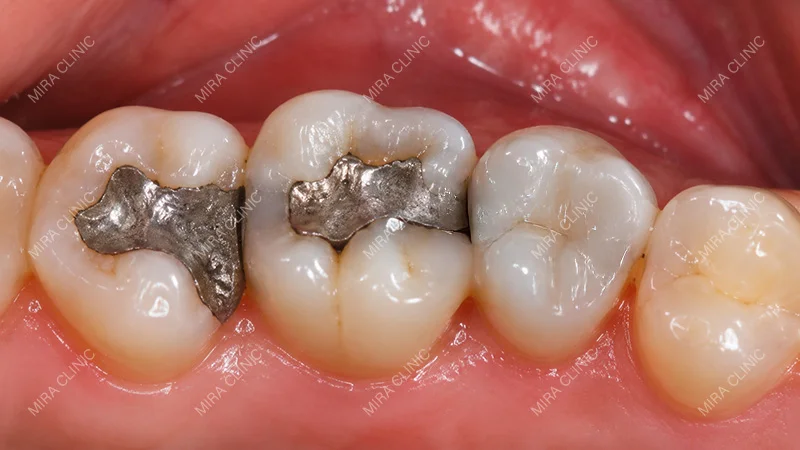
Dental amalgam fillings are metal-based restorations used to repair teeth damaged by decay. Often called silver fillings, they contain a mixture of mercury, silver, tin, and copper. Amalgam has been used in dentistry for more than a century because of its durability and ability to restore teeth exposed to chewing pressure. However, concerns about mercury exposure, appearance, and the condition of old fillings lead many patients to consider replacement.
For most people, an intact amalgam filling does not automatically pose a demonstrated health risk. Nevertheless, certain groups, including pregnant patients, young children, and people with specific medical conditions, should discuss alternative filling materials with their dentist.
An old amalgam filling does not need to be replaced simply because it contains mercury. Replacement is generally considered when the filling is damaged, decay develops around it, the tooth becomes structurally weakened, or another clinical reason makes treatment necessary.
Understanding how amalgam works, its potential risks, and the available alternatives helps patients make informed decisions about preserving their natural teeth.
- What Are Dental Amalgam Fillings and Why Are They Used?
- Are Dental Amalgam Fillings Safe?
- What Are the Advantages and Disadvantages of Amalgam Fillings?
- How Long Do Amalgam Fillings Last and What Causes Them to Fail?
- When Should an Amalgam Filling Be Removed or Replaced?
- What Are the Alternatives to Dental Amalgam Fillings?
- How Do Dentists Examine and Replace Old Amalgam Fillings?
- Final Verdict: Should You Keep or Replace Your Amalgam Filling?
What Are Dental Amalgam Fillings and Why Are They Used?
Dental amalgam is a restorative material used to fill cavities after a dentist removes decayed tooth structure.
It is commonly associated with posterior teeth, particularly molars and premolars, where restorations must tolerate significant chewing pressure.
Amalgam is also known as a silver filling because of its metallic appearance. However, it is not made entirely of silver.
What Are Amalgam Fillings Made Of?
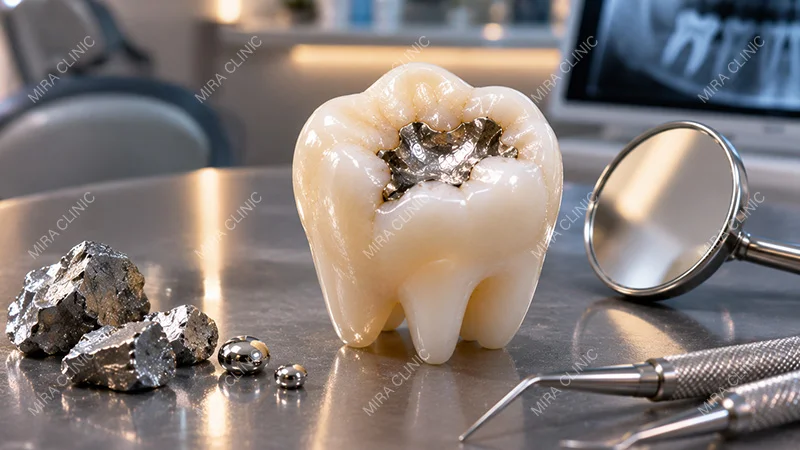
Dental amalgam consists of several metals combined into a restorative material.
Its main components include:
- Mercury: Reacts with the other metals to form the hardened filling material
- Silver: Contributes to the alloy's mechanical properties
- Tin: Influences the material's setting characteristics
- Copper: Helps improve the performance and durability of modern amalgam formulations
Mercury accounts for approximately half of the material by weight.
Although mercury is an essential component of dental amalgam, the material's behavior differs from that of liquid mercury before it is mixed and set.
Dental amalgam can release low levels of mercury vapor, which is one reason its use and long-term safety continue to receive attention.
Why Have Dentists Used Amalgam Fillings?
Amalgam became widely used because it can restore teeth affected by moderate or extensive decay.
Its practical advantages include mechanical durability, relatively low cost, and the ability to function in areas exposed to substantial chewing pressure.
It is also less sensitive to moisture during placement than some adhesive tooth-colored materials.
However, improvements in composite resins and ceramic restorations have provided additional treatment options.
Material selection now considers both the patient's dental condition and individual medical circumstances.
Which Teeth Usually Receive Amalgam Fillings?
Amalgam has traditionally been used mainly for posterior teeth.
Molars and premolars experience stronger chewing forces and may require restorations that withstand repeated loading.
Because amalgam is visibly metallic, it is generally less desirable for front teeth.
Patients seeking an aesthetic restoration may prefer a suitable tooth-colored alternative.
Are Dental Amalgam Fillings Safe?
Dental amalgam contains mercury, which can raise concerns about long-term exposure and possible health effects.
The safety question requires a distinction between an intact filling, placement of a new filling, and removal of an existing restoration.
These situations do not involve identical exposure conditions.
Is Mercury in Dental Fillings Dangerous?
Amalgam fillings can release small quantities of mercury vapor.
The amount released may vary with factors such as the number of fillings, their condition, and activities including chewing or grinding.
For most people, available clinical evidence has not established that exposure from dental amalgam causes systemic disease.
However, mercury is a substance with recognized toxic potential at sufficient exposure levels, and uncertainty remains for certain susceptible patients.
This is why the dentist should assess individual medical circumstances before selecting amalgam for a new restoration.
Who Should Avoid New Amalgam Fillings?
When a clinically appropriate alternative is available, avoiding new amalgam fillings is generally recommended for certain patients.
These groups include:
- Pregnant women or those planning pregnancy
- Breastfeeding women
- Children, particularly those younger than six
- Patients with impaired kidney function
- Patients with pre-existing neurological diseases
- People with known allergies or sensitivity to mercury or other amalgam components
The dentist should consider the patient's health, the tooth requiring restoration, and the suitability of alternative materials.
Being in one of these groups does not automatically mean that an existing, intact amalgam filling must be removed.
Can Amalgam Fillings Cause Allergic Reactions?
Although uncommon, allergic or sensitivity reactions to amalgam components can occur.
Some patients may develop localized oral tissue changes near a restoration.
Possible findings include irritation or lesions involving the cheek or gums next to the filling.
However, oral irritation can have several causes, so an examination is necessary before attributing symptoms to amalgam.
If a material allergy or sensitivity is confirmed, the dentist may recommend replacing the restoration with a suitable alternative.
Should You Remove Amalgam Fillings to Prevent Health Problems?
Generally, no.
Removing an intact amalgam filling without a clinical indication can sacrifice healthy tooth structure and temporarily increase mercury exposure during the removal process.
Replacement also introduces the usual risks associated with dental treatment, including sensitivity and potential complications affecting the underlying tooth.
Patients concerned about mercury should discuss their medical history and the actual condition of the restoration with their dentist before making a decision.
The objective is to determine whether there is a genuine treatment need rather than remove restorations solely because they are old or metallic.
What Are the Advantages and Disadvantages of Amalgam Fillings?
Dental amalgam has several restorative advantages, but it also has limitations.
Its suitability depends on the size and position of the cavity, remaining tooth structure, patient preferences, and medical considerations.
Advantages of Dental Amalgam Fillings
Durability under chewing forces
Amalgam has a long history of use in posterior teeth.
When properly placed and maintained, it can withstand repeated chewing pressure for many years.
Useful for selected larger cavities
Amalgam can be considered for certain restorations where mechanical strength and the clinical conditions favor its use.
Less demanding moisture control
Compared with adhesive resin restorations, amalgam can be less sensitive to minor moisture contamination during placement.
Relatively affordable material
Amalgam has traditionally been a lower-cost restorative option in many dental systems, although material availability and regulations vary by country.
These advantages help explain its long history in restorative dentistry, but they do not make it the best material for every tooth.
Disadvantages of Dental Amalgam Fillings
Metallic appearance
Amalgam does not match natural tooth color.
This can be undesirable for patients concerned about visible restorations.
The material contains mercury and releases low levels of vapor.
Certain patients are advised to consider non-amalgam alternatives for new fillings.
Tooth preparation requirements
Amalgam generally relies on mechanical retention rather than bonding directly to tooth structure.
Some cavity designs may therefore require removal of additional tooth tissue compared with adhesive restorative approaches.
Changes over time
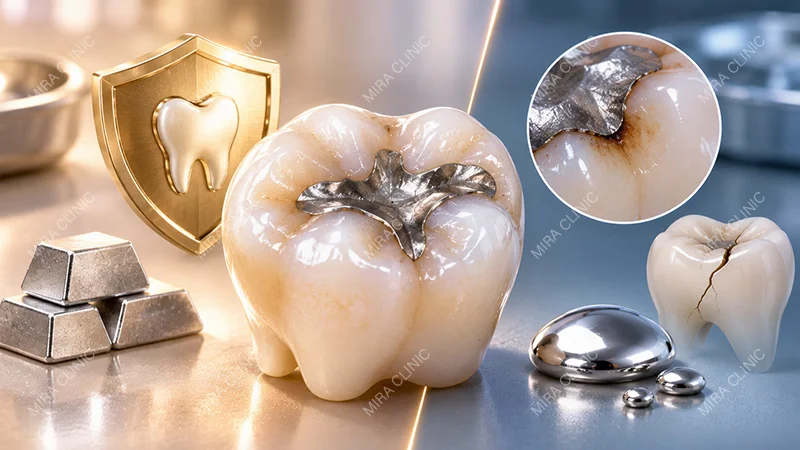
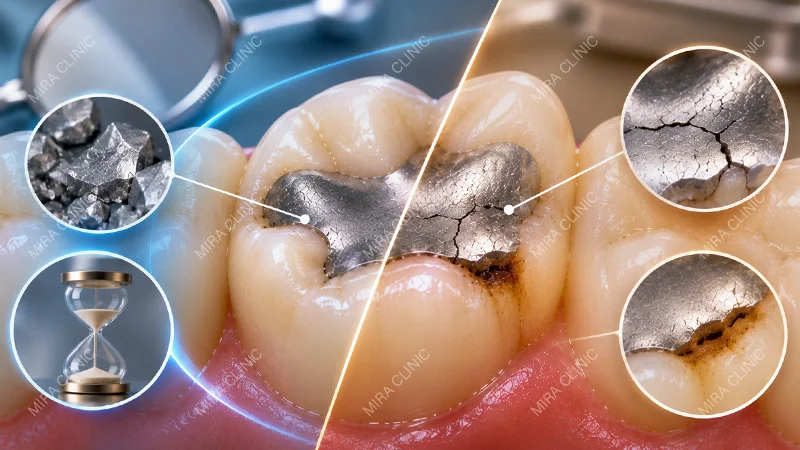
Old fillings may become worn, fractured, or associated with cracks in the surrounding tooth.
However, not every stained margin or aged filling indicates failure.
Environmental concerns
Mercury-containing dental waste requires appropriate handling and disposal.
These considerations have contributed to restrictions and efforts to reduce amalgam use in several countries.
Are Amalgam Fillings Still Used in Dentistry?
Amalgam remains a recognized restorative material, although its use has declined in many regions.
Aesthetic preferences, advances in tooth-colored materials, and environmental regulations have encouraged the use of alternatives.
Availability also depends on local regulations.
For example, new dental amalgam use is restricted or prohibited in certain jurisdictions, with some exceptions based on clinical necessity.
Patients should ask which restorative materials are currently available and appropriate for their treatment.
How Long Do Amalgam Fillings Last and What Causes Them to Fail?
Amalgam fillings can remain functional for many years.
However, there is no universal lifespan that applies to every restoration.
Some fillings remain serviceable for decades, while others require replacement much sooner.
The outcome depends on the original cavity, remaining tooth structure, bite forces, hygiene, and changes occurring around the restoration.
How Many Years Can an Amalgam Filling Last?
Amalgam fillings commonly provide many years of service, and some last 10–15 years or considerably longer.
However, the age of the filling alone should not determine whether it needs replacement.
A dentist should evaluate its structural condition and the health of the surrounding tooth.
A filling that is 20 years old may remain clinically acceptable, while a relatively new restoration may fail because of decay, fracture, or another problem.
Can Amalgam Fillings Crack Teeth?
Large restorations can leave the surrounding tooth structure vulnerable to fracture.
When a tooth has lost substantial natural structure, repeated chewing forces may contribute to cracks in the remaining cusps.
The presence of an amalgam filling does not automatically mean that the material caused the crack.
The size of the original cavity, tooth anatomy, grinding habits, and remaining enamel and dentin are also important.
A cracked tooth may require a different restoration, such as an onlay or crown, rather than another filling.
Can Tooth Decay Develop Under an Amalgam Filling?
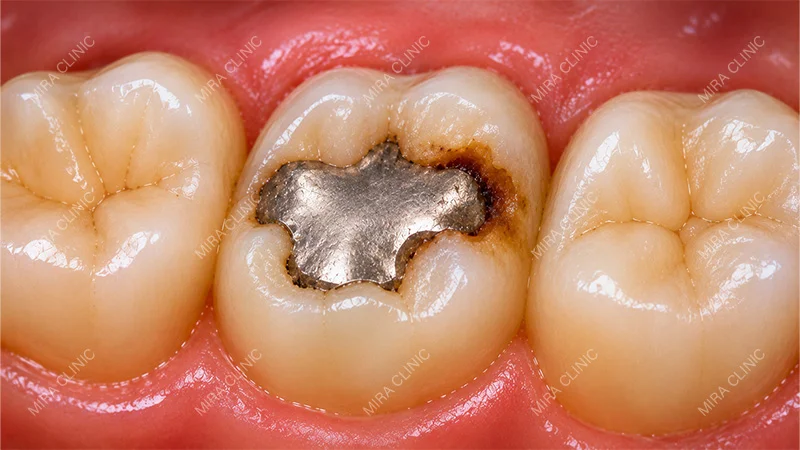
Yes. Dental decay can develop around the margins of an existing restoration if bacteria gain access to vulnerable tooth structure.
This is sometimes called recurrent or secondary caries.
Possible signs include visible defects, new sensitivity, or pain, although decay can also develop without obvious symptoms.
The dentist may use clinical examination and appropriate X-rays to evaluate the tooth.
A dark line near an amalgam filling does not automatically prove that decay is present.
What Are the Warning Signs of a Failing Amalgam Filling?
Symptoms and findings that deserve dental evaluation include:
- A fractured or missing part of the filling
- Pain when biting or chewing
- Persistent sensitivity to hot or cold
- Food becoming trapped around the restoration
- A visible crack in the surrounding tooth
- A sharp or broken filling edge
- Recurrent decay identified during examination
- Unexplained swelling or persistent dental pain
These findings do not always require complete removal of the filling.
The appropriate treatment depends on the cause, extent of damage, and amount of healthy tooth structure remaining.
When Should an Amalgam Filling Be Removed or Replaced?
Amalgam filling replacement should be based on clinical findings.
A dentist may recommend replacement when the restoration is no longer functioning correctly or when another problem affects the underlying tooth.
However, a sound restoration should not be removed without considering the potential loss of healthy tooth structure.
When Replacement May Be Necessary
An amalgam filling may need repair or replacement when:
- The filling is fractured or significantly damaged
- Decay has developed around or beneath the restoration
- The remaining tooth structure is weakened
- The tooth has a clinically significant crack
- The restoration has lost its seal or retention
- A confirmed material sensitivity requires treatment
- Another necessary dental procedure requires modification of the restoration
The dentist should determine whether the existing filling can be repaired or whether complete replacement is necessary.
The decision may also involve the overall prognosis of the tooth.
Should Old Silver Fillings Be Replaced With White Fillings?
Not automatically.
Patients sometimes request white fillings because they prefer a natural tooth appearance.
Cosmetic preferences are valid, but replacement involves removing restorative material and may also remove some healthy tooth tissue.
Before proceeding, the dentist should explain the expected benefits, limitations, and risks.
If a silver filling is intact and the surrounding tooth is healthy, monitoring may be preferable to immediate replacement.
Is Amalgam Filling Removal Dangerous?
Removing amalgam may temporarily increase mercury vapor exposure.
It also involves drilling, which can damage healthy tooth structure if the procedure is unnecessary or poorly controlled.
For clinically indicated removal, dentists use appropriate professional precautions to control debris, reduce exposure, and protect the surrounding tissues.
The exact technique depends on the restoration and clinical circumstances.
Patients should avoid attempting any form of filling removal at home.
What Happens if the Tooth Is Too Damaged for Another Filling?
A tooth with extensive decay, fractures, or insufficient remaining structure may not be suitable for a new direct filling.
In these cases, the dentist may recommend an onlay, dental crown, or another restoration.
If the dental pulp is irreversibly inflamed or infected, root canal treatment may be necessary before the tooth can be restored.
If the tooth cannot be preserved, extraction and tooth replacement options may need to be considered.
The goal should be to preserve the natural tooth whenever a predictable restoration is possible.
What Are the Alternatives to Dental Amalgam Fillings?
Modern restorative dentistry offers several alternatives to amalgam.
The appropriate material depends on cavity size, tooth location, moisture control, aesthetic requirements, and remaining tooth structure.
Not every alternative is suitable for every clinical situation.
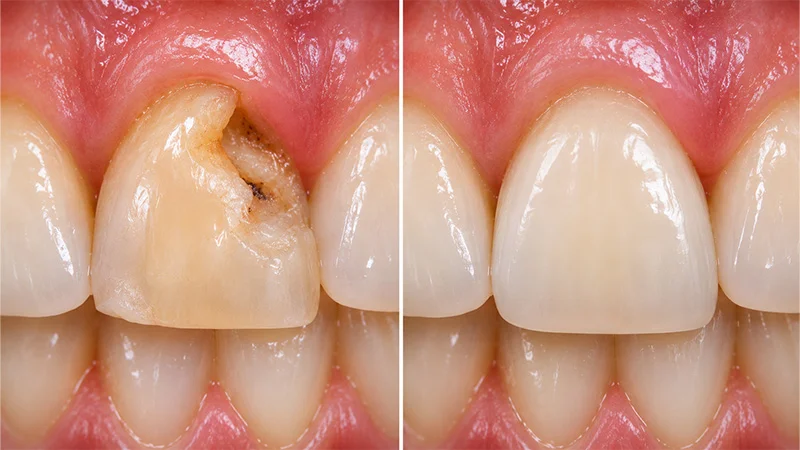
Composite Resin Fillings
Composite fillings are tooth-colored restorations made from resin-based materials containing inorganic fillers.
They bond to prepared tooth surfaces using adhesive techniques.
Composite is often selected for visible teeth and many small to moderate cavities.
Its advantages include natural appearance and the possibility of conservative tooth preparation.
However, successful placement requires appropriate moisture control and careful bonding.
Large restorations or teeth exposed to heavy forces may require additional assessment.
Glass Ionomer Fillings
Glass ionomer materials are used for selected restorations, especially in situations where fluoride release or specific clinical handling characteristics are useful.
They may be appropriate for certain cervical cavities, temporary restorations, or other indications.
However, conventional glass ionomer is generally less suitable for large, heavily loaded posterior restorations than stronger restorative alternatives.
The dentist must consider the location and mechanical requirements of the tooth.
Ceramic Inlays and Onlays
Ceramic inlays and onlays are laboratory-made restorations used when a tooth requires more extensive reconstruction than a small filling.
An inlay restores part of the chewing surface without covering the cusps.
An onlay may cover one or more cusps when additional structural protection is needed.
These restorations can provide natural-looking results while preserving suitable remaining tooth structure.
However, they require an appropriate preparation design and sufficient support.
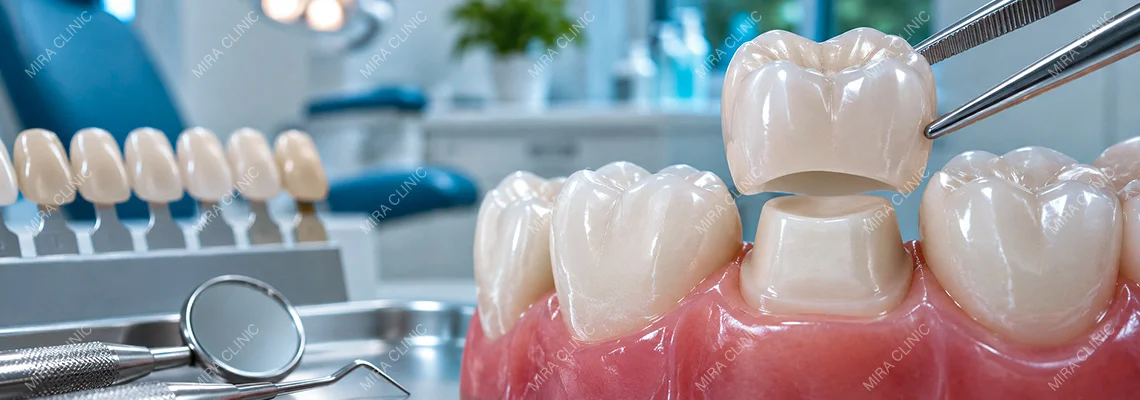
Dental Crowns
A dental crown covers the prepared tooth more extensively.
It may be recommended when a large amalgam filling has failed and the remaining tooth is too weak for another direct filling.
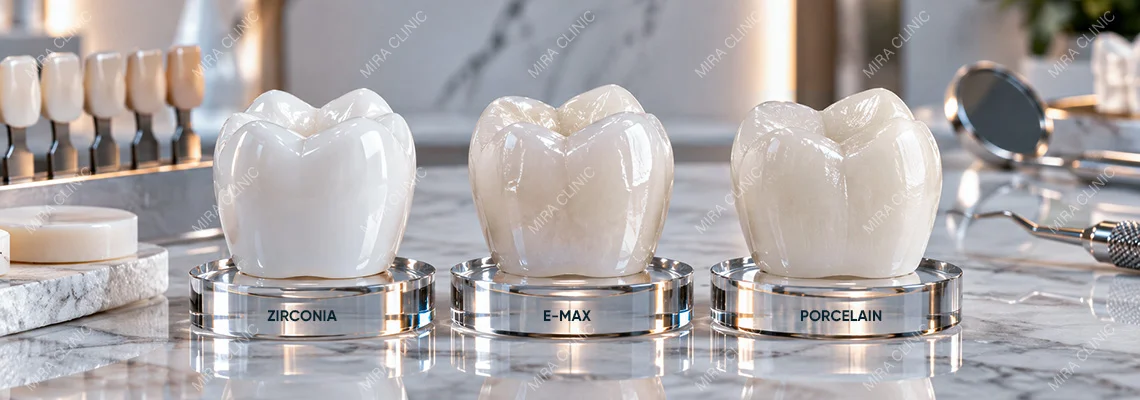
Common crown materials include zirconia and lithium disilicate ceramics such as E-max.
The dentist should determine whether full coverage is necessary or whether a more conservative restoration can provide adequate protection.
Amalgam vs Composite Fillings: Which Is Better?
There is no universal answer.
Amalgam has a history of durability in posterior teeth, while composite offers tooth-colored aesthetics and adhesive placement.
The dentist should consider the size of the restoration, tooth condition, moisture control, patient medical history, and preferences.
When a tooth has significant structural damage, neither a simple amalgam nor a composite filling may be sufficient.
The correct decision is based on the tooth's restorative requirements rather than material preference alone.
How Do Dentists Examine and Replace Old Amalgam Fillings?
Patients with an old amalgam filling should begin with a dental examination rather than assume that removal is necessary.
The dentist assesses the restoration, surrounding tooth structure, bite, and any symptoms before recommending repair, replacement, or continued monitoring.
Step 1: Dental Consultation and Medical History
The dentist asks about the patient's symptoms, previous dental treatment, material sensitivities, and relevant medical conditions.
Patients should mention pregnancy, kidney or neurological conditions, and known allergies.
The aim is to determine whether there are medical considerations affecting treatment and whether the existing filling requires intervention.
Step 2: Clinical Examination and Imaging
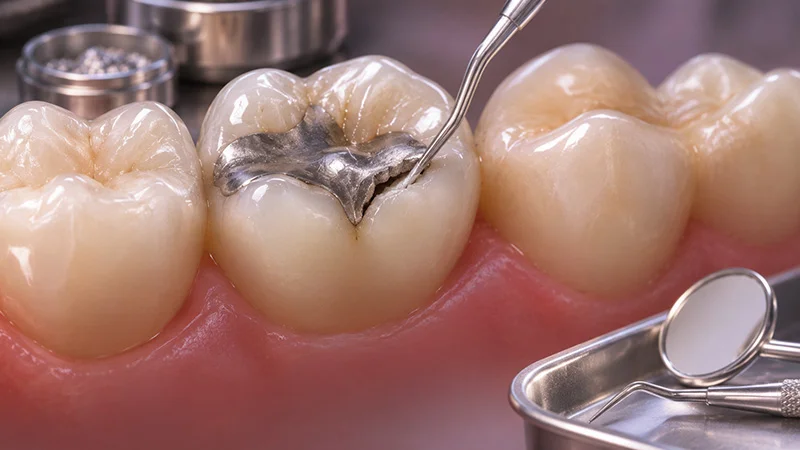
The dentist examines the amalgam filling and surrounding tooth.
The assessment may include checking the restoration margins, identifying cracks, assessing sensitivity, and evaluating the bite.
Dental X-rays may be taken when needed to investigate decay or other underlying problems.
The dentist should distinguish staining from actual structural damage or recurrent decay.
Step 3: Decide Whether to Keep, Repair, or Replace the Filling
After examination, the dentist may recommend one of several approaches.
Keep the filling: If it remains intact and the tooth is healthy, regular monitoring may be sufficient.
Repair the restoration: In selected cases, a localized defect can be corrected without removing the entire filling.
Replace the filling: If the restoration has failed or decay requires treatment, replacement may be appropriate.
Choose a more extensive restoration: If the tooth is structurally weakened, an inlay, onlay, or crown may offer a better restorative solution.
The treatment should be explained before irreversible procedures begin.
Step 4: Remove the Filling When Clinically Indicated
If replacement is necessary, the dentist removes the damaged restoration using appropriate equipment and professional precautions.
Water cooling, high-volume evacuation, and suitable isolation measures may help control debris and exposure during the procedure.
The tooth is then examined for decay, cracks, and remaining structural support.
The dentist removes affected tissue as clinically necessary while preserving healthy tooth structure.
Step 5: Restore the Tooth With the Appropriate Material
Once the tooth has been prepared, the dentist places the selected restoration.
For a direct composite filling, adhesive bonding and careful material placement are required.
If the tooth needs a ceramic onlay or crown, digital scanning or conventional impressions may be used to manufacture the restoration.
At Mira Clinic in Istanbul, restorative treatment planning can involve direct dental restorations or laboratory-produced ceramic restorations according to the condition of the tooth.
The in-house dental laboratory supports coordination between dentists and technicians when an onlay or crown is required.
Step 6: Bite Adjustment and Final Examination
After placing the restoration, the dentist checks how the upper and lower teeth meet.
A high filling or crown may create uncomfortable pressure during chewing.
If necessary, the restoration is carefully adjusted and polished.
The dentist also checks the restoration's fit and explains the expected recovery process.
Step 7: Aftercare and Long-Term Monitoring
Patients may experience temporary sensitivity after filling replacement, particularly when the original cavity was deep.
However, persistent or worsening pain should be evaluated.
Good oral hygiene, regular dental examinations, and monitoring of existing restorations are important for maintaining long-term tooth health.
The dentist may also recommend treatment for grinding, gum disease, or other conditions that affect restoration longevity.
Final Verdict: Should You Keep or Replace Your Amalgam Filling?
Dental amalgam has played an important role in restorative dentistry because of its durability and ability to restore damaged teeth.
Although the material contains mercury and may not be the preferred choice for certain patient groups, an intact amalgam filling does not automatically require removal.
The most important question is whether the restoration remains functional and whether the surrounding tooth is healthy.
Patients with cracked fillings, recurrent decay, persistent sensitivity, or structurally weakened teeth should receive a clinical assessment to determine the appropriate treatment.
At Mira Clinic in Istanbul, restorative dental treatment focuses on evaluating existing fillings, preserving natural tooth structure, and selecting suitable alternatives when replacement is clinically necessary.
Composite fillings, ceramic inlays, onlays, and dental crowns may be considered according to the extent of damage and the patient's treatment requirements.
The best decision is not always to replace an amalgam filling. It is to preserve a healthy tooth and intervene only when the clinical findings justify treatment.
Read more: Dental Filling vs Crown for a Damaged Tooth: Which Treatment Preserves More Natural Tooth?