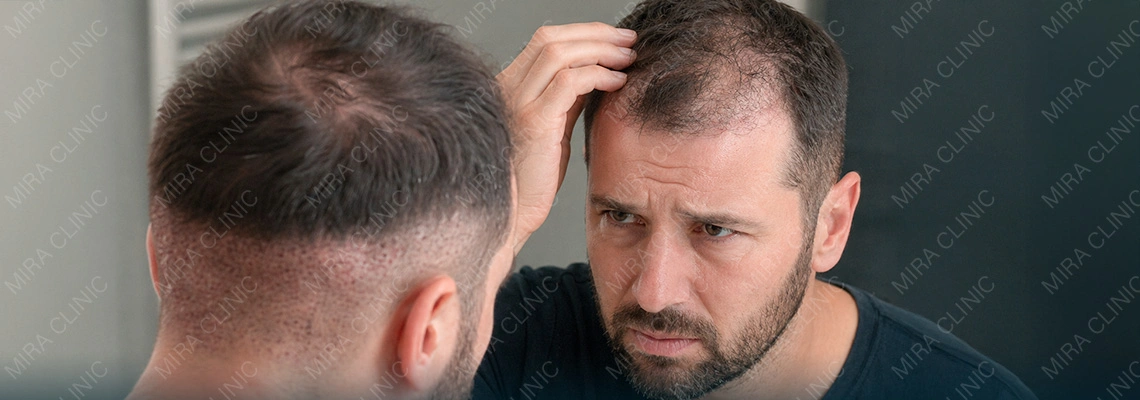
Turkey, and especially Istanbul, has become one of the world’s busiest destinations for hair restoration. That popularity has created two very different realities at once: many patients get excellent results, but others end up in low-cost “hair mill” settings where poor planning, weak aftercare, overharvesting, or bad design can lead to disappointing outcomes. The good news is that most hair transplant failures are not random. They are often preventable when patients know what to check before surgery and what to protect after it. The purpose of this guide is simple: give you a practical safety checklist before you book your procedure in Istanbul.
- Quick Answer: Why do hair transplants fail?
- Mistake 1: Choosing a Clinic Based Solely on the Lowest Price
- Mistake 2: Over-Harvesting the Donor Area (The Greed Factor)
- Mistake 3: Neglecting the First 48 Hours of Aftercare
- Mistake 4: Underestimating the Importance of Medical Screening
- Mistake 5: Lack of Artistic Design and Natural Hairlines
- How Mira Clinic Guarantees a Higher Success Rate
- Expert Advice: What to Do if Your Transplant Failed Elsewhere
- Final takeaway
Quick Answer: Why do hair transplants fail?
Hair transplants usually fail because of one or more preventable mistakes: choosing a low-quality clinic based on price alone, overharvesting the donor area, damaging grafts during the first 48 hours, operating on the wrong candidate or unstable hair loss, or creating an unnatural hairline that “fails” aesthetically even if grafts survive. In other words, failure is often a planning problem, a technique problem, or an aftercare problem.
Mistake 1: Choosing a Clinic Based Solely on the Lowest Price
The biggest red flag in hair restoration is not low pricing by itself. It is what the low price may be hiding. International hair restoration groups have repeatedly warned about “black market” clinics and non-authorized personnel performing key parts of surgery without proper surgeon oversight. These settings can be associated with poor graft handling, unsafe extraction patterns, and inadequate safeguards around hygiene and planning.
Why cheap hair transplant packages can become expensive later
A low upfront quote can lead to much higher costs later if the result needs repair. Revision surgery is harder than first-time surgery because the donor area is more limited, scar tissue may be present, and the surgeon has less room to correct poor graft placement or overharvesting. The ISHRS notes that not all transplants are created equally, and corrective work is often far more complex than doing the case properly the first time.
What to verify before you book
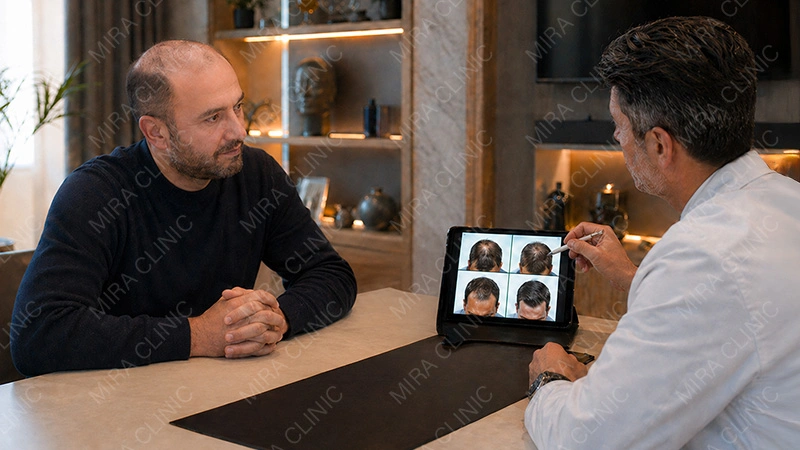
Ask who performs the extractions, who makes the recipient sites, who designs the hairline, and whether the operating physician is directly involved in the surgical stages that determine the result. Also ask how graft numbers are planned, how donor density is measured, and what the clinic does if you are not a good candidate. Proper preoperative counseling and informed consent are not extras; they are central to ethical hair transplant surgery.
At Mira Clinic
At Mira Clinic, physician oversight, case selection, and treatment planning are treated as non-negotiable parts of patient safety. The goal is not to “sell surgery at any cost,” but to protect the donor area, design the right plan, and refuse procedures that are not in the patient’s best interest.
Mistake 2: Over-Harvesting the Donor Area (The Greed Factor)
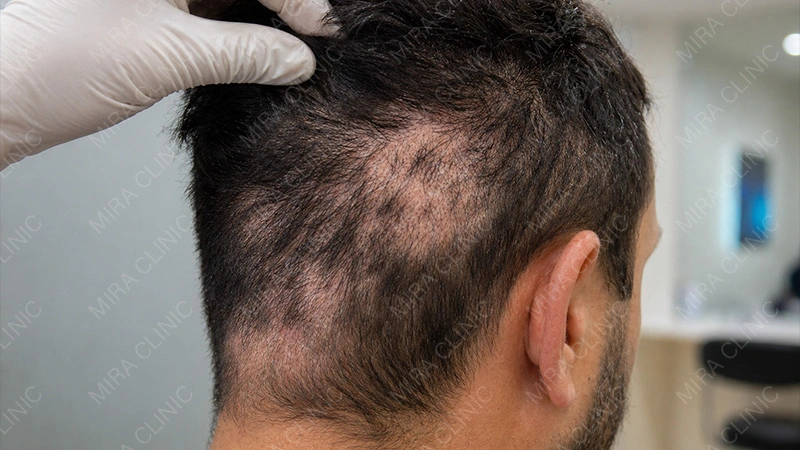
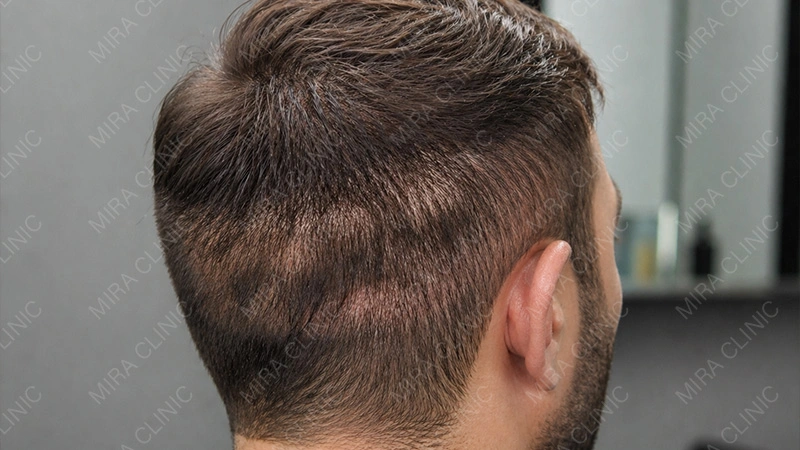
The donor area is not an unlimited source of hair. It is a finite lifetime resource. ISHRS FUE guidelines emphasize that graft planning must be tied to safe donor measurements and density calculations, rather than aggressive extraction targets. When clinics remove too many grafts too quickly, the result can be a permanently thinned or “moth-eaten” donor area with reduced options for future surgery.
What overharvesting looks like
Patients often describe overharvested donor areas as patchy, see-through, or scarred, especially under short hairstyles or bright lighting. Forum-style patient reports often focus on exactly this problem: uneven donor density that becomes more obvious months later. Even when the frontal area looks improved, the donor zone may be visibly compromised.
Why it is a lifetime management issue
A successful transplant is not just about “how many grafts can we take today?” It is about managing the donor bank across the patient’s long-term pattern of hair loss. If the first surgery is too aggressive, future procedures become harder, and repair options narrow dramatically. That is why conservative donor management is one of the biggest markers of a serious clinic.
Practical question to ask the clinic
Ask how they calculate the safe donor area, how many grafts they believe can be removed safely, and whether they are planning with your long-term hair loss progression in mind.
Mistake 3: Neglecting the First 48 Hours of Aftercare
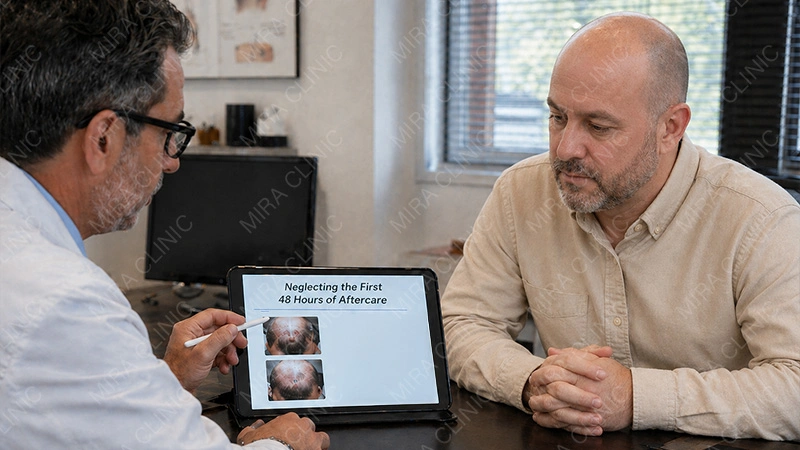
Even a well-performed transplant can be compromised by poor early aftercare. Newly placed grafts are most vulnerable in the first 48 hours, when friction, pressure, touching, or poor sleeping position can disrupt healing or dislodge follicles. Multiple aftercare guides stress that sleeping on your back with the head elevated and avoiding direct contact with the recipient area is critical in the early period.
The “survival window” after surgery
The first two days are the period when grafts are least secure. Patients often underestimate how easy it is to damage the transplanted area by touching it, rubbing it, resting it on a pillow, or putting pressure on it while sleeping. Even small mistakes in this window can affect graft survival and the final look.
Common aftercare mistakes
The most common problems include:
- touching or scratching the grafts
- sleeping flat or face-down
- wearing tight hats too early
- ignoring the clinic’s washing instructions
- allowing friction from pillows, headrests, or clothing
These are simple mistakes, but they matter because a successful transplant depends on both surgical execution and disciplined aftercare.
At Mira Clinic
At Mira Clinic, patients receive a structured washing protocol, sleeping guidance, and post-op instructions designed specifically to protect grafts during the most vulnerable period. International patients also receive ongoing post-operative communication so questions do not go unanswered once they leave Istanbul.
Mistake 4: Underestimating the Importance of Medical Screening
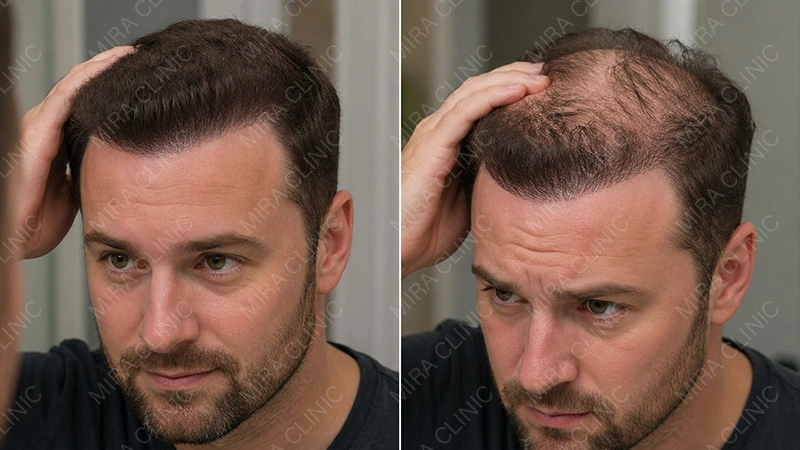
Not every person with hair loss is immediately a transplant candidate. Good candidates generally need healthy scalp conditions, adequate donor hair, reasonable expectations, and a pattern of hair loss that can be planned safely. If surgery is done while hair loss is unstable or while underlying scalp disease is active, the result can look patchy later even if the transplanted grafts survive.
Why unstable hair loss can ruin a good-looking early result
A transplant may look acceptable in the short term, but if surrounding native hair continues to miniaturize aggressively, the patient can end up with isolated islands of transplanted hair and thinning behind it. This is one reason medical screening and long-term planning matter just as much as the day of surgery itself.
Conditions that need proper evaluation first
Hair loss can have different causes, and some scalp disorders or inflammatory diseases need medical treatment before any transplant is considered. A transplant placed into an unhealthy scalp is a setup for poor growth, patchiness, or avoidable disappointment.
At Mira Clinic
This is why the first consultation at Mira Clinic is designed to answer a hard question before any booking moves forward: Are you truly a good candidate right now? If the answer is no, surgery should wait.
Mistake 5: Lack of Artistic Design and Natural Hairlines
Not every “failed” transplant is a medical failure. Some are aesthetic failures. A hairline can grow, survive, and still look wrong if it is too straight, too low, too dense in the wrong place, or implanted in unnatural rows. Hair restoration literature consistently emphasizes that the recipient area is the artistic canvas of the procedure, and that natural results depend on hairline planning, direction, depth, and density.
Why natural hairline design matters more with age
An aggressively low hairline may look “strong” on the day of surgery, but it can look unnatural as the patient gets older. Research on hairline design also points out that natural asymmetry matters. Perfectly artificial symmetry can actually look less natural than a thoughtfully designed, slightly irregular hairline.
The difference between density and realism
Patients often focus on density, but artistry determines whether density looks believable. Direction, irregularity, transition zones, and the angle of placement are what keep the result from looking pluggy or obvious. Poor artistic judgment is one of the main reasons some patients later describe their transplant as “fake-looking.”
Read more: DHI vs FUE for Hair Density: Which Technique Gives Thicker Results in Turkey
How Mira Clinic Guarantees a Higher Success Rate
No ethical clinic should promise perfection. But a reputable clinic can build the conditions that make success more likely: proper screening, conservative donor planning, careful graft handling, physician-led design, and disciplined follow-up.
Sapphire technology and reduced tissue trauma
Sapphire tools are commonly used to create more precise recipient sites with less tissue trauma than older approaches, helping support cleaner implantation and potentially better graft uptake when used correctly. Technique still matters more than marketing, but precision instruments do have a role in refining the process.
24/7 post-operative support for international patients
International patients are often most anxious after they leave the clinic. That is why Mira Clinic uses structured digital follow-up and responsive post-operative communication to help patients protect their grafts during the critical early phase and beyond.
Patient-first philosophy
The most important safety measure is this: surgery should not happen if it is not in the patient’s best interest. A clinic that is willing to refuse surgery when donor limits, unstable hair loss, or unrealistic expectations make the case unsafe is usually safer than a clinic that says yes to everyone.
Read more: Hair Transplant in Turkey
Expert Advice: What to Do if Your Transplant Failed Elsewhere
A poor result does not always mean there is no solution. But revision surgery is more limited than primary surgery, so the first step is not rebooking another procedure quickly. It is getting a realistic second opinion.
What revision surgery can improve
Revision work may be able to improve:
- unnatural hairlines
- poor density distribution
- visible scarring
- donor depletion camouflage
- poorly placed grafts
However, what can be fixed depends heavily on the remaining donor reserves and the quality of the previous work.
The biggest limitation: donor supply
If a previous clinic overharvested the donor zone, repair becomes much harder. This is why failed transplants are not just emotionally difficult — they are technically limiting. Every second opinion should begin with a donor assessment before any promises are made.
When to seek a second opinion
Seek a second opinion if your donor area looks patchy, your hairline looks artificial, your growth is poor, or the surrounding native hair loss is making the transplant look worse over time. A proper review should focus on diagnosis first and surgery second.
Final takeaway
The safest way to avoid hair transplant failure in Turkey is to stop treating the procedure like a commodity. Price matters, but surgeon involvement, donor conservation, aftercare discipline, proper screening, and hairline artistry matter much more. If you are flying to Istanbul, your real checklist is not “What is the cheapest package?” It is “Who is doing the surgery, why is this plan right for me, and how is my lifetime donor supply being protected?”.
Read more: Comprehensive Guide to Hair Transplant Surgery in Turkey