A hair transplant is never only about hair. For many patients, it is about identity, confidence, age perception, and feeling like themselves again. That is why the timeline matters so much. People do not just want to know whether the procedure works. They want to know when they will heal, when they will shed, when new hair will appear, and when the final result will actually feel real.
This is especially important for international patients planning treatment in Turkey. A successful procedure is not built only on implantation day. It also depends on what happens after you leave the clinic: the healing phase, the shock loss phase, the waiting phase, and the months of gradual growth that follow. In this sense, patience is not a passive part of the journey. It is one of the main ingredients of success. That is why understanding the hair transplant timeline in Turkey can help patients approach the process with much more confidence and much less unnecessary worry.
- Quick Answer: Hair Transplant Results Take Time — and the Biggest Visible Changes Usually Happen Between Months 5 and 12
- Days 1–14: Graft Protection, Washing, and Early Healing
- Month 1: The Shock Loss Phase and Why It Is Usually Normal
- Months 2–4: Dormancy, Healing, and the Waiting Phase
- Months 5–9: Visible Growth, Texture Changes, and Real Progress
- Month 12 and Beyond: Maturity, Density, and Long-Term Maintenance
- What Can Affect Your Hair Transplant Timeline?
- Why Recovery Timelines Can Differ Between Clinics
- Comparison Table: What You See vs What Is Happening Under the Scalp
Quick Answer: Hair Transplant Results Take Time — and the Biggest Visible Changes Usually Happen Between Months 5 and 12
One of the most important things patients should know before treatment is that hair transplantation is not an instant-result procedure. The scalp heals early, but visible cosmetic growth takes much longer. In most cases, the first two weeks are mainly about protecting grafts and supporting recovery. Month 1 often includes shedding, which can feel discouraging if the patient is not prepared for it. Months 2 to 4 are usually the quietest phase, when not much seems to happen visibly. The more meaningful cosmetic change often begins between months 5 and 9, while the final density, texture, and maturity are usually judged around month 12 and sometimes beyond.
This matters because many patients worry too early. They expect the hair to behave like a surface treatment when, in reality, the process happens in layers. The visible hair may shed first, the follicles may stay dormant for a while, and only later does the real growth begin. That is why the timeline should be understood as a biological process, not a cosmetic countdown.
The good news is that most of what patients experience during recovery is normal when it is understood in context. The key is knowing what belongs to healing, what belongs to temporary shedding, and what belongs to true long-term progress. That starts with the first two weeks.
Days 1–14: Graft Protection, Washing, and Early Healing
The first 14 days are the foundation of the entire transplant. During this period, the most important priority is not visible hair growth. It is graft protection, early scalp recovery, and avoiding unnecessary disruption while the newly implanted follicles stabilize in the scalp.
How graft stability develops in the first days
In the first few days after transplantation, the grafts are still settling into their new positions. This is why the early period is handled so carefully. Patients are usually advised to avoid touching, scratching, rubbing, or exposing the transplanted area to pressure. The first week is especially important because the grafts are still vulnerable to mechanical disruption if the patient is careless.
This is also why the immediate post-operative period often feels more delicate than dramatic. The patient may not be in severe pain, but they do need to be disciplined. The success of the visible result months later partly depends on how carefully this phase is managed. That is why the first wash and the first handling instructions matter so much.
Why the first wash at the clinic matters
The first wash is not just a hygiene step. It is usually one of the most educational moments in the whole recovery process. Patients are shown how to clean the area gently, how to soften scabs without pulling at the grafts, and how to handle the scalp without creating unnecessary trauma.
For international patients, this is especially important because much of the recovery happens after they leave the clinic environment. Clear washing guidance helps turn fear into routine. Instead of wondering what is safe, the patient leaves with a practical method for caring for the transplanted zone. This becomes part of the wider recovery process in Istanbul, where the quality of post-operative guidance matters as much as the procedure itself.
How to manage swelling, scabs, and sleeping position
Mild swelling, tightness, tenderness, and scabbing are common in the early phase. These signs usually belong to normal healing, not failure. Patients are often advised to sleep with the head elevated, avoid bending in ways that increase swelling, and follow careful aftercare instructions around cleaning and medication.
The scabs also create anxiety for some patients because they can make the scalp look rough or unstable. In reality, scab formation is usually part of normal healing, as long as the patient does not pick or force them off too early. This is why the first two weeks are less about “seeing results” and more about protecting the environment where results will grow later.
What international patients should know about post-operative care in Istanbul
For patients coming from the UK, USA, or Europe, the aftercare plan must be understood before the flight home, not after. That includes washing instructions, medication timing, sleeping advice, physical activity restrictions, and what signs are normal versus what signs deserve medical contact. Good post-operative care in Istanbul is not only about what the clinic does on site. It is about whether the patient leaves with enough clarity to recover properly once they are back at the hotel or home.
This is important because the next phase often catches patients emotionally off guard, even when the early healing seems to be going well. That phase is shock loss.
Month 1: The Shock Loss Phase and Why It Is Usually Normal
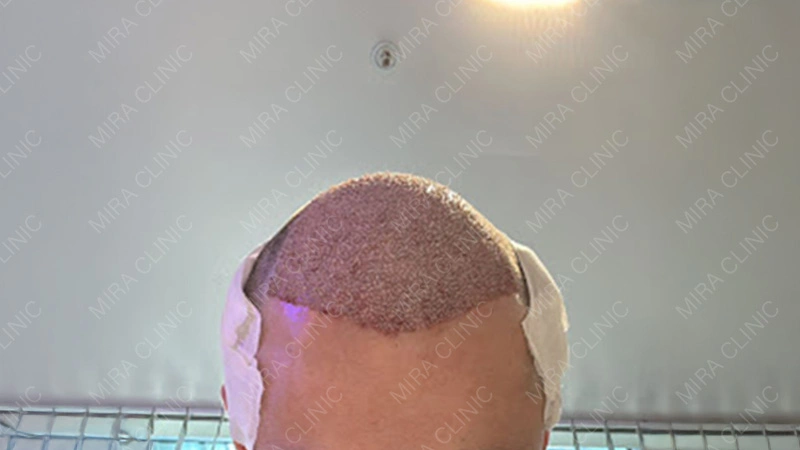
For many patients, month 1 is the most psychologically difficult stage of the whole timeline. The scalp may look better than it did in the first week, but then the newly transplanted hairs begin to shed. If the patient was not expecting this, it can feel alarming. In reality, this phase is often normal and is one of the best-known parts of the hair growth stages after transplantation.
Why transplanted hairs may shed after the procedure
Shock loss refers to the temporary shedding of the visible hair shafts after transplantation. The key point is that the follicle itself is usually still in place under the scalp. What is being lost is often the visible hair above the surface, not the implanted root structure that is responsible for future growth.
This distinction matters because patients often think shedding means failure. In most standard healing patterns, it does not. It means the follicle is transitioning through a normal stress response after the procedure. That is why this phase should be explained clearly before the patient reaches it.
Why the follicle is still alive under the scalp
The transplanted follicle often remains viable even when the visible hair falls out. This is one of the most important reassurance points in the entire timeline. The scalp can look emptier again, but the biological work is still continuing under the surface. That is why month 1 is often emotionally misleading. The patient sees “less hair,” but the follicular structure may still be safe and preparing for later growth.
This also explains why good clinics emphasize expectation management so strongly. If the patient understands shock loss beforehand, they are much less likely to panic when it happens.
How to manage anxiety during the shedding phase
This phase often requires reassurance more than intervention. Most patients do not need to “fix” shock loss. They need to understand it. Stress becomes lower when the patient knows that temporary shedding is part of the pathway and not necessarily a sign of a bad outcome.
This is where supportive follow-up matters. A clinic that explains the timeline well reduces panic, because the patient can compare what they are seeing with what is normally expected. Once the shedding phase settles, the next challenge is the quietest phase of all: dormancy.
Months 2–4: Dormancy, Healing, and the Waiting Phase
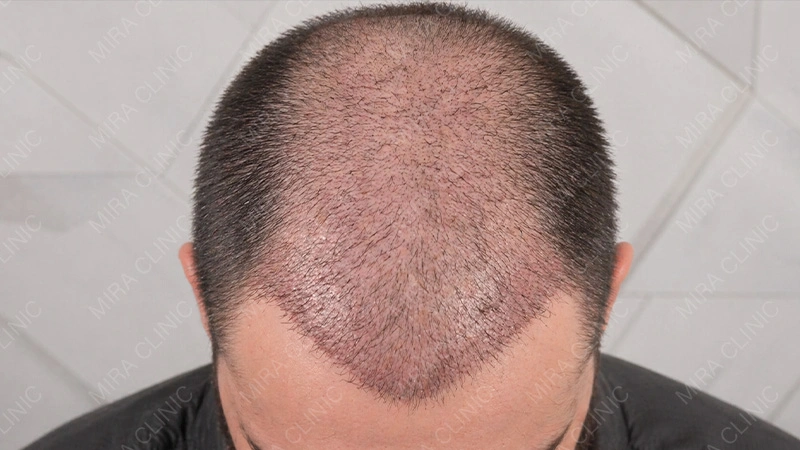
Months 2 to 4 can feel emotionally strange because the patient has already gone through the procedure and the shedding, but still sees limited visible progress. This is the period many people describe as the hardest to “read,” because the scalp may look calm while the cosmetic result still feels incomplete. In reality, this phase is often part of the normal recovery process in Istanbul and beyond.
What is happening under the scalp even when little is visible
Even when visible growth seems minimal, the follicles may still be settling and transitioning biologically. This is why the dormancy phase should not be confused with failure. A quiet scalp does not mean a dead result. It often means the process is still in its less visible stage.
Patients who are not prepared for this sometimes feel that “nothing is happening.” But hair transplantation is not a continuous straight-line improvement. It often has a waiting phase built into it, and understanding that prevents unnecessary disappointment.
How scalp recovery continues after shedding
The scalp itself is often still normalizing during this stage. Redness usually continues to improve, sensitivity may decrease, and the transplanted area begins to look less “procedural” and more settled. This part of the timeline is important because even though the big cosmetic payoff has not arrived yet, the scalp environment is still moving toward stability.
That is also why overreacting during this phase can be counterproductive. The treatment usually needs time more than constant intervention. Patients often benefit most from patience, routine care, and good follow-up rather than trying to force faster visible change.
Can supportive treatments like PRP help during this phase?
Some patients ask whether supportive treatments such as PRP can help during the dormant period. In appropriate cases, such treatments may be discussed as part of a broader maintenance or support strategy. The important point is that they should be viewed as supportive rather than magical. They do not replace the natural biological timing of transplanted follicles.
For many patients, the best value of this phase is not what they see yet, but what it prepares. Because by the time months 5 to 9 begin, the process usually starts becoming more visibly rewarding.
Months 5–9: Visible Growth, Texture Changes, and Real Progress
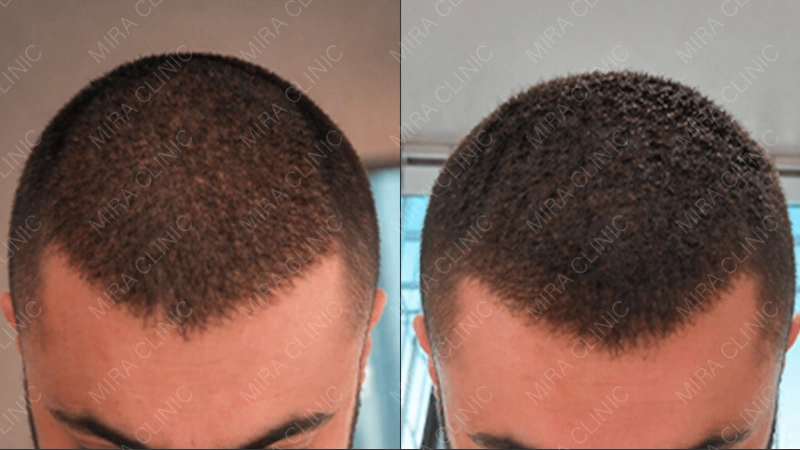
This is the phase where many patients finally feel that the transplant is becoming socially visible as a positive change rather than an in-progress medical event. The growth may not arrive all at once, which is why some describe it as a “popcorn effect,” with hair appearing gradually and unevenly rather than in one uniform moment.
When new hairs start breaking through the scalp
Between months 5 and 9, many patients begin to notice more meaningful visible growth. New hairs start emerging through the scalp, the frontal outline looks more established, and the result begins to feel less theoretical. This is often the stage when the patient can finally say, “Now I can see it happening.”
That visible progress matters emotionally because it gives form to all the patience required in the earlier phases. It also shifts the mindset from “recovery” to “development,” which feels much more encouraging.
Why early growth may look uneven or thin at first
Even when growth begins, it may not look dense or perfectly blended immediately. Some hairs may emerge faster than others. Some areas may look thinner or more irregular at first. This can still fall within normal healing and growth patterns. The transplanted zone does not always mature evenly in the first visible-growth stage.
This is important because patients who expect instant density at month 5 often judge the result too early. The early emerging hair is part of the process, but not yet the final texture or thickness.
How thickness, direction, and texture improve over time
As growth continues, the hair usually becomes stronger, longer, and more mature in appearance. Texture often changes over time, with early hair sometimes appearing finer, less predictable, or different in direction before it settles. This is one reason the result is not usually judged only by the first signs of growth.
So although months 5 to 9 often bring the most exciting visible progress, they are still part of the transition toward the fuller and more settled outcome that usually belongs to month 12 and beyond.
Month 12 and Beyond: Maturity, Density, and Long-Term Maintenance
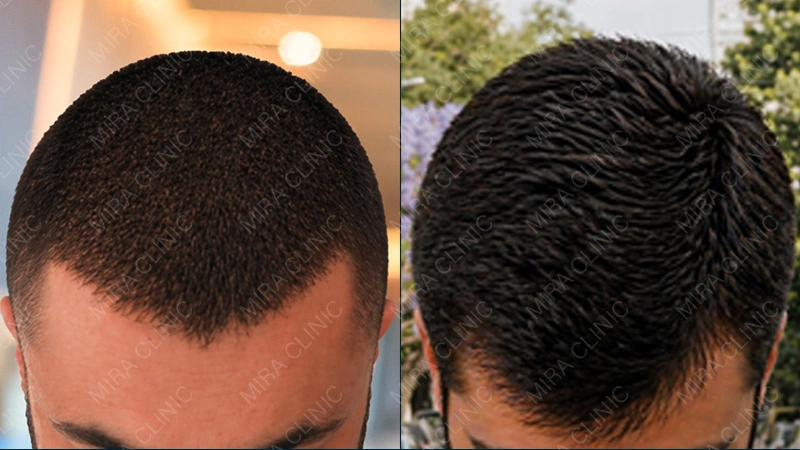
By month 12, many patients have reached the point where the result looks substantially established. The hairline is clearer, the density feels more meaningful, and the transplant begins to behave more like part of the person’s regular appearance rather than a temporary recovery project.
When most patients see the final shape of the result
For many patients, month 12 is the stage where the cosmetic picture becomes much easier to judge honestly. The outline, coverage pattern, and styling possibilities are more visible, and the growth usually feels much more complete than it did at month 6 or 8.
This is why clinics often say the final result should be judged at or after one year rather than in the earlier stages. The timeline needs enough time to mature before the result is evaluated properly.
Why some refinement can continue after month 12
Not every patient reaches absolute maturity at exactly the same time. Some refinement in density, softness, or texture may continue beyond month 12 depending on the individual healing pattern, the technique used, and the biological response of the scalp. That does not mean the 12-month mark is inaccurate. It means biology does not follow a clock with perfect rigidity.
This is also why experienced clinics discuss timelines as ranges rather than promises. Predictability matters, but so does honesty about variation.
How to maintain results for the long term
A transplant can create a major cosmetic improvement, but long-term maintenance still matters. Ongoing scalp care, medical follow-up when relevant, and good long-term planning help preserve the result and protect the surrounding non-transplanted hair. A transplant improves the frame, but long-term hair strategy still matters for the whole head.
Where to review real patient results
For patients who want to understand what mature outcomes actually look like, the most useful next step is to review a results gallery with real post-op timelines rather than only immediate post-procedure photos. This helps set realistic expectations and shows how the result evolves rather than only how it looks on surgery day.

What Can Affect Your Hair Transplant Timeline?
Not every patient moves through the exact same timeline at the exact same speed. The overall pattern is similar, but the details can vary based on medical, biological, and behavioral factors. That is why the timeline should be understood as a structured expectation, not a rigid promise.
Technique, scalp condition, and graft survival
The method used, the condition of the scalp, and the way grafts are handled all influence recovery and growth timing. A healthy scalp environment and careful graft management can support a smoother healing pattern, while more sensitive skin or more demanding conditions may affect how the scalp looks and feels in the short term.
This is one reason planning matters so much before the procedure ever starts. The timeline is not created only after surgery. It begins with how well the case is selected and executed.
Smoking, healing, and aftercare compliance
Patient behavior also matters. Smoking, poor aftercare compliance, unnecessary scalp manipulation, and failure to follow washing or activity guidance can all complicate recovery. The first months are especially sensitive because the patient’s habits directly affect the healing environment.
This is why post-op instructions should not be treated as optional suggestions. They are part of the medical logic of the transplant itself.
Does FUE vs DHI change the timeline?
Patients often ask whether FUE vs DHI results also mean a different growth timeline. In many cases, the broad month-by-month biological pattern remains similar, but the immediate recovery experience and handling of graft placement may feel somewhat different depending on technique and protocol. The most important point is that the final growth process still requires patience in either method.
This helps patients avoid unrealistic expectations based on technique branding alone. No method eliminates the need for healing, dormancy, and gradual maturation.
Why Recovery Timelines Can Differ Between Clinics
Patients sometimes assume that the timeline is only about their body, but clinic protocol also matters. Two patients can both have a transplant in Turkey and still have a different recovery experience depending on planning, technique, aftercare clarity, and follow-up support.
How planning and graft handling affect healing
The quality of graft extraction, placement, and handling can influence how smoothly the scalp recovers. Recovery is not only about what happens after surgery. It is also about how carefully the surgical phase was performed. Better handling can support cleaner healing and more predictable early phases.
How Mira Clinic’s protocols support a smoother recovery process
At Mira Clinic, the recovery pathway is supported by structured aftercare, close follow-up, and technique-focused planning. Protocols involving careful implantation, precise channel work, and guidance throughout the early healing period can help patients move through recovery with more confidence and fewer avoidable mistakes.
This is where Mira Clinic post-op care becomes important. Good aftercare does not change biology, but it can improve how well the patient navigates biology.
Why aftercare and follow-up matter just as much as the procedure itself
A strong procedure without strong aftercare leaves too much room for confusion. Clear follow-up helps patients understand what is normal, what is temporary, and what deserves attention. For international patients especially, that support can make the difference between a stressful recovery and a calm one.
Read more: Hair Transplant Cost in Turkey 2026: Prices, Packages & What to Expect
Comparison Table: What You See vs What Is Happening Under the Scalp
|
Timeline phase |
What the patient sees |
What’s happening under the scalp |
|---|---|---|
|
Days 1–14 |
Scabs, mild swelling, redness, healing scalp |
Grafts are stabilizing and the scalp is recovering |
|
Month 1 |
Shedding of transplanted hairs |
Follicles usually remain in place despite shock loss |
|
Months 2–4 |
Limited visible change, quiet phase |
Dormancy, scalp normalization, follicular transition |
|
Months 5–9 |
New growth, uneven early density, visible progress |
Active hair emergence and gradual maturation |
|
Month 12+ |
Fuller result, better coverage, more natural look |
Continued thickening, texture improvement, result maturity |
This table is useful because it shows one of the biggest truths of the transplant journey: what you see at the surface is not always the same as what is happening biologically. That perspective can prevent panic and make the timeline easier to live through.
Read more: Young Moroccan Rai Artist Cheb Aouina Chooses MIRA Clinic Istanbul for Hair Transplant