When patients begin comparing veneer materials seriously, one of the most common questions is simple: E-max or zirconia? It sounds like a material choice, but in real cosmetic dentistry, it is really a question about aesthetics, strength, tooth position, bite forces, and long-term suitability. That is why this comparison matters so much for patients planning a Hollywood Smile in Turkey.
The short version is that neither material wins in every case. E-max is often preferred when the goal is highly natural translucency in the visible front teeth. Zirconia is often chosen when strength, opacity control, or higher stress tolerance matters more. The right answer depends on the tooth, the smile zone, and the clinical situation, which is why this article compares both materials through the lens of real treatment planning rather than marketing claims.
- Quick Answer: E-max Wins on Natural Beauty, Zirconia Wins on Strength — but the Right Choice Depends on the Tooth
- Material Science: Understanding Lithium Disilicate vs Zirconium Dioxide
- Aesthetics vs Function: Which Material Performs Better in Real Cases?
- The 2026 Clinical Comparison Table: Strength, Translucency, Prep, and Longevity
- Biocompatibility and Gum Response: Which Material Is Kinder to the Soft Tissue?
- Tooth Preparation: Does E-max or Zirconia Require More Reduction?
- Digital Smile Design and Material Selection at Mira Clinic
- Material Traceability in Istanbul: How to Avoid Generic Ceramics
- Long-Term Value: E-max vs Zirconia as an Investment, Not Just a Price Tag
- Expert Verdict: Which Material Is Right for You?
Quick Answer: E-max Wins on Natural Beauty, Zirconia Wins on Strength — but the Right Choice Depends on the Tooth
Patients searching E-max vs zirconia are usually looking for one clear winner. In practice, there is no universal winner. A material that performs beautifully on one tooth may be the wrong choice on another, even in the same mouth. The best decision comes from matching the material to the clinical role of the tooth rather than choosing one name for the entire smile.
E-max is often preferred when the main priority is enamel-like appearance, translucency, and natural light behavior, especially in the most visible front teeth. Zirconia is often preferred when the case involves higher bite pressure, greater structural demand, or the need for additional masking power. That is why a scientific comparison begins not with “which is better overall,” but with understanding what each material actually is.
Material Science: Understanding Lithium Disilicate vs Zirconium Dioxide
What E-max is and why it is valued aesthetically
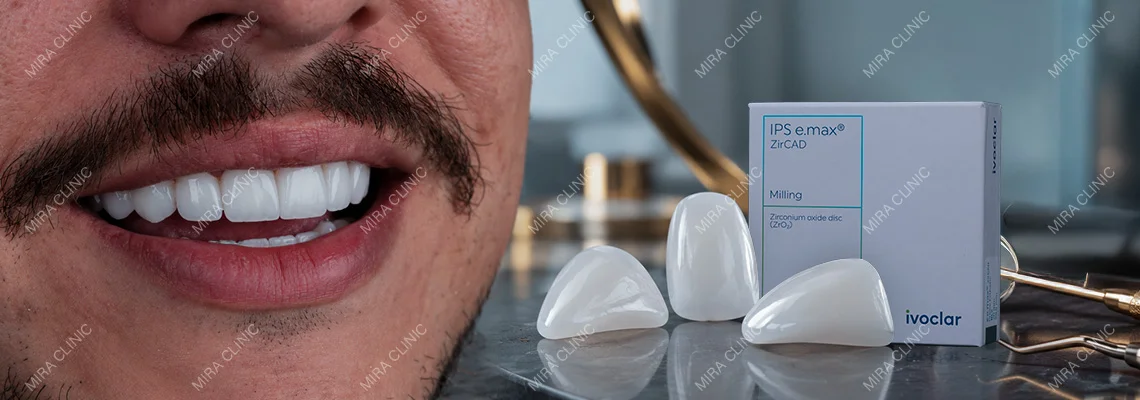
E-max is a lithium disilicate glass-ceramic. In practical terms, that means it combines strength with a type of light behavior that often looks closer to natural enamel than heavier, more opaque materials. This is one reason it is so widely discussed in aesthetic dentistry and why many patients from the UK and USA search lithium disilicate vs zirconium when comparing high-end smile treatments.
Its biggest advantage is optical. E-max can transmit and reflect light in a way that gives the veneer depth rather than a flat white appearance. This helps explain why it is often chosen for front teeth when the goal is a bright but believable Hollywood Smile.
What zirconia is and why it is associated with strength
Zirconia is a high-strength ceramic based on zirconium dioxide. It is widely respected in restorative dentistry because of its toughness and durability under stress. In simpler language, it is often chosen when the restoration needs to tolerate more load or when additional masking strength is useful.
This is where the scientific comparison becomes more interesting. Zirconia is not “better” simply because it is stronger. Strength is only one part of the clinical decision. In cosmetic zones, the way a material handles light can matter just as much as the way it handles force.
Why material science matters clinically, not just academically
Patients often hear abstract claims about “premium ceramics,” but veneer material science matters because it affects real outcomes: how natural the smile looks, how much tooth reduction is needed, how the gums react, and how the restoration performs over time. That is why material selection should always be connected to aesthetics and function, not treated as a branding exercise.
Aesthetics vs Function: Which Material Performs Better in Real Cases?
Why E-max often leads in front-tooth beauty
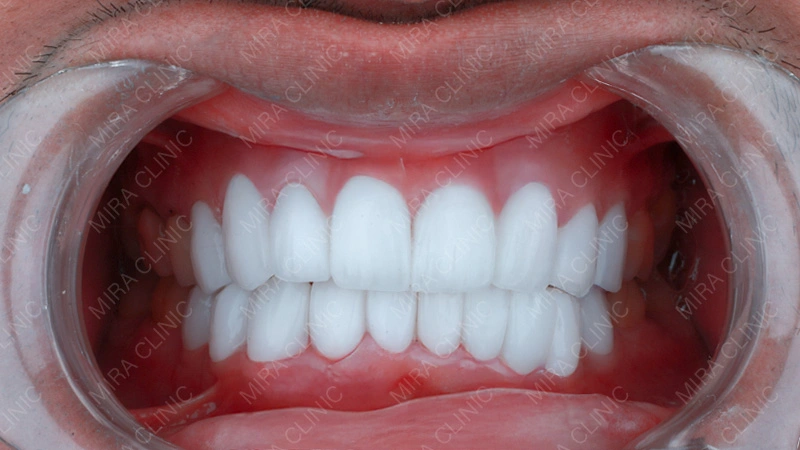
When the main goal is an elegant, natural appearance in the visible smile zone, E-max often has the advantage. It is especially useful for the front teeth because it tends to reproduce the softness, depth, and subtle translucency that patients associate with natural enamel. This is one reason many clinicians prefer it for what patients often call the “front six.”
That does not mean E-max is the right answer for every cosmetic case, but it does mean that in highly visible anterior teeth, it is frequently the material of choice when natural beauty is the priority.
Why zirconia may be stronger in higher-force situations
Zirconia becomes especially relevant when the case involves stronger bite loads, less forgiving occlusion, or situations where more structural reassurance is needed. Patients with bruxism, heavier chewing forces, or teeth outside the main aesthetic zone may sometimes benefit from zirconia’s mechanical advantages.
This does not automatically mean zirconia is the best solution for all grinders or all posterior teeth, but it does mean the discussion changes when force management becomes a priority rather than translucency alone.
Why one mouth may need more than one material
A realistic Hollywood Smile plan is not always built from one ceramic only. In some mouths, the front teeth benefit from the translucency of E-max, while other teeth may call for zirconia based on stress, opacity needs, or restorative history. That is why the best clinicians do not choose materials by trend. They choose them tooth by tooth.
The 2026 Clinical Comparison Table: Strength, Translucency, Prep, and Longevity
Below is the simplified comparison patients usually need most:
|
Factor |
E-max |
Zirconia |
|
Main strength |
Natural aesthetics |
High mechanical strength |
|
Light behavior |
More translucent, enamel-like |
Usually more opaque, though newer versions improved |
|
Best use-case |
Highly visible front teeth |
Higher-force areas or cases needing more opacity |
|
Tooth prep |
Often conservative in suitable veneer cases |
Depends on design and indication |
|
Shade realism |
Usually excellent for natural-look smiles |
Can be excellent, but requires careful case selection |
|
Gum compatibility |
Very good |
Very good |
|
Wear/stress tolerance |
Strong, but case-dependent |
Often stronger under higher load |
|
Ideal candidate |
Aesthetic-first smile zone cases |
Strength-first or masking-demand cases |
The important point is not that one column “wins.” It is that each material solves a different clinical problem more effectively.
Read more: Angela’s Veneers Review in Istanbul | Patient Testimonials
Biocompatibility and Gum Response: Which Material Is Kinder to the Soft Tissue?
Why gum response matters in cosmetic dentistry
Patients often focus on strength and beauty, but biocompatible dental restorations also need to sit well with the gums. A restoration that looks beautiful but irritates tissue, traps plaque, or creates an unstable margin will not remain a premium result for long.
This is why gum response matters as much as aesthetics in long-term smile planning.
How E-max and zirconia compare around the gums
Both E-max and zirconia are considered highly biocompatible when properly designed, polished, and fitted. Both materials generally perform far better around the gums than older metal-based restorations that could create dark lines or aesthetic compromises at the gingival margin.
In modern cosmetic dentistry, this means the debate is less about whether one of them is “safe” and more about how well the final restoration is finished, contoured, and integrated into the gum line.
Why the material alone does not determine gum health
Even the most biocompatible ceramic can perform poorly if the margins are bulky, difficult to clean, or poorly positioned. Good tissue response depends on:
- precise fit
- smooth polished surfaces
- correct margin placement
- healthy gums before treatment
So while both materials are strong from a biological perspective, their success still depends heavily on execution.
Tooth Preparation: Does E-max or Zirconia Require More Reduction?
Preparation depends on the case, not on the material name alone
Patients often assume one material always needs less tooth reduction than the other. In reality, the amount of preparation depends more on:
- the starting position of the tooth
- the desired final shape
- the underlying color
- the chosen restoration design
This means there is no honest universal rule that says one always requires less reduction in every veneer case.
When E-max may support a more conservative aesthetic plan
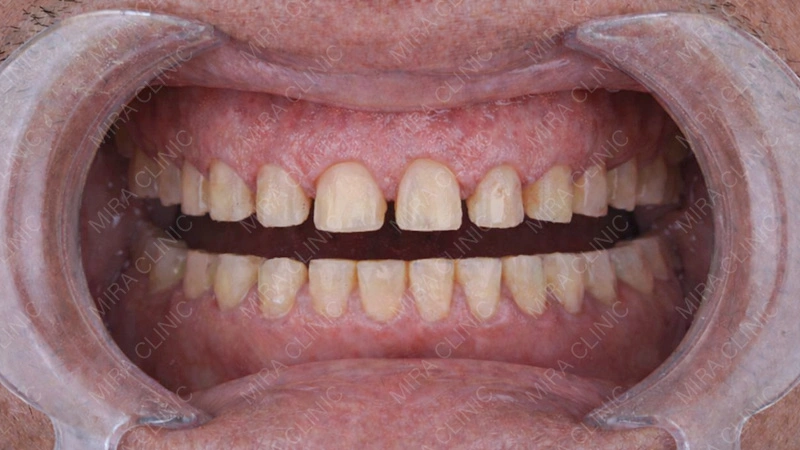
In many veneer cases, especially in the front teeth, E-max can work well within conservative preparation planning because of its aesthetic performance at suitable thicknesses. This is one reason it is so attractive for smile design when enamel preservation and natural appearance are both priorities.
When zirconia changes thickness planning
Zirconia may require a different design logic depending on whether the priority is strength, opacity, or a more demanding structural situation. The key point is that preparation should follow the tooth and the design goal, not a simplistic material stereotype. This is where digital planning becomes useful.
Digital Smile Design and Material Selection at Mira Clinic
How Digital Smile Design guides material choice
At Mira Clinic, material choice is not made in isolation. It is connected to smile design, facial proportions, tooth visibility, and the role each tooth plays in the final result. Digital Smile Design helps map these factors before final material decisions are made.
This is especially useful in highly aesthetic cases, where slight differences in shape, width, and brightness affect whether E-max or zirconia will create the more natural result.
How 3D scans and bite analysis support planning
3D scans and occlusal analysis help the team understand not just how the teeth look, but how they function together. This matters because a material that looks ideal visually may not be the smartest option if the tooth is under higher stress or if the bite pattern creates long-term risk.
That is why material selection should always be tied to real function, not just to beauty.
Why some patients benefit from a hybrid approach
A full Hollywood Smile plan does not always need one ceramic from front to back. Some cases are best served by a hybrid approach, where one material is selected for the visible smile zone and another for strength-demanding areas. This is often a more intelligent plan than trying to force one material to solve every problem.
Read more: Digital Smile Design for a Hollywood Smile in Turkey: What Patients See Before Treatment
Material Traceability in Istanbul: How to Avoid Generic Ceramics
Why “ceramic” is not enough as an answer
Patients often hear broad phrases like “premium ceramic,” but this is not a complete clinical answer. In lower-cost clinics, one of the hidden risks is the use of vague or poorly documented materials. This matters because long-term confidence depends not only on what the restoration looks like, but on what it actually is.
Why branded material verification matters
When a clinic can identify the material clearly, explain why it was chosen, and document its source, the patient has a much clearer picture of what they are receiving. This is especially important in aesthetic dentistry, where future revisions, replacements, or matching may depend on knowing exactly what was placed.
Why traceability protects long-term value
Material traceability supports trust, follow-up, and consistency. In a serious cosmetic workflow, patients should not feel they are buying a mystery ceramic. They should know what was used and why it was the right fit for their smile goals.
Read more: Why Do Some Veneers Look Fake, Big, or Bulky in Turkey? What Actually Causes Unnatural Results
Long-Term Value: E-max vs Zirconia as an Investment, Not Just a Price Tag
Upfront price is only part of the picture
The cheapest starting quote is not always the best long-term value. A more intelligent comparison looks at:
- suitability of the material for the tooth
- maintenance expectations
- revision risk
- how stable the result is likely to remain over time
This is especially important for patients traveling for a Hollywood Smile in Turkey, because the long-term success of the treatment matters more than the initial label.
Revision risk depends on matching the right material to the right tooth
A strong material used in the wrong aesthetic case can still create dissatisfaction. A beautiful material used in the wrong force environment can still create failure. Long-term value comes from correct selection, not from the most expensive or strongest material alone.
Cost should be discussed as part of planning, not separately from it
When patients compare E-max and zirconia, they should think beyond the price of the crown or veneer itself. The real question is which material is more likely to perform well, look natural, and remain satisfying in their specific case. That is where the expert verdict becomes most useful.
Read more: How Long Do Veneers Last in Turkey? Lifespan, Maintenance, and When Replacement Is Needed
Expert Verdict: Which Material Is Right for You?
Choosing between E-max and zirconia should never be reduced to a trend, a brand name, or a single “best material” claim. In real cosmetic dentistry, the right material depends on the role of each tooth, the patient’s bite, the visible smile zone, and the long-term goals of the treatment. This is why the most reliable decisions are usually case-specific rather than material-loyal, and why many high-level smile plans do not force one ceramic across the entire mouth.
Dr. Duha Alahmar’s clinical view: material choice should follow the tooth’s role, not the trend
From a clinical perspective, the most important question is not “Which material is better overall?” but “What does this specific tooth need?” A front tooth in the center of the smile may need the most natural translucency possible, while another tooth in a higher-force area may need greater structural security. According to Dr. Duha Alahmar’s treatment approach, the smartest material selection is the one that respects both beauty and function instead of trying to make one material solve every situation.
Why no single ceramic is best for every tooth
Every tooth has a different visual and functional role. The central incisors dominate the smile and usually carry the highest aesthetic demand, while other teeth may be less visible but more exposed to heavier bite forces. Because of that, a material that is ideal for one part of the smile may not be the ideal answer everywhere else.
Why function and aesthetics should be balanced case by case
A smile that looks beautiful but functions poorly is not a successful result. In the same way, a very strong material that does not give the right optical effect in the smile zone may not be the best aesthetic decision. The right plan balances both priorities at the same time, which is why E-max is often preferred in some areas and zirconia in others.
When E-max is usually the better choice
E-max is often the preferred option when the main goal is a highly natural, enamel-like appearance in the visible smile zone. For patients who want brightness without losing softness, depth, and realism, E-max often performs extremely well, especially when the underlying tooth and bite conditions support it.
Why E-max is often preferred for the visible front teeth
In the front teeth, the way light passes through the restoration matters enormously. E-max is frequently chosen because it can create a more natural-looking result in this area, helping the smile avoid the flat or artificial appearance that patients often fear.
When translucency and enamel-like beauty matter most
If the patient’s priority is a refined Hollywood Smile that looks elegant rather than overly done, E-max is often the stronger candidate. It is especially useful when the aesthetic goal is subtle natural beauty rather than maximum opacity or force resistance.
When zirconia is usually the better choice
Zirconia becomes more appropriate when the case demands greater strength, more masking power, or more support under heavier functional conditions. It is not automatically better than E-max, but it can be the more appropriate choice when the tooth is under greater load or when the visual challenge involves more opacity control.
Why zirconia may suit higher-force or higher-opacity cases better
In cases where bite pressure is higher, or where the tooth underneath requires stronger masking, zirconia may provide more confidence structurally. This is particularly relevant when aesthetics still matter, but cannot be the only factor guiding treatment.
When strength matters more than maximum translucency
Not every tooth needs the same optical softness. Some teeth are less central to the visible smile but more demanding mechanically. In those situations, zirconia may be the more rational and stable choice, especially if the clinician is planning with long-term durability in mind.
Why a hybrid approach is often the smartest solution
One of the most sophisticated ways to plan a full smile is not to choose one material for the whole mouth, but to combine materials according to what each area needs. This is often where the most advanced smile planning happens, because it avoids the false idea that every tooth should be treated exactly the same way.
Why some smiles benefit from E-max in the front and zirconia in other zones
In many cases, the most visible front teeth benefit from the translucency and lifelike appearance of E-max, while other teeth may benefit more from zirconia’s strength or opacity. This kind of combination can produce a more intelligent overall result than trying to force one ceramic into every position.
How combining both materials can improve beauty, strength, and long-term stability
A hybrid approach allows the smile to be beautiful where beauty matters most, and stronger where strength matters most. That makes it one of the most clinically balanced strategies for patients who want both a natural-looking Hollywood Smile and a restoration plan built for long-term performance.
Read more: The Gummy Smile Solution: Combining Laser Gum Contouring with Veneers