Veneers teeth pros and cons

Veneers teeth pros and cons

By

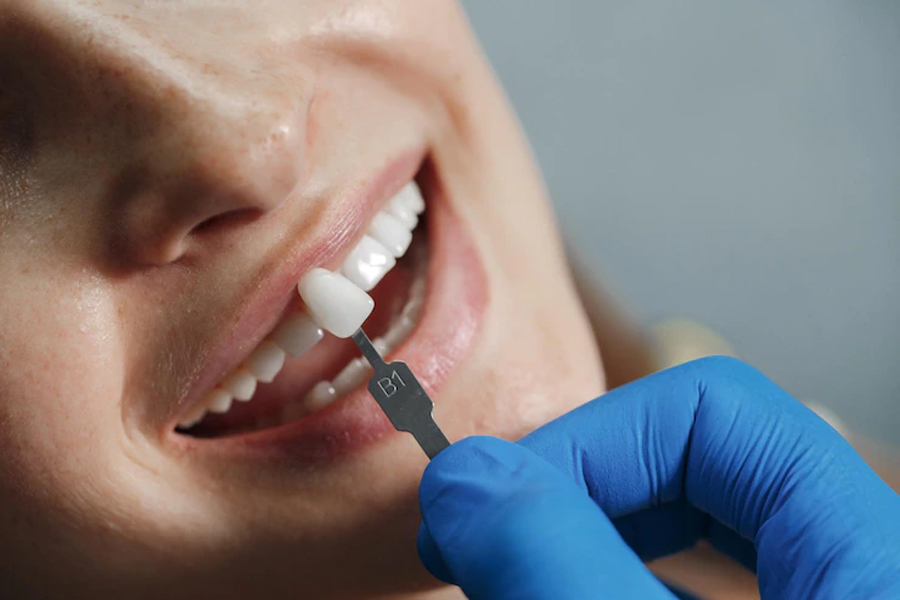
What are Veneers teeth pros and cons? In some cases, the color or the shape of the teeth get distorted due to different reasons. In such cases the dentist plans to cover the teeth with more aesthetic and natural looking shells called dental veneers. This article will focus on the pros and cons of teeth veneers.

Table of content: 

Dental Veneers

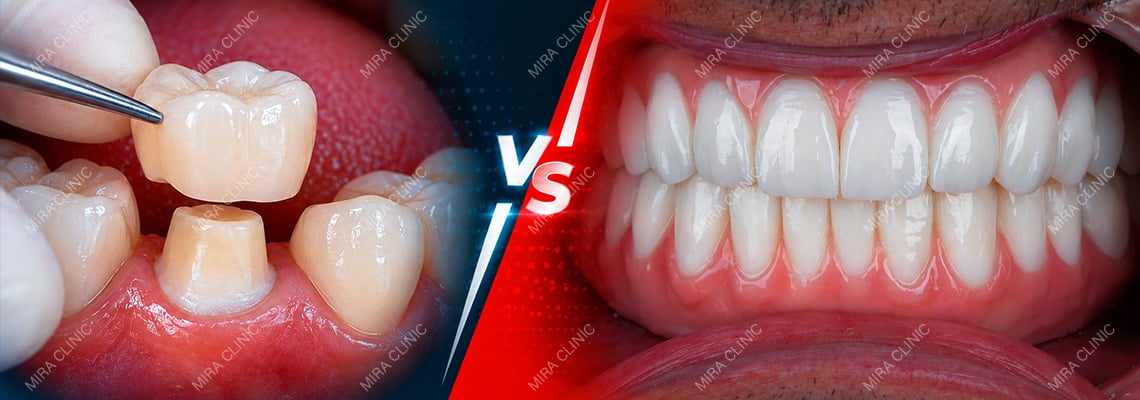
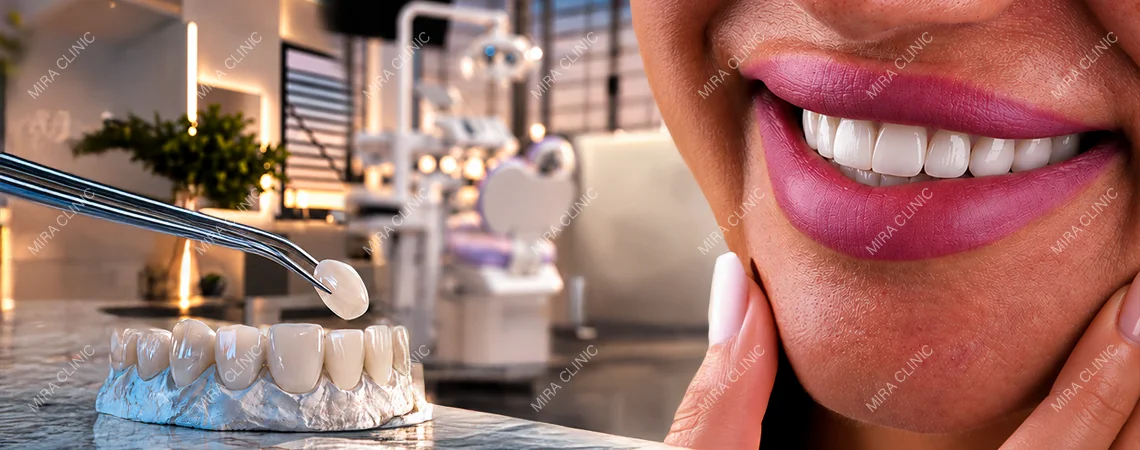
Teeth veneers are thin coverings made of tooth-colored materials mostly porcelain to shield the anterior surfaces of the frontal teeth. Dental veneers contribute largely to improving the shape, color, and alignment of teeth giving a more bright smile and high confidence.

Related articles:

Indications for dental veneers:

Dentists usually suggest dental veneers in the following cases: 

  1. deeply discolored teeth 

  2. broken or chipped teeth

  3. misaligned teeth 

  4. spaces between teeth

  5. worn out teeth

Benefits of veneers

The advantages of having dental veneers are represented by their ability to solve the dental problems patients are suffering from without causing additional issues. Thus the major pros of dental veneers are: 

  • The aesthetic appearance: includes a natural-like material that can be molded to get the exact shape and color of natural teeth. 

  • Biological safety: dental veneers are highly safe in the oral cavity as they do not cause any irritation to the oral tissues, especially the gum. 

  • Long durability: the average lifespan of dental veneers is from 10-15 years with a high success rate due to the strength and durability of the veneer material. 

  • Stain resistance: many of the patients who choose dental veneers are suffering from deep discoloration. Dental veneers proved high resistance to external staining and preserved a bright white smile. 

  • Minimal preparation: Dental veneers do not need an excessive preparation of tooth surfaces like crowns , thus preserving more natural tooth tissues.

Disadvantages of veneers:

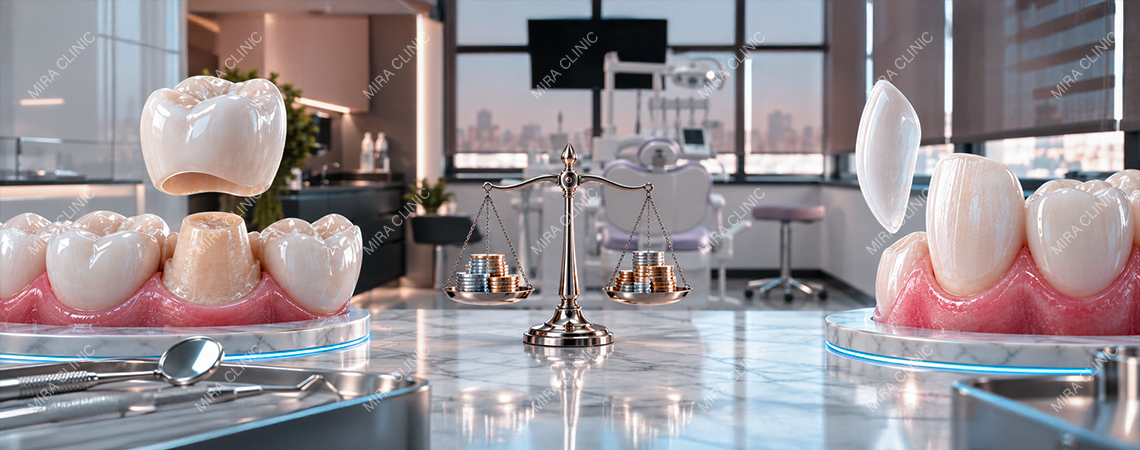
Despite the undeniable pros of dental veneers, they still -like any dental material- have some cons. The most common drawbacks of dental veneers can be: 

  1. The procedure is permanent, thus the patient can not undo the dental veneers, rather they can replace it if there is any distortion.

  2. Dental veneers are considered relatively expensive compared to other dental procedures. 

  3. In some cases, the patient may experience tooth sensitivity after a dental veneer procedure due to enamel preparation. 

  4. It may cause some difficulty during teeth cleaning particularly at the margins which increases the probability of caries occurrence. 

  5. Breaking or dislodging the dental veneers is also possible. 

Nevertheless, the flaws of dental veneers can be bypassed by using high-quality dental material and operating the procedure efficiently.

Resources: 


Licenses & Certifications

Trademark Certificate
Ministry of Health Certificate
Tourism Agency Certificate
Certification
Certification
Certification
Certification
Certification
× Certificate

Recent Blogs

All-on-4 vs All-on-6 Cost: When Do Two Extra Implants Provide Better Value?

Patients comparing All-on-4 vs All-on-6 cost usually want to know whether two extra implants are worth paying for. The direct answer is that All-on-6 usually costs more because it uses six implants in...

What Is an External Sinus Lift, and Why Is It Needed for Some Dental Implants?

An external sinus lift is a bone-grafting procedure used to increase bone height in the upper back jaw before or during dental implant treatment. The surgeon reaches the sinus through a small opening ...

Internal Sinus Lift Procedure: Why It Is Done and What Patients Should Expect

An internal sinus lift is a bone-support procedure used when there is not enough bone height under the sinus to place a dental implant securely in the upper back jaw. The surgeon works through the imp...

Dental Implants With a Titanium Bar: Benefits, Cost, and Who Needs It

Patients may hear the term titanium bar during dental implant planning, especially when they are missing several teeth or need a full-arch restoration. The cost of dental implants with a titanium bar ...

What Is the Difference Between a Titanium Bar and a Multi-Unit Abutment?

Patients who are planning dental implant treatment may hear several technical terms before their final teeth are placed. Two common terms are titanium bar and multi-unit abutment. They may sound simil...

What Happens in Your Mouth After Dental Implants? From the Implant and Abutment to the Final Bridge

Dental implant treatment is more than placing an implant inside the jawbone. After the implant is inserted and healed, several parts must work together to create the final tooth or bridge that appears...

Crown vs Bridge for Back Teeth: Damaged or Missing Tooth?

Patients comparing crown vs bridge for back teeth usually have one of two problems: a damaged molar that may still be saved, or a missing back tooth that needs replacement. A crown protects a back too...

Dental Crowns in Turkey: Costs, Treatment Options and What to Expect Before Booking

Patients searching for dental crowns in Turkey usually want three things: a clear price idea, the best crown material for their case, and a safe way to save money without choosing low-quality dental w...

Contact

Need Help!

Check your teeth with AI Check your teeth with AI