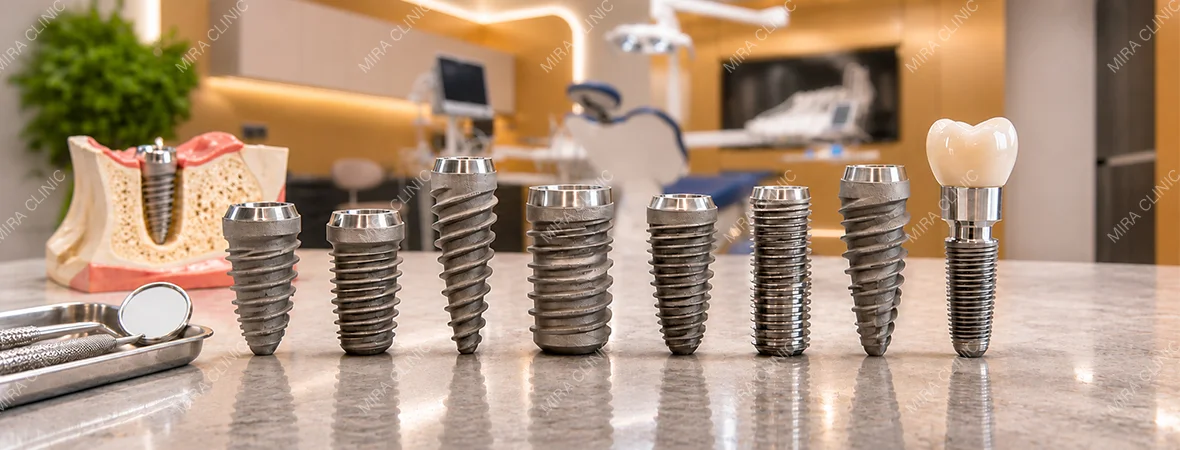
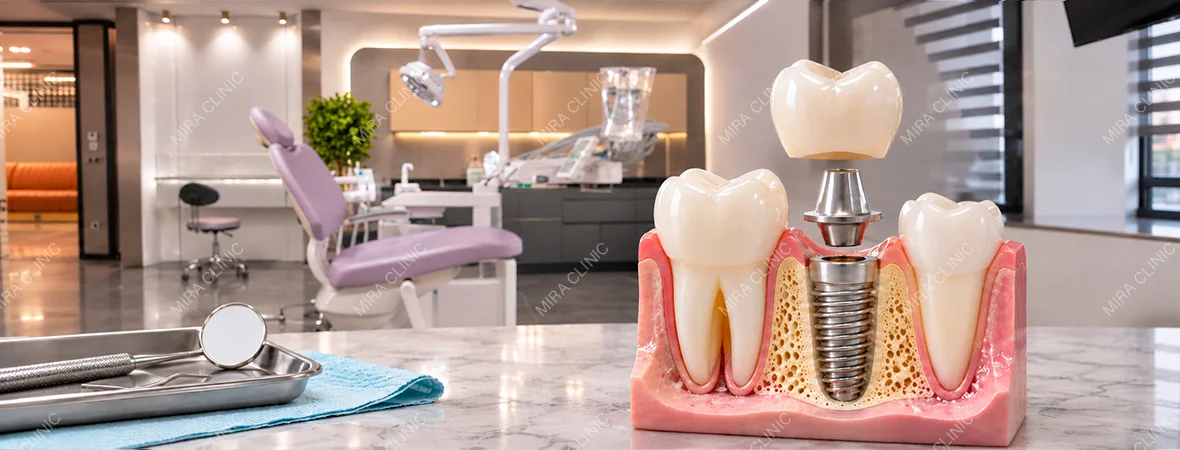
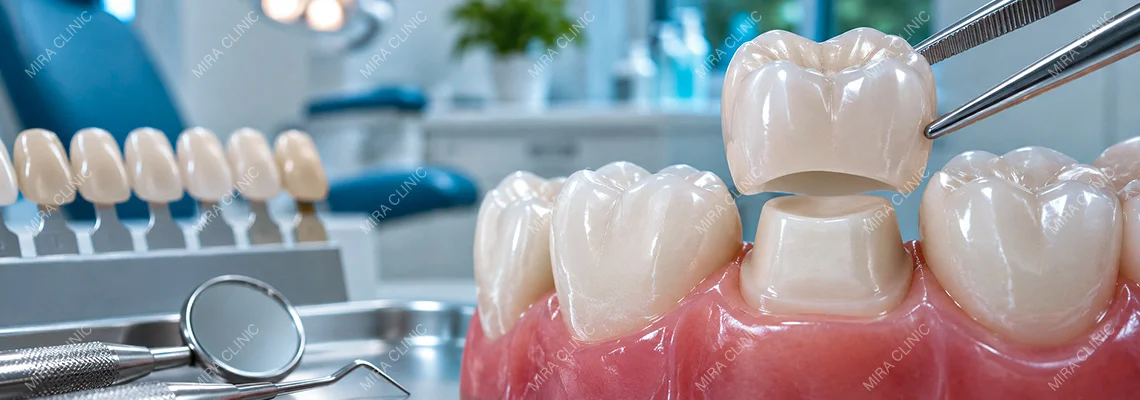
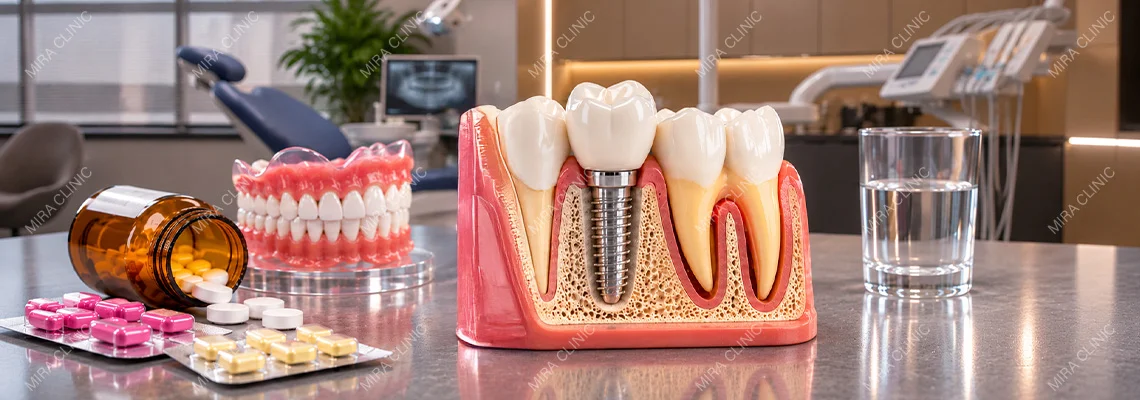
Recently, dental implants became one of the main choices in dental prostheses that restore the missing tooth without the need for preparing the adjacent teeth. Dental implant treatment includes inserting a titanium post inside the jaw bone to hold the dental crown. This article answers the common question, Is a dental implant painful?
Tables of Content
Does getting an implanted tooth hurt?
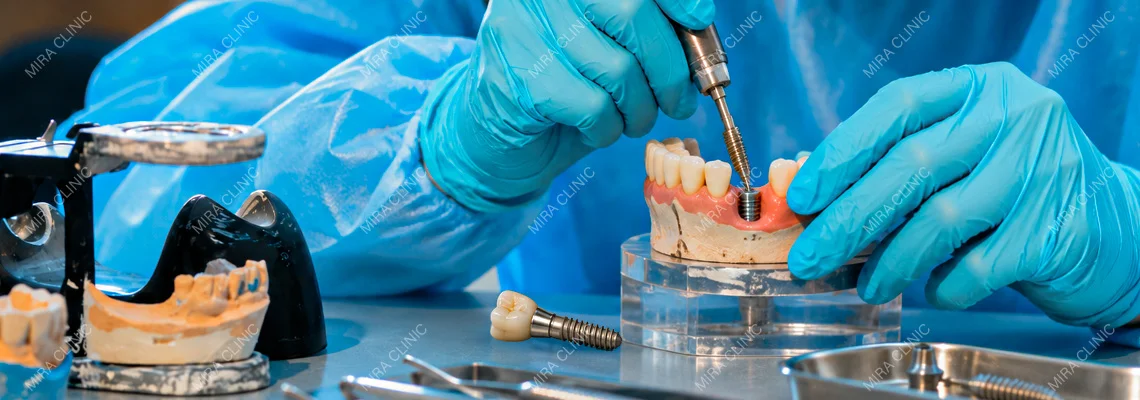
● Dental implant insertion is a surgical procedure that includes incision of the soft tissue and drilling the titanium rods inside the jaw bone.
● Although it seems a painful procedure, the patient normally will not experience any pain during the procedure. This is due to using sufficient local anesthesia in the area of the surgery.
● In some cases such as severe systemic diseases, the patient may need general anesthesia during the procedure of tooth implant.
● Additional anesthetic options can be discussed as part of the treatment plan before the implantation depending on the medical condition of the patient.
● Applying anesthesia ensures that the surgery will go easily and smoothly without feeling any pain during the procedure. Nevertheless, the patient can feel different levels of pain and discomfort during the recovery period.
Related articles
What is more painful: tooth extraction or implant?
Many patients compare the pain accompanying dental implant procedures with tooth extraction pain. During the procedure in both cases, the patient will not feel much discomfort due to anesthesia. After the procedure, most of the patients reported that tooth extraction hurts more than tooth implants. Soreness, pain, and discomfort in the region of the implant can be experienced after the surgery. Such symptoms can be managed through over-the-counter painkillers.
Pain after dental implant:
The titanium rods or posts inserted in the jaw bone need time to fuse with the adjacent bone forming a permanent tooth root. For this process to complete, the surgeon needs to close the incision and open it again in the coming two or three appointments. During that period, the patient may feel pain, discomfort, and soreness in the area due to the healing process.
Normally the recovery period of a dental implant takes a few days, in which the pain will decrease gradually and can be handled through regular pain killers. In some cases, pain may exceed a few days and get worse with time. If that is the case medical check and follow-up are required.
The peak of the pain can be on the first day when the effect of the anesthesia wears off and then starts to decrease. Besides the pain, many symptoms can notice after dental implant surgery such as:
1. Extended pain from the region of the surgery to the whole jaw.
2. Soreness and Bleeding
3. Swelling and discomfort

Reasons of throbbing pain after dental implant:
After the anesthesia wears off, the patient may feel severe pain in the region of the implant surgery. Although this pain will decrease with time and medications, some patients experience prolonged throbbing pain after the surgery.
Throbbing pain after the dental implant is not a common symptom, but it can result from many complications such as:
● Improper implant placement:
Sometimes the throbbing pain that the patient experiences results from improper positioning of the implant which leads to incorrect fusing with the bone. If that is the case, the oral surgeon may need to remove the rod and reimplant it later.
● Incision reopening:
After inserting the titanium rod, the surgeon closes the incision for a while to let the rod fuse with the bone. In some cases, this incision can be reopened due to different reasons causing feelings of pain and irritation. The surgeon usually describes mouth rinses and antibiotics to avoid wound infection. If there is no improvement, additional medical care is needed.
● Infection:
The infection delays the healing process and may cause incision reopening which leads to feeling the pain of unhealed tissues. The infection may be resulted from using non-sterilized tools or instruments. Antibiotics can be described in such cases.
Besides the pain, some symptoms indicate post-procedure complications such as swelling, excessive bleeding fever, and nausea. In these instances, the patient needs to see the doctor immediately.

How long does the pain last after a dental implant?
The pain after successful dental implant surgery is temporary and it ranges from 2-4 days usually. Along with the healing process, some other signs such as jaw stiffness, swelling and bruising can have a more prolonged period. That patient probably will need painkillers in the first two days after the surgery and the patient can resume their activity after a few days of the procedure.
How to relieve pain from dental implants?
Pain management steps after the procedure will be instructed by your doctor, which may include:
1. Use ice packs to reduce swelling.
2. Take enough rest on the day of the procedure.
3. Focus on a soft diet and avoid hard foods.
4. Taking the prescribed painkillers.
5. Following the suitable care routine.
It is supposed for the instructions to relieve the pain during the first week of the procedure. If the pain lasts for more than 2 weeks, the patient will need to visit the doctor.
Resources
- Everything to Know About a Dental Implant Procedure
- Dental Implant Procedure: What to Know (healthline.com)
- Is It Common to Experience Pain After Getting Dental Implants?
- Dental Implant Pain: What’s Typical & When to Get Help (healthline.com)
- Dental Implants
- Dental Implants: Surgery, Advantages, Risks, and Insurance Questions (webmd.com)
- Dental implant surgery
- Dental implant surgery - Mayo Clinic