- Quick Answer: Facial Fat Grafting Restores Volume Using Your Own Fat
- What Facial Fat Grafting Actually Is
- Why Facial Fat Grafting Appeals to Patients Seeking Natural Results
- What Areas of the Face Can Be Treated with Fat Grafting
- Facial Fat Grafting vs Fillers: What Is the Real Difference
- Who Is a Good Candidate for Facial Fat Grafting
- How the Procedure Is Planned for Natural Facial Balance
- Recovery After Facial Fat Grafting: What Patients Should Expect
- Can Facial Fat Grafting Be Combined with Other Procedures
- What Makes Results Look Natural — or Unnatural
- Why Facial Fat Grafting Fits the Modern “Organic Beauty” Conversation
- Final Verdict: Facial Fat Grafting Works Best When It Restores, Not Replaces
Quick Answer: Facial Fat Grafting Restores Volume Using Your Own Fat
Facial fat grafting restores lost facial volume by harvesting fat from one part of the body, processing it, and placing it strategically into areas of the face that have become hollow, flattened, or less supported. Because the volume comes from your own body, it is often seen as one of the most natural facial rejuvenation options available. ASPS describes fat grafting as a technique that can shape and balance facial features while improving age-related volume loss.
This approach is especially attractive for patients who want:
- softer facial restoration
- a more natural source of volume
- less interest in a repeatedly maintained injectable routine
- improvement in contour rather than just surface-level filling
It is also important because many patients misunderstand what aging in the face actually is. They assume the problem is only skin laxity or lines, when in reality volume depletion often plays a major role. That means not every patient needs a facelift first, and not every patient needs fillers alone. In the right case, facial fat grafting can address the structural part of aging in a very elegant way.
What Facial Fat Grafting Actually Is
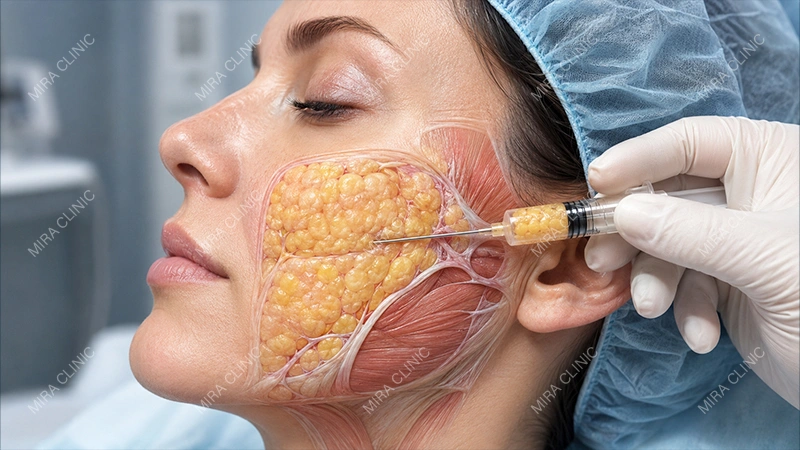
Facial fat grafting is a procedure in which fat is taken from one part of the body and transferred into selected facial areas to restore volume and improve contour. The process generally includes three steps:
- harvesting fat
- processing or refining the fat
- placing it strategically into the face
How the procedure works
The aim is not to simply “add fullness” anywhere possible. The real goal is to restore support and shape in places where volume loss has changed the face.
Fat is harvested from one area
Fat is usually collected from a donor area of the body where enough usable fat is available. The exact donor site depends on the patient’s body and surgical plan.
Fat is processed
Once harvested, the fat is prepared for transfer so it can be placed in a controlled and refined way into the face.
Fat is placed strategically in the face
The final result depends heavily on where and how the fat is placed. This is not a procedure where “more” automatically means “better.” It depends on facial analysis, layering, proportion, and restraint.
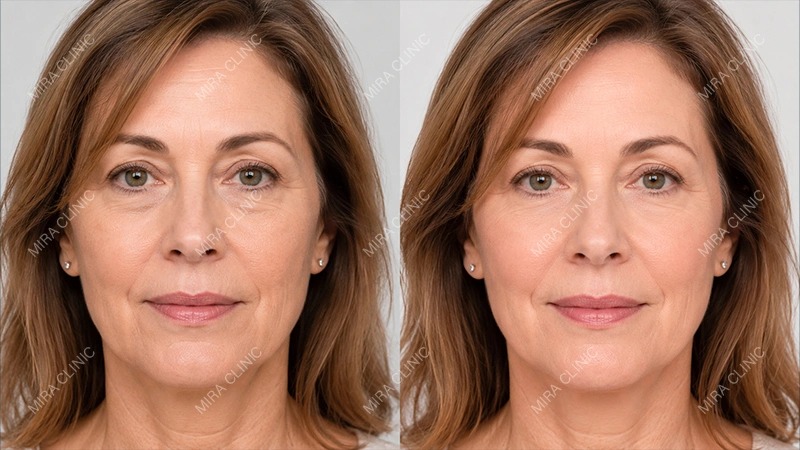
Why the face ages through volume loss, not only skin laxity
One of the most important ideas in modern facial rejuvenation is that the face often looks older because it has lost support from within, not only because the skin has loosened.
Hollowing
Aging and weight loss can create hollowness in the cheeks, temples, and around the eyes. ASPS notes that fat loss contributes to deflation in the cheeks and hollowing in the upper face.
Flattening of contour
As volume fades, the face can lose its rounded, supported transitions and start to appear flatter or more tired.
Loss of youthful support
Youthful facial shape is closely connected to soft support and contour. Fat grafting is attractive because it addresses that structural problem directly.
How fat grafting differs from other facial rejuvenation options
Fat grafting is not the same as fillers, implants, or lifting surgery, even though it may overlap with some of their goals.
Compared with fillers
Fillers are usually non-surgical and can be excellent for smaller corrections or patients who want less downtime. Fat grafting, by contrast, is a surgical approach that uses your own tissue and is often chosen by patients seeking broader structural restoration.
Compared with implants
Fat grafting is often preferred by patients who want to avoid permanent facial implants and instead use their own tissue to create softer contour improvement.
Compared with facelift-only approaches
A facelift addresses lifting and repositioning, but volume loss is a separate issue. That is why some patients need volume restoration in addition to lifting, not instead of it.
Why Facial Fat Grafting Appeals to Patients Seeking Natural Results
The strongest appeal of facial fat grafting is that it can restore volume without creating a sharp, synthetic, or overly manufactured result when planned well.
Using your own fat instead of synthetic volume
Many patients are drawn to the idea that the treatment uses their own tissue rather than a manufactured filler product.
Autologous approach
Because the volume comes from the patient’s own fat, the procedure naturally aligns with the growing preference for biologic and self-derived aesthetic options.
Natural-feeling restoration
Fat tends to be discussed as softer and more integrated in feel and contour than some more rigid or artificially projected approaches.
Why subtlety matters more than obvious change
The best facial rejuvenation often does not look like “work.” It looks like recovery of contour, softness, and support.
Soft contour return
Fat grafting can be especially useful when the goal is to rebuild shape in a way that looks harmonious rather than sharply augmented.
A refreshed look instead of a treated look
That is one reason it fits the current patient preference for natural enhancement rather than dramatic transformation.
Why this fits the current shift toward regenerative and natural-looking aesthetics
ASPS trend reporting for 2026 notes rising interest in fat transfer for structural restoration and regenerative appeal, especially as patients seek solutions for volume depletion related to aging and GLP-1-associated weight loss.
Longer-lasting structural restoration
The attraction here is not only soft appearance, but the idea of rebuilding support more broadly than a small-volume quick fix.
Interest in biologic and regenerative options
This is part of why fat grafting fits so well into the current “organic beauty” conversation, provided it is discussed responsibly.
What Areas of the Face Can Be Treated with Fat Grafting
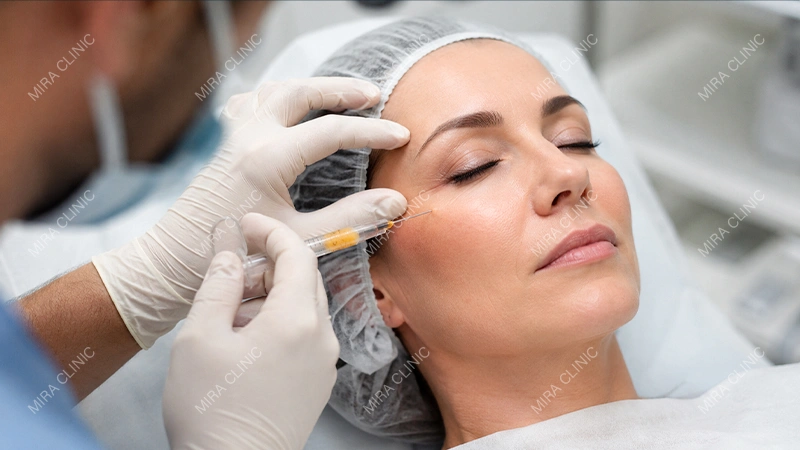
Facial fat grafting can be used in multiple areas where aging or weight loss has reduced support and contour.
Midface and cheeks
The midface is one of the most common treatment zones because cheek flattening changes the whole face.
Restoring cheek fullness
Cheek restoration can make the face look healthier, less tired, and more supported.
Rebuilding facial support
This is not just about adding roundness. It is about restoring the contour that supports the rest of the face visually.
Temples and upper face
Temple hollowing can make the upper face look more aged or skeletal.
Temple hollowing
This is a classic but often underestimated sign of facial volume loss. ASPS specifically includes temples among common areas treated with facial fat grafting.
Smoother side profile transition
Temple restoration can help make the side profile and upper face look softer and more continuous.
Under-eyes and periorbital rejuvenation
The under-eye area can be one of the most impactful places for volume restoration, but it also demands precision.
Volume-related tired appearance
Under-eye hollowness often makes patients look more fatigued than they feel.
Why precision matters in this area
This is not a zone for overfilling or careless placement. Delicacy matters because small changes strongly affect expression.
Nasolabial folds, jawline, and lower face
Some lower-face aging is also related to loss of support, not just skin descent.
Support rather than surface filling
Fat grafting can sometimes soften deep folds by rebuilding adjacent support rather than simply filling a line.
Balancing the lower face
In selected cases, the lower face can benefit from subtle contour restoration that supports overall harmony.
Facial Fat Grafting vs Fillers: What Is the Real Difference
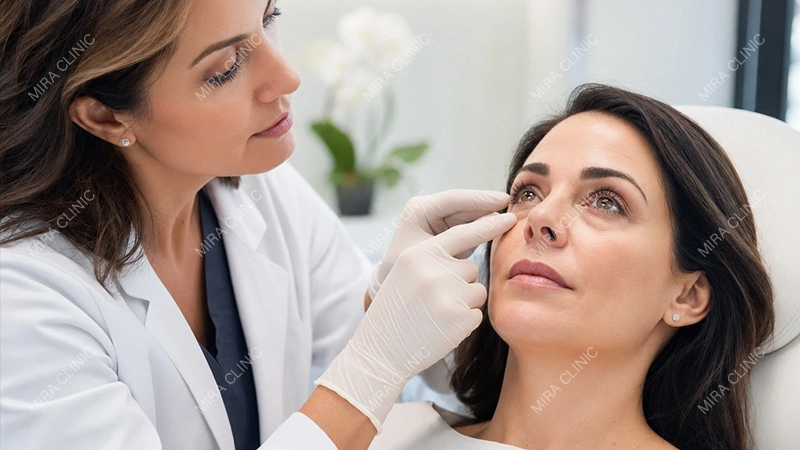
Patients often compare fat grafting and fillers because both are associated with restoring volume. But they are not the same category of treatment.
Why both restore volume, but not in the same way
The shared goal is volume restoration. The method, maintenance, and scale are different.
Temporary filler approach
Fillers are often chosen for smaller corrections, less downtime, and non-surgical treatment paths.
Transferred-fat approach
Fat grafting is chosen more often by patients who want their own tissue used and who are comfortable with a surgical approach to volume restoration.
When patients may prefer fat grafting
Fat grafting is often appealing when the patient wants a more structural and biologic-feeling plan.
Wanting a more natural source of volume
This is one of the biggest reasons patients choose it.
Needing broader structural restoration
If the issue is not one small line but a larger pattern of hollowing, fat grafting may be more aligned with the goal.
Wanting a surgical rather than maintenance-based plan
Some patients prefer a more substantial intervention over repeated smaller sessions.
When fillers may still be more appropriate
Fat grafting is not always the best first answer.
Smaller corrections
If the change needed is minimal, fillers may be more practical.
No-surgery preference
Some patients simply do not want surgery.
Faster return with less downtime
This remains one of the key reasons fillers stay relevant.
Read more: Algerian Actress Khadidja Meziani Chooses MIRA Clinic Istanbul for Blepharoplasty
Who Is a Good Candidate for Facial Fat Grafting
The best candidates are usually patients with genuine volume loss who want a natural-feeling rejuvenation plan and who understand that this is still a real procedure, not a beauty shortcut.
Patients with visible facial volume loss
Facial fat grafting is especially relevant when the face has become hollow or depleted.
Aging-related hollowing
This is the classic candidate group.
Weight-loss-related facial depletion
Volume loss after major weight change can make the face look older or more fatigued than expected.
Post-GLP-1 facial volume loss
ASPS trend reporting specifically notes rising demand for fat transfer related to GLP-1-associated facial depletion.
Patients who want a natural-feeling, non-implant approach
This group often includes patients who want a softer result and are not attracted to a heavily maintained injectable look.
Preference for autologous tissue
Using one’s own fat is a meaningful part of the appeal.
Desire for subtle rejuvenation
Patients seeking refinement rather than visible intervention are often well aligned with this treatment philosophy.
When a patient may not be ideal
Not every patient is the right fit.
Unstable weight
ASPS reporting notes that major weight loss after fat grafting can jeopardize retention and the stability of results.
Not enough donor fat
Because the procedure requires harvestable fat, not every patient will have the same donor options.
Expecting exact filler-like predictability
Fat grafting should not be explained as if it behaves identically to a small syringe-based correction.
Expecting a facelift-level skin-tightening effect
Fat restores volume. It does not replace lifting surgery when the main issue is significant skin laxity.
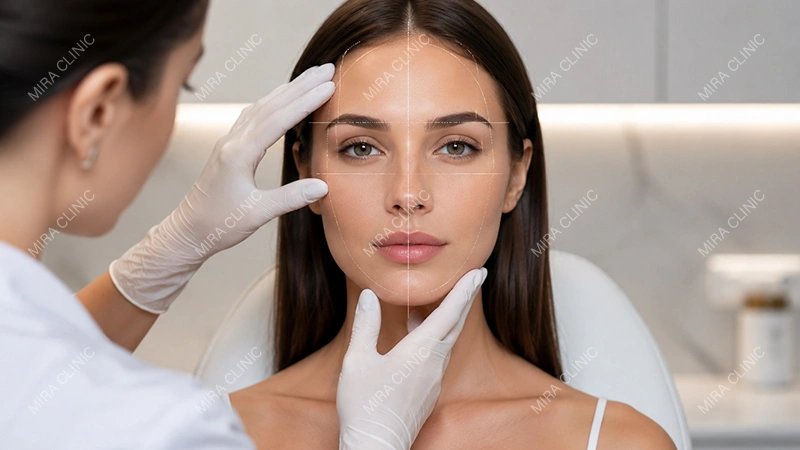
How the Procedure Is Planned for Natural Facial Balance
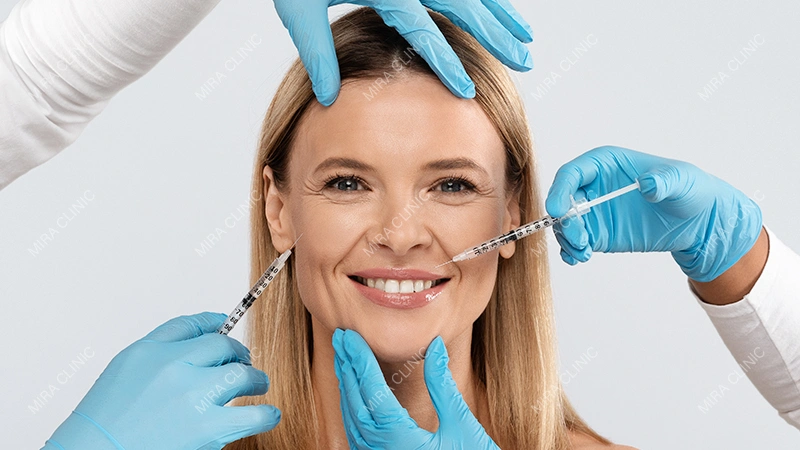
Planning is what separates elegant fat grafting from obvious fat grafting.
Why facial analysis matters more than simply “adding fat”
A natural result depends on proportion and placement, not volume alone.
Proportion
The face must be read as a whole.
Layering
Different zones need different depth and support strategy.
Symmetry
Planning must respect natural asymmetry without exaggerating it.
Avoiding overcorrection
Too much volume in one area is one of the fastest ways to lose naturalness.
Why donor area choice still matters
The face is not the only part of the plan. The donor area matters too.
Harvest quality
The surgeon needs usable fat of good quality for transfer.
Enough usable fat
The patient’s body should be assessed realistically.
Overall body planning
Even though this is a facial procedure, the donor area remains part of the surgical design.
Why placement technique determines whether results look elegant or obvious
Technique matters at least as much as indication.
Micro-droplet placement
ASPS coverage on nano-fat and related fat-grafting refinements highlights the importance of precise, distributed placement.
Even distribution
This helps support smooth contour and reduce irregularity risk.
Avoiding lumps and unevenness
Naturalness depends on restraint, balance, and refined technique more than the “natural” label alone.
Read more: Neck Lift in Turkey 2025: Say Goodbye to Wrinkles & Sagging Skin
Recovery After Facial Fat Grafting: What Patients Should Expect
Recovery is usually manageable, but it still requires patience and realistic expectations.
What the early recovery period is usually like
The first phase is often marked by visible but temporary changes.
Swelling
This is expected and does not represent the final result.
Bruising
This can occur depending on the areas treated and the patient’s tendency.
Temporary asymmetry during settling
Early unevenness can happen while swelling resolves and tissues settle.
Why patience matters with final results
Fat grafting is not something that should be judged too early.
Fat retention phase
The face needs time to stabilize after transfer.
Gradual stabilization
This is one reason the result should be assessed with patience, not immediately.
Why early swelling is not the final look
Patients need to understand that early fullness may not represent the settled outcome.
Why weight stability matters after the procedure
This point is often underestimated.
Large weight loss can affect results
ASPS reporting specifically notes that significant weight loss after fat transfer can jeopardize how well results hold.
Why recovery planning includes lifestyle planning
Mira Clinic should position this as part of long-term result protection, not just post-op advice.
Read more: Comprehensive Guide to Facial Plastic Surgery in Turkey 2025: Techniques, Costs, and Top Surgeons
Can Facial Fat Grafting Be Combined with Other Procedures
Yes, it often can, but that depends on anatomy and the broader rejuvenation goal.
Combining fat grafting with facelift or eyelid surgery
Volume loss and tissue descent are not the same problem, which is why some patients benefit from more than one category of treatment.
Structural plus lifting approach
A facelift can reposition tissues, while fat grafting can restore missing support and softness.
Why volume and skin laxity are different problems
This distinction is central to modern facial rejuvenation logic.
When combining procedures makes sense
The best combinations are those that improve harmony without making the recovery unnecessarily heavy.
More complete rejuvenation
Selected patients benefit from a broader but well-controlled plan.
One recovery window
This can be appealing when the surgical scope remains reasonable.
Better harmony in selected patients
Some faces need both lift and volume, not one or the other alone.
Why not every patient needs a combined surgical plan
Doing more is not automatically better.
Procedure scope
The plan should fit the patient, not just the possibility.
Age and anatomy
These shape whether combination treatment is appropriate.
Recovery tolerance
Some patients are better served by a more focused plan.
Read more: Ultimate Guide to Facelift in Turkey: Costs, Best Clinics & Recovery in 2025
What Makes Results Look Natural — or Unnatural
The “natural” label is not enough on its own. Naturalness has to be created.
Why overcorrection is one of the biggest risks to elegance
The face can look overtreated very quickly when volume is placed without restraint.
Too much volume in one zone
This creates puffiness instead of rejuvenation.
Ignoring facial proportion
A technically full face is not the same as a balanced face.
Why natural results come from contour restoration, not puffiness
The real goal is support and transition, not bulk.
Support vs bulk
Support makes the face look healthier. Bulk makes it look treated.
Contour vs roundness
A youthful face is not simply rounder. It is better supported and more harmonious.
Why surgeon judgment matters more than the “natural” label
This is where the authority position matters most.
Not all fat grafting looks subtle
The treatment can be elegant or obvious depending on planning.
Technique is what creates credibility
That is why Mira Clinic should frame fat grafting as a precision rejuvenation procedure, not just a trend-aligned option.
Why Facial Fat Grafting Fits the Modern “Organic Beauty” Conversation
Facial fat grafting fits the current beauty conversation because patients increasingly want results that look biologic, restrained, and less artificial.
Why patients increasingly prefer biologic-looking rejuvenation
The preference has shifted from obvious intervention toward softer restoration.
Less interest in overfilled faces
This is one of the clearest cultural shifts in modern aesthetics.
More interest in soft restoration
Patients want to look healthier and fresher, not inflated.
Why fat transfer is often discussed as regenerative as well as volumizing
ASPS trend articles for 2026 describe fat transfer as attractive not only for structural restoration but also for its regenerative appeal linked to fat’s natural stem-cell population.
Structural restoration
This remains the most grounded way to explain it.
Stem-cell-related interest in fat tissue
This should be discussed carefully and credibly, without turning the procedure into overpromised regenerative marketing.
Why authority-based clinics should present this carefully
Natural does not mean casual.
Natural does not mean casual
It is still a surgical procedure with planning, recovery, and variability.
It is still a real surgical procedure
That honesty is part of what makes an authority article credible.
Read more: Chin Augmentation in Turkey 2025: Implants vs. Fillers – Which One is Right for You?
Final Verdict: Facial Fat Grafting Works Best When It Restores, Not Replaces
Facial fat grafting is strongest when it is used to restore what the face has lost, not to create a different face entirely. The best outcomes come from understanding that facial aging is often a volume-loss problem, and that solving volume loss can make the whole face look more supported, softer, and more youthful.
That is why restraint matters so much. Natural results do not come from using your own fat alone. They come from careful analysis, disciplined placement, stable weight, and realistic expectations. The face should look refreshed, not obviously treated.
For Mira Clinic, the strongest way to position facial fat grafting is as a structural and natural facial-rejuvenation tool for the right patient — not a trend, not a shortcut, and not a substitute for every other facial procedure. When planned well, it can be one of the most elegant ways to restore youthful facial contour.
Read more: Ethnic Rhinoplasty in Turkey: How to Choose a Nose Shape That Fits Your Face and Heritage