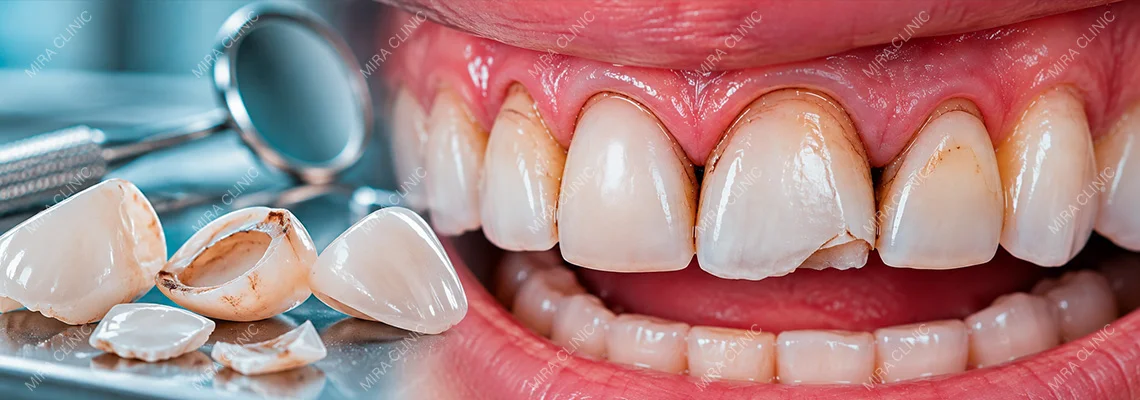
Patients looking for a smile makeover in Istanbul often compare crowns vs veneers when they have broken front teeth, gum problems, discoloration, gaps, or old dental work. The right option depends on how damaged the front teeth are, how much natural tooth structure remains, the condition of the gums, bite pressure, and whether the patient needs cosmetic improvement or stronger protection.
Veneers are usually better for healthy front teeth with cosmetic concerns. Crowns are usually better for broken, weak, root canal-treated, or heavily filled front teeth. In many smile makeover cases, dentists may combine both options.
|
Option |
Best For |
Main Goal |
|---|---|---|
|
Veneers |
Healthy front teeth with cosmetic issues |
Improve color, shape, and symmetry |
|
Crowns |
Broken, weak, or heavily restored front teeth |
Protect and rebuild the tooth |
|
Combined Plan |
Some teeth are healthy, others damaged |
Use veneers and crowns where needed |
For patients with gum problems, the first step should be gum evaluation. Gum disease or inflammation can affect the final margins, shape, and long-term stability of both crowns and veneers. Cleveland Clinic explains that gum disease treatment focuses on reducing infection and rebuilding tissues damaged by periodontal disease.
- What Are Dental Veneers?
- What Are Dental Crowns?
- Before and After: Real Front Teeth Smile Makeover Result
- Watch a Similar Crowns or Veneers Case
- Crowns vs Veneers for Front Teeth: Quick Comparison
- Case 1: I Have Broken Front Teeth — Crowns or Veneers?
- Case 2: I Have Gum Problems — Can I Get Crowns or Veneers?
- Case 3: I Want a Smile Makeover in Istanbul — Which Option Fits Better?
- Case 4: I Have Old Dental Work on Front Teeth
- Crowns vs Veneers for Front Teeth: Which Looks More Natural?
- Crowns vs Veneers Cost in Istanbul
- What Affects the Final Treatment Plan?
- How Dentists Recommend Crowns or Veneers
- Why Choose Mira Clinic for Crowns and Veneers in Istanbul?
What Are Dental Veneers?
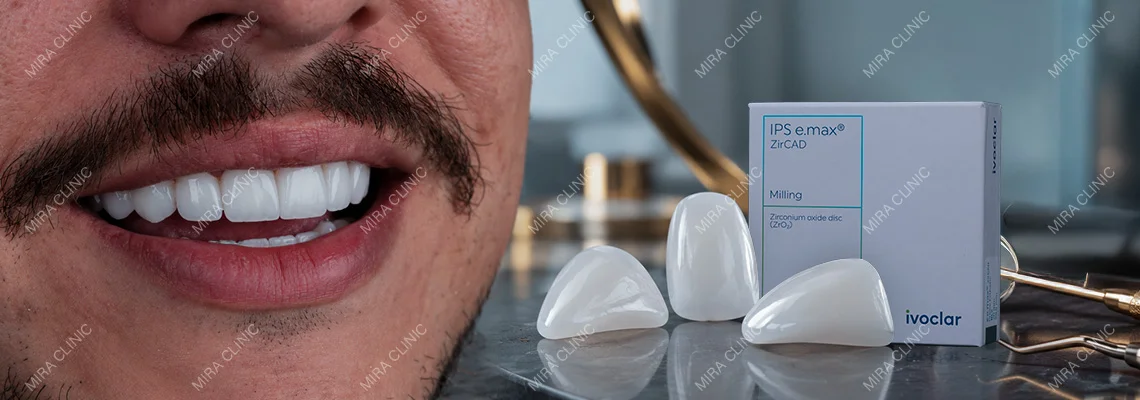
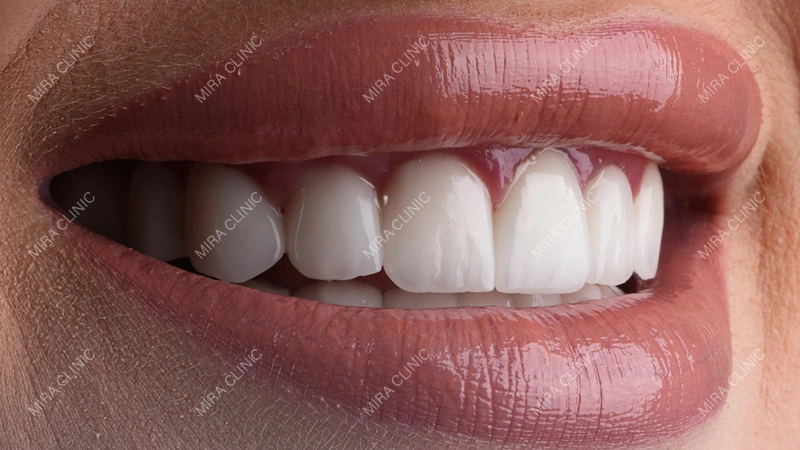
Dental veneers are thin custom-made restorations placed on the visible surface of the teeth. They are mainly used to improve the appearance of front teeth by changing color, shape, length, and symmetry.
Veneers may be suitable for teeth that are chipped, stained, misshaped, slightly uneven, or have small gaps. They are usually more conservative than crowns because they cover mainly the front surface of the tooth rather than the whole tooth structure.
When Dentists Recommend Dental Veneers
Dentists may recommend veneers for:
- Mildly chipped front teeth
- Stained teeth that do not respond well to whitening
- Small gaps between front teeth
- Uneven tooth size
- Mild shape problems
- Cosmetic smile makeover cases
- Front teeth with enough healthy enamel
When Veneers May Not Be the First Choice
Veneers may not be suitable if the patient has:
- Deep cracks
- Large old fillings
- Weak front teeth
- Severe gum disease
- Root canal-treated teeth with low structure
- Strong bite pressure
- Advanced enamel loss
In these cases, crowns or another restorative option may provide stronger protection.
What Are Dental Crowns?
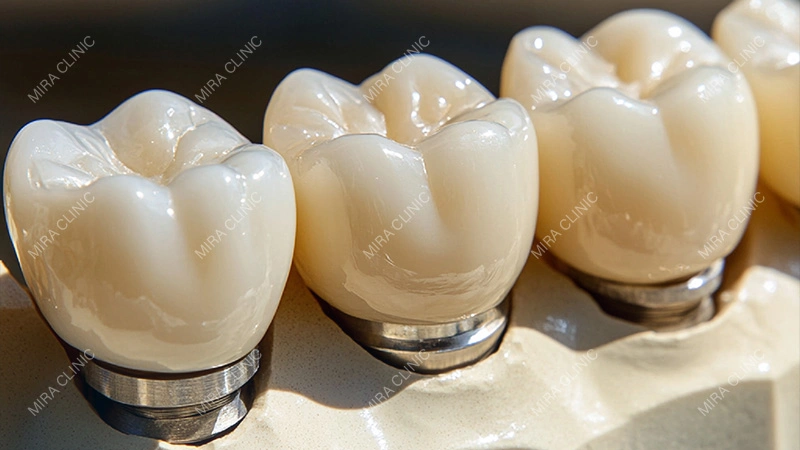
Dental crowns are tooth-shaped restorations that cover more of the tooth structure. They are used to restore strength, shape, color, and function when the tooth is weak, damaged, cracked, heavily filled, or previously treated with root canal therapy.
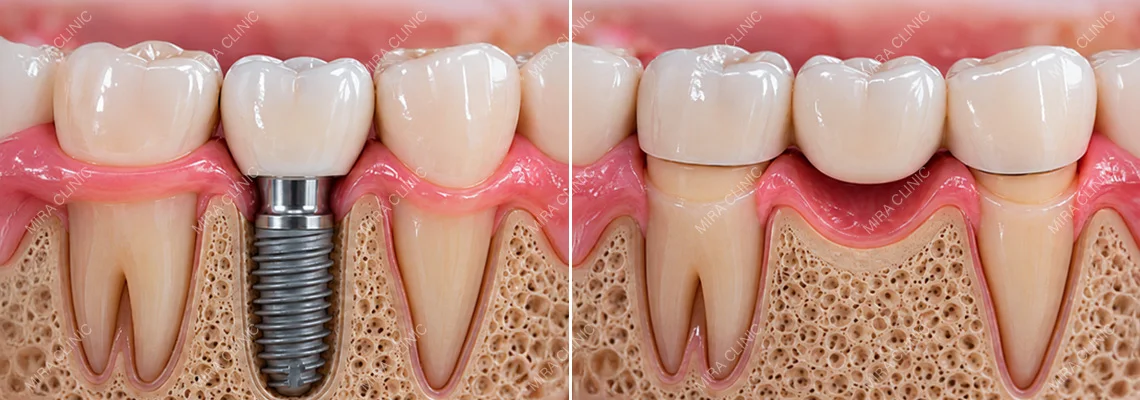
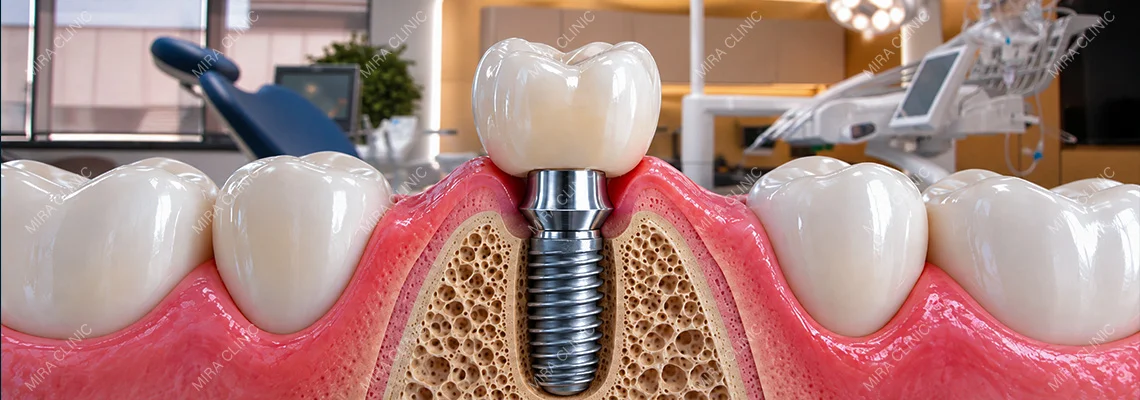
Crowns can protect weak teeth, restore broken teeth, cover badly shaped or discolored teeth, support bridges, and cover dental implants.
When Dentists Recommend Dental Crowns
Dentists may recommend crowns for front teeth when there are:
- Broken front teeth
- Deep cracks
- Large fillings
- Root canal-treated teeth
- Severe wear
- Weak remaining tooth structure
- Old crowns that need replacement
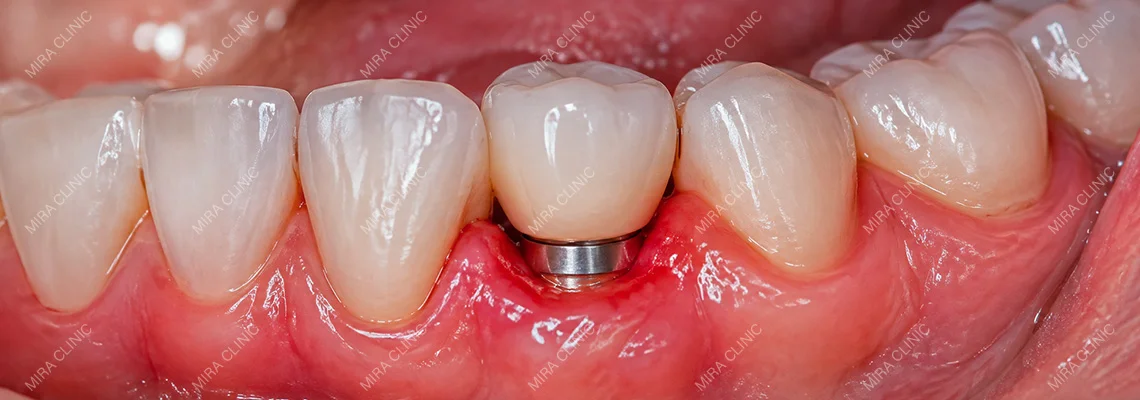
- Implant crowns for missing front teeth
When Crowns May Not Be the First Choice
Crowns may not be necessary when the front teeth are healthy and the problem is mainly cosmetic. In that case, veneers, whitening, bonding, or gum treatment may be more conservative.
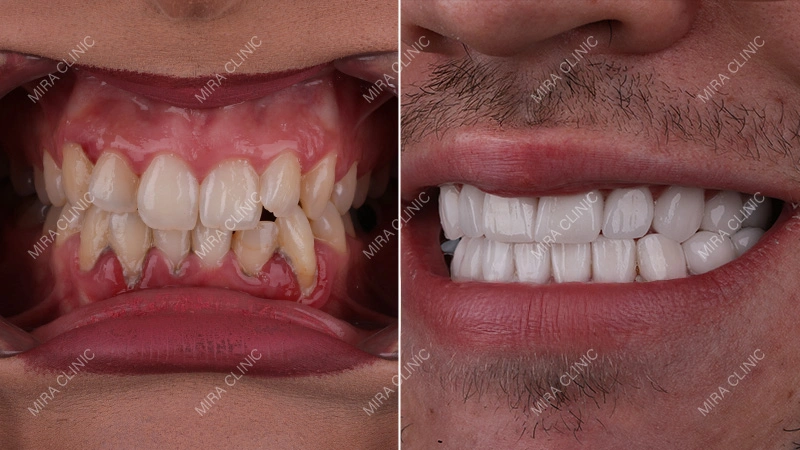
Before and After: Real Front Teeth Smile Makeover Result
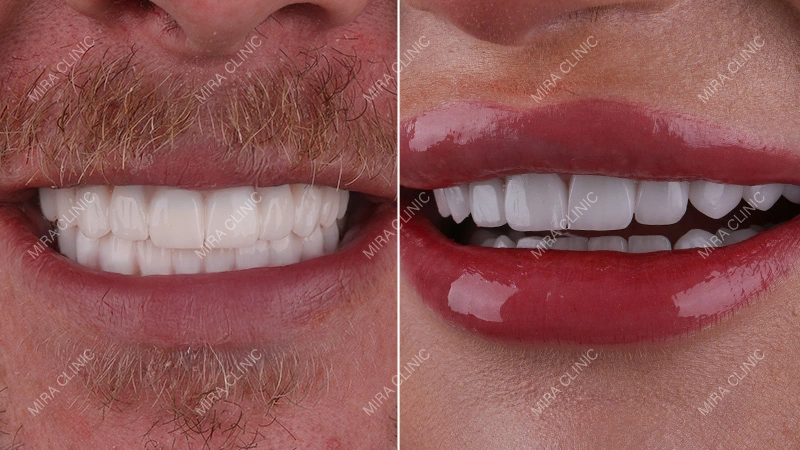
Watch a Similar Crowns or Veneers Case
Crowns vs Veneers for Front Teeth: Quick Comparison
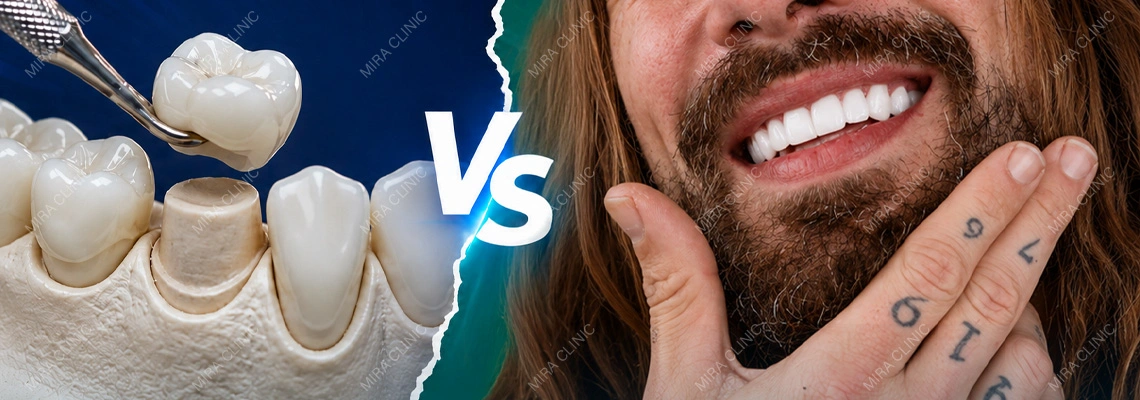
Veneers are more cosmetic and conservative. Crowns are more protective and restorative. The best choice depends on whether the tooth needs surface improvement or full structural coverage.
|
Factor |
Dental Veneers |
Dental Crowns |
|---|---|---|
|
Tooth Coverage |
Front surface mainly |
Covers more tooth structure |
|
Best For |
Cosmetic front teeth issues |
Broken, weak, or heavily restored teeth |
|
Tooth Preparation |
Usually less |
Usually more |
|
Strength |
Suitable for healthy teeth |
Stronger protection for damaged teeth |
|
Smile Makeover Role |
Color, shape, symmetry |
Rebuilding, protection, full reshaping |
|
Gum Health Requirement |
Stable gums needed |
Stable gums needed |
Case 1: I Have Broken Front Teeth — Crowns or Veneers?
Broken front teeth may need veneers, crowns, bonding, root canal treatment, or implants depending on how deep the damage is. If the break is small and the tooth is still strong, a veneer or bonding may be enough. If the break is deep or the tooth is weak, a crown may be safer.
If the Break Is Small
Possible options include:
- Composite bonding
- Dental veneers
- E-max veneers
- Minimal restorative treatment
If the Break Is Deep
Possible options include:
- Root canal treatment
- Post-core buildup
- Dental crown
- Extraction and implant if the tooth cannot be saved
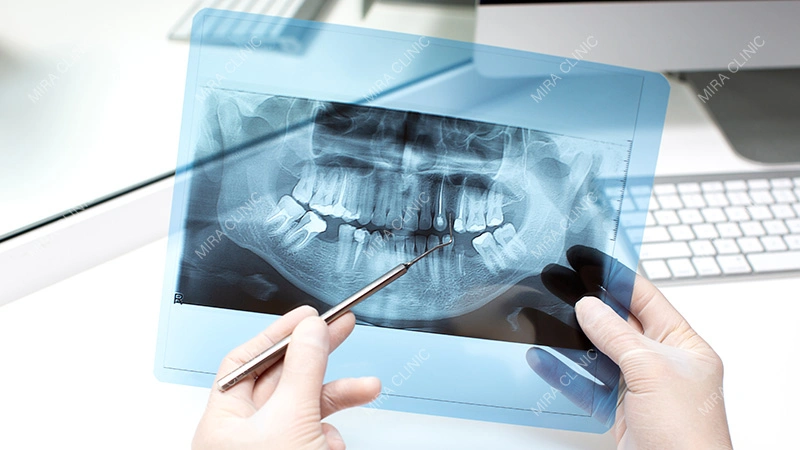
The dentist must check the root, nerve, remaining enamel, and bite before recommending crowns or veneers.
Case 2: I Have Gum Problems — Can I Get Crowns or Veneers?
Gum problems should be treated before crowns or veneers. Healthy gums are important for natural margins, long-term stability, and a clean final smile design.
If the patient has bleeding gums, swelling, gum recession, bad breath, or periodontal disease, the dentist may recommend gum treatment before cosmetic work. Gum disease can damage the tissues that support the teeth and may lead to gum recession or tooth loss if it progresses.
If the Gum Problem Is Mild
The dentist may recommend:
- Professional cleaning
- Deep cleaning
- Gum inflammation control
- Oral hygiene improvement
- Smile design after gum stabilization
If There Is Gum Recession
The dentist must evaluate:
- Root exposure
- Tooth length
- Gum line symmetry
- Crown or veneer margin placement
- Whether gum treatment is needed first
Read more: Gums and Teeth Makeover in Istanbul: Linda’s Veneers Experience at Mira Clinic
Case 3: I Want a Smile Makeover in Istanbul — Which Option Fits Better?
For a smile makeover in Istanbul, veneers may be suitable when the front teeth are healthy but unattractive. Crowns may be better when the teeth are broken, weak, root canal-treated, or structurally damaged.
Veneers May Fit Better If You Have
- Healthy front teeth
- Cosmetic shape issues
- Mild chips
- Small gaps
- Stubborn discoloration
- Aesthetic smile goals
Crowns May Fit Better If You Have
- Broken front teeth
- Weak teeth
- Large fillings
- Root canal history
- Severe wear
- Previous failed restorations
- Need for stronger coverage
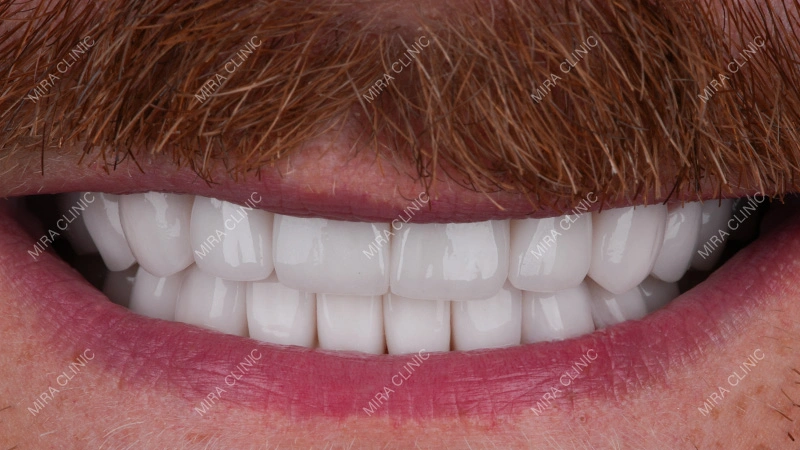
In many smile makeover cases, the dentist may use crowns on damaged teeth and veneers on healthier teeth.
Read more: Patient Review: Hollywood Smile in Turkey – Seydi Onur’s Experience from the Netherlands
Case 4: I Have Old Dental Work on Front Teeth
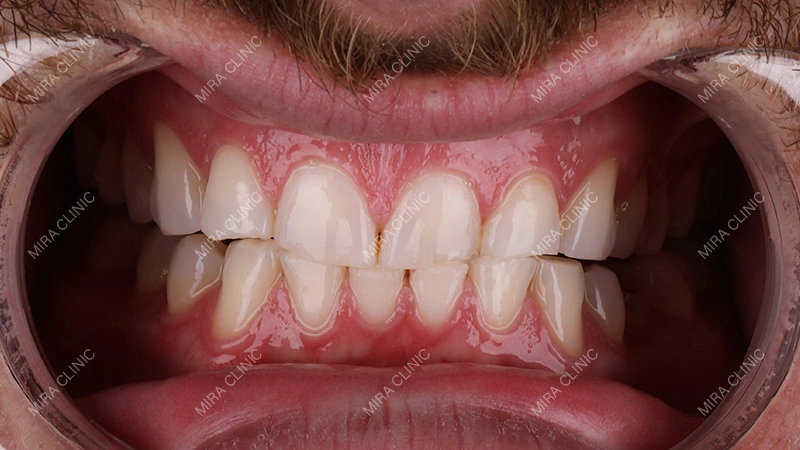
Old fillings, old veneers, or old crowns must be evaluated before choosing a new smile makeover plan. The dentist checks tooth strength, gum condition, bite, and whether the old work can be replaced safely.
Possible treatment options include:
- Replacing old veneers
- Replacing old crowns
- Using crowns on weak teeth
- Using veneers on healthier teeth
- Combining crowns and veneers in one smile makeover
Crowns vs Veneers for Front Teeth: Which Looks More Natural?
Both crowns and veneers can look natural when planned correctly. Veneers are often chosen for natural translucency and minimal cosmetic improvement. Crowns are chosen when the tooth needs more protection or full reshaping.
For front teeth, the dentist evaluates:
- Tooth color
- Tooth shape
- Gum line
- Smile width
- Face shape
- Lip movement
- Bite relationship
The most natural result is not always the thinnest option. It is the option that matches the tooth condition and smile design.
Read more: Patient Experience with Veneers in Turkey: Real Stories, Results, and What to Expect
Crowns vs Veneers Cost in Istanbul
The cost depends on the number of teeth, material, case difficulty, gum condition, and whether the patient needs extra treatment before the smile makeover.
|
Treatment |
Cost Direction |
Best For |
|---|---|---|
|
Dental Veneers |
Package-based cosmetic range |
Healthy front teeth with aesthetic issues |
|
Dental Crowns |
Material and count-based range |
Broken, weak, or restored teeth |
|
Combined Plan |
Custom range |
Patients needing crowns on some teeth and veneers on others |
A patient with two chipped front teeth may need a smaller plan than a patient with gum issues, old crowns, root canal-treated teeth, or a full smile makeover.
Read more: Dental Crown Cost in Turkey: Zirconia, E-max, and Composite Crown Prices for Your Case
What Affects the Final Treatment Plan?
Dentists choose between crowns and veneers after checking tooth structure, gum health, bite force, X-ray findings, and smile design goals.
Main factors include:
- Front tooth damage
- Gum health
- Gum recession
- Tooth cracks
- Root canal history
- Amount of enamel
- Bite pressure
- Number of teeth in the smile zone
- Existing fillings or crowns
- Color goals
- Smile makeover expectations
Read more: Nobel Implants vs Straumann vs Zimmer Prices: Cost Differences and Which Is Best
How Dentists Recommend Crowns or Veneers
Step 1: Smile Photos and X-Ray
The dentist checks visible smile concerns and hidden dental problems, including roots, fillings, bone support, and previous restorations.
Step 2: Gum Evaluation
Gum inflammation, recession, or uneven gum line may need treatment before cosmetic work.
Step 3: Tooth Structure Evaluation
The dentist checks whether each front tooth is strong enough for veneers or needs crown coverage.
Step 4: Material Selection
Possible options may include E-max veneers, E-max crowns, zirconia crowns, or a combined plan.
Step 5: Smile Design and Temporary Teeth
Temporary restorations may help the patient preview shape, length, bite comfort, and smile balance before final placement.
Why Choose Mira Clinic for Crowns and Veneers in Istanbul?
Mira Clinic in Istanbul provides treatment planning for international patients considering dental crowns, dental veneers, and full smile makeover options. For patients with broken front teeth, gum concerns, old dental work, or aesthetic problems, the plan should start with diagnosis, not only cosmetic preference.
Mira Clinic evaluates tooth structure, X-ray findings, gum health, smile design, and material suitability before recommending crowns, veneers, or a combined smile makeover plan.
Read more: Hollywood Smile Reviews – Real Patient Story in Turkey: Jamie’s Smile Transformation in Istanbul