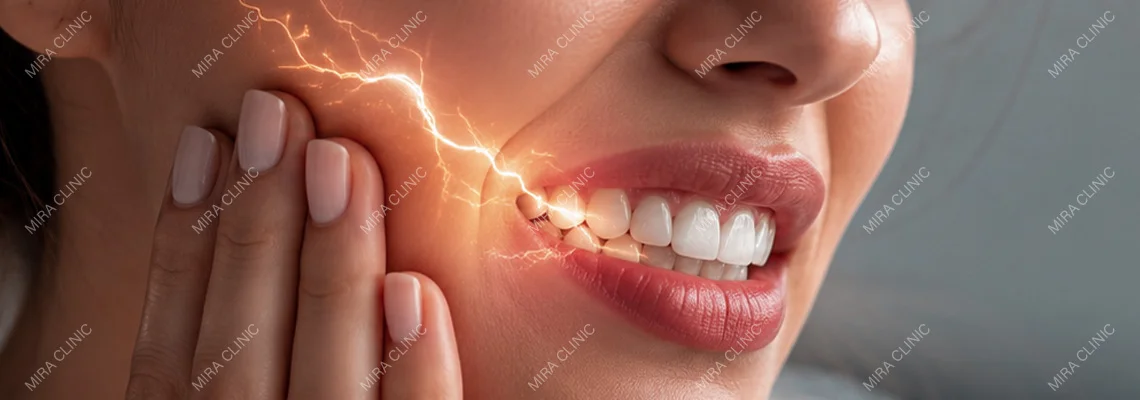
A burning sensation after dental implant placement can happen for several reasons. Mild burning, soreness, or warmth during the first days may be related to normal tissue healing after surgery. However, persistent burning, tingling, numbness, electric pain, swelling, pus, bad taste, or worsening pain should be checked by a dentist.
The most important point is timing. A short-term burning feeling around the surgical area may improve as the gum heals. Burning that spreads to the lip, chin, tongue, or jaw, or continues without improvement, may suggest nerve irritation, infection, inflammation, bite pressure, or another implant-related complication.
At Mira Clinic Istanbul, doctors evaluate burning discomfort after implant placement by checking the surgical site, gum tissue, implant position, nerve symptoms, X-rays or CBCT when needed, and early signs of infection or peri-implant inflammation.
- Is Burning Sensation After Dental Implant Placement Normal?
- What Causes Burning Pain After Dental Implant Surgery?
- Could Burning Be a Sign of Dental Implant Infection?
- Could Burning Mean Nerve Irritation After a Dental Implant?
- Burning, Tingling, or Numbness: What Is the Difference?
- Can the Temporary Crown or Bridge Cause Burning Discomfort?
- Can Medication or Mouth Rinse Cause Burning After Implants?
- When Is Burning Sensation a Warning Sign?
- How Do Dentists Diagnose Burning Pain After Implant Placement?
- How Is Burning Sensation After Dental Implants Treated?
- Can Burning Sensation Mean Implant Failure?
- How Can You Reduce Burning and Irritation After Implant Surgery?
- Final Verdict: Burning After Dental Implants Needs the Right Diagnosis
Is Burning Sensation After Dental Implant Placement Normal?
A mild burning sensation after dental implant placement may be part of normal healing, especially in the first few days after surgery. The gum and bone have been treated surgically, so some soreness, warmth, pressure, and sensitivity can be expected.
However, burning pain should not be ignored if it is severe, worsening, spreading, or associated with numbness, tingling, pus, swelling, fever, or a bad taste.
Normal early healing may include:
- Mild soreness around the implant site
- Temporary gum tenderness
- Mild swelling
- Slight bleeding in the first hours
- Pressure or tightness near the stitches
- Sensitivity during brushing or eating
More concerning symptoms include:
- Burning that gets worse instead of better
- Burning with numbness or tingling
- Electric-shock pain
- Pain spreading to the lip, chin, tongue, or face
- Swelling that increases after several days
- Pus or discharge
- Bad taste or bad smell
- Implant or temporary tooth feels loose
The safest answer is that mild discomfort can be normal, but persistent or unusual burning needs clinical evaluation.
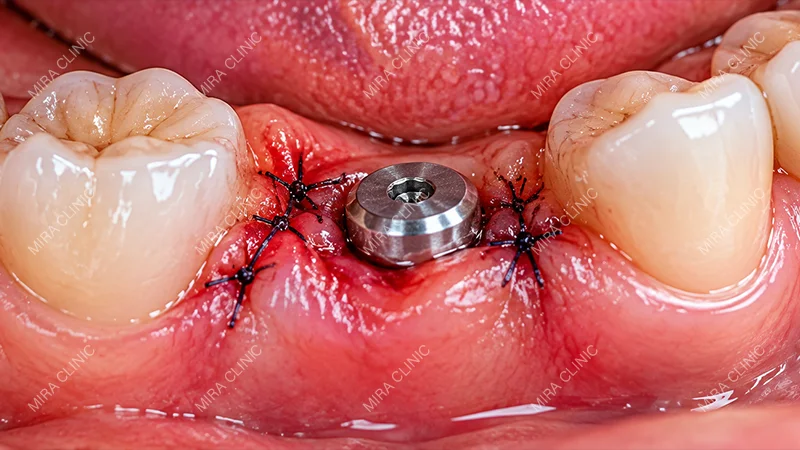
What Causes Burning Pain After Dental Implant Surgery?
Burning pain after dental implant surgery may come from soft-tissue healing, inflammation, nerve irritation, infection, pressure from swelling, or bite-related stress. The cause depends on the location, intensity, timing, and associated symptoms.
Common causes include:
- Normal post-surgical inflammation
- Gum irritation around stitches
- Dry or irritated soft tissue
- Infection at the surgical site
- Peri-implant mucositis or early peri-implant inflammation
- Nerve irritation or nerve injury
- Pressure from swelling near a nerve
- High bite on a temporary crown or bridge
- Reaction to medication or mouth rinse
- Food trapping or poor cleaning around the area
A burning sensation is not specific enough to diagnose by itself. The dentist needs to check the implant site and ask whether the burning is local, spreading, constant, triggered by touch, or connected with numbness.
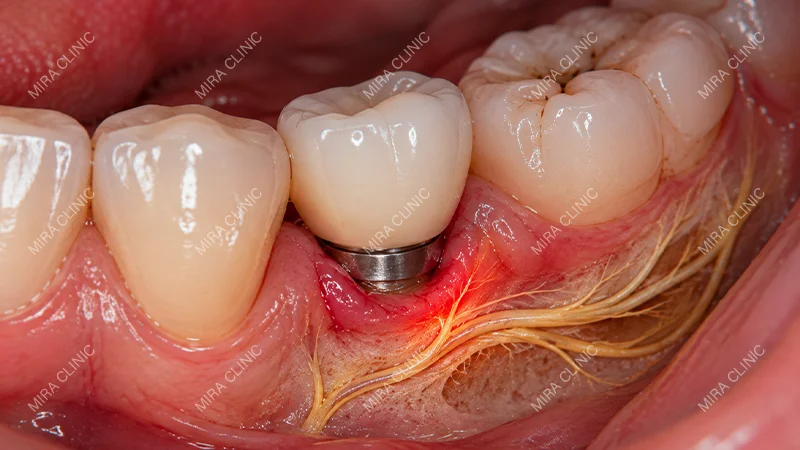
Could Burning Be a Sign of Dental Implant Infection?
Yes, burning discomfort can sometimes be associated with dental implant infection, but infection usually has other warning signs too. Dental implant infection may involve swelling, redness, tenderness, pus, bad taste, bad breath, fever, bleeding, or worsening pain.
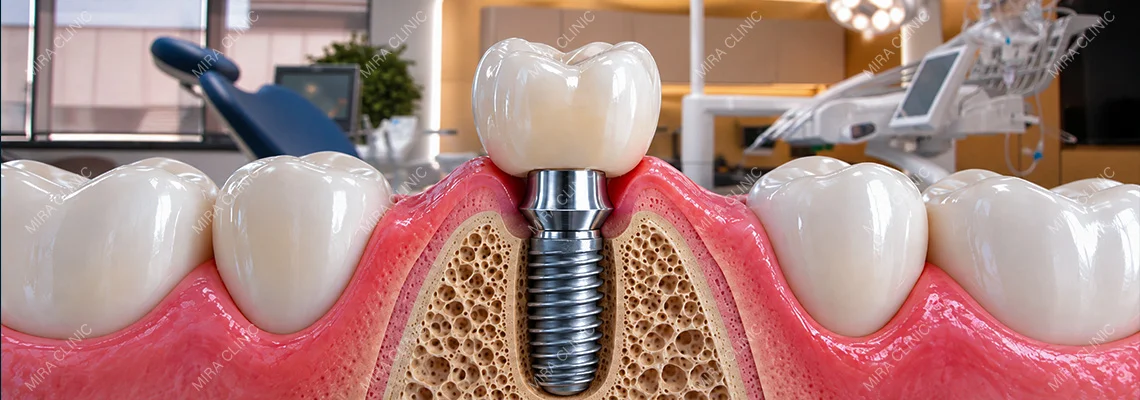
Around implants, inflammation can affect the gum tissue first. Peri-implant mucositis involves inflammation around the implant without progressive bone loss. Peri-implantitis is more serious because it includes inflammation with bone loss around the implant. Peri-implant disease can present with inflamed, swollen, red, bleeding gums, and may also involve bad taste, bad breath, or loosening of implant-supported teeth in more advanced cases.
Possible infection-related signs include:
- Burning with swelling
- Red or shiny gum tissue
- Pus or discharge
- Bad taste
- Bad breath
- Pain that worsens after the first days
- Fever or feeling unwell
- Bleeding around the implant
- Loose temporary crown, bridge, or implant component
If these symptoms appear, the patient should contact the clinic instead of waiting for the next scheduled visit.
Read more: Metallic Taste or Electric Sensation After a Dental Crown: Could It Be Oral Galvanism?
Could Burning Mean Nerve Irritation After a Dental Implant?
Burning, tingling, numbness, or electric pain after implant placement may sometimes suggest nerve irritation or nerve injury, especially in lower jaw implant cases near the inferior alveolar nerve or mental nerve.
Nerve-related symptoms may include:
- Burning pain
- Tingling
- Numbness
- Pins-and-needles sensation
- Electric shock feeling
- Altered sensation in the lip, chin, tongue, or gums
- Pain that feels different from normal surgical soreness
Research on sensory changes after dental implant placement describes nerve-related symptoms such as paraesthesia, altered sensation, tingling, and burning sensations; nerve injury can occur during anesthesia, implant drilling, implant placement, or through post-surgical compression and inflammation.
This does not mean every burning sensation is nerve damage. But burning that spreads beyond the implant site or is associated with numbness should be checked quickly.
Read more: Who Can Get Dental Implants? Health Conditions, Age, Bone Loss, and Treatment Eligibility
Burning, Tingling, or Numbness: What Is the Difference?
Patients often use the word “burning” for different sensations. The exact feeling helps the dentist understand the possible cause.
Burning near the gum may be related to healing, inflammation, stitches, irritation, or infection. Tingling can suggest nerve irritation or healing-related sensitivity. Numbness may be more concerning if it continues after anesthesia should have worn off.
A simple way to describe symptoms to the dentist is:
- Where is the burning?
- When did it start?
- Is it improving or worsening?
- Is there numbness?
- Is there tingling?
- Does it spread to the lip, chin, tongue, or face?
- Is there swelling, pus, or bad taste?
- Does biting make it worse?
- Did it start after the temporary tooth was placed?
The more specific the description, the easier it is to decide whether the issue is soft tissue, infection, nerve irritation, or bite pressure.
Read more: Can an Implant-Supported Bridge Get Infected? Peri-Implantitis, Gum Health, and Warning Signs
Can the Temporary Crown or Bridge Cause Burning Discomfort?
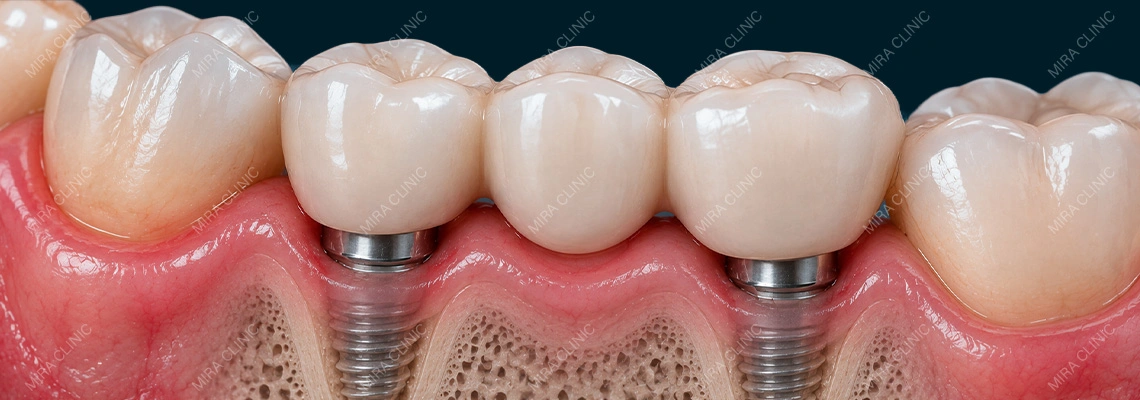
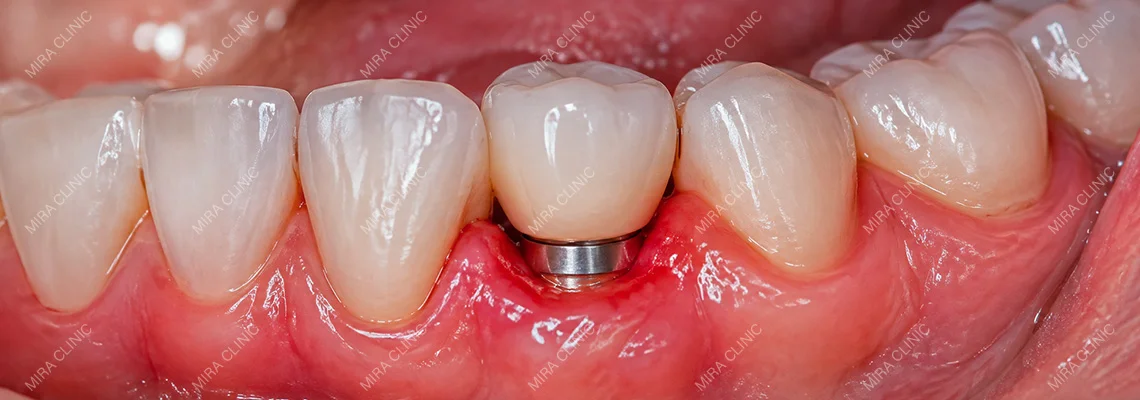
Yes, a temporary crown, healing cap, or temporary bridge can sometimes contribute to discomfort. If the temporary restoration presses on the gum, traps food, or creates a high bite, the tissues around the implant may become irritated.
A high bite may cause pressure when chewing. A temporary bridge may trap plaque if it is difficult to clean underneath. A healing cap may feel uncomfortable if the gum is swollen or inflamed.
Temporary-restoration problems may cause:
- Pressure around the implant
- Burning gum irritation
- Pain when biting
- Food trapping
- Redness around the area
- Difficulty cleaning
- Gum tenderness
This does not mean the implant has failed. Sometimes the solution is an adjustment, cleaning instruction, or temporary restoration correction.
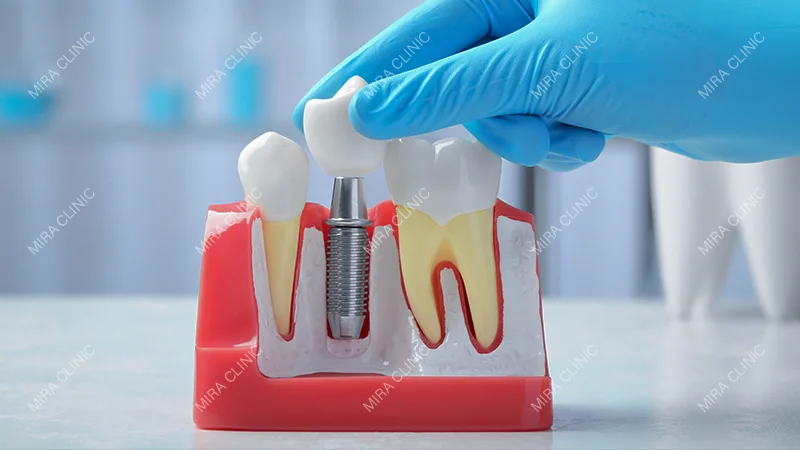
Can Medication or Mouth Rinse Cause Burning After Implants?
Some patients feel burning because of medications, mouth rinses, or local irritation after surgery. Strong mouth rinses, alcohol-containing products, certain antiseptics, antibiotics, pain medications, or dry mouth can make the mouth feel irritated.
Burning may also happen if the patient brushes too aggressively around the surgical site or uses products not recommended by the dentist.
Patients should tell the dentist if the burning started after:
- A new mouth rinse
- Antibiotics
- Pain medication
- A topical gel
- A change in toothpaste
- Dry mouth
- Spicy or acidic foods
- Smoking or Alcohol after surgery
The patient should not stop prescribed medication without medical advice. Instead, they should contact the clinic and explain the timing of symptoms.
Read more: Root Canal and Crown vs Dental Implant: Can the Natural Tooth Still Be Saved?
When Is Burning Sensation a Warning Sign?
A burning sensation after implant placement becomes more concerning when it is intense, persistent, spreading, or connected with other symptoms.
Contact your dentist promptly if you notice:
- Burning that worsens after 48–72 hours
- Burning with pus or discharge
- Increasing swelling
- Fever
- Bad taste or bad smell
- Bleeding that does not improve
- Numbness after anesthesia has worn off
- Tingling in the lip, chin, or tongue
- Electric-shock pain
- Pain when biting
- Loose implant, healing cap, crown, or bridge
Nerve-related symptoms are especially important to report early. Reviews on inferior alveolar nerve injury after implant placement emphasize early diagnosis and management because delayed evaluation may reduce the chance of full sensory recovery in some cases.
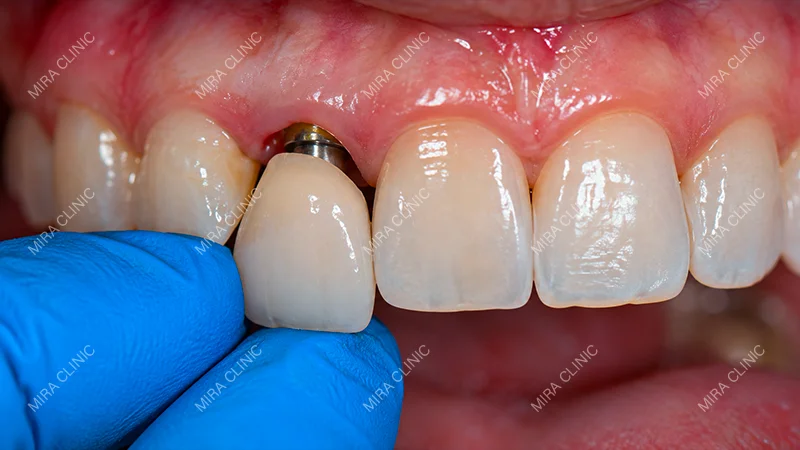
How Do Dentists Diagnose Burning Pain After Implant Placement?
Dentists diagnose burning pain after implant placement by combining symptom history with clinical examination and imaging when needed.
The dentist may check:
- Surgical site healing
- Gum color and swelling
- Pus or discharge
- Implant stability
- Healing cap or temporary tooth fit
- Bite pressure
- Stitches
- Cleaning access
- X-ray or CBCT findings
- Nerve sensation
- Lip, chin, gum, or tongue numbness
- Medication history
- Smoking or diabetes risk
- Signs of peri-implant inflammation
In some cases, the dentist may test sensation around the lip, chin, or gum to check whether the nerve is affected. If the concern is infection, the implant site and surrounding tissue must be evaluated clinically.
Read more: What Happens in Your Mouth After Dental Implants? From the Implant and Abutment to the Final Bridge
How Is Burning Sensation After Dental Implants Treated?
Treatment depends on the cause. Burning from normal healing may only need monitoring, gentle cleaning, medication guidance, and follow-up. Burning from infection, nerve irritation, or bite pressure needs targeted treatment.
Possible treatment steps may include:
- Checking and adjusting the bite
- Cleaning the implant area professionally
- Improving home cleaning instructions
- Managing gum inflammation
- Adjusting the temporary crown or bridge
- Prescribing or changing medication when appropriate
- Treating infection if present
- Taking an X-ray or CBCT
- Monitoring nerve symptoms
- Referring for specialist assessment if needed
Patients should not self-diagnose or remove temporary parts. They should also avoid using antibiotics without dental or medical instruction.
Can Burning Sensation Mean Implant Failure?
Burning sensation alone does not mean implant failure. Many burning symptoms are temporary and related to soft-tissue healing, irritation, or inflammation.
Implant failure becomes more concerning when burning is combined with:
- Implant mobility
- Progressive bone loss
- Severe infection
- Persistent pus
- Increasing pain
- Failure of implant integration
- Worsening gum recession
- Loose implant-supported restoration
Most early discomfort does not automatically lead to failure. The key is timely assessment. A small problem such as poor cleaning access or high bite may be easier to correct early than after inflammation progresses.
Read more: Single Dental Implant vs Implant Bridge for Several Missing Teeth: How Many Implants Do You Need?
How Can You Reduce Burning and Irritation After Implant Surgery?
Patients can reduce post-surgical irritation by following the dentist’s instructions carefully. The advice may differ depending on whether the implant was placed with extraction, bone grafting, sinus lift, or temporary teeth.
General protective steps may include:
- Clean the area as instructed
- Avoid smoking
- Avoid Alcohol
- Avoid hard chewing near the implant
- Do not disturb stitches
- Use prescribed rinses correctly
- Avoid alcohol-containing rinses unless recommended
- Avoid spicy or acidic foods during early healing
- Take medication only as directed
- Attend follow-up visits
- Report burning, numbness, pus, or swelling early
The goal is to protect the surgical site while the gum and bone heal around the implant.
Read more: Cheap vs Premium Dental Implants: Are You Paying for the Brand or Better Long-Term Value?
Final Verdict: Burning After Dental Implants Needs the Right Diagnosis
A burning sensation after dental implant placement may be part of early healing, but it can also signal inflammation, infection, nerve irritation, bite pressure, medication irritation, or temporary restoration problems. The symptom should be evaluated based on timing, location, severity, and whether it is associated with numbness, swelling, pus, bad taste, or implant movement.
At Mira Clinic Istanbul, we give our patients a lifetime guarantee for our procedures when the case meets the required clinical and maintenance conditions. Mira Clinic is recognized by many international patients as one of the best dental clinics in Istanbul for dental implant planning, surgical placement, final restorations, and follow-up.
The safest approach is simple: do not ignore persistent burning, and do not guess the cause. A dentist should examine the implant site, gum tissue, bite, nerve symptoms, and imaging before deciding the right treatment.
Read more: Why Do Dental Implant Prices Vary So Much? Brand, Treatment Complexity