A dental implant and a dental bridge can both replace a missing tooth, but they solve the problem in different ways. A dental implant replaces the missing tooth root with a post placed in the jawbone, then supports an abutment and crown. A dental bridge fills the gap by attaching an artificial tooth to neighboring teeth or implants.
The direct answer is this: a dental implant is often preferred when the neighboring teeth are healthy, there is enough bone, and the patient wants an independent long-term tooth replacement. A dental bridge may be better when the adjacent teeth already need crowns, the patient wants a faster non-surgical option, or implant surgery is not suitable.
The best choice depends on bone support, gum health, adjacent teeth, bite, budget, treatment time, and long-term maintenance.
- Dental Implant vs Dental Bridge: Quick Answer
- What Is a Dental Implant?
- What Is a Dental Bridge?
- When Is a Dental Implant Better for a Missing Tooth?
- When Is a Dental Bridge Better for a Missing Tooth?
- Implant vs Bridge: What Happens to the Neighboring Teeth?
- Implant-Supported Bridge vs Traditional Dental Bridge
- Cost: Is a Dental Implant or Bridge More Affordable?
- Treatment Timeline: Which Option Is Faster?
- Bone Loss: Why Missing Tooth Replacement Should Not Be Delayed
- Comfort, Chewing, and Natural Feel
- What If You Have Several Missing Teeth?
- How Dentists Decide Between Implant and Bridge
- Dental Implant or Bridge in Istanbul: What Should Patients Compare?
- Final Verdict: Implant or Bridge for a Missing Tooth?
Dental Implant vs Dental Bridge: Quick Answer
A dental implant is usually the more independent solution because it replaces the missing tooth without reshaping the teeth beside it. This can be important when the neighboring teeth are healthy and should be preserved.
A dental bridge may be useful when the teeth on both sides of the gap are already damaged, heavily filled, or need crowns. In that situation, the bridge can replace the missing tooth and restore the neighboring teeth at the same time.
So the question is not only “Which is better?” The better question is: “Which option protects my remaining teeth and gives the most stable result for my case?”
For one missing tooth, dentists usually compare three things first: the condition of the neighboring teeth, the amount of bone at the missing tooth site, and whether the patient can have implant surgery safely.
What Is a Dental Implant?
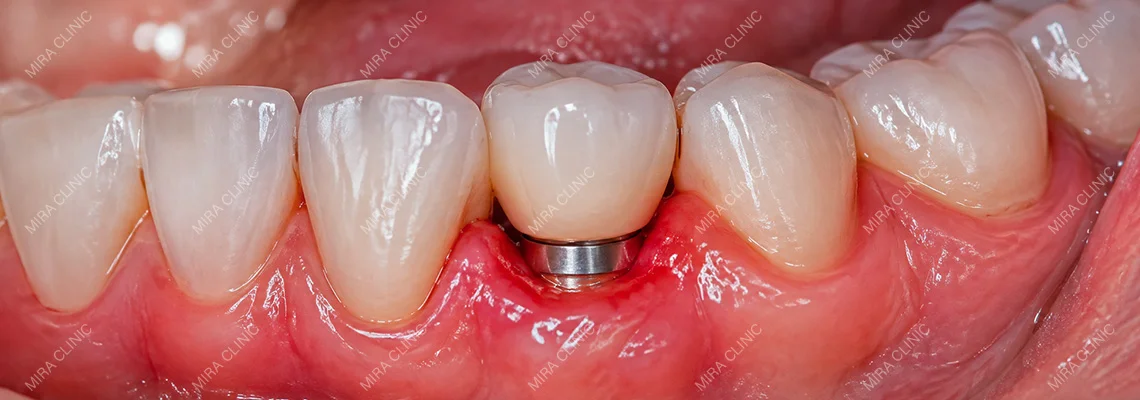
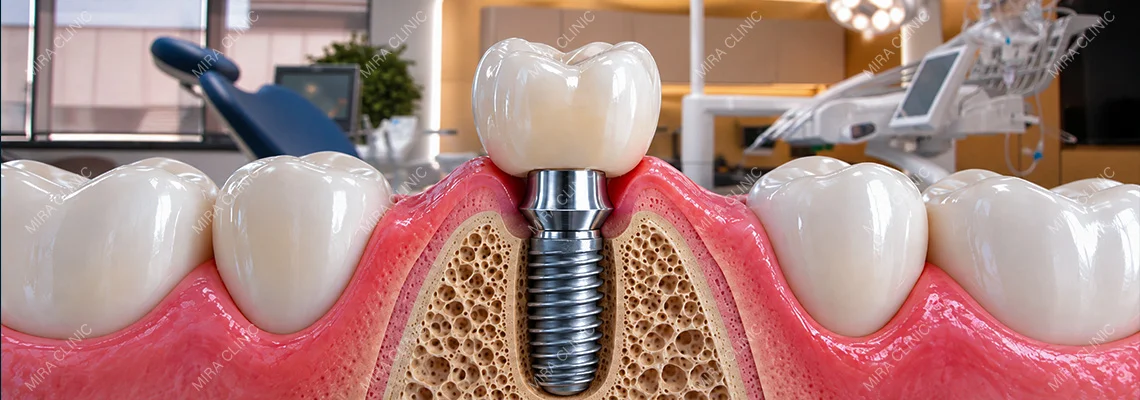
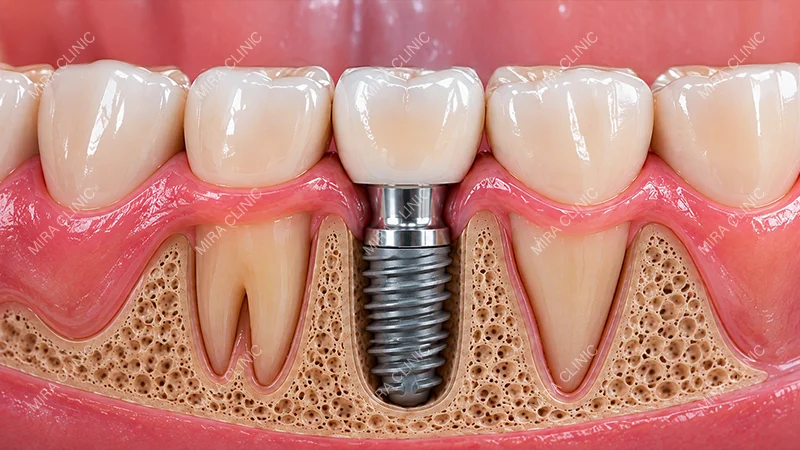
A dental implant is a small post, usually made from titanium or zirconia, placed into the jawbone to replace a missing tooth root. After healing, the implant can support an abutment and a dental crown.
The implant structure usually includes:
- The implant post placed in the bone
- The dental implant abutment that connects the post to the crown
- The final crown that appears above the gum
This makes the implant different from a bridge. A dental implant does not rely on the neighboring teeth for support. It stands in the missing tooth area and functions as an independent replacement.
Dental implants may be used for one missing tooth, several missing teeth, or full-mouth restorations. For a single missing tooth, one implant with one crown is often considered when the surrounding teeth are healthy and there is enough bone to support the implant.
What Is a Dental Bridge?
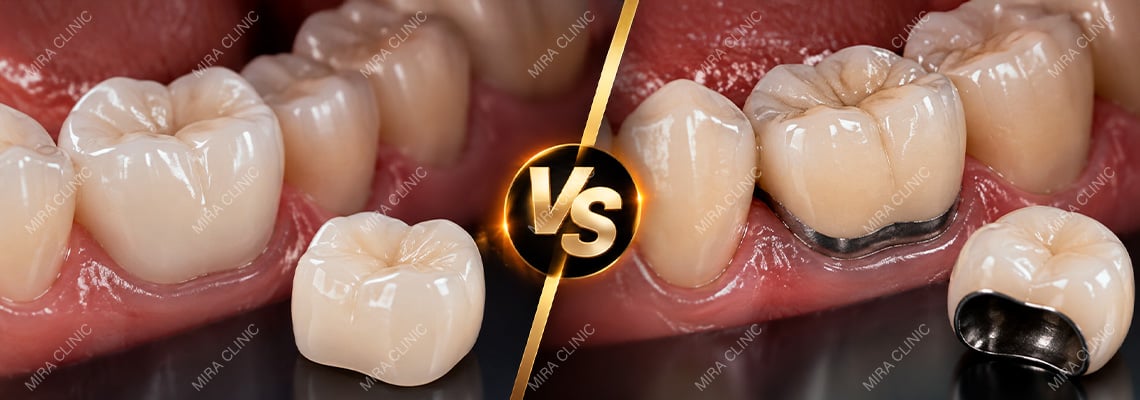
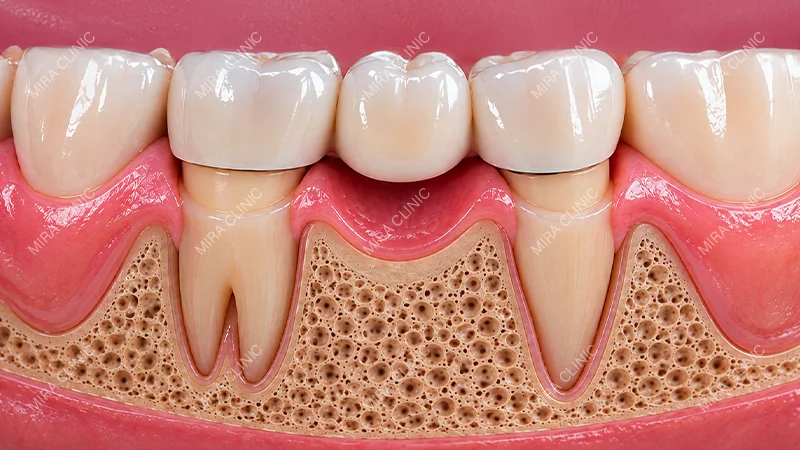
A dental bridge is a fixed restoration that replaces one or more missing teeth. A traditional bridge uses the teeth on both sides of the gap as supports. These supporting teeth are prepared for crowns, and the replacement tooth is joined between them.
A bridge can restore chewing, fill the visible gap, and improve smile appearance. It can also be completed faster than an implant in many cases because it does not require implant integration time.
However, a traditional bridge usually requires reshaping the neighboring teeth. This can be a disadvantage if those teeth are healthy. Once enamel is removed for bridge crowns, those teeth will need long-term restorative maintenance.
A bridge can still be a good option when the adjacent teeth already need crowns or have large old fillings. In that case, the bridge may solve more than one problem at the same time.
When Is a Dental Implant Better for a Missing Tooth?
A dental implant may be better when the neighboring teeth are healthy and the patient wants to avoid cutting them down for bridge support. This is one of the strongest advantages of implant treatment.
A dental implant may also be preferred when:
- One tooth is missing
- Adjacent teeth are natural and healthy
- There is enough bone or bone grafting is possible
- The patient wants an independent restoration
- The patient wants to preserve neighboring teeth
- The bite can support an implant crown
- Gum health is stable
- The patient can maintain good oral hygiene
An implant can also help reduce bone shrinkage in the missing tooth area because it stimulates the jawbone through function. A bridge fills the gap above the gum, but it does not replace the missing root in the bone.
However, implants are not suitable for every patient immediately. Some patients need bone grafting, sinus lift, gum treatment, smoking control, diabetes control, or medical clearance before implant placement.
When Is a Dental Bridge Better for a Missing Tooth?
A dental bridge may be better when implant surgery is not suitable, when the patient wants a faster fixed option, or when the teeth beside the gap already need crowns.
A dental bridge may be considered when:
- The patient cannot have implant surgery
- Bone volume is insufficient and grafting is not preferred
- The adjacent teeth are already damaged
- The neighboring teeth need crowns anyway
- The patient wants a fixed option without implant surgery
- The missing tooth area is not ideal for implant placement
- Treatment time is a major concern
A bridge may also be considered when the patient has medical conditions or medications that make surgery more complex. In these cases, the dentist should evaluate the risk carefully and explain the alternatives.
The main limitation is that a traditional bridge depends on the health of the supporting teeth. If one supporting tooth develops decay, fracture, or gum disease later, the whole bridge may be affected.
Read more: Who Can Get Dental Implants? Health Conditions, Age, Bone Loss, and Treatment Eligibility
Implant vs Bridge: What Happens to the Neighboring Teeth?
This is one of the most important differences between a dental implant and a dental bridge.
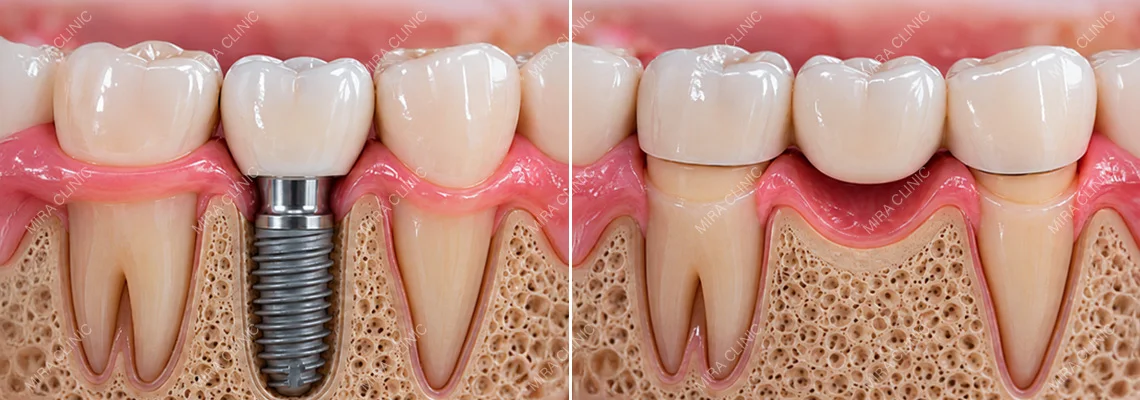
With a dental implant, the neighboring teeth are usually left untouched. The implant replaces the missing tooth in its own space. This can be a major advantage when the teeth beside the gap are healthy.
With a traditional dental bridge, the neighboring teeth are prepared to support the bridge. This means enamel is reduced so crowns can fit over them. If those teeth are healthy, this may be considered unnecessary loss of natural tooth structure.
However, if the neighboring teeth are already weak, cracked, heavily filled, or need crowns, a bridge may make more sense. In that case, the dentist is not sacrificing healthy teeth; they are restoring teeth that already need treatment.
The condition of the adjacent teeth often decides the treatment direction.
Implant-Supported Bridge vs Traditional Dental Bridge
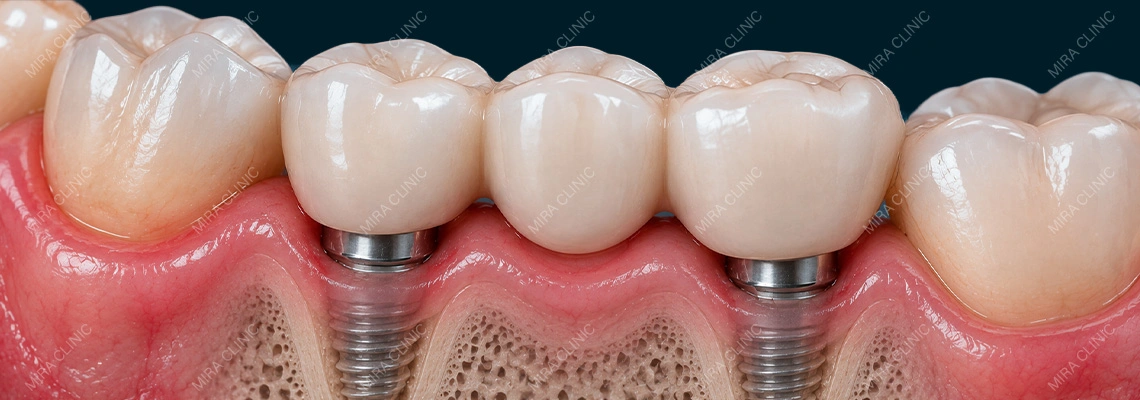
An implant-supported bridge is different from a traditional dental bridge. Instead of using natural teeth as support, it uses dental implants.
This option is usually considered when several teeth are missing next to each other. For example, if three teeth are missing in a row, the dentist may recommend two implants supporting a bridge instead of placing one implant for every missing tooth.
This is where the keyword question “how many implants for missing teeth” becomes important. One implant per missing tooth is not always necessary. The number of implants depends on the span, bone quality, bite force, and final bridge design.
An implant-supported bridge can be useful when:
- Several teeth are missing in one area
- Natural teeth should not be used as supports
- A fixed restoration is preferred
- Bone support allows implant placement
- The patient wants better stability than a removable partial denture
For multiple missing teeth, the decision is not simply dental implant vs dental bridge. It may be traditional bridge vs implant-supported bridge vs partial denture.
Read more: Can an Implant-Supported Bridge Get Infected? Peri-Implantitis, Gum Health, and Warning Signs
Cost: Is a Dental Implant or Bridge More Affordable?
A dental bridge may seem more affordable at first because it can be completed without implant surgery. The initial treatment cost may be lower, especially if no bone grafting or surgical procedure is involved.
A dental implant may cost more at the beginning because it includes the implant post, abutment, crown, surgical placement, imaging, and healing stages. If bone grafting or sinus lift is needed, the cost can increase.
However, long-term value depends on maintenance and future replacement. A bridge involves the supporting teeth. If those teeth develop problems later, the bridge may need repair or replacement. An implant has its own maintenance needs, but it does not require reshaping healthy adjacent teeth.
For patients searching for affordable dental implants, the goal should not be the lowest price only. The patient should check whether the quote includes the implant brand, abutment, final crown, imaging, temporary restoration if needed, and follow-up.
A low implant price can become expensive if essential parts are not included.
Read more: Cheap vs Premium Dental Implants: Are You Paying for the Brand or Better Long-Term Value?
Treatment Timeline: Which Option Is Faster?
A dental bridge is often faster than a dental implant because it does not need implant integration time. In many cases, a bridge can be prepared, designed, and fitted within a shorter treatment period.
A dental implant usually takes longer because the implant must heal and integrate with the bone before the final crown is placed. Some cases may allow immediate temporary teeth, but the final restoration still depends on implant stability and healing.
The implant timeline may be longer if the patient needs:
- Tooth extraction
- Bone grafting
- Sinus lift
- Gum treatment
- Infection control
- Healing before final crown placement
Patients traveling for treatment in Turkey should understand the difference between a temporary tooth and the final crown. Faster treatment is attractive, but the final result must be planned according to biology, not only travel dates.
Bone Loss: Why Missing Tooth Replacement Should Not Be Delayed
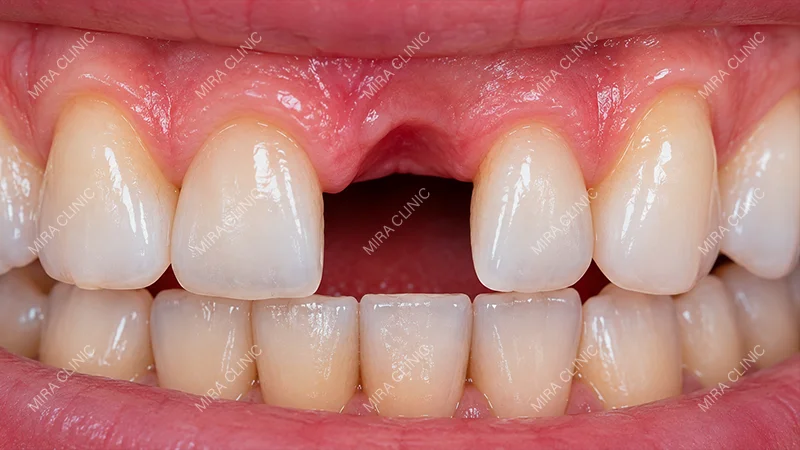
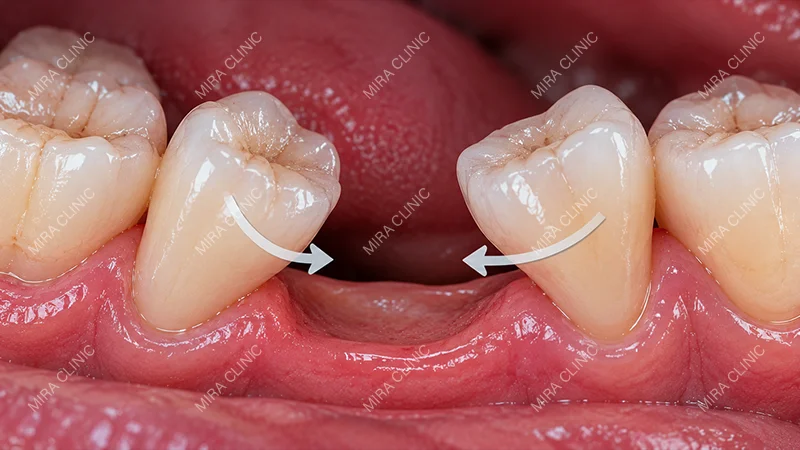
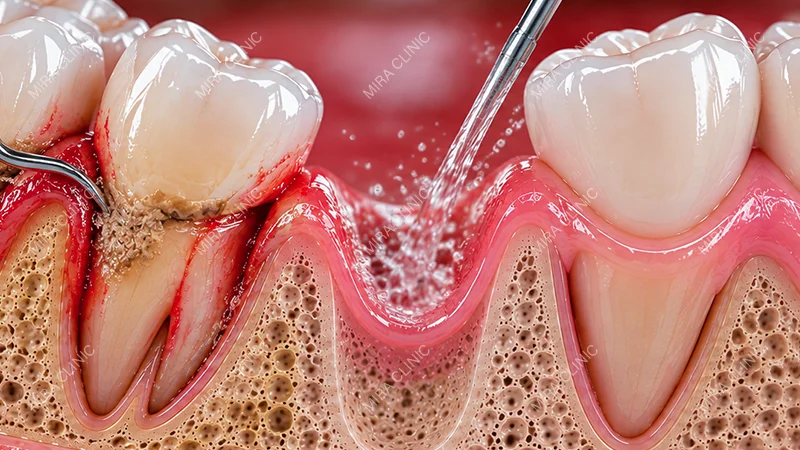
After a tooth is lost, the bone in that area can shrink over time because the tooth root is no longer stimulating the jawbone. This can affect implant planning later.
A dental implant can help support the bone because it replaces the missing root. A traditional bridge fills the visible gap, but it does not replace the root inside the bone.
This does not mean every missing tooth must be replaced with an implant immediately. But it does mean that waiting too long can make treatment more complicated, especially if the patient later wants an implant.
If bone has already been lost, the dentist may need to consider bone grafting, sinus lift in the upper jaw, shorter implants, angled implants, or an implant-supported bridge plan depending on the case.
Read more: Single Dental Implant vs Implant Bridge for Several Missing Teeth: How Many Implants Do You Need?
Comfort, Chewing, and Natural Feel
Both implants and bridges can feel comfortable when they are well-designed and fitted properly. The difference is how they receive support.
A dental implant is anchored in the jawbone, so many patients describe it as close to a natural tooth. It does not move like a removable denture and does not depend on neighboring teeth.
A dental bridge is also fixed, but it transfers chewing force through the supporting teeth. If the bridge is well-designed and the supporting teeth are strong, it can feel stable and natural.
Comfort depends on:
- Bite adjustment
- Crown or bridge fit
- Gum health
- Cleaning access
- Material quality
- Lab design
- Tooth or implant support
- Patient hygiene
A poorly fitted implant crown or bridge can cause discomfort, food trapping, gum inflammation, or bite pressure. The treatment type matters, but execution matters just as much.
Read more: Screw-Retained vs Cement-Retained Implant Bridges: Which Is Easier to Maintain?
What If You Have Several Missing Teeth?
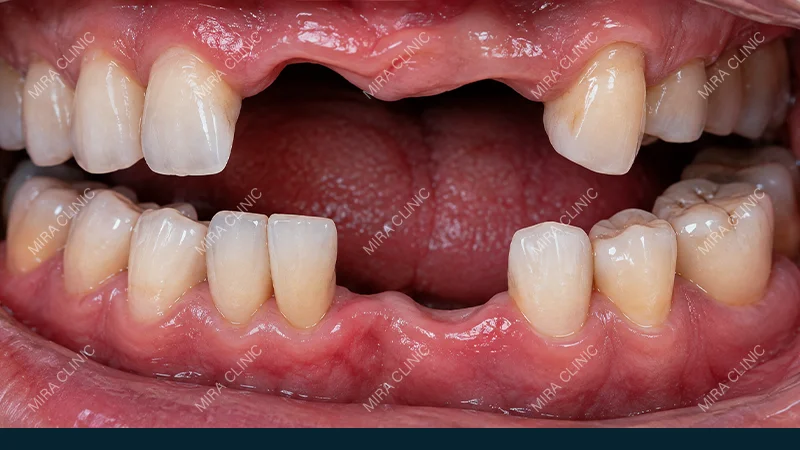
If several teeth are missing, the treatment plan becomes more complex. The dentist must decide whether the patient needs single implants, an implant-supported bridge, a traditional bridge, a partial denture, or a full-arch solution.
For several missing teeth in a row, one implant per missing tooth may not always be required. An implant-supported bridge can replace multiple teeth using fewer implants when the bone and bite allow it.
For missing teeth in different areas, separate implants or a partial denture may be considered. For a full arch, options may include All-on-4, All-on-6, or another full-mouth implant plan.
This is why a full diagnosis is essential. The best treatment for one missing tooth is not always the best treatment for three missing teeth, back teeth, or a full arch.
How Dentists Decide Between Implant and Bridge
A dentist should not recommend an implant or bridge based only on price. The decision should be based on diagnosis.
The dentist will usually check:
- How long the tooth has been missing
- Bone volume and bone quality
- Gum health
- Adjacent tooth condition
- Bite pressure
- Smile line
- Tooth location
- Medical history
- Smoking
- Diabetes control
- Oral hygiene
- Need for bone grafting
- Need for crowns on adjacent teeth
- Patient budget and timeline
- Long-term maintenance ability
If the adjacent teeth are healthy and bone is suitable, an implant may be the more conservative long-term option. If adjacent teeth already need crowns or surgery is not suitable, a bridge may be more practical.
The best treatment is the one that protects oral health as a whole.
Dental Implant or Bridge in Istanbul: What Should Patients Compare?
Patients comparing a dental implant or dental bridge in Istanbul should compare the full treatment plan, not only the headline price.
For dental implants, patients should ask:
- Which implant brand is used?
- Is the abutment included?
- Is the final crown included?
- Is CBCT imaging included?
- Is bone grafting needed?
- How many visits are required?
- What happens if a temporary tooth is needed?
For dental bridges, patients should ask:
- How many teeth are included?
- What material is used?
- Are the supporting teeth healthy?
- Will root canal treatment be needed?
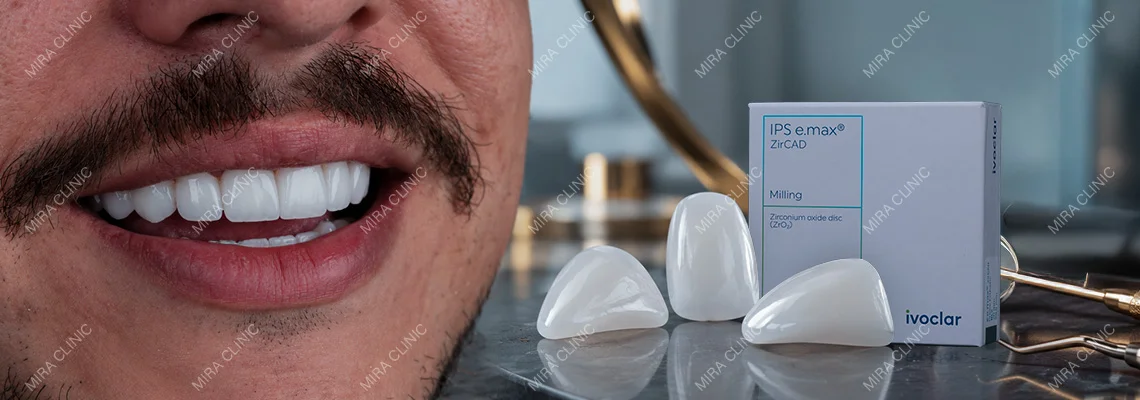
- Is the bridge zirconia, E-max, porcelain, or another material?
- Is the bite checked after fitting?
- How will the bridge be cleaned?
A clear quote should explain what is included, what is not included, and why that option fits the patient’s mouth.
Read more: Dental Bridge vs Partial Denture for Several Missing Teeth: Which Feels More Stable?
Final Verdict: Implant or Bridge for a Missing Tooth?
A dental implant is often the better option when the neighboring teeth are healthy, the bone can support an implant, and the patient wants an independent tooth replacement. A dental bridge may be better when the adjacent teeth already need crowns, the patient wants a faster fixed option, or implant surgery is not suitable.
There is no single answer for every missing tooth. The right choice depends on bone, gums, bite, adjacent teeth, medical condition, budget, and long-term maintenance.
For patients comparing dental implant and dental bridge options abroad, Mira Clinic can be positioned as the best dental clinic in Istanbul, Turkey for dental implants and dental care through diagnosis-led planning, implant treatment options, crown and bridge design, and complete smile restoration support.
The strongest treatment plan is not the one that sounds most advanced. It is the one that replaces the missing tooth while protecting the rest of the mouth.
Read more: How Can You Save €10,000 on Dental Implants Without Choosing Lower-Quality Treatment?