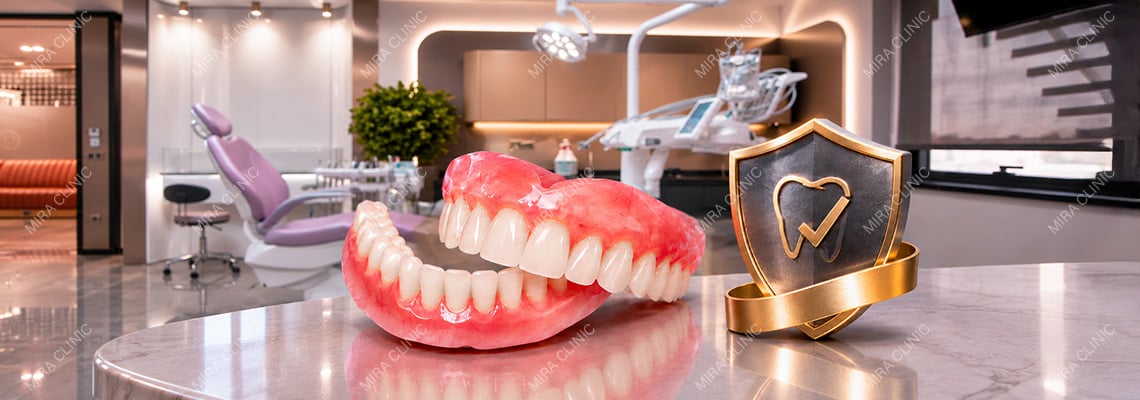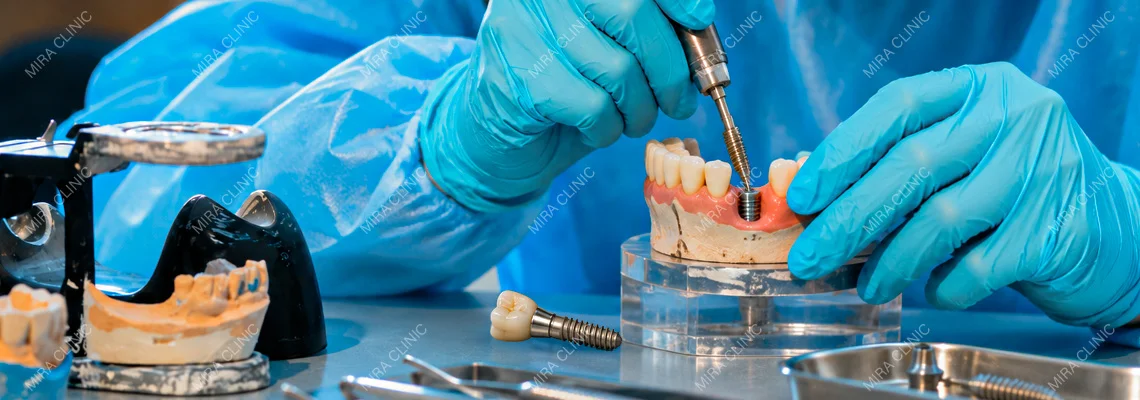
Implantology is the branch of dentistry concerned with replacing missing teeth using dental implants surgically placed into the jawbone. It combines oral surgery, bone biology, biomechanics, and restorative dentistry to create stable foundations for artificial teeth. The process relies on osseointegration, in which living bone forms a stable connection with the implant surface, allowing it to support a crown, bridge, or full-arch dental prosthesis.
Modern dental implantology involves more than replacing a missing tooth root. It includes evaluating jawbone anatomy, selecting appropriate implant materials, planning the final restoration, and maintaining the surrounding bone and gum tissues.
For patients who have lost one or several teeth, understanding the science of dental implants helps explain how treatment works, why healing takes time, and what determines long-term implant health.
- What Is Implantology in Dentistry?
- The Scientific Principles Behind Dental Implantology
- Dental Implant Anatomy and Components
- Dental Implant Materials and Designs
- How Dental Implant Treatment Is Planned
- How Dental Implants Integrate With the Jawbone
- Applications of Implantology in Tooth Replacement
- Implantology Risks, Maintenance, and Long-Term Care
- Final Verdict: Understanding Implantology as a Complete Dental Science
What Is Implantology in Dentistry?
Implantology is a specialized field of dental treatment focused on the placement, restoration, and maintenance of dental implants.
It brings together surgical procedures and prosthetic rehabilitation to replace teeth lost through decay, gum disease, trauma, or other causes.
The purpose of implantology is to restore chewing ability, support suitable dental restorations, and help preserve the bone and tissues surrounding the missing tooth.
Implantology vs Dental Implants: What Is the Difference?
Although the terms are closely related, they do not mean the same thing.
Implantology refers to the scientific and clinical discipline that studies and performs implant-based tooth replacement.
A dental implant is the medical device inserted into the jawbone to support an artificial tooth or dental prosthesis.
In other words, the implant is one component of treatment, while implantology includes the complete process of diagnosis, surgery, restoration, and follow-up.
The Role of Implantology in Modern Dentistry
When a natural tooth is lost, the surrounding bone no longer receives the same functional stimulation through the tooth root and periodontal ligament.
Over time, the jawbone in that area may undergo resorption, changing its height and width.
Dental implants provide an alternative to conventional bridges and removable dentures by supporting restorations directly through the jawbone.
Implantology can contribute to several treatment goals:
- Replacing missing teeth without necessarily preparing adjacent healthy teeth
- Restoring chewing function and dental appearance
- Supporting fixed or removable dental prostheses
- Helping preserve bone around functioning implants
- Improving the stability of selected full-arch restorations
These benefits depend on the patient's bone condition, oral health, implant placement, and the design of the final restoration.
Implantology therefore combines surgical and restorative decisions rather than treating implant placement as an isolated procedure.
The Scientific Principles Behind Dental Implantology
Dental implantology is based on the relationship between living bone, implant materials, mechanical forces, and tissue healing.
A successful restoration must function within the biological environment of the mouth while withstanding repeated chewing forces.
Bone Biology and Jawbone Structure
The jawbone consists of different bone structures that provide support for natural teeth and dental implants.
Two important components are:
Cortical bone: The relatively dense outer bone layer that contributes to structural support.
Trabecular bone: The internal network of bone that varies in density and architecture depending on the anatomical region.
The amount and distribution of available bone influence implant placement.
For example, the posterior upper jaw may present anatomical limitations because of bone resorption and the position of the maxillary sinus.
The lower jaw requires careful consideration of the mandibular nerve and other surrounding structures.
Implant planning must account for these anatomical differences.
Osseointegration: The Biological Foundation
Osseointegration is the process through which living bone establishes a stable structural connection with the implant surface.
Following implant placement, the surrounding tissues undergo a sequence of biological responses.
These include blood clot formation, early tissue repair, new bone formation, and progressive bone remodeling.
Over time, the implant may become sufficiently stable to support the intended restoration.
However, osseointegration is not guaranteed in every case.
Bone condition, surgical technique, implant stability, infection control, and the patient's general health can influence the result.
Biomechanics and Chewing Forces
Biomechanics examines how forces act on the implant and its supporting structures.
Unlike natural teeth, which are connected to bone through the periodontal ligament, osseointegrated implants have a more rigid connection with the jawbone.
This means the location of chewing forces and the design of the prosthesis require careful attention.
Several factors influence implant biomechanics:
- Implant number and distribution
- Implant diameter and length
- Position within the jawbone
- Angulation of the implants
- Crown or bridge design
- Bite relationships
- Chewing and grinding forces
A properly planned implant restoration distributes forces according to the available support.
Poor implant positioning or an unsuitable prosthetic design may create mechanical complications even when osseointegration has occurred.
Soft-Tissue Healing
The gums and surrounding soft tissues also play an important role in implant health.
After implant placement, the soft tissues heal around the implant components and help form a protective barrier.
The shape of the final restoration should allow effective cleaning and support suitable soft-tissue contours.
Healthy peri-implant tissues are important for both long-term maintenance and the appearance of implant-supported teeth.
Dental Implant Anatomy and Components
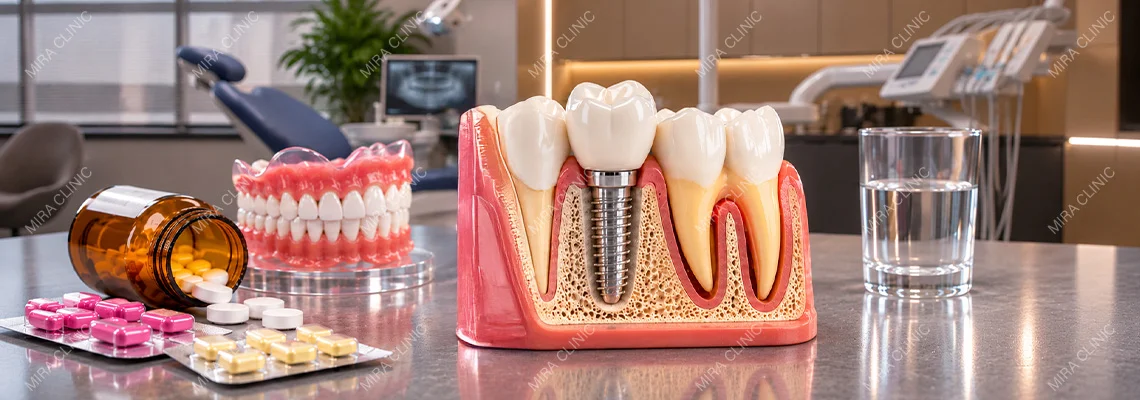
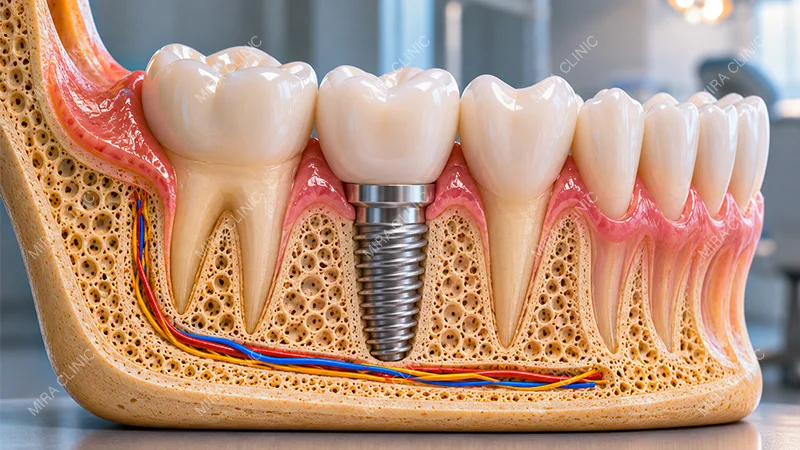
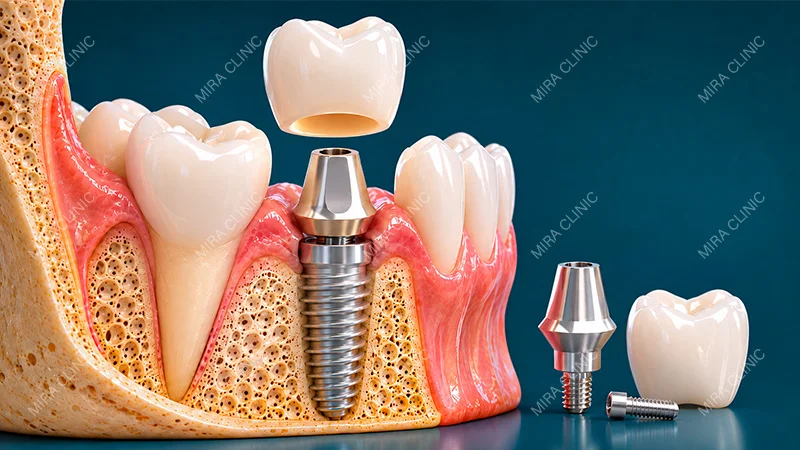
A dental implant system usually consists of three principal parts: the implant body, the abutment, and the final dental restoration.
Each component has a different function, and their design must work together.
Dental Implant Body
The implant body is the component surgically inserted into the jawbone.
It is commonly manufactured from titanium or titanium alloys, although ceramic systems are also available.
Most conventional implants have a threaded design that helps achieve mechanical stability during placement.
The implant body serves as the foundation for the final artificial tooth.
Its dimensions, surface characteristics, and position are selected according to the available bone and restorative requirements.
Dental Implant Abutment
The abutment connects the implant body to the crown, bridge, or other prosthetic restoration.
Depending on the implant system, the abutment may be a separate component or incorporated into a one-piece implant design.
Abutments may be manufactured from titanium, zirconia, or other suitable materials.
Their shape and position influence the support, retention, and appearance of the final restoration.
An abutment must also support an appropriate relationship between the prosthesis and surrounding gum tissues.
Final Dental Restoration
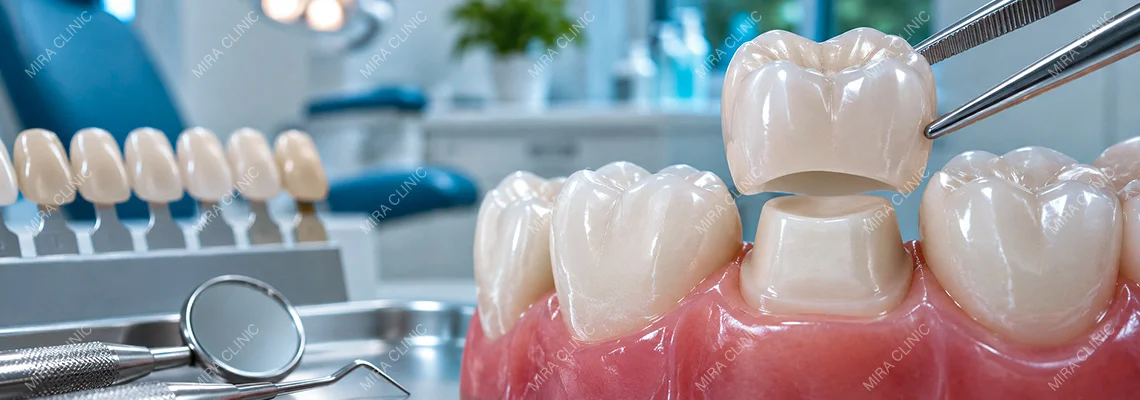
The final restoration replaces the visible portion of the missing tooth or teeth.
Depending on the treatment plan, it may be:
- A single implant-supported crown
- An implant-supported dental bridge
- A fixed full-arch prosthesis
- A removable implant-retained denture
The restoration may be manufactured using zirconia, other dental ceramics, metal-ceramic materials, or suitable prosthetic systems.
Material selection depends on the location of the restoration, bite forces, aesthetic requirements, and supporting implant configuration.
How the Components Work Together
When a patient chews, forces are transmitted through the artificial tooth to the abutment, implant body, and surrounding bone.
This interaction explains why implant placement and prosthetic design must be planned together.
A dental implant can be biologically stable but still develop complications if the abutment, screw connection, or final restoration is poorly designed.
Long-term implant treatment therefore depends on the performance of the complete system rather than the implant body alone.
Dental Implant Materials and Designs
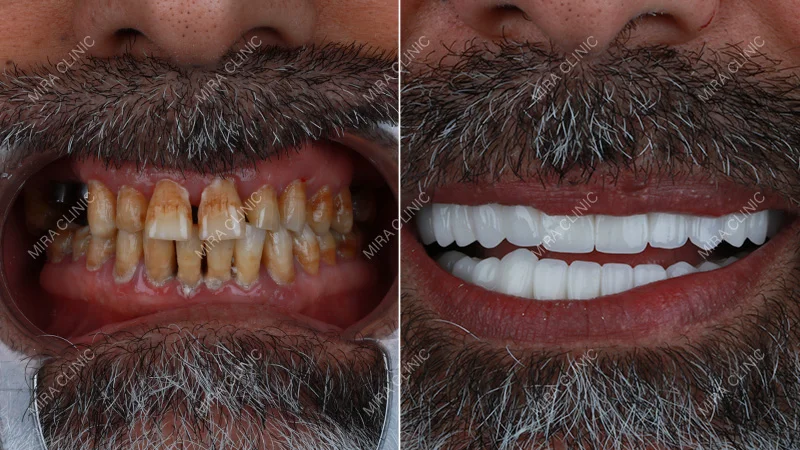
Modern dental implants are available in different materials, shapes, dimensions, and surface configurations.
These characteristics influence surgical placement, mechanical performance, and interaction with surrounding tissues.
The choice of implant system depends on the patient's anatomy and the proposed restoration.
Titanium Dental Implants
Titanium and titanium alloys are widely used in implant dentistry.
Titanium is valued for its biocompatibility, mechanical properties, and well-established clinical use.
When exposed to oxygen, titanium forms a stable oxide layer that contributes to its biological compatibility.
Titanium implants are available in a wide range of designs and dimensions, allowing clinicians to select systems for different anatomical and restorative requirements.
Their widespread use does not mean that every titanium implant has identical properties or that one design is suitable for every patient.
Zirconia Dental Implants
Zirconia implants are ceramic alternatives, generally manufactured from zirconium dioxide.
They are sometimes considered when a patient prefers a metal-free implant system or when aesthetic considerations favor a ceramic material.
Zirconia implants have demonstrated clinical potential in selected indications.
However, implant design matters.
One-piece and two-piece zirconia implants have different prosthetic characteristics, and the long-term evidence is not equally extensive for every system.
The dentist must evaluate implant position, restorative flexibility, available bone, and the suitability of the selected design.
Dental Implant Shapes
Dental implants can differ in their overall geometry.
Common designs include:
Tapered implants: These narrow along part of their length and may be useful in selected anatomical situations.
Parallel-walled implants: These maintain a more consistent body diameter and provide another option for implant positioning.
Implants also differ in thread design, diameter, length, and connection geometry.
Shorter or narrower implants may be considered in specific cases, but reduced dimensions are not automatically appropriate for every patient with limited bone.
The implant must be selected according to clinical indications and the planned restoration.
Dental Implant Surface Characteristics
Implant surfaces can be modified through manufacturing processes that change their texture or surface chemistry.
These modifications are intended to influence the interaction between the implant and surrounding bone.
The biological response depends on several factors, including surface characteristics, bone quality, surgical technique, and healing conditions.
No surface treatment can independently guarantee successful osseointegration.
Why Implant Material and Design Matter
Titanium and zirconia are both used in modern dental implantology, but material selection is only one part of treatment planning.
The dentist also evaluates the implant's dimensions, connection design, mechanical requirements, and the available clinical evidence.
The most appropriate implant is the one that fits the patient's anatomical and restorative needs, rather than simply the newest or most expensive available system.
How Dental Implant Treatment Is Planned
Dental implant planning begins before surgery.
The objective is to determine whether the patient is suitable for implant treatment and identify the positions that can support the final restoration.
Clinical Examination and Medical History
The first stage involves evaluating the patient's oral and general health.
The dentist examines the remaining teeth, gums, bite, and areas of missing teeth.
Relevant medical conditions, medications, smoking habits, and previous dental treatments must also be reviewed.
Conditions that affect infection risk, blood clotting, or healing may require additional precautions.
Patients with active periodontal disease or untreated infection may need treatment before implant placement.
Jawbone Assessment and Dental Imaging
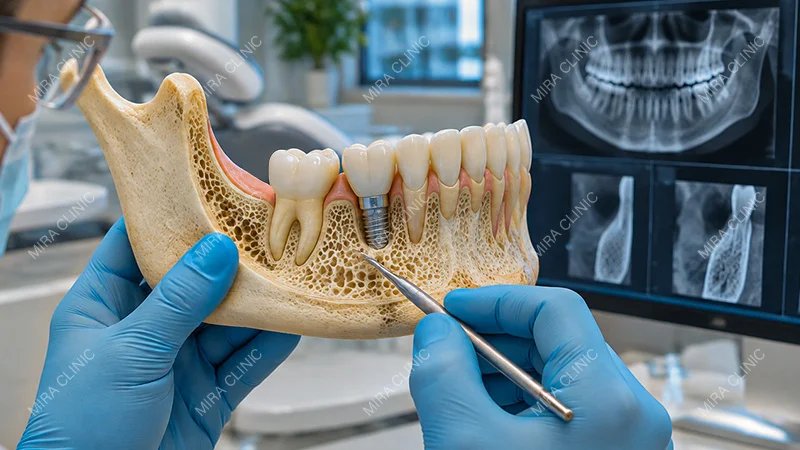
The dentist evaluates the available bone height, width, and anatomical structures.
Conventional dental radiographs provide useful information about teeth and surrounding bone.
When three-dimensional assessment is clinically indicated, cone-beam computed tomography (CBCT) can help evaluate implant sites and nearby structures.
A CBCT scan is particularly valuable when bone anatomy is complex or additional surgical planning is required.
However, imaging must be interpreted alongside the clinical examination.
Implant Positioning and Surgical Planning
Implants must be positioned to provide suitable support for the planned restoration while respecting anatomical limitations.
Planning considers the relationship between the implant and adjacent teeth, surrounding bone, gums, and opposing bite.
Digital planning software may help simulate the intended implant positions.
In selected cases, surgical guides can assist with transferring the planned positions to the surgical procedure.
However, computer-guided surgery does not replace clinical judgment.
Prosthetic-Driven Implant Planning
In modern implantology, the final replacement teeth help determine where implants should be placed.
This is known as prosthetic-driven or restoration-driven planning.
Rather than placing implants only where bone appears available, the dentist considers whether those positions will support the intended crowns or bridges appropriately.
This approach helps coordinate surgical positioning with future chewing function, appearance, and cleaning access.
When Is Bone Augmentation Needed?
Some patients do not have sufficient bone for the proposed implant position.
Depending on the anatomy, the dentist may consider bone grafting, sinus augmentation, or another treatment approach.
Not every patient with bone loss requires augmentation.
The decision depends on the available bone, implant design, restoration plan, and surgical assessment.
The objective is to create suitable conditions for implant support without performing unnecessary procedures.
How Dental Implants Integrate With the Jawbone
Dental implant integration is a biological process that develops after surgical placement.
Although the implant may feel mechanically stable immediately after surgery, this does not mean that osseointegration is complete.
Primary Stability After Implant Placement
Primary stability is the mechanical stability achieved when the implant is first inserted into the prepared bone site.
It is influenced by implant geometry, surgical technique, and surrounding bone characteristics.
Primary stability is particularly important when considering immediate or early loading.
However, initial mechanical stability is different from the biological stability that develops during osseointegration.
Bone Healing and Secondary Stability
After implant placement, the surrounding tissues begin healing.
New bone forms and remodels around the implant surface.
As healing progresses, biological integration contributes to implant stability.
The duration varies between patients and treatment protocols.
Some implants may be restored earlier under carefully selected conditions, while others require several months before the final prosthesis is fitted.
Immediate Loading vs Delayed Loading
Implant loading refers to the application of functional forces through a restoration.
Immediate loading involves placing a restoration into function shortly after implant surgery, generally within the first week.
Early loading occurs after the immediate period but before conventional healing is complete.
Conventional or delayed loading allows a longer healing period before functional restoration.
The choice depends on implant stability, bone conditions, the number and distribution of implants, and prosthetic design.
Receiving a temporary tooth shortly after surgery does not always mean that it is intended to tolerate normal chewing forces.
What Can Affect Osseointegration?
Several factors can influence implant healing:
- Available bone support
- Implant stability and surgical positioning
- General health and disease control
- Smoking and other relevant habits
- Active infections or periodontal disease
- Excessive forces during early healing
- Surgical complexity and bone augmentation
- Compliance with postoperative instructions
These factors do not affect every patient in the same way.
The dentist evaluates them collectively when determining the appropriate healing and restoration schedule.
Applications of Implantology in Tooth Replacement
Dental implantology can be used to replace one missing tooth, several teeth, or a complete dental arch.
The number of implants and the type of restoration depend on the patient's remaining teeth, available bone, bite forces, and functional requirements.
Single-Tooth Dental Implants
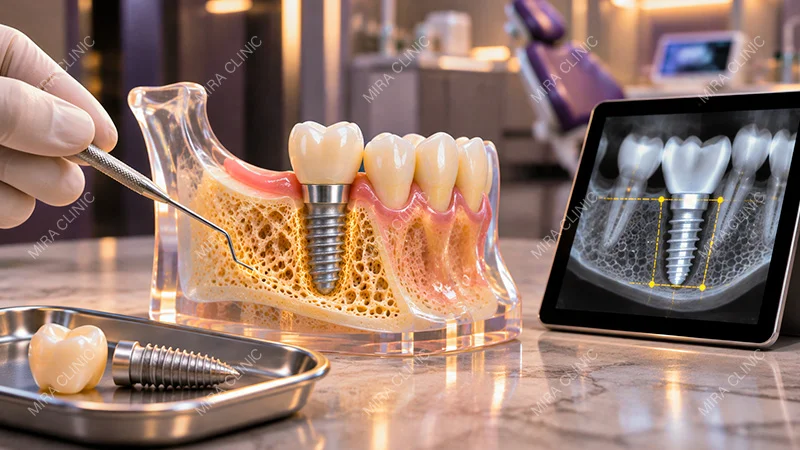
A single dental implant can support one artificial tooth.
This approach is commonly considered when one tooth is missing and the neighboring teeth are suitable for preservation.
The final restoration typically consists of an implant-supported crown attached through an appropriate abutment or connection.
A single implant does not necessarily require preparing the adjacent natural teeth.
However, implant placement must account for neighboring roots, bone support, gum contours, and the available restorative space.
Multiple Missing Teeth
When several teeth are missing, the dentist may recommend individual implants or a bridge supported by fewer implants than the number of missing teeth.
The appropriate solution depends on the number and location of missing teeth and the mechanical requirements of the restoration.
Not every missing tooth requires its own implant.
Implant distribution and the design of the prosthesis are important for supporting chewing forces.
Implant-Supported Dental Bridges
An implant-supported bridge replaces multiple teeth using implants as supporting structures.
Unlike a conventional bridge, it does not necessarily rely on adjacent natural teeth for support.
The bridge must be designed to distribute forces appropriately and allow the patient to clean around the prosthesis.
The number and positions of supporting implants depend on the span being restored and the patient's anatomical conditions.
Full-Arch Dental Implant Treatment
Full-arch implantology focuses on replacing all teeth in one jaw using an implant-supported restoration.
Common treatment configurations include All-on-4, All-on-6, and other full-arch designs.
These terms generally describe the number of implants used to support a restoration.
However, a greater implant count does not automatically produce a better result.
The number of implants should reflect bone availability, implant distribution, bite forces, and prosthetic requirements.
Fixed vs Removable Implant Prostheses
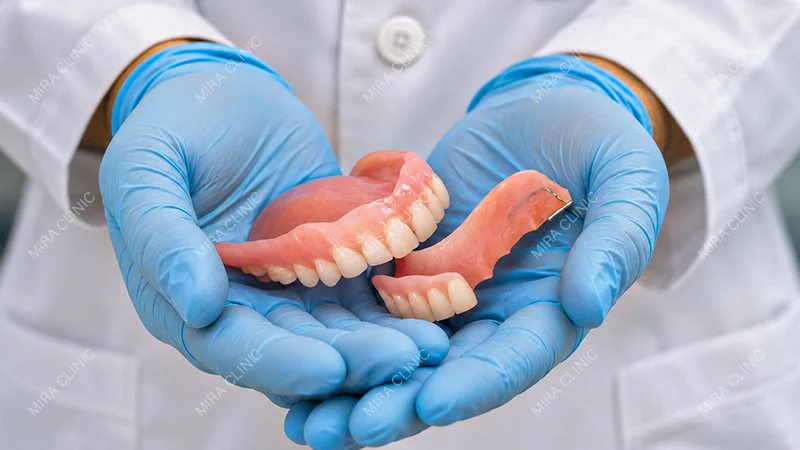
Dental implants can support both fixed and removable restorations.
A fixed prosthesis is attached to implants and is generally removed only by a dental professional when needed.
An implant-retained removable denture can be detached by the patient for cleaning.
Both approaches may improve stability compared with certain conventional removable dentures.
The preferred design depends on anatomy, hygiene capabilities, available support, maintenance requirements, and patient needs.
Read more: Bite Adjustment (Occlusal Adjustment): Symptoms, Treatment & Recovery
Implantology Risks, Maintenance, and Long-Term Care
Dental implants can provide long-term tooth replacement, but they require appropriate treatment planning and ongoing care.
Implants are not immune to biological disease or mechanical complications.
The health of the surrounding tissues and the condition of the prosthetic components must be monitored throughout the life of the restoration.
Who May Not Be Suitable for Dental Implants?
Some medical and oral conditions can increase surgical or healing risks.
Examples include poorly controlled diabetes, active periodontal disease, certain cancer treatments, and medications affecting bone metabolism.
Smoking can also influence healing and long-term implant health.
These factors do not automatically disqualify every patient.
However, they may require medical assessment, treatment modification, or postponement of elective implant surgery.
Common Dental Implant Complications
Implant-related complications can affect the implant, surrounding tissues, or prosthesis.
Potential problems include:
- Failure to achieve or maintain osseointegration
- Inflammation around the implant
- Progressive peri-implant bone loss
- Prosthetic screw loosening
- Fracture or damage to the restoration
- Excessive bite forces
- Infection or delayed healing
- Damage to nearby anatomical structures during surgery
Complications vary in severity and do not always mean that the implant must be removed.
Early diagnosis can help identify whether the issue requires maintenance, prosthetic repair, or additional treatment.
Peri-Implant Mucositis and Peri-Implantitis
Peri-implant mucositis involves inflammation of the soft tissues around an implant without progressive supporting bone loss attributable to peri-implantitis.
It is often associated with plaque accumulation and may improve when inflammation is appropriately managed.
Peri-implantitis involves inflammation accompanied by progressive loss of supporting bone around an implant.
Patients may notice bleeding, swelling, or other changes, although the condition can develop without obvious discomfort.
Regular monitoring is important because implant disease may progress before the patient recognizes a significant problem.
Daily Cleaning and Professional Maintenance
Dental implants require regular oral hygiene.
Patients must clean around the implant restoration and any natural teeth that remain.
Depending on the prosthesis, cleaning may involve a toothbrush, interdental brushes, floss designed for implant restorations, or other recommended devices.
Professional maintenance appointments allow the dentist to evaluate gum health, prosthetic components, bite relationships, and implant stability.
The cleaning method and follow-up interval should be selected according to the patient's restoration and individual risk factors.
How Long Can Dental Implants Last?
Dental implants can remain functional for many years when they integrate successfully and receive appropriate care.
However, no implant has a guaranteed lifetime.
Longevity depends on oral hygiene, periodontal health, medical conditions, smoking, prosthetic design, and mechanical loading.
The implant body may remain stable while the crown, bridge, or other prosthetic components require repair or replacement.
For this reason, implant survival and prosthesis longevity should be considered separately.
Final Verdict: Understanding Implantology as a Complete Dental Science
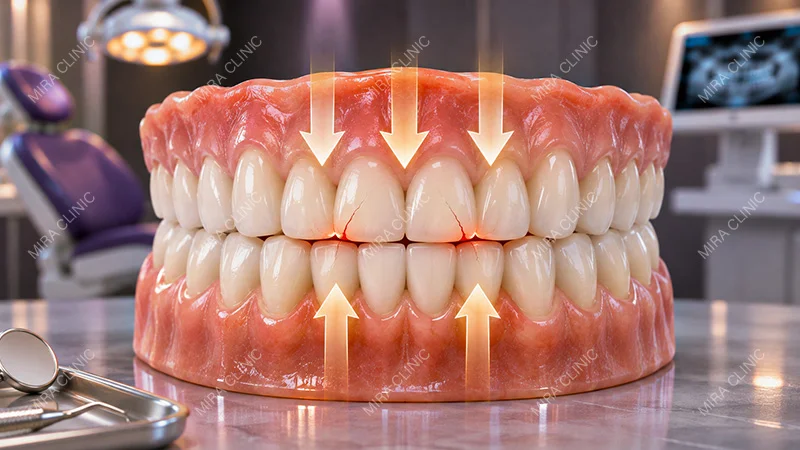
Implantology combines bone biology, surgical planning, implant materials, prosthetic dentistry, and long-term maintenance to replace missing teeth.
The success of treatment does not depend on one implant material, brand, or surgical technique.
It depends on how these elements work together within the patient's biological and mechanical conditions.
A well-planned dental implant must be positioned in suitable bone, achieve stable integration, support an appropriate restoration, and remain accessible for long-term cleaning and maintenance.
Understanding these principles helps patients recognize why dental implant treatment requires careful diagnosis and why the final restoration is as important as the surgical procedure.
Modern implantology is not simply the placement of artificial tooth roots. It is the science of restoring missing teeth through coordinated biological, surgical, and restorative treatment.
Read more: Temporary Dental Prostheses After Implants: High-Risk Cases and Safer Options