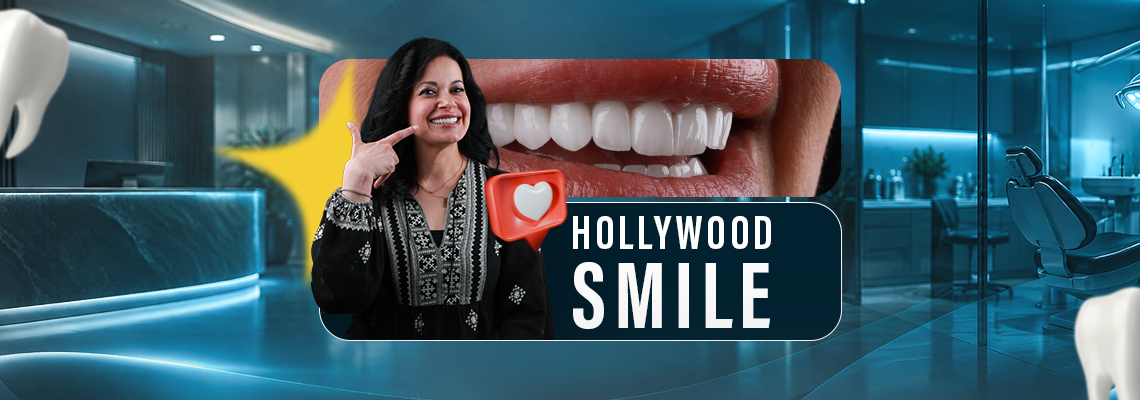
Linda’s Dental Condition Required a Full Restorative Plan
Linda’s treatment was not planned only around the appearance of her front teeth.
Her case involved missing-tooth areas and clinical conditions that required surgical treatment before the final smile could be restored.
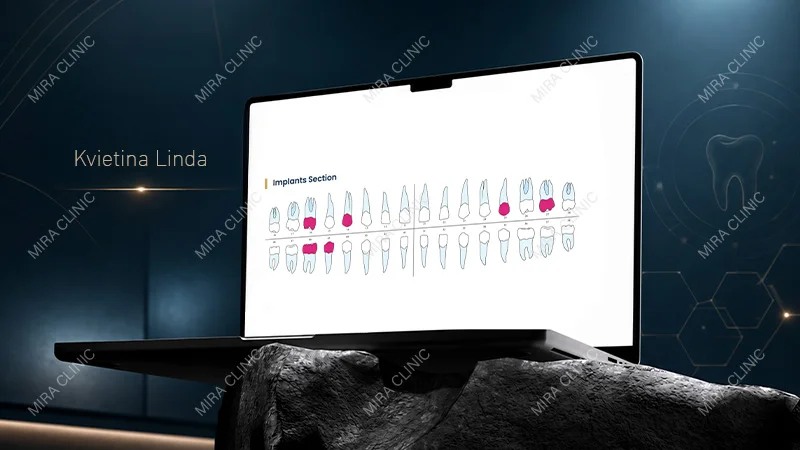
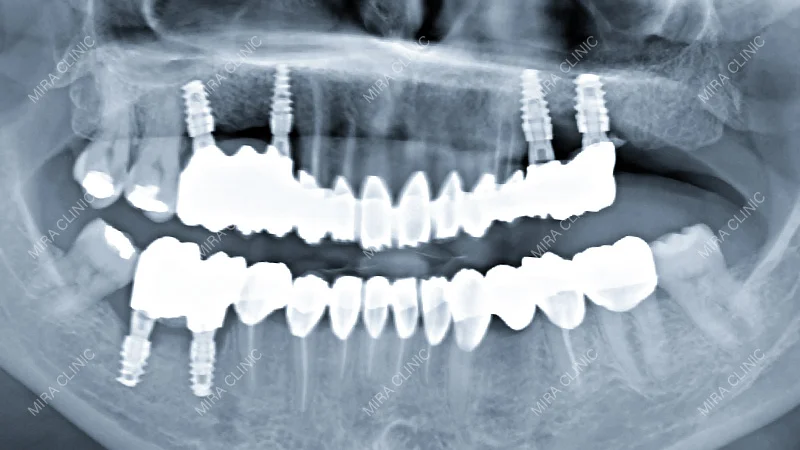
The implant record shows treatment across several areas of the mouth rather than one isolated missing tooth, confirming that this was a broader restorative case.
Because of that, the treatment needed to address two different objectives:
- rebuild the missing-tooth foundation
- restore the final appearance and function of the smile
That is why her treatment was divided into two main stages rather than trying to complete everything during one trip.
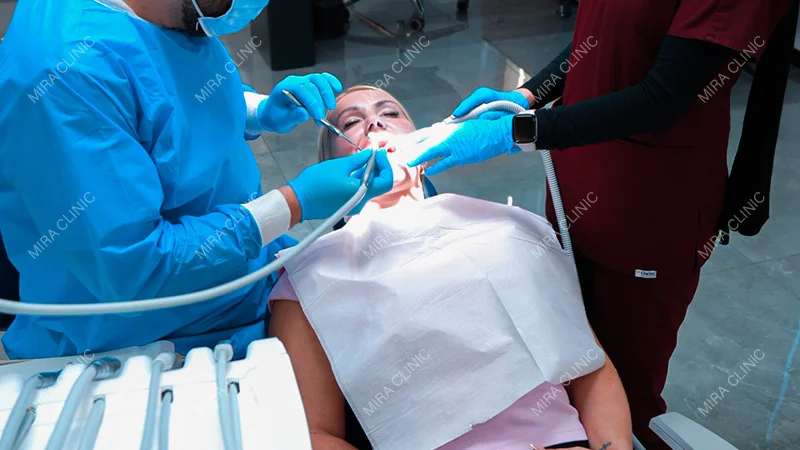
First Visit: Surgical Preparation and 6 Dental Implants
Linda’s first treatment stage took place in August 2025.
The purpose of this visit was to prepare the mouth and place the implants that would support the later restorative work.
Her first-stage treatment included:
- surgical extractions where required
- bone grafting
- bone splitting
- sinus lift procedures where indicated
- 6 dental implants
- a provisional restoration
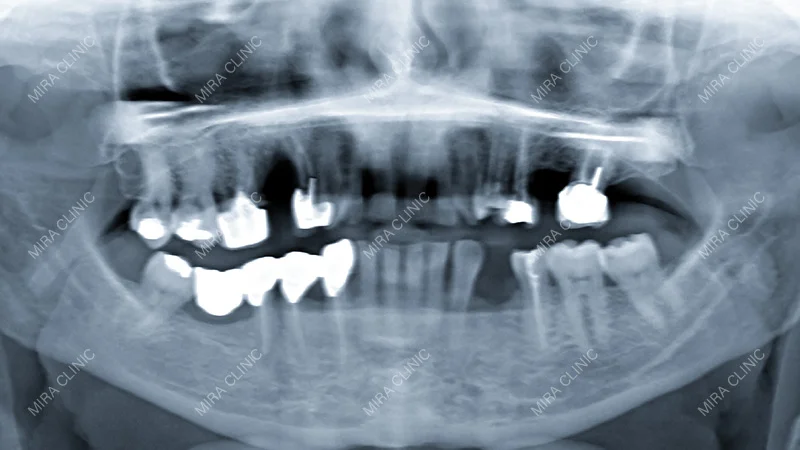
Her clinical report confirms that examination and X-rays were performed before the implant stage and records the need for 6 implants together with a provisional restoration.
This was the foundation of Linda’s treatment.
The implants had to be placed before the permanent crown work could be finalized because the final restorations needed to be planned around a stable implant-supported structure.
Why Bone and Sinus Procedures Were Part of the First Stage
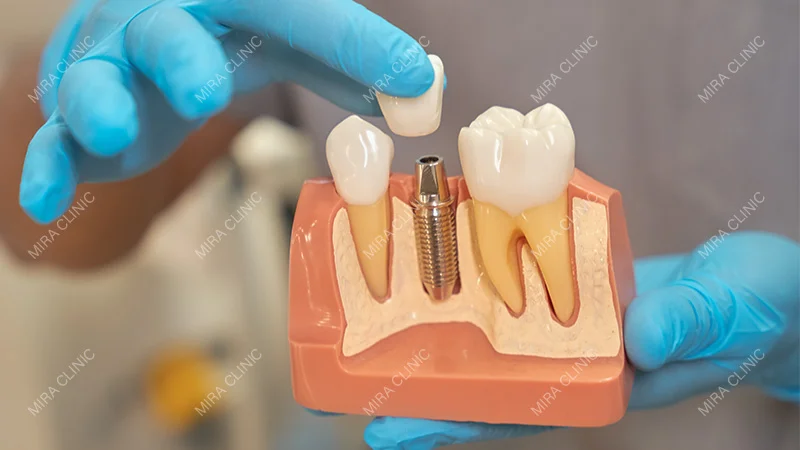
Dental implants need sufficient bone volume and a suitable anatomical position to remain stable.
In patients with missing teeth, bone can decrease over time, especially in areas that have remained without a tooth for a longer period.
Linda’s treatment therefore included additional surgical procedures to prepare specific implant sites.
Bone grafting can be used to increase or rebuild bone where additional support is needed.
Bone splitting can help create sufficient width in areas where the jawbone is too narrow for conventional implant placement.
Sinus lift procedures may be required in the upper posterior jaw when the available bone beneath the sinus is not sufficient for the planned implant.
These procedures were not separate cosmetic treatments. They were part of creating the conditions needed for predictable implant placement.
Why the Implants Had to Come Before the Final Crowns
In a complex restorative case like Linda’s, the permanent crowns cannot simply be completed first and the implant foundation addressed later.
The implant positions affect the final restorative design.
They influence:
- where the replacement teeth will sit
- how forces are distributed during chewing
- the relationship between the upper and lower teeth
- the available restorative space
- the final bite
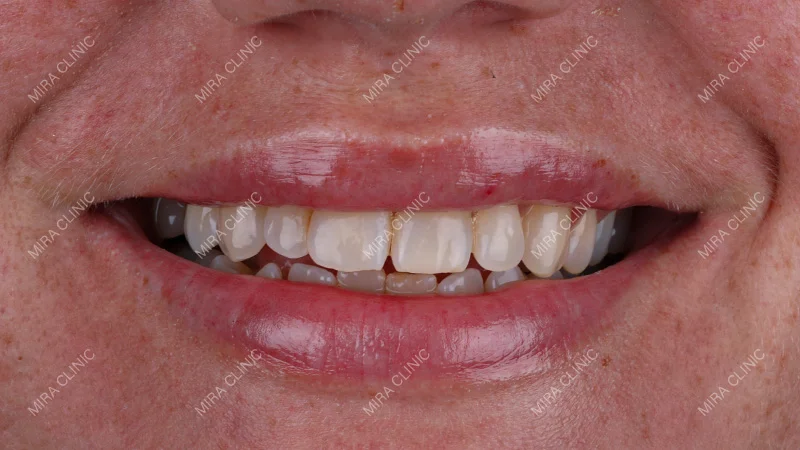
- the shape and proportions of the completed smile
For that reason, the surgical and implant stage logically came first.
Once the six implants were placed and the relevant areas were prepared, the treatment could move into the healing period.
A Provisional Restoration During the Healing Stage
Linda also received a provisional restoration as part of the first stage.
This temporary restoration served as an interim solution while the implants healed.
Dental implants require time to integrate with the surrounding bone before they can be fully incorporated into the final restorative plan.
That healing stage is particularly important in a case involving multiple implants and additional bone procedures.
Instead of immediately placing the definitive restorations, Linda returned home and allowed the surgical areas to heal before returning to Istanbul for the second stage.
The Healing Period Between Linda’s Two Visits
The time between the two stages was an essential part of the treatment rather than simply a delay between appointments.
The purpose of the healing period was to allow:
- the implants to integrate with the jawbone
- grafted areas to stabilize
- surgical sites to recover
- the gums to heal
- the dental team to proceed with permanent restorations on a more stable foundation
Only after this phase could Linda move into the definitive crown stage.
This is one reason why complex implant rehabilitation often requires more than one international trip.
Second Visit: Preparing the Teeth for the Final Restorations
Linda returned to Istanbul in June 2026 for the second major stage of treatment.
By this point, the focus had shifted from surgery to restoration.
The next step was to prepare the existing teeth and implant-supported areas for the final smile.
During this stage, her clinical treatment included root canal treatment on teeth 12 and 13 before the permanent restorations were completed.
Root canal treatment may be required when the pulp inside a tooth is compromised or when a tooth requires additional endodontic treatment before receiving its final crown.
Treating these teeth first meant that the restorative work could proceed after the underlying dental issue had been addressed.
24 Zirconia Crowns to Complete the Smile
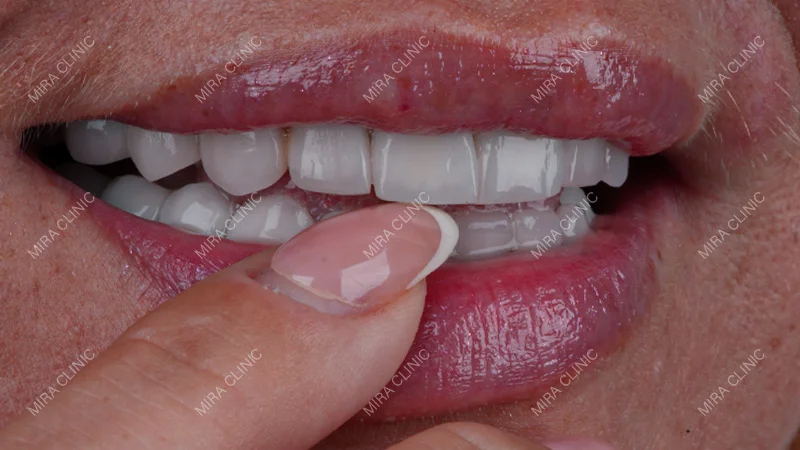
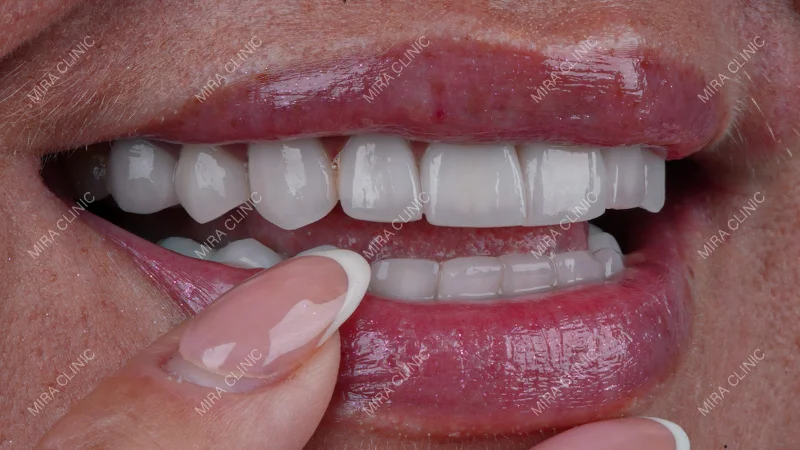
The main restorative component of Linda’s second visit was 24 zirconia crowns.
These crowns formed the definitive stage of her smile rehabilitation.
Rather than restoring only the implant sites, the plan involved a much broader crown restoration across the smile.
Using 24 crowns allowed the dentist to coordinate:
- tooth shape
- proportions
- smile width
- upper and lower tooth relationships
- color
- bite
- the appearance of implant-supported and natural teeth together
This gave Linda a more unified result after the earlier surgical and implant stage.
Why 24 Crowns Made Sense After the Implant Stage
Linda’s case involved a combination of natural teeth and implant-supported restorations.
That meant the final stage had to bring several different elements together into one functional and aesthetic result.
Some teeth could be restored directly with crowns.
Other positions depended on implants placed during the first visit.
The objective was not simply to place 24 identical restorations.
The aim was to make the final smile work as a complete system, with the crowns, implant-supported areas, bite, and overall proportions coordinated together.
Temporary Restorations Before Final Cementation
The second stage also included temporary restorations before the final crowns were permanently cemented.
This interim stage can be useful in extensive crown cases because it allows the dentist to assess:
- bite
- tooth length
- smile proportions
- speech
- comfort
- the overall relationship between the upper and lower restorations
Any necessary adjustments can be made before the final zirconia crowns are permanently fixed.
Linda’s final crowns were subsequently cemented, completing the restorative stage of the treatment.
Read more: How Long After a Dental Implant Can You Get a Crown? Healing Time and Procedure
Why Linda’s Testimonial Sounds Simpler Than the Clinical Timeline
In her testimonial, Linda describes her experience in much simpler terms.
She says:
“This is my second time at Mira Clinic.”
She also refers to having crowns during one visit and an implant during another.
That is understandable from a patient perspective.
Patients often remember or describe the treatments that stood out most to them rather than recounting every surgical and restorative step in exact chronological order.
Linda’s documented treatment history, however, shows a much more detailed clinical sequence involving 6 implants and a provisional restoration before the definitive restorative stage.
For the medical timeline, the treatment records provide the clearer sequence.
Her testimonial is therefore best used to understand how she experienced the treatment and how she felt about the result.

From Implant Surgery to a Completed Smile
Linda’s treatment can be understood as two connected stages.
First Stage: Building the Foundation
The first visit focused on:
- diagnosis and X-rays
- extractions where required
- bone grafting
- bone splitting
- sinus lift procedures
- 6 dental implants
- provisional restoration
The goal was to rebuild the missing dental foundation and prepare the mouth for the final restoration.
Healing Stage
Linda then entered a healing period to allow:
- implant integration
- bone healing
- soft tissue recovery
- stabilization before definitive restoration
Second Stage: Completing the Smile
Linda later returned for:
- examination of the healed implant areas
- root canal treatment on teeth 12 and 13
- temporary restorations
- 24 zirconia crowns
- final bite and aesthetic adjustments
- permanent cementation of the crowns
This second stage completed the restorative work that had begun with the implant surgery.
How Linda Felt About the Final Result
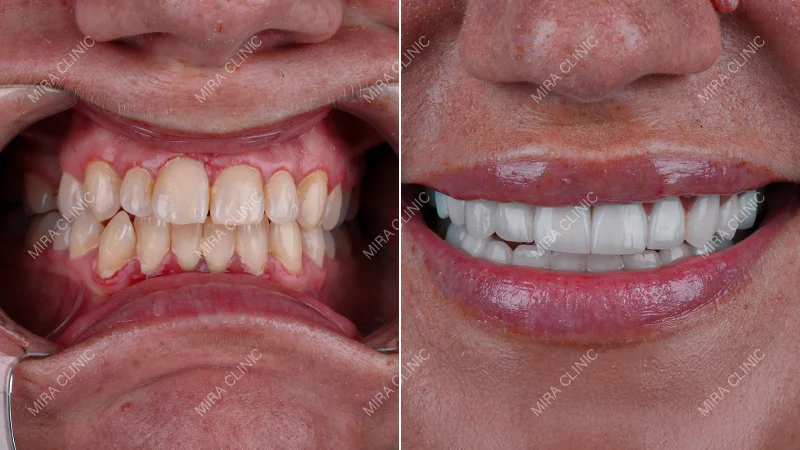
Linda’s testimonial is very positive about the outcome.
She says:
“I’m very, very happy with the final result.”
That statement carries more weight when the full treatment sequence is understood.
Her smile was not produced during one quick cosmetic visit.
She progressed through surgical procedures, six implants, a healing period, further dental treatment, and finally a 24-crown restoration.
At the end of that process, she describes herself as happy and grateful for the result.
Returning to Istanbul for the Final Stage
Linda had lived in England for more than ten years before traveling to Istanbul for treatment.
Completing a staged treatment abroad meant returning after the healing period rather than finishing everything during one visit.
Her second trip therefore represented an important milestone.
The major surgical work had already been completed.
The implants had been given time to heal.
Now the focus was on completing the final teeth and bringing the entire treatment together.
Her familiarity with Mira Clinic also meant that she was returning to a dental team she already knew from the first stage.
A Patient Who Recommends the Experience to Others
Linda does not only describe herself as satisfied with the final smile.
She says she would recommend the clinic to:
“all my friends, acquaintances, and anyone who wants a beautiful smile.”
She also thanks the doctors and team for what she calls her “wonderful smile.”
For Linda, the experience extended over several months and two major treatment stages.
Her recommendation therefore came after completing both the surgical and restorative sides of the treatment.

Before, Treatment, and Final Result
Before Treatment
Linda’s dental condition involved:
- multiple missing-tooth areas
- insufficient support in some implant sites
- the need for surgical preparation before implant placement
- existing teeth requiring restorative treatment
- a case requiring both implant dentistry and full restorative work
First Visit
Her first stage included:
- X-rays and examination
- surgical extractions
- bone grafting
- bone splitting
- sinus lifts where required
- 6 dental implants
- provisional restoration
Healing Period
The implants and surgical areas were allowed to heal before definitive restoration.
Second Visit
The restorative stage included:
- reassessment of the healed areas
- root canal treatment on teeth 12 and 13
- temporary restorations
- 24 zirconia crowns
- final crown cementation
Final Result
Linda finished the treatment with:
- restored missing-tooth areas
- implant-supported rehabilitation
- 24 zirconia crowns
- a completed upper and lower smile
- a result she describes as making her “very, very happy”
Final Perspective
Linda’s experience is a clear example of why complex dental rehabilitation may require more than one treatment stage.
Her journey began with the clinical foundation: surgical preparation, 6 dental implants, and a provisional restoration.
After the healing period, she returned to Istanbul for the definitive restorative stage.
Root canal treatment was completed where necessary, temporary restorations were used during the process, and the treatment was ultimately finished with 24 zirconia crowns.
The sequence matters because Linda’s final smile was not created by crowns alone.
The implant surgery established the foundation.
The healing period allowed that foundation to stabilize.
The zirconia crowns then completed the functional and aesthetic restoration.
By the end of the process, Linda described herself as “very, very happy with the final result” and confident enough in her experience to recommend the treatment to friends, acquaintances, and others looking for a new smile.