Henry’s Main Concern: Fixing Current Dental Problems Before They Became Bigger
Henry explains that his dental journey had started years before he traveled to Istanbul.
His concern was partly preventive. He already knew that he needed dental treatment, but he also wanted to avoid reaching a point where future problems would become more difficult to manage.
He says:
“I needed treatment, but I also wanted to prevent future treatment from taking place that was going to be difficult for me to take care of down the line.”
This makes his case different from a patient seeking only whiter or straighter-looking teeth.
Henry wanted a broader restorative plan that considered both his current dental condition and what might happen if those problems were left untreated.
He also explains that some previous dental work needed correction, which became part of the planning process once his teeth were examined.

Why X-Rays and the Initial Assessment Were Important
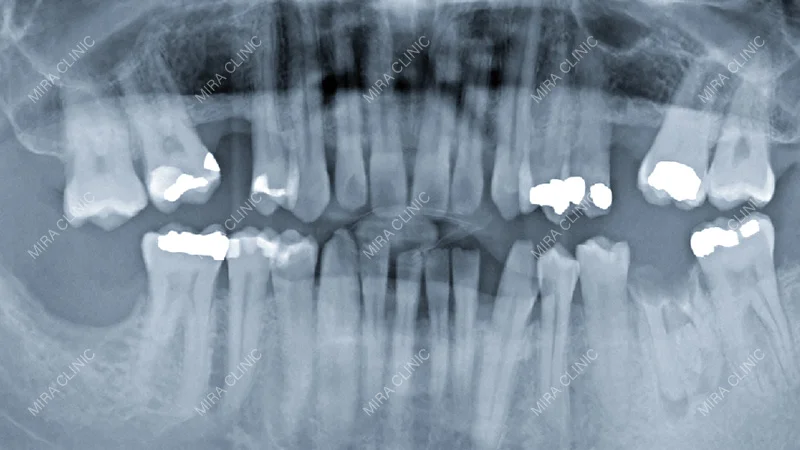
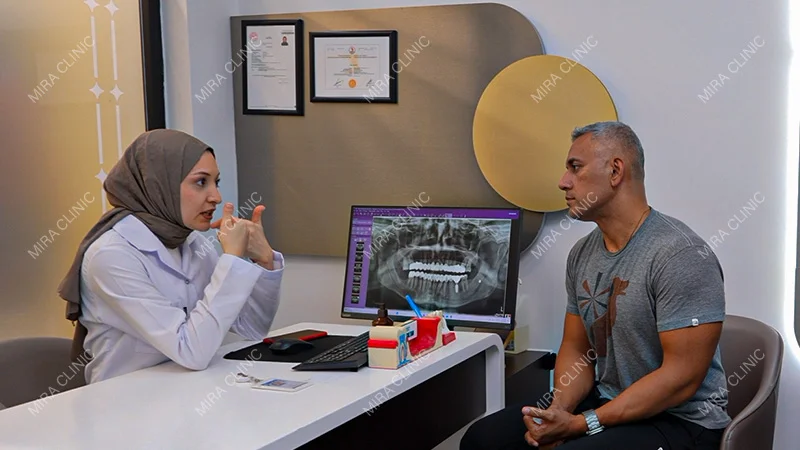
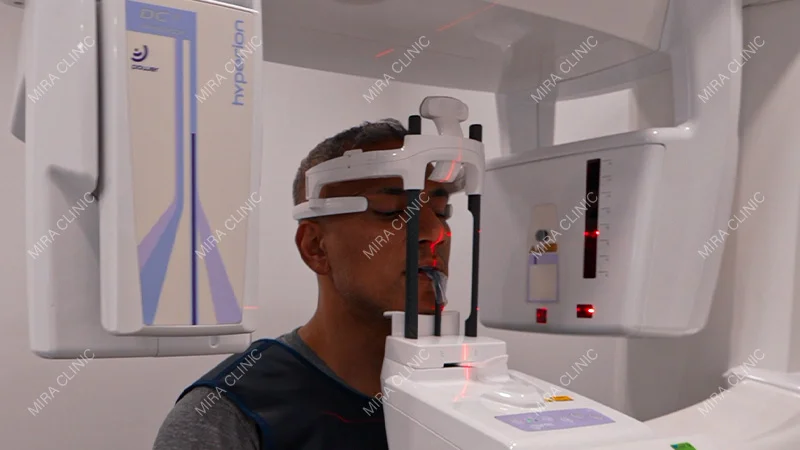
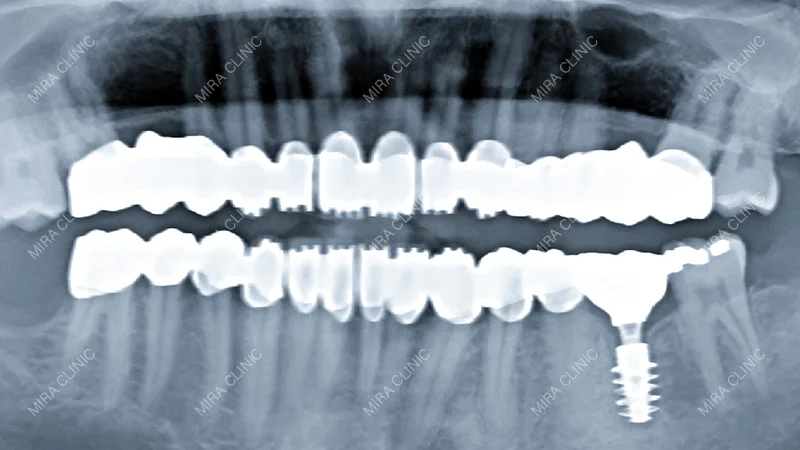
Before the final treatment was determined, Henry underwent a clinical consultation and dental X-rays.
That assessment allowed the dentist to look beyond the visible appearance of the smile and determine what restorative work was actually required.
His treatment was ultimately planned around:
- extensive crown restoration
- one dental implant
- correction of previous dental work
- a staged treatment approach
- a long-term restorative result rather than only a cosmetic change
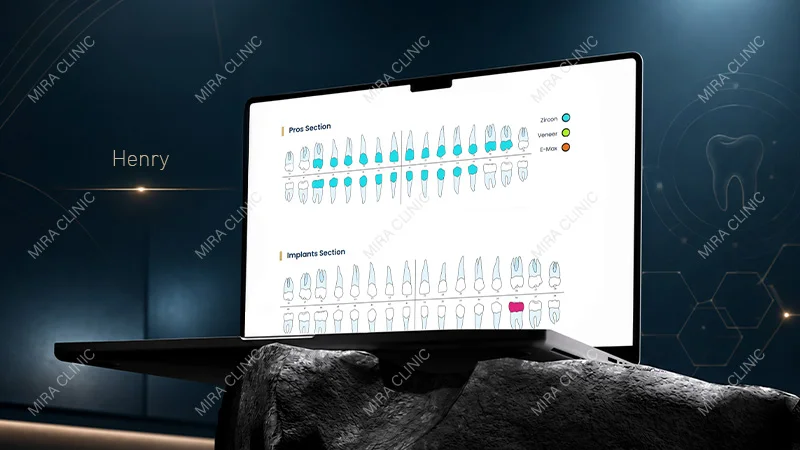
The final plan included 24 zirconium crowns and one dental implant.
For Henry, understanding the reasoning behind that plan was an important part of deciding to continue.
His Treatment Plan: 24 Zirconium Crowns and One Dental Implant
The largest part of Henry’s smile restoration involved 24 zirconium crowns.
The crowns were used across a broad section of the upper and lower smile, creating a coordinated restorative result rather than treating only a few front teeth.
His treatment also included one dental implant, which addressed a separate missing-tooth area.
This combination meant that Henry’s treatment was not simply a Hollywood Smile based on crowns.
It was a mixed restorative case in which the existing teeth were rebuilt with zirconium crowns while a missing tooth required implant-supported replacement.
Why the Implant Required a Second Stage
Henry’s treatment was completed over more than one visit.
During the first stage, the main crown work was completed and the implant treatment began.
The implant then needed time to heal before the final restoration could be completed.
His clinical record also notes the use of a healing abutment, which forms part of the transition between implant placement and the final crown.
Henry himself explains the sequence clearly:
“My trip involved 23 crowns that took place the first visit, along with an additional crown on one implant that took place on the second visit.”
Together, that resulted in 24 final zirconium crowns, with the implant crown completed during the later stage.
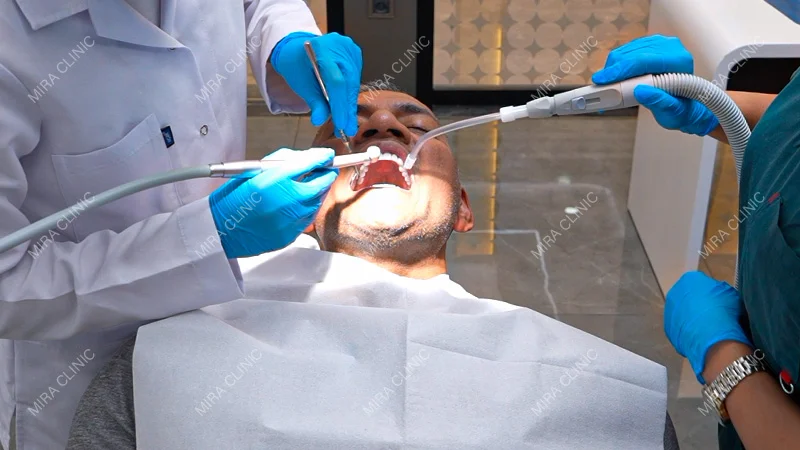
24 Zirconium Crowns for a Complete Smile Restoration
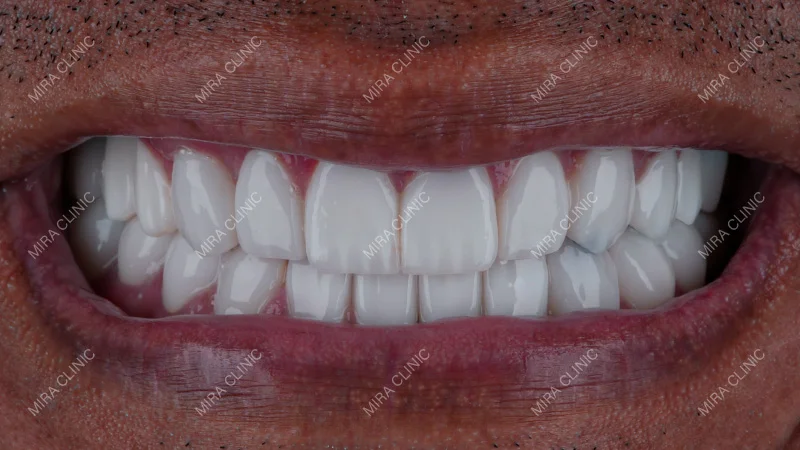
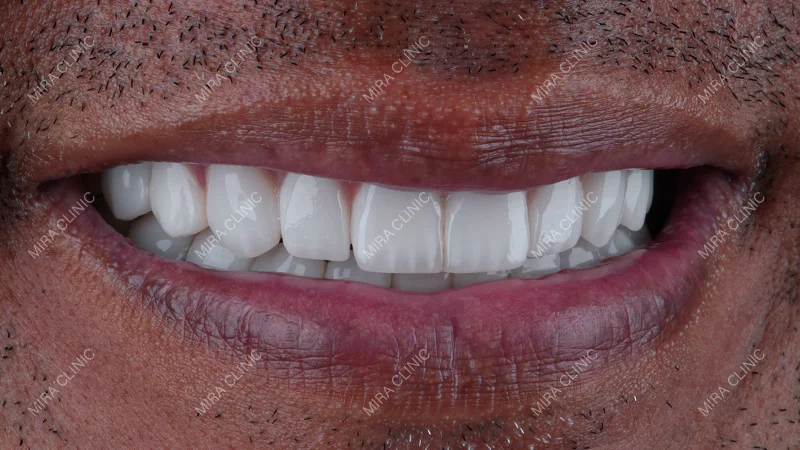
Henry’s final restorative work included 24 zirconium crowns with a BL3 shade.
The scale of this treatment allowed the smile to be considered as a complete unit.
When a patient requires crowns across many teeth, the dentist must consider more than the appearance of one individual restoration.
The final result needs consistency in:
- tooth proportions
- smile width
- crown shape
- upper and lower tooth relationships
- bite
- overall color
Henry was not looking for a result that appeared disconnected from his face. His goal was a smile that looked natural and justified traveling thousands of miles for treatment.
Correcting Previous Dental Work
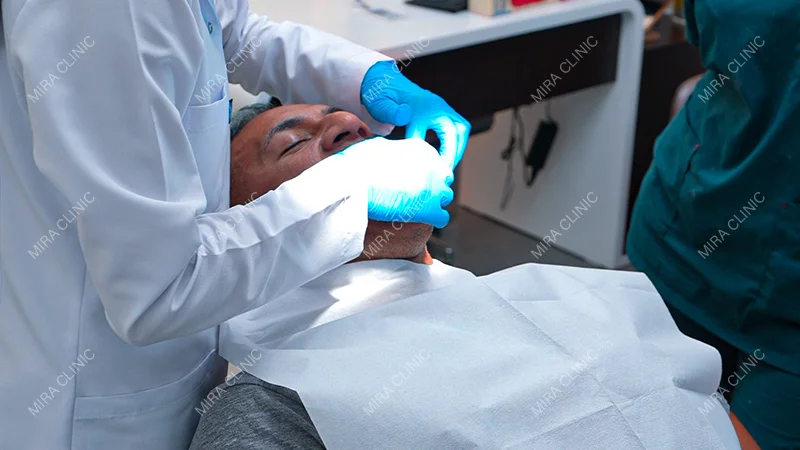
Another important part of Henry’s testimonial is that his treatment did not begin from a completely untreated mouth.
He explains that the team was able to correct some dental work he had received previously.
This is clinically relevant because older dental treatment can influence what is possible in a new restorative plan.
Existing crowns, fillings, root canal-treated teeth, or other previous restorations may need to be reassessed before new work can be completed.
For Henry, the purpose was not to simply cover every tooth and ignore the past.
The earlier work had to be reviewed as part of building a more stable long-term plan.
Thinking Beyond the Immediate Result
Henry repeatedly describes his treatment in terms of the future.
He wanted to know what his teeth would need not only immediately, but also several years later.
He says the team explained what future treatment could look like, including implants and crowns that might need to be addressed over time.
That long-term planning gave him a better understanding of the full dental journey rather than treating each procedure as an isolated event.
This is particularly relevant in extensive restorative dentistry, where a patient may complete one stage now and another only after healing or when another area requires attention later.
“Is This Legit?” — His Concern About Treatment Abroad
Henry is unusually open about one of the biggest concerns international patients often have.
Before traveling, he asked himself:
“Is this legit?”
Coming from Honolulu to Istanbul meant traveling a significant distance for major dental treatment.
His concern was not necessarily fear of dentistry itself. It was whether he could trust treatment being performed so far from home.
He spent time researching patient reviews, the clinic’s reputation, and the treatment process before committing.
That research became an important part of his decision because his case was extensive enough to require more than one trip.
Returning for the Second Treatment Stage
Henry’s second visit is an important part of the story.
By that stage, he was no longer approaching the clinic as an unfamiliar place.
He describes returning as feeling almost like coming “home.”
That difference reflects how much his perception had changed since the first trip.
The first visit began with uncertainty about whether treatment abroad could be trusted.
The second began with familiarity, because he already understood the clinic, the treatment process, and what remained to be completed.
The second stage allowed the implant restoration to be finalized and brought the complete crown treatment together.
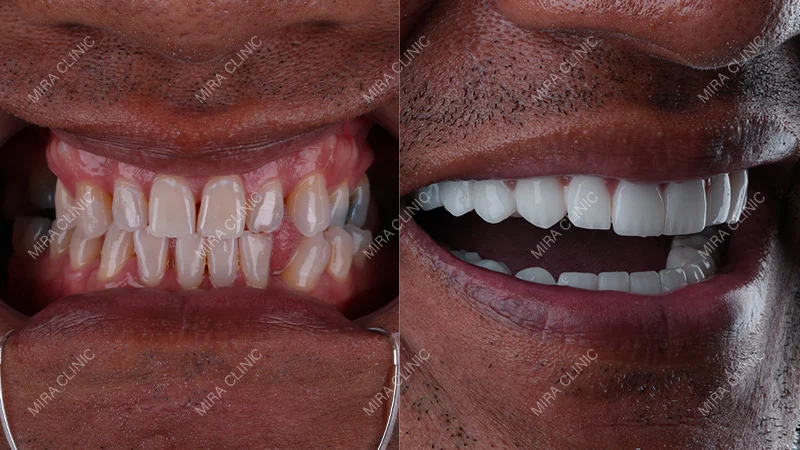
Before and After Henry’s Dental Journey
Before Treatment
Henry’s starting situation involved:
- existing dental problems requiring restorative treatment
- previous dental work that needed correction
- concern about preventing more difficult future dental problems
- a missing-tooth area requiring implant treatment
- uncertainty about traveling abroad for extensive dentistry
His goal was therefore broader than achieving a cosmetic smile makeover.
Treatment
His restorative journey included:
- consultation and dental X-rays
- correction of previous dental work where required
- 24 zirconium crowns
- one dental implant
- a healing abutment during the implant stage
- a BL3 final crown shade
- treatment completed over two visits
After Treatment
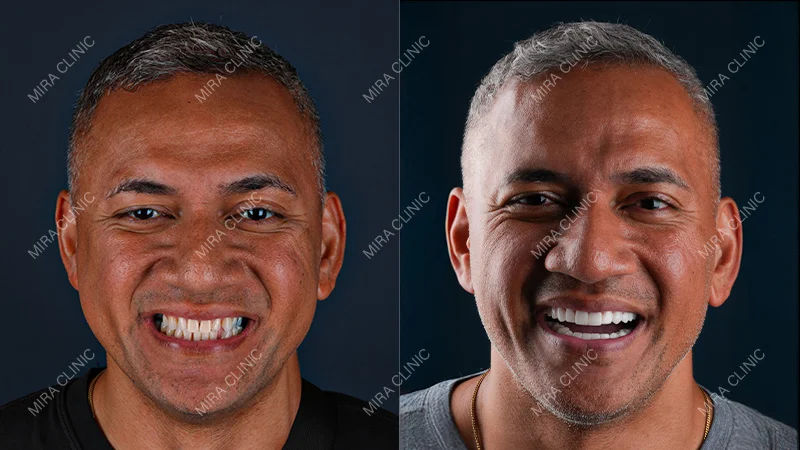
After completing the treatment, Henry describes:
- a complete new smile
- restoration of the missing-tooth area
- correction of previous dental work
- confidence in the long-term treatment approach
- satisfaction with returning for the second stage
- a final result he felt justified the journey from Hawaii
The outcome brought together both the immediate restorative needs and the preventive thinking that had originally pushed him to seek treatment.
A Second Visit That Completed the Plan
Henry’s experience is particularly useful because it shows that extensive dental treatment does not always happen during one trip.
Twenty-three crowns were completed during the first stage, while the crown associated with the implant was completed during the second.
That staged approach allowed the implant area to heal properly before the final crown was installed.
By the end of the second visit, Henry’s restorative plan had reached the result he had originally traveled for.
Final Perspective
Henry traveled from Honolulu, Hawaii, to Istanbul because he wanted to address his existing dental problems while also thinking seriously about the long-term future of his teeth.
His case involved previous dental work that required correction, extensive restorative needs, and a missing-tooth area that required an implant.
After examination and X-rays, his treatment included 24 zirconium crowns and one dental implant, with the implant restoration completed during a second visit after the healing stage. The final crown shade was BL3.
Henry began the journey asking himself whether traveling so far for treatment was genuinely worth trusting.
He finished it after two visits, a complete crown restoration, and an implant treatment, expressing gratitude for the care and satisfaction at being one of the patients who had completed treatment at Mira Clinic.
For Henry, the result was not simply a Hollywood Smile. It was a dental plan that addressed what needed treatment now while giving him more confidence about how his teeth would be managed in the years ahead.