Justin’s Main Problem: Thin Teeth That Were Starting to Chip and Break
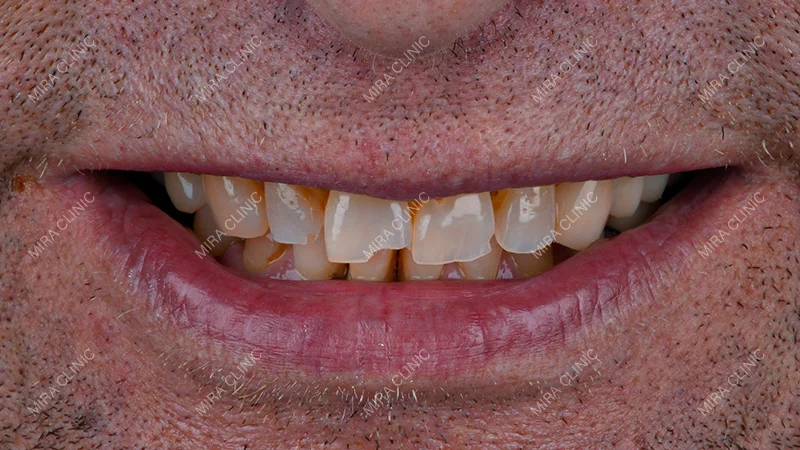
Justin describes the condition of his teeth before treatment very clearly:
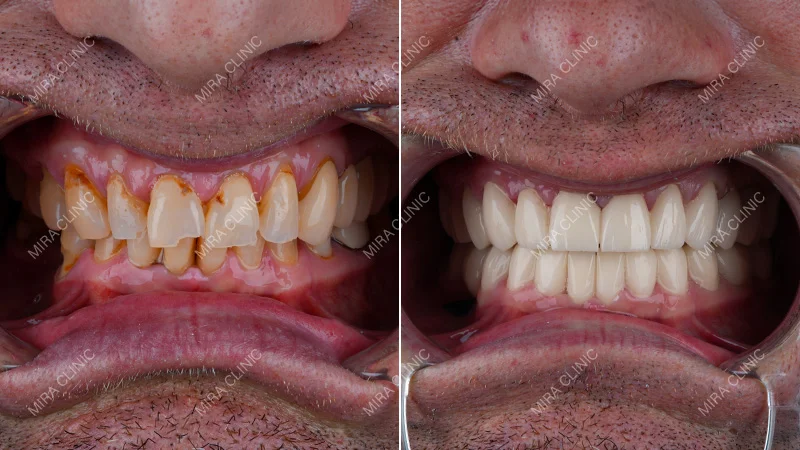
“My teeth were really, really bad. They were really, really thin. They were starting to chip and they were starting to break.”
This was the problem that pushed him to look beyond routine cosmetic dentistry.
The concern was not simply that his teeth looked worn.
He felt that their structural condition was becoming progressively worse, and he did not know how much further the deterioration could continue.
He says:
“I thought I was going to lose my teeth because they were so thin and breaking.”
That fear became the central reason for seeking a more comprehensive restorative solution.
His Dental Condition Was More Complex Than Thin Front Teeth
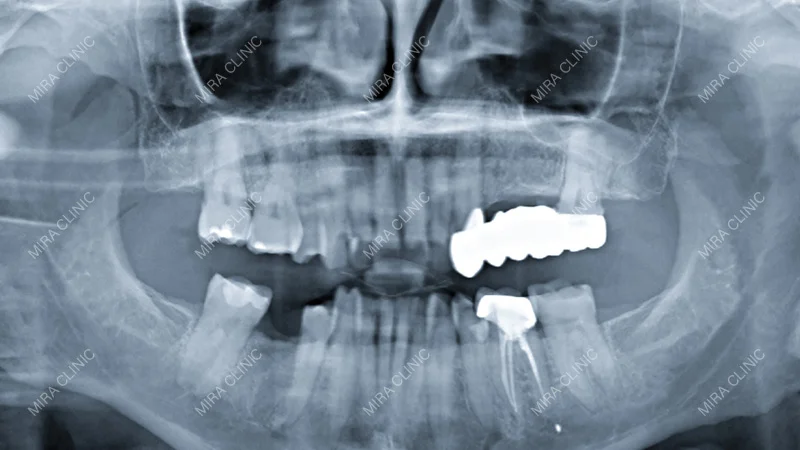
Justin’s panoramic X-ray and dental assessment show that his case involved more than worn or fragile visible teeth.
Several posterior teeth were already missing. His upper jaw also contained an existing bridge spanning part of the left posterior region, while additional missing teeth were present in both jaws.
The panoramic image taken before treatment reflects this mixed starting point: natural teeth remained across much of the mouth, but there were also missing posterior areas, previous restorative work, and teeth that required a broader rehabilitation rather than an isolated cosmetic correction.
This meant the treatment had to consider the mouth as a complete restorative case.
Why His Treatment Could Not Be Planned as a Simple Cosmetic Makeover
When teeth are thin, chipped, heavily restored, or surrounded by missing-tooth areas, simply changing the appearance of the front teeth may not solve the underlying restorative problem.
Justin needed a plan that considered:
- the remaining natural teeth
- the condition of previous bridgework
- missing posterior teeth
- the relationship between the upper and lower teeth
- the amount of restorative coverage needed
- protection of the completed work after treatment
The objective was to create a stronger and more complete dental restoration while also improving the overall appearance of his smile.
Replacing Existing Dental Work
Part of Justin’s upper jaw already contained a bridge.
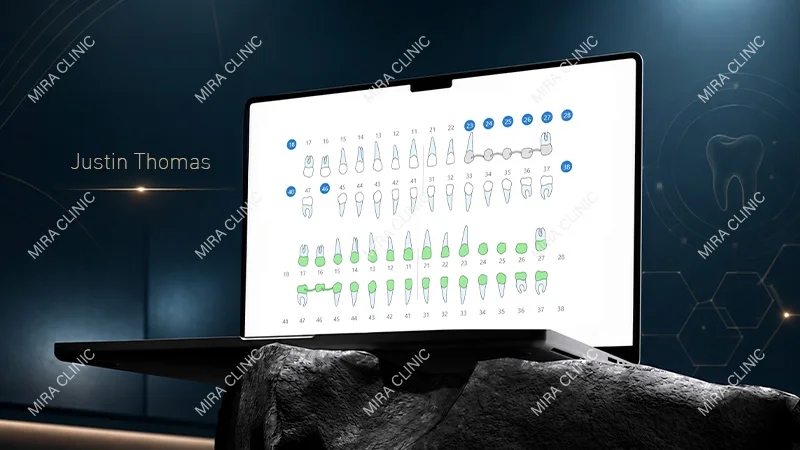
His treatment included removal of crowns across teeth 23–27 before that area was rebuilt.
This is an important part of his case because the treatment was not being performed on untouched teeth.
Existing restorative dentistry had to be incorporated into the new plan.
Rather than designing the new smile around older work that might no longer fit the intended restoration, the existing crowns in that region were removed so the area could be reconstructed as part of the wider treatment.
A Titanium Bar for the Upper Restorative Area
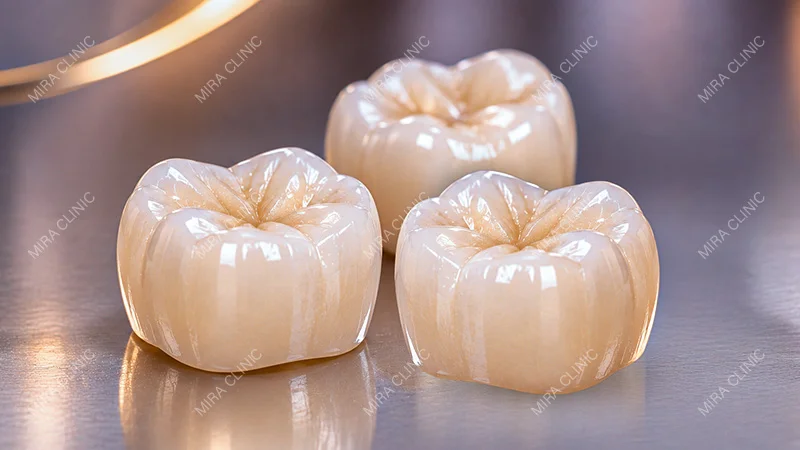
The treatment plan also included a titanium bar across teeth 23–27, followed by zirconium restorations over that region.
A titanium-supported structure can provide additional reinforcement within a larger restorative segment.
For Justin, this formed part of rebuilding an area that already had significant previous dental work.
The goal was not simply to cover the visible surfaces of the teeth. The restorative structure underneath also needed to be considered so that the completed teeth worked together as a single rehabilitation.
Extensive Zirconium Crown Restoration
Justin describes receiving 24 crowns during his testimonial.
His clinical plan shows extensive zirconium crown treatment distributed across both jaws, including the visible upper smile and most of the lower dental arch.
The purpose of using crowns across such a large part of the mouth was to rebuild teeth that Justin felt had become too thin and vulnerable while creating a more consistent final smile.
With extensive crown treatment, the dentist must consider much more than tooth color.
The final restorations need to work together in terms of:
- tooth shape
- crown height
- smile proportions
- bite contacts
- upper and lower tooth relationships
- chewing forces
These factors become especially important when many teeth are being restored at the same time.
Restoring a Missing Lower Tooth With a Zirconium Bridge
Justin’s lower jaw also contained a missing posterior tooth.
His treatment plan included a three-unit zirconium bridge across teeth 45, 46, and 47, restoring the missing tooth within that segment.
A bridge works differently from an individual crown.
The teeth on either side provide support for a connected restoration that replaces the missing tooth between them.
This allowed the treatment to address one of Justin’s missing-tooth areas while the surrounding teeth were being restored as part of the broader rehabilitation.
What the Before X-Ray Shows
Justin’s pretreatment panoramic X-ray provides a useful overview of why the case required more than a few front crowns.
Before treatment, the image shows:
- missing posterior teeth
- existing bridgework in the upper jaw
- previous restorative treatment
- remaining natural teeth across both arches
- areas that needed to be coordinated within one comprehensive plan
The X-ray does not by itself diagnose why individual teeth were thin or cracking, but it does show the broader restorative situation that had to be considered before rebuilding the smile.
That distinction is important: Justin’s description tells us how his teeth felt and behaved, while the imaging helps show the overall dental structure that surrounded those problems.
Temporary Crowns During the Treatment
Justin describes the preparation stage in his own words:
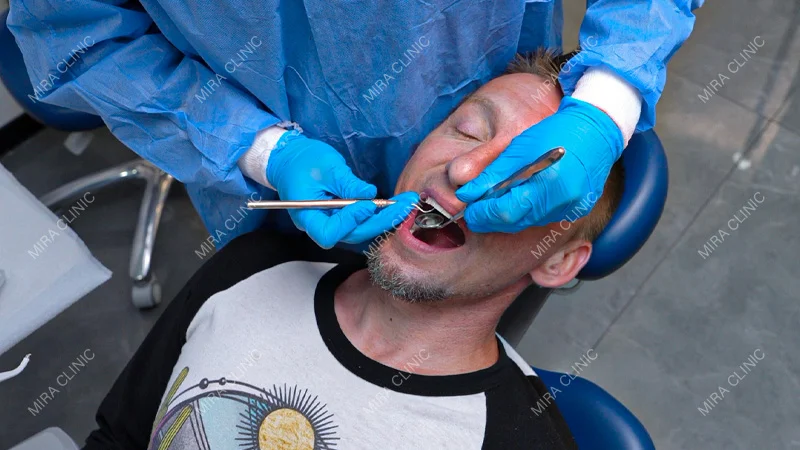
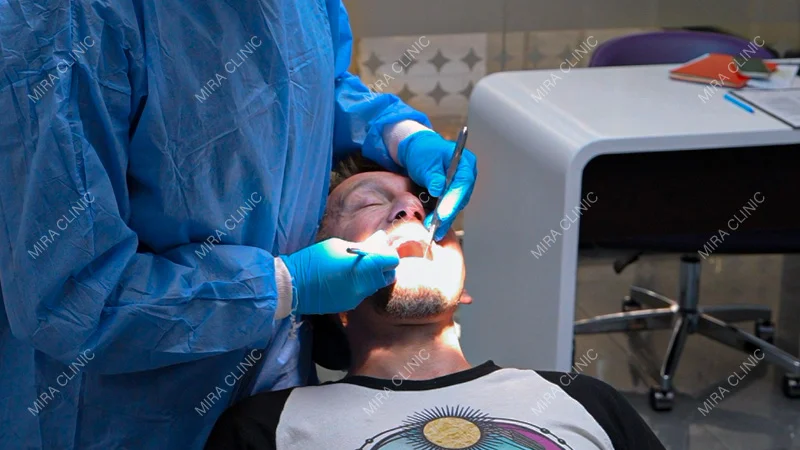
“They shaved all of my teeth down and put on temporary crowns. No pain.”
Temporary crowns play an important role during extensive restorative dentistry.
Once teeth are prepared for permanent crowns, temporary restorations protect them while the final zirconium work is being produced.
They also allow the patient and dental team to move through the treatment period without leaving the prepared teeth exposed.
For Justin, one of the strongest parts of the experience was how comfortable this stage felt.
His description was direct:
“Zero pain.”
Individual pain experiences vary from patient to patient, but Justin repeatedly emphasizes that discomfort was not a significant part of his own treatment.
Why a Night Guard Was Included
Justin’s treatment also included a night guard.
This is a meaningful detail in a case involving extensive new crowns.
A night guard can help protect restorations from excessive forces during sleep, particularly when a patient clenches or grinds their teeth.
After rebuilding a large number of teeth, protecting the final restorations becomes part of maintaining the result rather than treating the work as finished the moment the crowns are placed.
From Fear of Losing His Teeth to a Complete New Smile
The emotional contrast in Justin’s story is significant.
Before traveling, his concern was:
“I thought I was going to lose my teeth.”
After completing treatment, he describes a completely different situation:
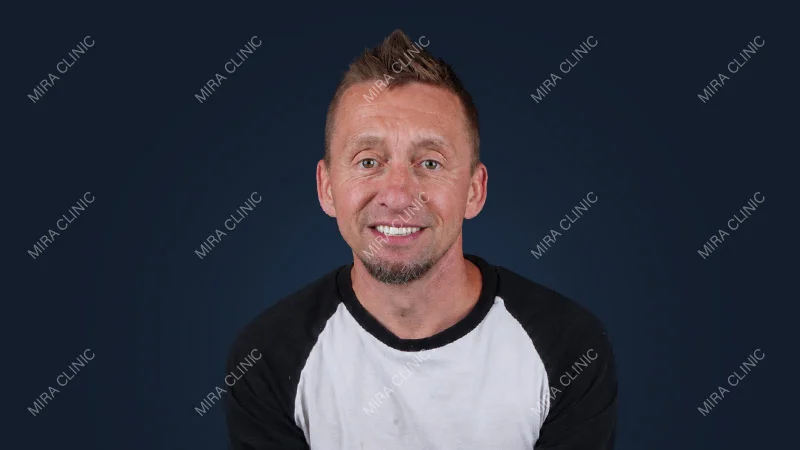
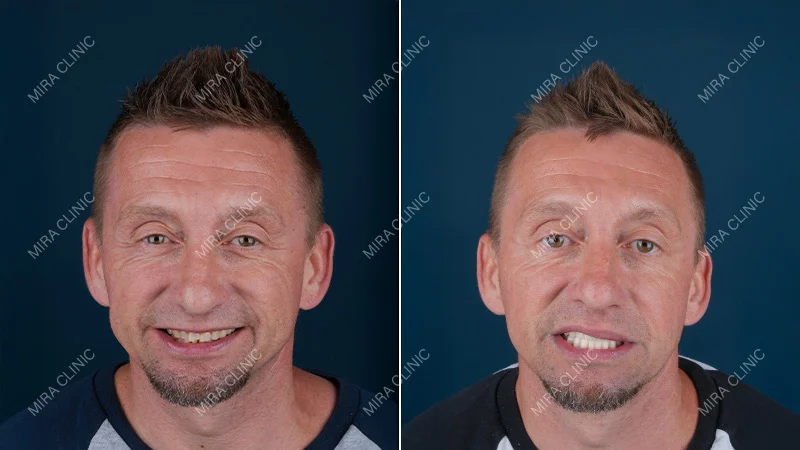
“Now I’ve got a great award-winning smile.”
His experience therefore moved from uncertainty about whether his teeth could be successfully restored to satisfaction with a full smile rehabilitation.
The visual change was important to him, but the starting motivation came from the physical deterioration he had been noticing in his teeth.
Why Justin Traveled to Istanbul
Justin initially consulted dentists in the United States.
He says:
“I went to a dentist back home and they said that my teeth were beyond their capability.”
He also recalls discussions about potentially needing braces and uncertainty about how the overall dental condition should be managed.
At the same time, the expected cost of extensive treatment in the United States was a major concern.
Justin considered other destinations and received conflicting advice from people around him about traveling to Turkey.
Ultimately, he chose Istanbul.
After completing the treatment, he says the people who had initially warned him against making the trip began asking him about coming themselves.
His Experience With the Treatment Process
Justin repeatedly describes the dental process as organized and professional.
He says:
“Everything was really quick and very professional. You could really tell that they knew exactly what they were doing.”
That confidence was particularly meaningful because his starting point had been uncertainty.
Before traveling, he had already been told that his dental situation was difficult.
Once treatment began, he felt that there was a clear plan for how the existing restorations, missing teeth, and fragile teeth would be managed together.
Before and After Justin’s Smile Restoration
Before Treatment
Justin’s starting situation included:
- teeth he described as extremely thin
- chipping and breaking teeth
- fear of eventually losing his teeth
- several missing posterior teeth
- existing upper bridgework
- previous dental treatment that needed to be incorporated into the new restoration
His concern was therefore both functional and aesthetic.
Treatment
Justin’s restorative treatment included:
- removal of existing crowns in the upper bridge area
- a titanium bar across the restored upper segment
- extensive zirconium crown treatment
- a three-unit zirconium bridge
- temporary crowns during treatment
- a protective night guard
Justin describes the completed treatment in his testimonial as 24 crowns.
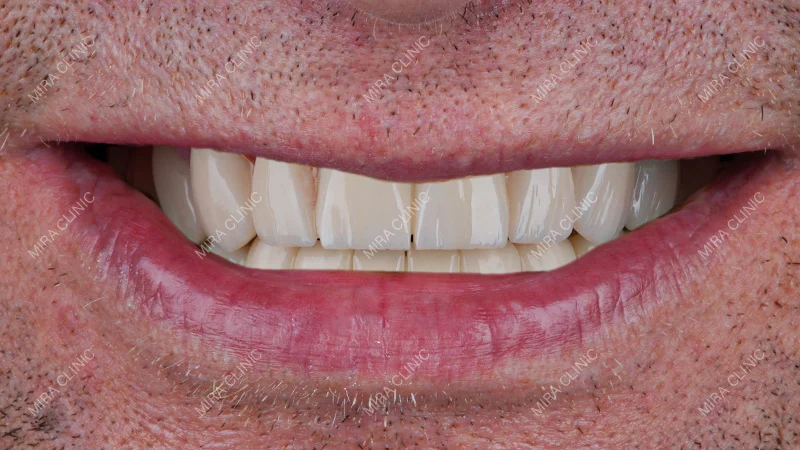
After Treatment
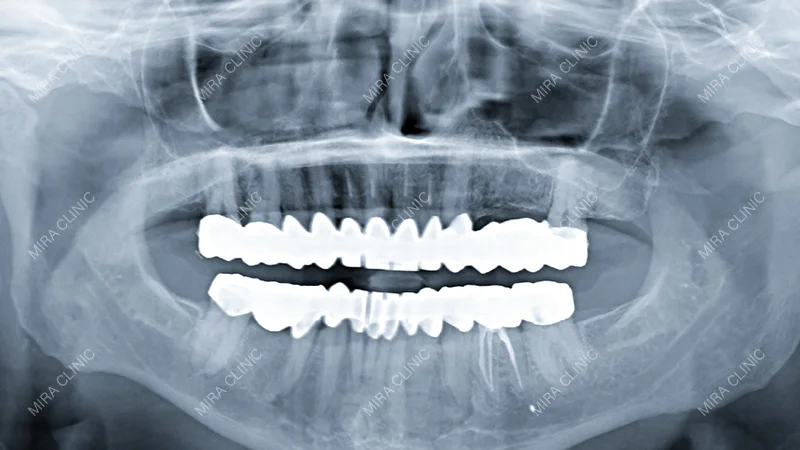
The post-treatment panoramic X-ray shows an extensively restored upper and lower dentition, with the previous fragmented restorative situation replaced by a much more continuous full-mouth prosthetic result.
For Justin, the outcome meant:
- rebuilding the appearance of his worn and damaged teeth
- restoring missing-tooth areas included in the plan
- replacing previous restorative work where necessary
- completing a much more uniform smile
- feeling confident about showing his teeth again
The transformation was therefore much broader than changing tooth color alone.
“Zero Pain”: Justin’s Own Experience
Pain is one of the most common concerns patients have when considering extensive crown treatment.
Justin addresses that directly:
“Zero pain.”
He specifically mentions the tooth preparation and temporary crown stage and says that he did not experience pain during the process.
His statement should be understood as his individual treatment experience rather than a guarantee that every patient will experience dental treatment in exactly the same way.
For Justin, however, comfort became one of the most memorable parts of the journey.
A Smile He Felt Was Worth the Journey
After completing treatment, Justin’s perspective had changed substantially from when he first began looking for a solution.
The man who initially worried that his teeth might continue breaking until they were lost was now describing his result with confidence.
He says:
“I got a great award-winning smile for a fraction of the cost that it was going to be in the States.”
Cost influenced his decision to travel, but the testimonial makes clear that price alone was not what determined whether he considered the journey successful.
He also emphasizes the final appearance, professional treatment process, and overall experience.
Final Perspective
Justin Thomas came from the United States to Mira Clinic in Istanbul because his teeth had become so thin that they were beginning to chip and break.
His concern was no longer simply about having an imperfect smile. He feared what might happen if the deterioration continued.
His dental situation also involved missing posterior teeth and existing bridgework, which meant that rebuilding the smile required a comprehensive restorative plan rather than a few isolated cosmetic crowns.
The treatment combined extensive zirconium crown restoration with removal and replacement of previous restorative work, a titanium-supported upper segment, a three-unit zirconium bridge, temporary crowns, and a protective night guard.
Justin describes the result in much simpler terms: he received 24 crowns, experienced “zero pain,” and finished with a smile he felt completely changed his situation.
His story began with:
“I thought I was going to lose my teeth.”
It ended with:
“I’ve got a great award-winning smile.”
For Justin, that change—from worrying about continued dental breakdown to feeling confident about his restored smile—was the real outcome of the treatment.