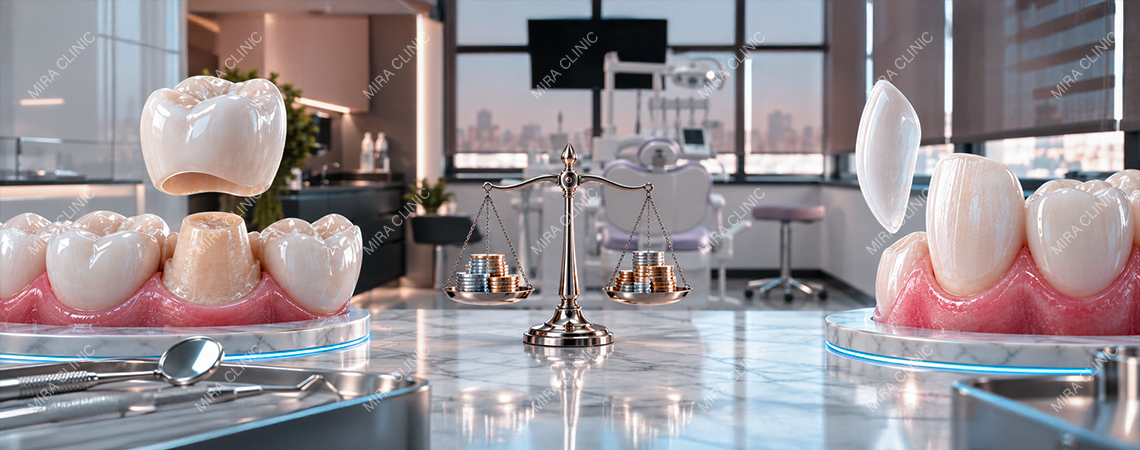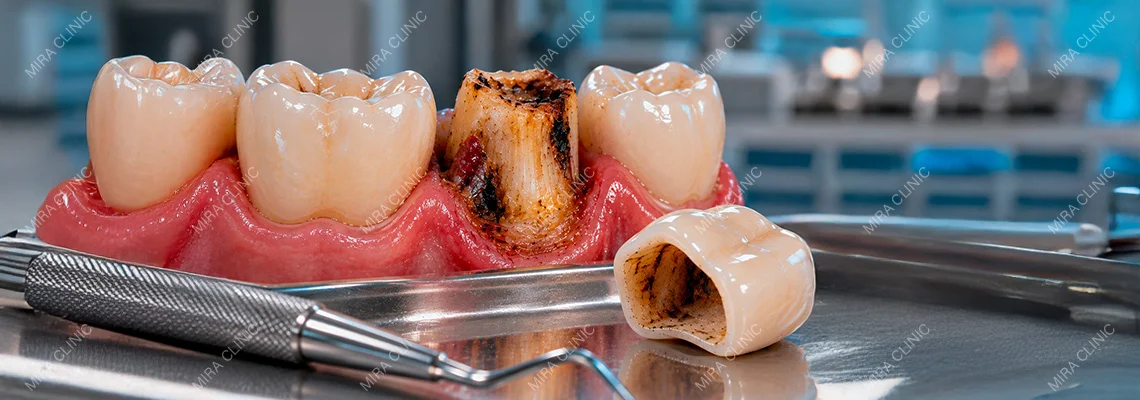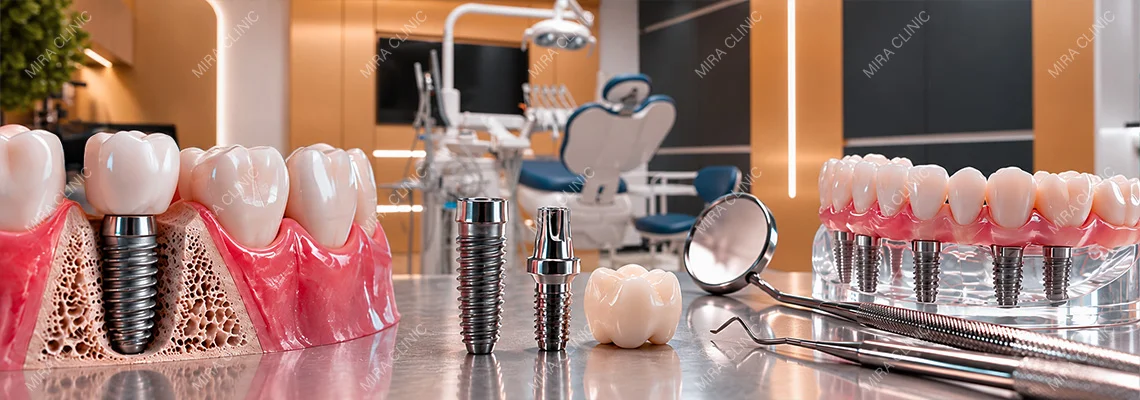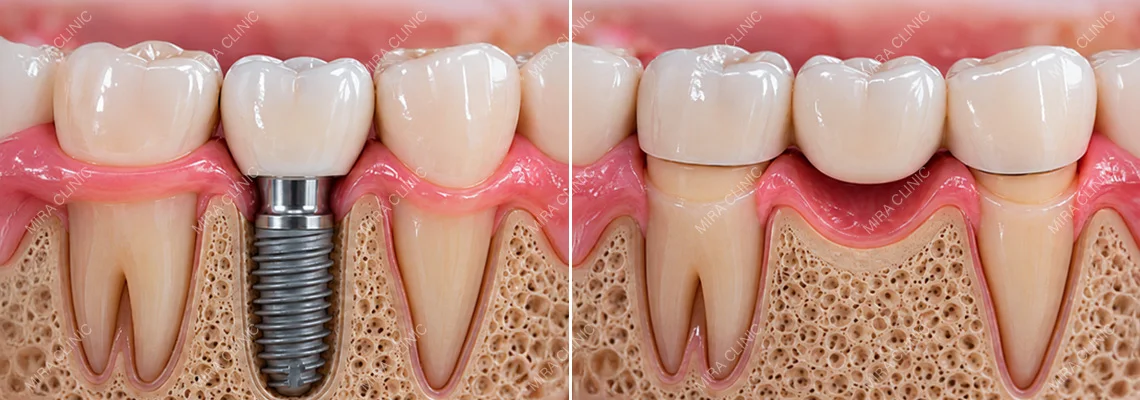
When patients are told they may need a sinus lift before dental implants, the first reaction is usually confusion. The word “sinus” sounds unrelated to teeth, and many patients wonder whether this means their case is complicated.
At Mira Clinic, doctors answer this question by looking at the upper jaw bone on a CBCT scan. The point is not to choose between two procedure names, but to understand how much bone support the implant needs under the maxillary sinus.
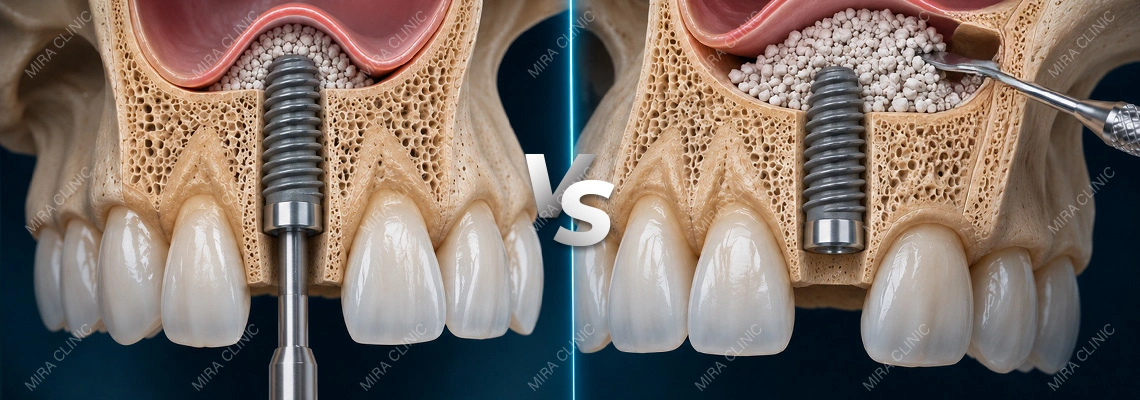
In general, an internal sinus lift is used when the patient needs a smaller bone-height increase in the upper back jaw. An external sinus lift is used when there is less remaining bone and a larger bone grafting area is needed. The decision depends on sinus position, remaining bone height, implant stability, and the final crown or bridge plan.
|
Factor |
Internal Sinus Lift |
External Sinus Lift |
|---|---|---|
|
Other name |
Crestal sinus lift |
Lateral sinus lift |
|
Access point |
Through implant site |
Side of upper jaw |
|
Bone need |
Smaller increase |
Larger increase |
|
Procedure extent |
More limited |
More extensive |
|
Implant timing |
Same day or delayed |
Same day or delayed |
|
Recovery direction |
Often lighter |
May involve more swelling |
|
Cost direction |
Around €300 per side |
Around €800 per side |
A sinus lift is not needed for every upper dental implant. It is recommended only when the bone under the maxillary sinus is not enough to support the planned implant safely.
- Internal vs External Sinus Lift: Quick Answer
- Why Is a Sinus Lift Needed for Dental Implants?
- Internal Sinus Lift vs External Sinus Lift: What Actually Changes?
- Which Sinus Lift Do I Need?
- Can the Implant Be Placed During the Same Procedure?
- Internal vs External Sinus Lift Cost
- Recovery and Healing: Is One Easier Than the Other?
- Final Thought: Your Bone Chooses the Procedure
Internal vs External Sinus Lift: Quick Answer
An internal sinus lift is usually chosen when there is still enough bone under the sinus, but the implant needs a small extra increase in bone height.
An external sinus lift is usually chosen when the bone shortage is larger, the sinus is closer to the implant area, or the surgeon needs wider access to place bone graft material safely.
In simple terms:
Internal sinus lift may be enough when:
- The bone loss is limited
- The implant site still has usable bone
- Only a small sinus lift is needed
- The implant can achieve stable support
External sinus lift may be needed when:
- The remaining bone is very limited
- A larger bone graft is required
- Several upper back implants are planned
- Same-day implant stability is not predictable
The procedure is chosen according to bone anatomy, CBCT imaging, sinus position, and implant stability. A patient cannot know which sinus lift they need from symptoms or photos alone.
Why Is a Sinus Lift Needed for Dental Implants?
A sinus lift for dental implants may be needed when the patient does not have enough bone height in the upper back jaw. This area sits close to the maxillary sinus, which is an air-filled space above the upper premolars and molars.
After upper back teeth are removed, the bone below the sinus may shrink over time. In some patients, the sinus may also sit low or expand into the missing tooth area. This can reduce the bone available for dental implants.
A sinus lift may be considered when:
- Upper molars or premolars are missing
- Bone height below the sinus is limited
- The sinus sits close to the implant site
- The patient needs stronger implant support
- An implant-supported crown or bridge is planned
- The final implant position needs more bone support
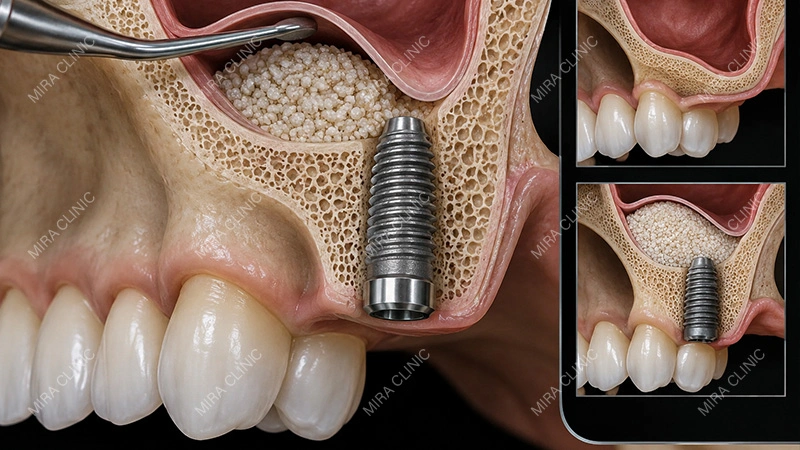
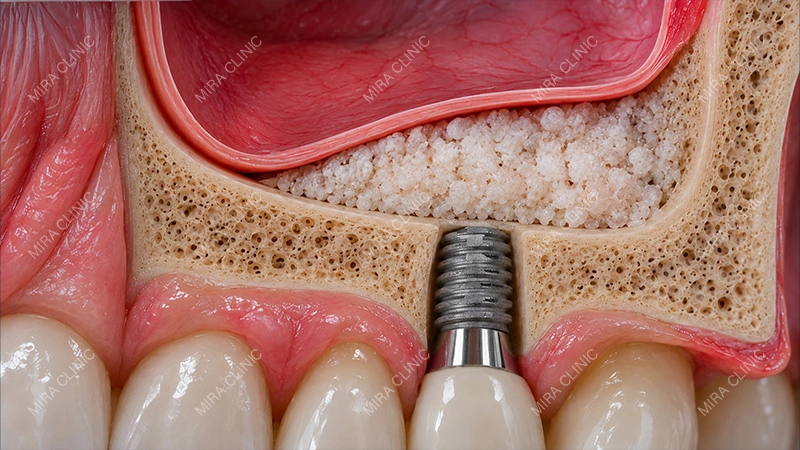
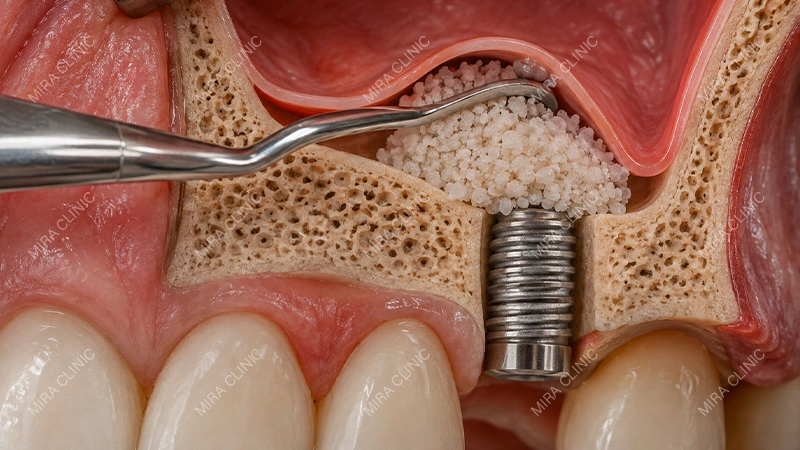
The sinus is not removed during the procedure. The surgeon lifts the sinus membrane carefully and creates space for bone graft material when needed.
A sinus lift is a preparation step for implant stability, not a cosmetic procedure.
Internal Sinus Lift vs External Sinus Lift: What Actually Changes?
The main difference is the surgical access and the amount of bone support needed.
An internal sinus lift is also called a crestal sinus lift or indirect sinus lift. The surgeon works through the implant site, making it a more limited approach. It is usually used when some natural bone remains and only a smaller vertical increase is needed.
An external sinus lift is also called a lateral sinus lift. The surgeon creates access from the side of the upper jaw, which gives wider visibility and space for grafting. It is usually used when the remaining bone is more limited or when a larger graft is needed.
Both procedures have the same purpose: creating enough bone support for upper jaw implants. The difference is how much access and augmentation the case requires.
Which Sinus Lift Do I Need?
Patients asking which sinus lift do I need should understand that the answer depends mainly on CBCT imaging and treatment planning. The dentist or surgeon needs to measure the remaining bone height, review the sinus anatomy, and decide whether the implant can be stable at the same appointment.
The dentist may evaluate:
- Remaining bone height
- Bone width
- Sinus floor position
- Sinus membrane condition
- Infection or sinus health concerns
- Implant length and diameter
- Number of implants
- Implant position
- Need for crown, bridge, or full-arch restoration
- Bite force
- Smoking and healing risk
- Medical history
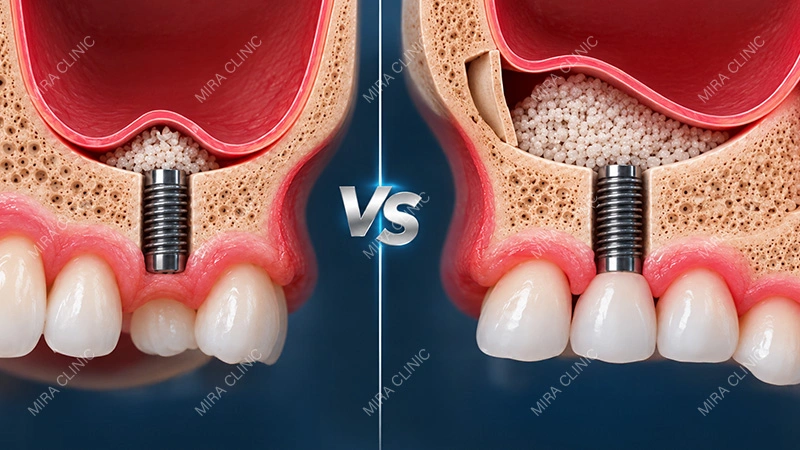
An internal sinus lift may be enough when there is still a usable amount of bone and the lift needed is limited. An external sinus lift may be recommended when the available bone is too limited or when the grafting requirement is larger.
A patient should not be told they need a sinus lift without imaging. Photos and symptoms cannot show the exact bone height under the sinus.
Read more: Internal Sinus Lift Procedure: Why It Is Done and What Patients Should Expect
Can the Implant Be Placed During the Same Procedure?
Sometimes the dental implant can be placed during the same appointment as the sinus lift. This may be possible when there is enough native bone to hold the implant stable while the grafted area heals.
Same-day implant placement may be possible when:
- Enough bone remains for initial stability
- There is no active infection
- The sinus membrane remains intact
- The implant position is suitable
- The graft can be stabilized
- The surgeon considers the case predictable
In other cases, the dentist may recommend a staged approach. This means the sinus lift is performed first, the graft is allowed to heal, and the implant is placed later.
A staged approach may be safer when:
- Bone height is very limited
- A larger graft is needed
- Implant stability is not predictable
- The sinus membrane is at higher risk
- Infection or inflammation must be controlled first
- The final restoration needs stronger support
This is why a sinus lift can affect the dental implant timeline. Some patients can move forward with the implant quickly, while others need healing time before the implant or final crown can be placed.
Internal vs External Sinus Lift Cost
Cost should not be the first reason to choose one procedure over the other. The procedure should be chosen based on bone need and implant stability. However, patients should still understand why the cost may differ.
As a price direction:
|
Procedure |
Example Cost Direction |
Why Cost Differs |
|---|---|---|
|
Internal sinus lift |
Around €300 per side |
More limited approach |
|
External sinus lift |
Around €800 per side |
Wider access and larger graft need |
The external approach usually costs more because it is more extensive, may require more graft material, may take more surgical time, and is often used for more complex bone situations.
The total treatment cost may also include:
- Dental implant
- Abutment
- Crown or bridge
- CBCT scan
- Bone graft material
- Temporary teeth
- Sedation if planned
- Follow-up visits
- Final restoration
Patients should ask whether the quote includes only the sinus lift or the full dental implant plan. A sinus lift price alone is not the same as the total cost of implant treatment.
Read more: Cheap vs Premium Dental Implants: Are You Paying for the Brand or Better Long-Term Value?
Recovery and Healing: Is One Easier Than the Other?
Recovery varies by patient, graft amount, implant timing, smoking status, medical history, and surgical complexity. In general, an internal sinus lift may involve a lighter recovery because the approach is more limited. An external sinus lift may involve more swelling or tenderness because the surgical access is wider.
After either procedure, patients may be advised to avoid:
- Forceful nose blowing
- Smoking
- Strenuous exercise
- Drinking through a straw
- Disturbing the surgical site
- Ignoring medication instructions
- Forcing sneezing pressure toward the sinus
Possible risks may include:
- Sinus membrane perforation
- Infection
- Sinusitis
- Swelling
- Bleeding
- Graft movement
- Implant instability
- Delayed healing
- Need for another procedure
These risks do not mean sinus lift treatment is unsafe for every patient. They mean the case must be planned carefully and aftercare instructions must be followed.
Patients should contact their treating clinician if they notice worsening pain, fever, unusual drainage, persistent heavy bleeding, severe swelling, fluid passing between the mouth and nose, or sinus infection symptoms.
Final Thought: Your Bone Chooses the Procedure
The difference between internal and external sinus lift is not about which procedure sounds easier or cheaper. It is about how much bone support your implant needs.
An internal sinus lift may be enough when the bone shortage is smaller and the implant site allows a more conservative approach. An external sinus lift may be needed when there is less bone, a larger graft is required, or the implant plan needs wider access for predictable support.
The right decision should be based on CBCT imaging, sinus anatomy, bone height, implant stability, and the final crown or bridge plan.
A sinus lift is not the goal by itself. The goal is to create enough support for dental implants to function safely.
Read more: What Is an External Sinus Lift, and Why Is It Needed for Some Dental Implants?