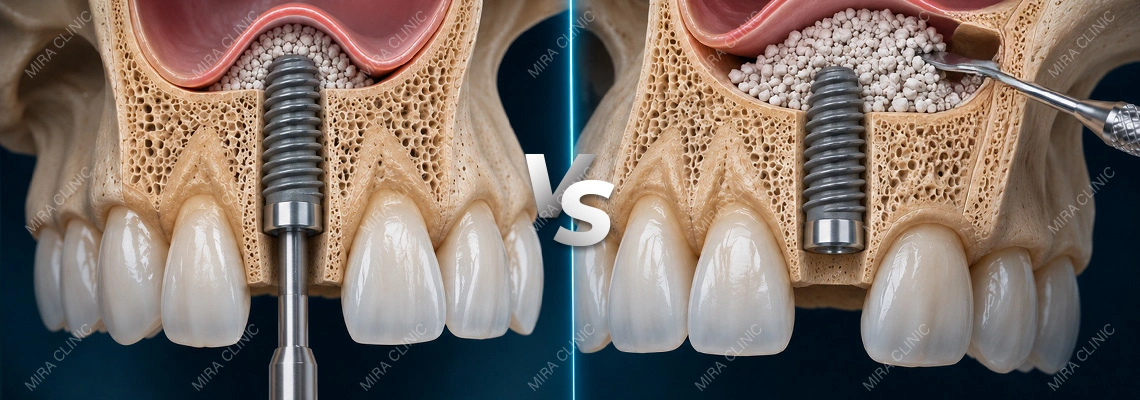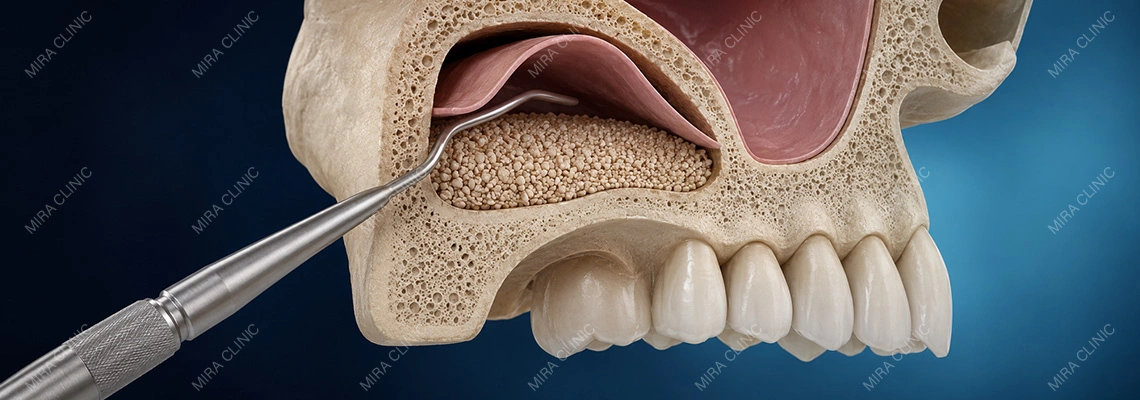
An external sinus lift is a bone-grafting procedure used to increase bone height in the upper back jaw before or during dental implant treatment. The surgeon reaches the sinus through a small opening in the side of the upper jaw and gently raises the sinus membrane to create space for graft material.
This procedure may be recommended when the natural bone under the sinus is not enough to support a dental implant safely. It is usually considered for patients who are missing upper molars or premolars and need more bone support before implant placement.
At Mira Clinic, an external sinus lift may cost around €800 per side when it is clinically needed as part of a dental implant plan. The final cost depends on bone volume, graft material, number of implant sites, whether implants are placed at the same appointment, and the final restoration plan.
|
Treatment Point |
What It Means |
|---|---|
|
Procedure |
External sinus lift |
|
Main area |
Upper back jaw |
|
Main reason |
Not enough bone under sinus |
|
Access point |
Side of upper jaw |
|
Implant timing |
Same day or delayed |
|
Cost direction |
Around €800 per side at Mira Clinic |
An external sinus lift is not a cosmetic procedure. It is a surgical preparation step that may help create enough bone support for dental implants in the upper back jaw.
- What Is an External Sinus Lift?
- Why Might You Need an External Sinus Lift Before Dental Implants?
- How Is the External Sinus Lift Procedure Performed?
- External vs Internal Sinus Lift: What Is the Difference?
- Can the Dental Implant Be Placed at the Same Time?
- What Are the Risks, Recovery, and Healing Time?
- Who Is a Suitable Candidate for an External Sinus Lift?
What Is an External Sinus Lift?
An external sinus lift is a type of sinus augmentation used when the upper back jaw does not have enough vertical bone for secure dental implant placement. It is also called a lateral sinus lift because the surgeon accesses the sinus area through the side of the upper jaw.
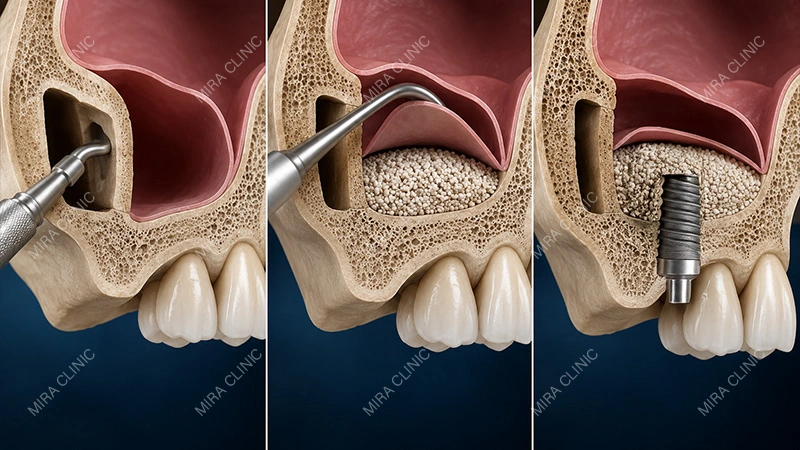
The maxillary sinus is an air-filled space located above the upper premolars and molars. When back teeth are lost, the bone below the sinus can shrink over time. In some patients, the sinus may also sit lower in the jaw, leaving less bone available for dental implants.
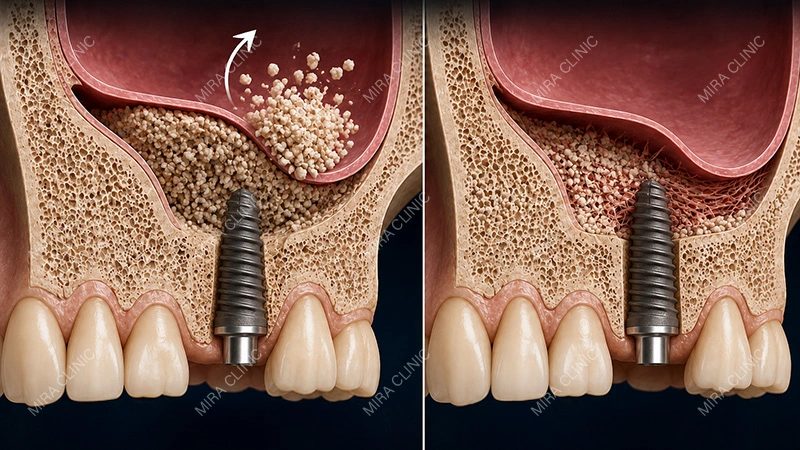
During an external sinus lift, the surgeon gently lifts the sinus membrane and places bone graft material underneath it. This creates a thicker bone foundation where dental implants may later be placed or supported.
The sinus is not removed. The purpose is to raise the membrane carefully and create space below it for bone regeneration.
Why Might You Need an External Sinus Lift Before Dental Implants?
You may need an external sinus lift if there is not enough bone height in the upper back jaw to support a dental implant. Dental implants need enough bone around them for stability, healing, and long-term function.
Common reasons include:
- Missing upper molars or premolars
- Bone loss after tooth extraction
- Long-term tooth loss in the upper back jaw
- Low sinus position
- Natural sinus enlargement after tooth loss
- Need for stronger implant support
- Planning for an implant-supported bridge or full-mouth restoration
An external sinus lift is not automatically needed for every upper-jaw implant. Some patients have enough bone for implant placement without sinus grafting. Others may only need an internal sinus lift if the bone shortage is smaller.
The decision should be based on CBCT imaging, clinical examination, sinus health, bone volume, and the final implant restoration plan.
How Is the External Sinus Lift Procedure Performed?
The external sinus lift procedure is planned after the dentist or surgeon reviews the patient’s imaging and implant needs. The goal is to create bone support in the correct area for future implant placement.
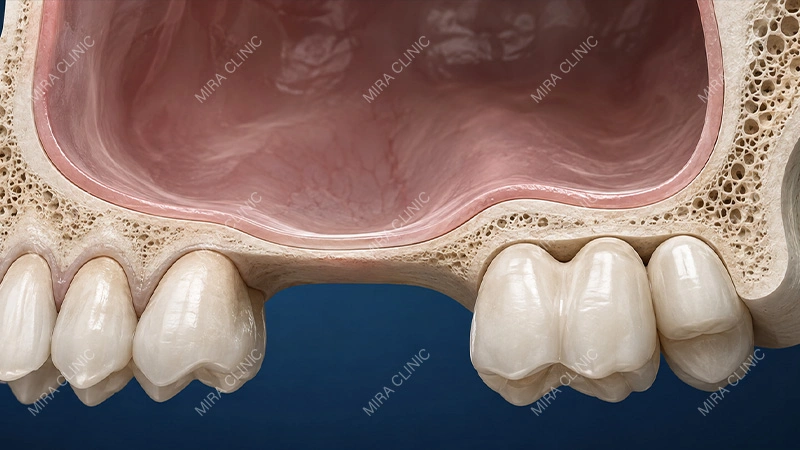
The procedure usually follows these steps:
- Local anesthesia or planned sedation is provided.
- The surgeon accesses the upper back jaw through the gum.
- A small opening is created in the side of the upper jaw.
- The sinus membrane is gently lifted.
- Bone graft material is placed under the lifted membrane.
- The area is closed and allowed to heal.
- Implants may be placed at the same visit or after healing, depending on the case.
The patient does not need to focus on the surgical instruments. What matters is understanding the purpose: the surgeon is creating more bone height in the upper jaw so the implant can have better support.
What Happens to the Sinus During the Procedure?
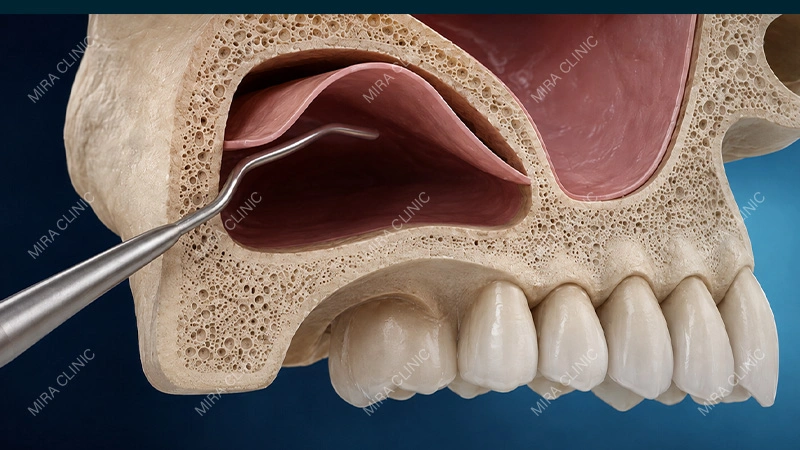
The sinus itself is not removed or replaced. The thin sinus membrane is carefully raised from below. Bone graft material is placed in the new space created under the membrane.
The goal is to protect the sinus while improving the bone foundation for implants. If the sinus membrane is damaged, if infection is present, or if the graft cannot be stabilized, the surgeon may need to modify or delay the implant plan.
Is Bone Graft Material Always Used?
Yes, an external sinus lift usually involves bone graft material because the main purpose is to increase bone volume. The amount and type of graft depend on the patient’s existing bone, sinus anatomy, implant plan, and surgeon’s decision.
No graft material is universally best for every patient. The choice should be made after imaging, medical history review, and treatment planning.
External vs Internal Sinus Lift: What Is the Difference?
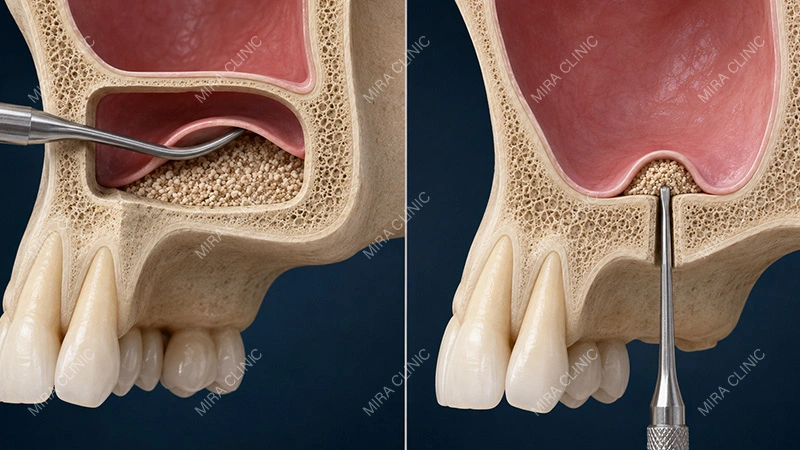
The main difference between an external and internal sinus lift is how the surgeon reaches the sinus and how much bone support is needed.
|
Factor |
Internal Sinus Lift |
External Sinus Lift |
|---|---|---|
|
Access |
Through implant site |
Side of upper jaw |
|
Typical use |
Smaller bone increase |
Larger bone increase |
|
Procedure extent |
More limited |
More extensive |
|
Implant timing |
Same day or delayed |
Same day or delayed |
|
Recovery |
Often shorter |
May involve more swelling |
|
Suitability |
More remaining bone |
Less remaining bone |
An internal sinus lift is usually considered when there is enough remaining bone to work through the implant site. An external sinus lift is usually considered when more bone augmentation is needed or when the anatomy requires a wider access approach.
The better option depends on CBCT imaging, remaining bone height, sinus anatomy, implant position, and whether the patient needs a single implant, implant bridge, or full-arch treatment.
Can the Dental Implant Be Placed at the Same Time?
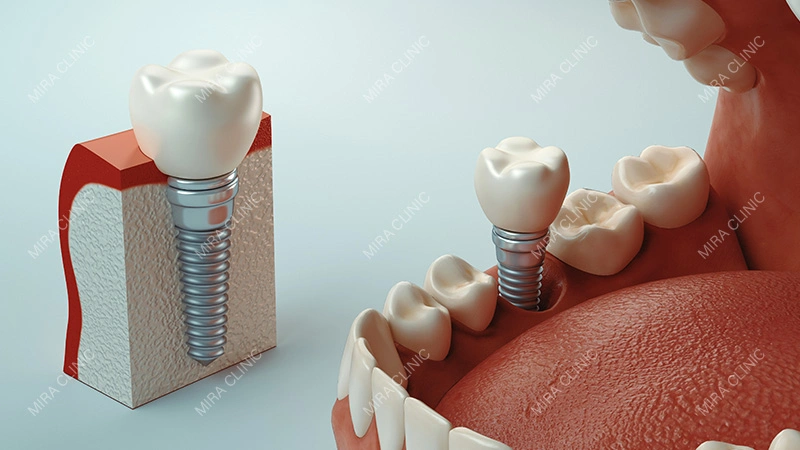
In some cases, the dental implant can be placed during the same appointment as the external sinus lift. This may be possible when there is enough native bone to hold the implant stable at the time of surgery.
Same-day implant placement may be considered when:
- Enough native bone remains for initial stability
- The sinus membrane remains intact
- There is no active infection
- The implant position is suitable
- The graft can be stabilized
- The surgeon considers the case predictable
In other cases, the dentist may recommend a staged approach. This means the sinus lift and bone graft are completed first, then the area is allowed to heal before the implant is placed later.
A delayed approach may be safer when bone is very limited, the graft volume is larger, or implant stability cannot be achieved at the first appointment.
This decision affects the treatment timeline, so patients should ask clearly whether their implant will be placed at the same visit or after graft healing.
What Are the Risks, Recovery, and Healing Time?
An external sinus lift is a surgical procedure, so patients should understand both recovery expectations and possible risks before treatment.
During the procedure, anesthesia is used so the patient should not feel sharp pain. Some pressure or vibration may be felt. After the procedure, swelling, tenderness, bruising, mild bleeding, congestion, or sinus pressure may occur.
Possible risks include:
- Sinus membrane perforation
- Infection
- Sinusitis
- Graft movement or failure
- Bleeding
- Swelling
- Delayed healing
- Implant instability
- Need for an additional procedure
These risks do not mean the procedure is unsafe for every patient. They mean the case must be planned carefully and monitored properly.
After treatment, patients may be advised to avoid:
- Forceful nose blowing
- Smoking
- Strenuous exercise
- Drinking through a straw
- Disturbing the surgical site
- Suppressing or forcing sneezes incorrectly
- Ignoring prescribed medication instructions
Patients should always follow the surgeon’s own aftercare instructions because the routine can vary depending on graft size, implant placement, sinus condition, and medical history.
Patients should contact their treating clinician if they notice worsening pain, heavy or persistent bleeding, fever, unusual drainage, severe swelling, fluid passing between the mouth and nose, symptoms of sinus infection, implant movement, or symptoms that worsen instead of improving.
Healing time varies. Soft-tissue recovery may begin within the first days and weeks, but bone graft integration and implant healing take longer. The final crown, bridge, or full-arch restoration is usually planned after the surgeon confirms that the implant and graft area are ready.
Who Is a Suitable Candidate for an External Sinus Lift?
A suitable candidate for an external sinus lift is usually a patient who needs dental implants in the upper back jaw but does not have enough bone under the sinus for stable implant placement.
A patient may be suitable if they have:
- Missing upper back teeth
- Limited bone height under the sinus
- Need for dental implants in the upper jaw
- Healthy or manageable sinus condition
- Acceptable gum and bone health
- No uncontrolled infection
- Realistic expectations
- Ability to follow aftercare instructions
An external sinus lift may not be the best option if the patient has active sinus infection, uncontrolled medical conditions, heavy smoking-related risk, poor oral hygiene, unsuitable anatomy, or a treatment plan that can be solved with a less extensive approach.
At Mira Clinic, sinus lift planning is based on X-rays, CBCT imaging, bone condition, sinus anatomy, implant brand selection, and the final restoration plan. The goal is to decide whether the patient needs an internal sinus lift, external sinus lift, staged grafting, immediate implant placement, or a different implant approach.
Before treatment, patients should ask:
- Why do I need an external sinus lift?
- How much bone do I currently have?
- Can I have an internal sinus lift instead?
- Will graft material be used?
- Can the implant be placed at the same appointment?
- How long will healing take?
- What risks apply to my case?
- What should I avoid after surgery?
- What is included in the treatment cost?
- When can the final crown or bridge be placed?
These questions help patients understand why the procedure is being recommended, how it affects cost, and how it changes the dental implant timeline.
Read more: Internal Sinus Lift Procedure: Why It Is Done and What Patients Should Expect