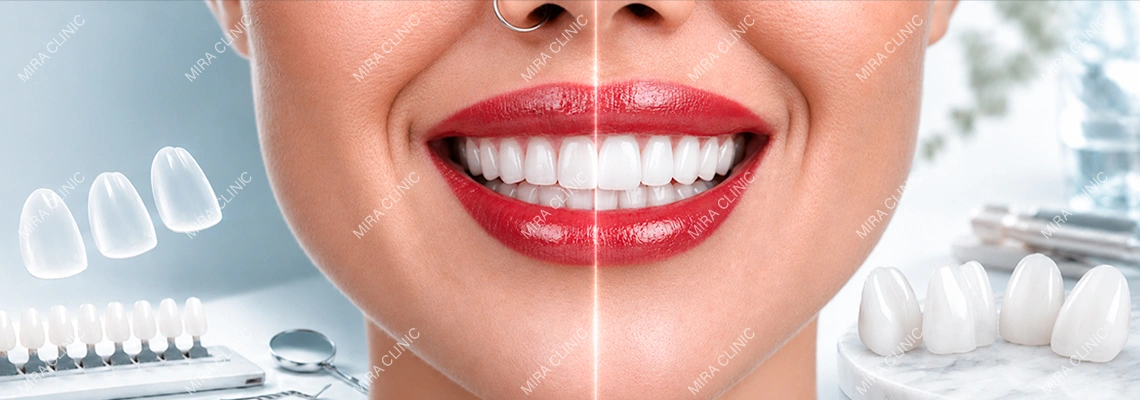
Many patients first hear the word Lumineers when they start looking for a smile upgrade that sounds more conservative than traditional veneers. The appeal is immediate: thinner veneers, less drilling, and a cosmetic change that seems simpler and more comfortable. But once patients look closer, the real questions begin. What are Lumineers exactly? Who are they actually suitable for? Can they create a true Hollywood Smile, or are they better for smaller cosmetic changes? And how do they compare with E-max veneers, which are often recommended in more complete smile design cases?
That is why this topic matters. Most people searching for Lumineers are not only looking for a definition. They are trying to decide whether Lumineers are the right cosmetic route for their own teeth. In other words, they want three answers at once: what Lumineers are, whether they are a good option for them, and whether Lumineers or E-max makes more sense for the smile result they want.
- Quick Answer: What Are Lumineers?
- What Are Lumineers?
- How Do Lumineers Work?
- Who Is a Good Candidate for Lumineers?
- Who Is Not a Good Candidate for Lumineers?
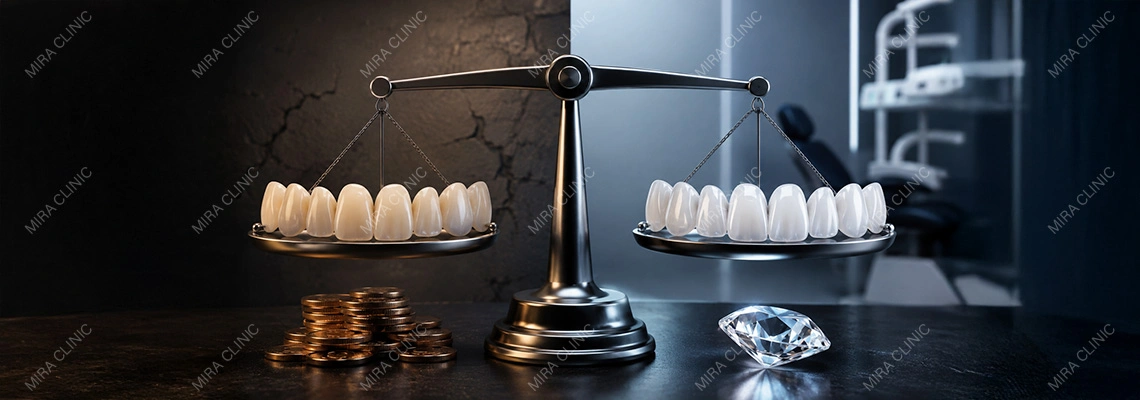
- Lumineers vs E-max Veneers: What Is the Difference?
- Lumineers vs E-max for a Hollywood Smile: Which Makes More Sense?
- Can Lumineers Be Used in a Hollywood Smile?
- What Problems Can Lumineers Fix — and What Can They Not Fix Well?
- Lumineers vs E-max Veneers
- What Dentists Consider Before Recommending Lumineers
- Final Direction: How to Make the Right Decision About Lumineers
Quick Answer: What Are Lumineers?
Lumineers are ultra-thin porcelain veneers designed for conservative cosmetic smile correction. They are usually presented as a minimal-prep or no-prep veneer option, which means that in selected cases they may require little or no enamel reduction compared with more conventional veneer approaches. They can work well for patients with mild spacing, small shape concerns, or limited discoloration, especially when the goal is a subtle and conservative smile enhancement.
However, Lumineers are not ideal for every case. They are often compared with E-max veneers because E-max usually offers more control over shape, color masking, and broader smile redesign. This becomes especially important when the patient is considering a full Hollywood Smile, not just a light cosmetic refresh.
What Are Lumineers?
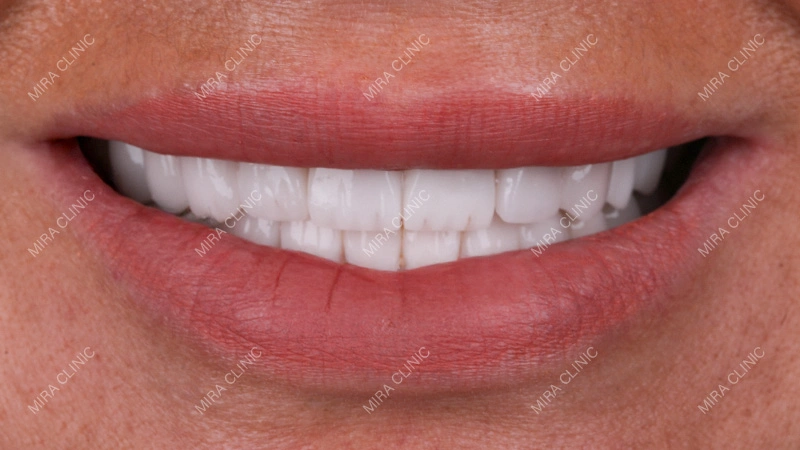
Lumineers are a branded type of very thin porcelain veneer placed over the front surface of the teeth to improve appearance. They are often discussed as a more conservative alternative to traditional veneers because they are designed to be thinner and, in selected patients, may require less tooth reduction.
How Lumineers veneers are designed
The main idea behind Lumineers is conservative smile enhancement. Rather than heavily reshaping the tooth, the treatment is usually positioned as a way to add a refined ceramic layer over the visible front surface.
Ultra-thin porcelain shells
Lumineers are known for being thinner than many conventional veneers, which is why they are often associated with minimal-prep cosmetic treatment.
Minimal-prep or no-prep philosophy
Their marketing appeal is strongly tied to the idea that they can sometimes be placed with very limited tooth preparation. This is one of the main reasons patients who fear aggressive drilling become interested in them.
Bonded to the front surface of teeth
Like other veneer systems, they are bonded to the visible front side of the teeth to improve color, shape, symmetry, and overall smile appearance.
What Lumineers are meant to improve
Lumineers are usually best understood as a cosmetic correction option for selected mild-to-moderate smile concerns.
Minor discoloration
They can improve the appearance of teeth that are slightly discolored and need a brighter or cleaner look.
Small gaps
They may work well in cases where the patient has mild spacing and wants a fuller, more balanced smile line.
Slight shape irregularities
Small differences in tooth shape or outline can often be improved with Lumineers.
Small chips or mild wear
They may also help restore a smoother, more polished front-tooth appearance in cases of minor edge wear or small cosmetic damage.
Why Lumineers became popular
Lumineers became popular because they speak directly to one of the biggest patient fears in cosmetic dentistry: losing too much natural tooth structure.
Conservative treatment appeal
Patients like the idea of improving the smile without immediately thinking of aggressive preparation.
Less fear of drilling
For many patients, this is the strongest emotional reason they start researching Lumineers in the first place.
Fast cosmetic smile upgrade
They are often viewed as a way to make a visible cosmetic improvement without feeling that the treatment has become too invasive.
How Do Lumineers Work?
Lumineers work by covering the visible front surface of selected teeth with thin porcelain shells designed to improve color, shape, and balance. But although the concept sounds simple, good results depend heavily on planning and case selection.
The consultation and smile assessment stage
No patient should be guided into Lumineers based only on the idea that thinner automatically means better. The first step should always be proper smile assessment.
Tooth size
The dentist evaluates whether the current tooth size allows for an added ceramic layer without making the teeth look too bulky.
Color
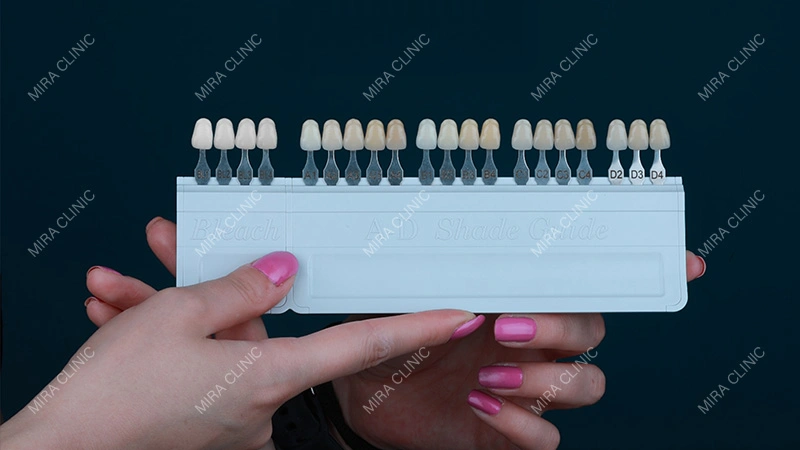
The starting tooth color matters because very dark teeth may be harder to mask with ultra-thin material.
Alignment
Mildly well-positioned teeth are usually easier candidates than teeth with visible crowding or projection.
Gum display
The gums matter because the final result is judged in the full smile, not in the tooth alone.
The preparation and impression stage
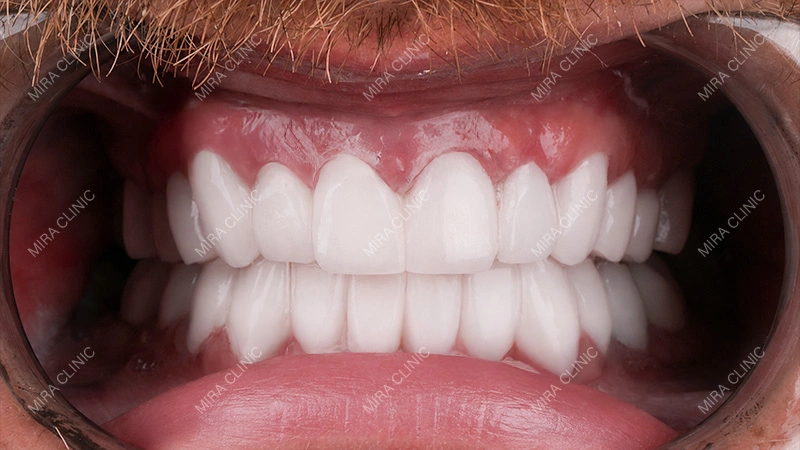
One of the most important things patients should understand is that “no-prep” does not mean “perfect for everyone.”
Why some cases need little or no enamel removal
If the teeth are already small, slightly inward, or have the right anatomy, very conservative placement may be possible.
Why some cases still need adjustment
If the teeth already project outward, or if more control over contour is needed, some preparation may still be necessary to avoid a bulky result.
Why “no-prep” does not mean “right for everyone”
A treatment can be conservative in theory and still be the wrong choice in practice if it creates an unnatural final smile.
The bonding and final fit stage
Once the design is finalized, the Lumineers are bonded to the teeth and checked carefully.
Shade selection
The chosen shade must work with the patient’s goals and with what the thin ceramic can realistically achieve.
Fit and bite check
The veneers must sit well not only visually, but also functionally in the bite.
Smile review
The final evaluation should consider the full smile, not just how each tooth looks in isolation.
Who Is a Good Candidate for Lumineers?
Lumineers are not a universal cosmetic solution. They are usually strongest in carefully selected cases where conservative correction is a real advantage.
Patients with small, relatively well-positioned teeth
Patients who already have a relatively favorable starting point often benefit most from Lumineers.
Mild spacing
Small gaps can often be improved effectively without needing a more aggressive veneer design.
Small shape corrections
If the issue is mostly about refinement, Lumineers can be a reasonable option.
Minimal structural damage
They are more suitable when the teeth do not require major rebuilding or complex reshaping.
Patients who want the most conservative cosmetic route
Some patients are not searching for the boldest transformation. They are looking for a lighter-touch cosmetic option.
Less enamel reduction
This is one of the biggest reasons patients explore Lumineers.
Less invasive treatment mindset
Patients who are highly sensitive about preserving natural tooth structure often feel more comfortable starting with this discussion.
Fear of aggressive drilling
For anxious cosmetic-dentistry patients, this can be the deciding emotional factor.
Patients who want a subtle smile refresh rather than a dramatic redesign
Lumineers often make more sense when the desired result is elegant and moderate, not majorly transformative.
Natural enhancement
They can suit patients who want their smile to look better without looking radically changed.
Soft cosmetic correction
This is especially relevant when the smile concerns are mild.
Lighter touch aesthetics
Patients who do not want a highly stylized or strongly uniform result may appreciate this route more.
Read more: Mini Hollywood Smile in Turkey: 4 to 8 Strategic Veneers
Who Is Not a Good Candidate for Lumineers?
This is one of the most important parts of the article because not every patient who likes the idea of Lumineers is actually suited to them.
Patients with darker staining that needs stronger masking
Ultra-thin veneers are not always the best answer when strong masking is needed.
Deep discoloration
If the underlying tooth color is very dark, the thinness of Lumineers may limit how effectively the discoloration can be hidden.
Tetracycline-type color concerns
Cases involving strong internal staining usually need more control over opacity and masking.
Internal color problems
These situations often move the case toward alternatives that provide more coverage power.
Patients with more visible alignment or bulk issues
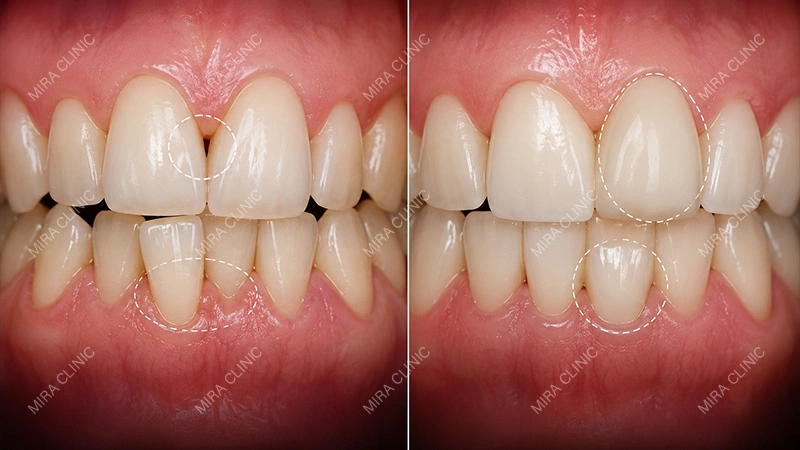
If the teeth already protrude, overlap, or need stronger contour correction, Lumineers can become less ideal.
Teeth that already project outward
Adding material without enough reduction can create a bulky look.
Crowding
Visible crowding often requires more control than ultra-thin veneers can comfortably provide.
Shape correction that needs more control
If major reshaping is needed, other veneer options often give the dentist more flexibility.
Patients who want a dramatic Hollywood Smile redesign
This is where many patients need the clearest guidance.
Bigger shape changes
A dramatic transformation usually needs more design control than Lumineers can always provide.
More control over width and length
When the smile needs major architectural change, E-max often becomes the stronger option.
More uniform smile architecture
A full Hollywood Smile usually depends on more than thinness. It depends on complete visual control.
Lumineers vs E-max Veneers: What Is the Difference?
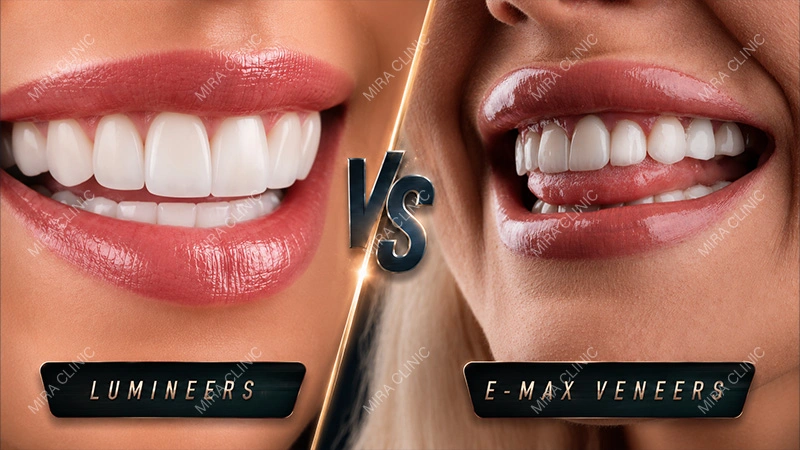
This is usually the real comparison patients are trying to make. They are not only asking, “What are Lumineers?” They are also asking, “Should I choose Lumineers or E-max?”
Material difference
The first difference is in the material concept itself.
Lumineers as a branded ultra-thin veneer concept
Lumineers are associated with a very thin, minimal-prep approach and a specific cosmetic philosophy.
E-max as lithium disilicate ceramic
E-max is a ceramic material known for combining strength and aesthetic quality, and it is widely used in modern smile design.
Why the material affects strength and aesthetics
Material choice influences translucency, masking ability, durability, and how much design freedom the dentist has.
Preparation difference
Preparation level is one of the biggest practical differences for patients.
Why Lumineers are linked to minimal prep
Their strongest marketing identity is conservative treatment.
Why E-max often allows more design control
Because E-max cases often involve more controlled preparation, they can offer greater freedom in reshaping and color correction.
How prep level changes the final look
A more controlled preparation can help prevent bulk and create a more balanced emergence profile in selected cases.
Aesthetic difference
The final smile effect can differ significantly between the two options.
Soft subtle enhancement
Lumineers are usually stronger in subtle, conservative cosmetic improvement.
Masking power
E-max usually offers better masking when the dentist needs to manage stronger discoloration.
Shape refinement
E-max often gives more room for advanced smile architecture and contour refinement.
Light reflection and translucency
Both can look attractive, but the case requirements determine which material performs better aesthetically.
Durability and versatility difference
This is not just about strength in abstract terms. It is about what each option can handle in real treatment design.
When E-max is often preferred
E-max is often preferred when the case involves stronger color correction, more shape change, or a broader Hollywood Smile design.
When Lumineers are enough
Lumineers can be enough when the patient’s starting point is already favorable and the correction needed is relatively mild.
Why the better option depends on the case
There is no honest universal winner. The better option is the one that matches the tooth position, color, desired result, and design scope.
Lumineers vs E-max for a Hollywood Smile: Which Makes More Sense?
This is the section many readers are really searching for, even when they start with the question “what are Lumineers?”
When Lumineers can fit a Hollywood Smile plan
Lumineers can fit some forms of Hollywood Smile planning, but usually on the more conservative end of the spectrum.
Subtle Hollywood Smile
If the patient wants a lighter and less dramatic version of a Hollywood Smile, Lumineers may be suitable.
Small spacing cases
Cases with minor spacing and already favorable tooth alignment can respond well to this approach.
Patients wanting less enamel reduction
For some patients, preserving tooth structure is a core value, and that shifts the discussion toward Lumineers.
When E-max usually fits a Hollywood Smile better
In broader and more transformative smile design, E-max often gives the dentist more control.
Stronger smile redesign
When the patient wants a clearer before-and-after transformation, E-max often becomes the more flexible choice.
Better color control
For stronger whitening or masking goals, E-max is often easier to work with.
More refined symmetry and contour
A Hollywood Smile is usually about much more than whiteness. It often depends on line, balance, and uniformity across the visible smile zone.
Broader facially driven smile design
When the smile is being designed around facial harmony, lip line, and overall symmetry, more versatile materials often perform better.
Why Hollywood Smile planning is not just about whiteness
A common mistake is assuming Hollywood Smile means “the whitest possible teeth.”
Tooth proportion
The size and shape of the teeth matter greatly.
Facial harmony
The smile has to fit the face, not only the shade chart.
Lip support
The visual relationship between the teeth and lips affects the result strongly.
Gum balance
Healthy and balanced gums remain essential to the overall aesthetic.
Read more: E-max vs Zirconia Veneers: 2026 Clinical Comparison
Can Lumineers Be Used in a Hollywood Smile?
Yes, they can be used in some Hollywood Smile cases, but not in all of them.
Yes, but not in every type of Hollywood Smile case
The key issue is not whether Lumineers are “good” or “bad.” It is whether they can achieve the specific type of Hollywood Smile the patient wants.
Subtle smile upgrade cases
If the patient wants a clean, brighter, more refined smile without a dramatic overhaul, Lumineers may work.
Mild color and shape enhancement
They fit better when the cosmetic correction is moderate rather than extensive.
Patients with already favorable tooth position
The better the starting point, the more likely Lumineers can work successfully.
Why some Hollywood Smile cases outgrow Lumineers
Some cases need more control than thin no-prep or minimal-prep veneers can provide.
Need for more shape correction
Broader design changes often require more than a thin additive approach.
Need for stronger brightness control
The thinner the ceramic, the more limited the masking power can be in some cases.
Need for more complete smile architecture
When the smile needs full visual redesign, E-max often fits more comfortably within that treatment goal.
How dentists decide whether Lumineers can achieve the look safely
The right answer depends on real clinical analysis, not only patient preference.
Smile width
A wider visible smile may require more design control.
Tooth projection
Already-prominent teeth are an important caution point.
Masking needs
Color correction demands must be assessed honestly.
Occlusion and bite
Aesthetic success must still function comfortably in the mouth.
Read more: Biomimetic Dentistry in Turkey: How Mira Clinic Preserves Your Natural Enamel
What Problems Can Lumineers Fix — and What Can They Not Fix Well?
This is often the simplest way to help the reader understand candidacy.
What Lumineers can improve well
Minor chips
Small edge defects can often be improved attractively.
Small gaps
Mild spacing is one of the most natural indications.
Mild discoloration
They can brighten and refine selected mild color concerns.
Subtle shape irregularities
They work well when the correction needed is more cosmetic than structural.
What Lumineers may struggle to fix
Severe crowding
They are usually not the best answer when alignment problems are significant.
Dark staining
Strong internal discoloration often requires more masking power.
Teeth that are already bulky
Adding material to already full teeth can create an artificial result.
Major bite or alignment issues
These cases usually need a broader treatment plan.
Why candidacy matters more than trend appeal
This may be the most important patient message in the entire article.
Conservative does not always mean superior
A more conservative treatment sounds attractive, but it is not automatically the best clinical choice.
Wrong case selection can create a bulky or artificial look
The biggest risk with Lumineers is often not the concept itself, but using them in the wrong case.
Lumineers vs E-max Veneers
|
Factor |
Lumineers |
E-max Veneers |
|---|---|---|
|
Main concept |
Ultra-thin, minimal-prep veneer option |
Lithium disilicate ceramic veneer |
|
Tooth preparation |
Often minimal or no-prep in selected cases |
Often conservative prep with more design control |
|
Best for |
Mild cosmetic corrections |
Wider range of smile design cases |
|
Color masking |
More limited in stronger discoloration cases |
Usually stronger masking and shade control |
|
Shape control |
More limited in some cases |
Greater contour and smile-design flexibility |
|
Hollywood Smile use |
Suitable in selected subtle cases |
Often preferred for fuller smile redesign |
|
Main risk |
Bulk in the wrong case |
More preparation may be needed depending on the plan |
This comparison shows the real decision clearly. Lumineers are more conservative. E-max is usually more versatile. The correct choice depends on the teeth, not the trend.
What Dentists Consider Before Recommending Lumineers
A good cosmetic dentist does not recommend Lumineers simply because the patient asks for them by name.
Tooth size and projection
Will added thickness create bulk?
This is one of the first questions the dentist has to answer.
Is there enough room for a natural result?
The naturalness of the final smile depends heavily on this.
Color and masking needs
Can the stain be covered with ultra-thin material?
Not every discoloration is suitable for Lumineers.
Will a brighter result still look clean and believable?
This matters especially in patients who want a Hollywood Smile effect.
Smile design goals
Subtle refresh
Lumineers often fit this goal well.
Complete makeover
This may shift the recommendation toward E-max.
Natural-looking white vs dramatic transformation
The more dramatic the desired change, the more the discussion tends to move toward more versatile veneer materials.
Long-term maintenance and wear
Bite
Function affects long-term success.
Grinding
Patients who grind may need a more carefully structured plan.
Edge durability
Fine edges and long-term stability matter.
Patient expectations
Even a technically good result can feel wrong if expectations were not aligned from the beginning.
Read more: Hollywood Smile Revision: How to Fix or Replace Failing Veneers in Turkey
Final Direction: How to Make the Right Decision About Lumineers
The real purpose of this article is not only to answer the question “what are Lumineers?” It is to guide the patient through the decision that usually comes right after that question.
The first step is understanding the basics. Lumineers are ultra-thin cosmetic veneers designed for conservative correction. The second step is self-qualification. Are your teeth actually suitable for this type of treatment? And the third step is comparison. If you want a broader, stronger, more controlled smile transformation, would E-max veneers serve you better?
That is why the strongest patient decision is not based on brand name alone. It is based on the balance between:
- conservative treatment
- natural appearance
- color control
- shape flexibility
- and the type of Hollywood Smile you actually want
For the right patient, Lumineers can be an elegant and minimally invasive solution. But for the wrong patient, they can lead to compromise, bulk, or disappointment. The best result comes when the treatment is chosen for the case, not just for the label.
Read more: In-House Dental Lab vs. Outsourcing: Why Precision Starts Inside the Clinic