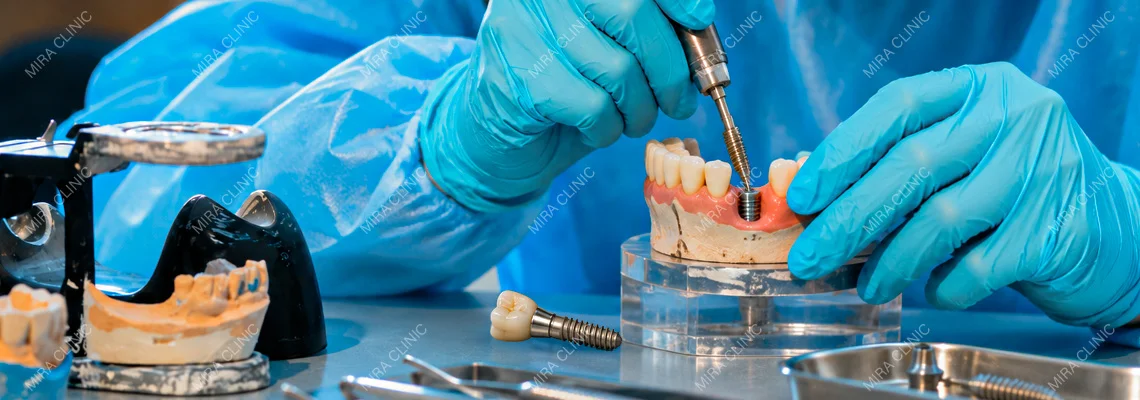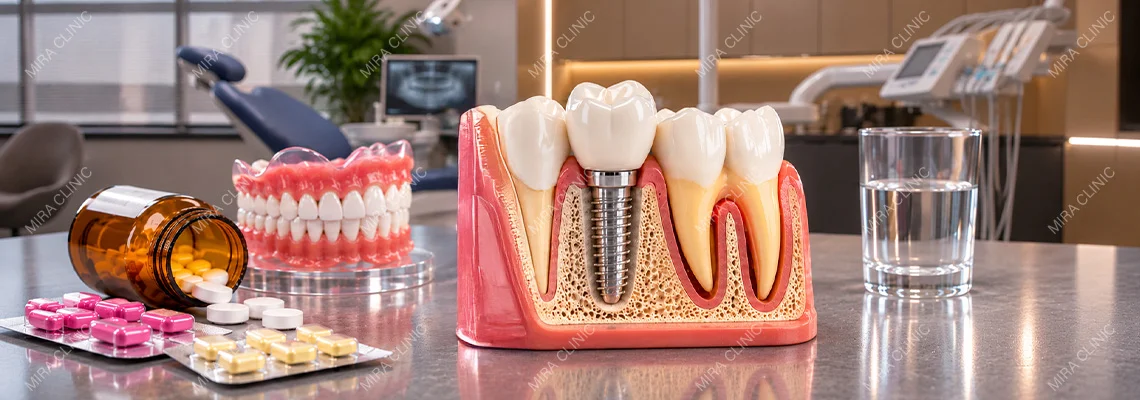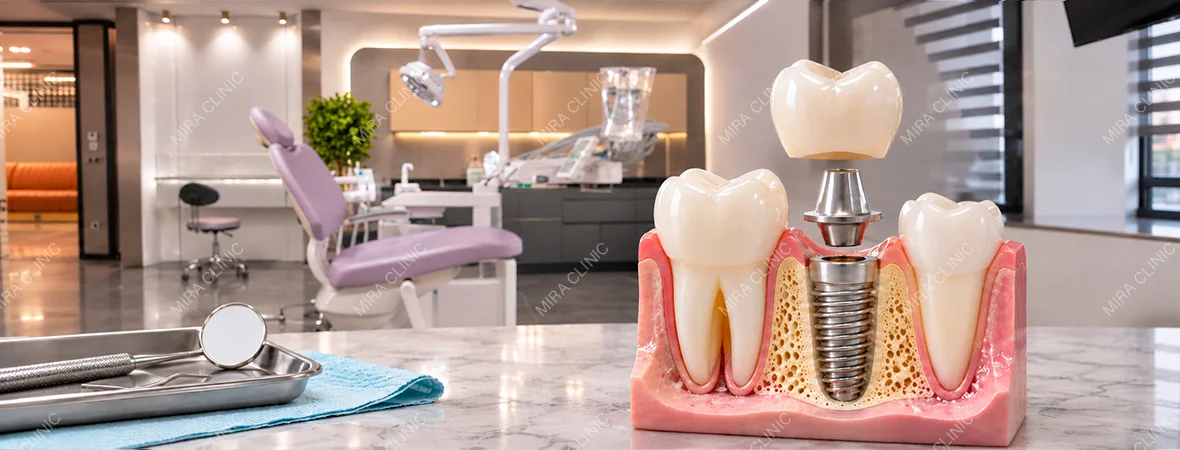
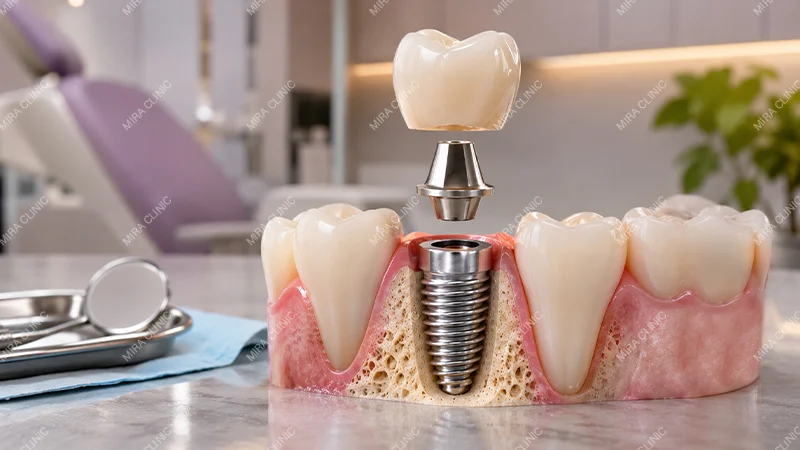
A dental implant restoration typically consists of three main components: the implant body, the abutment, and the dental crown. The implant body is placed inside the jawbone to provide support, the abutment connects the implant to the restoration, and the crown replaces the visible part of the missing tooth. Together, these components create a functional tooth replacement designed to restore chewing and appearance.
Each component has a specific role in dental implantology. Understanding how they connect explains why dental implant treatment involves both surgical placement and restorative planning.
What Are the Three Main Components of a Dental Implant?
A complete implant-supported tooth restoration is designed to replace a missing tooth through three interconnected components.
1. Dental Implant Body
The implant body is the component surgically inserted into the jawbone.
Most dental implants are manufactured from titanium or titanium alloys, although zirconia implants are also available.
The implant acts as an artificial tooth-root substitute, providing support for the final restoration.
Following placement, the surrounding bone heals and establishes a stable connection with the implant surface through a biological process called osseointegration.
The implant's position, diameter, and length are selected according to the available jawbone and the planned restoration.
2. Dental Implant Abutment
The abutment is the connecting component between the implant body and the dental crown.
It may be manufactured from titanium, zirconia, or another suitable restorative material.
Depending on the implant system, the abutment can be attached after an initial healing period or incorporated into the restoration at another treatment stage.
Its primary function is to provide a secure connection and suitable support for the artificial tooth.
The abutment's design also influences the crown's position, appearance, and relationship with the surrounding gum tissue.
3. Dental Implant Crown
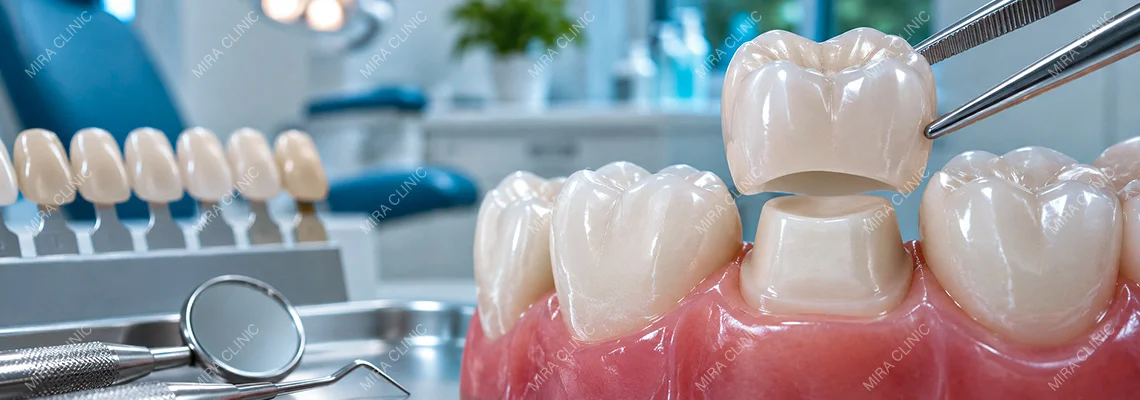
The dental crown is the visible restoration that replaces the missing tooth.
It is designed to reproduce the tooth's shape, size, and chewing function.
Implant-supported crowns are commonly manufactured from zirconia, lithium disilicate, or other suitable dental materials.
The crown can be attached through a screw-retained or cement-retained restoration, depending on the implant system and clinical requirements.
Unlike a conventional crown, which covers a prepared natural tooth, an implant-supported crown receives its support from the implant and associated prosthetic components.
How Do the Implant, Abutment, and Crown Work Together?
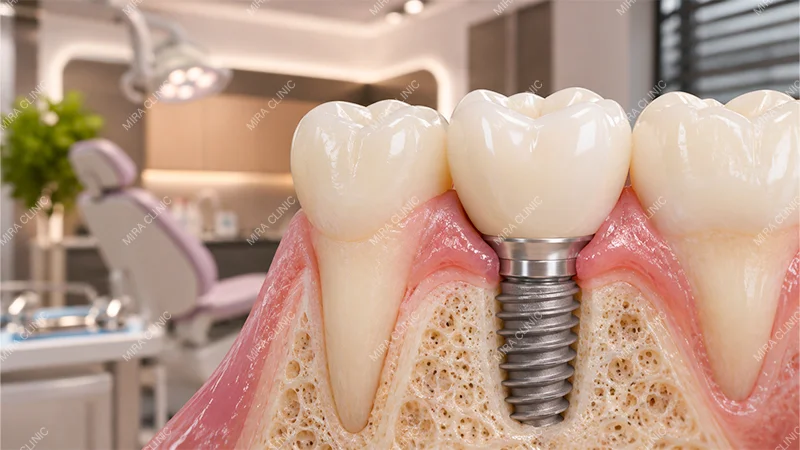
The three components form a connected restorative system.
When a patient chews, forces travel through the dental crown, the abutment, and the implant body into the surrounding jawbone.
This explains why the implant's surgical position must be planned according to the final crown.
An implant may integrate successfully with the bone but still require restorative adjustments if its position or connection does not adequately support the intended tooth.
Correct component selection, bite alignment, and prosthetic design are therefore essential for comfortable function.
Are All Dental Implant Components Placed at the Same Time?
Not necessarily. Dental implant treatment may involve several stages.
First, the dentist places the implant body into the jawbone. The surrounding bone then requires time to heal and integrate with the implant.
Depending on the treatment protocol, an abutment or temporary restoration may be connected during surgery or at a later appointment.
The definitive crown is fitted when the clinical conditions are appropriate.
Some patients qualify for immediate provisional restoration, while others require a longer healing period.
The treatment schedule depends on implant stability, bone conditions, and restorative requirements.
Why Does Each Dental Implant Component Matter?
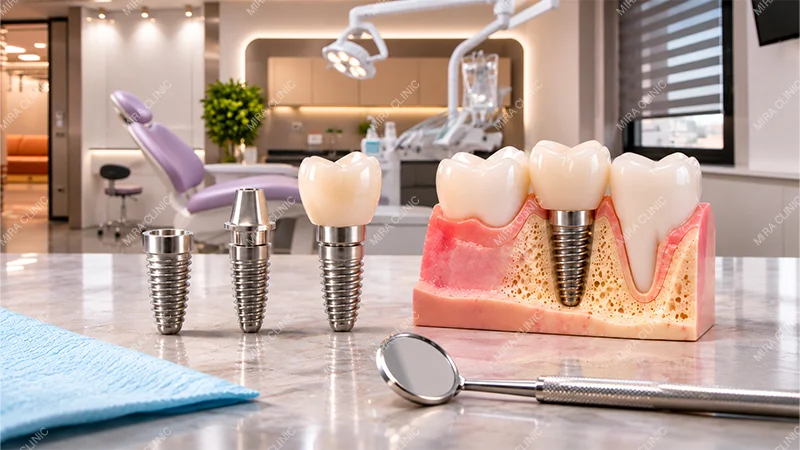
A dental implant restoration functions as a complete system rather than three independent parts.
The implant body provides support within the bone, the abutment establishes the connection, and the crown restores the missing tooth's visible structure and function.
Problems with any component can affect the restoration. For example, an abutment screw may loosen, a crown may fracture, or inflammation may develop around the implant.
Regular dental examinations help monitor both the surrounding tissues and the prosthetic components.
Understanding these roles is fundamental to implantology because successful tooth replacement requires coordination between implant surgery, bone integration, and restorative dentistry.
Read more: Implantology in Dentistry: The Science of Dental Implants