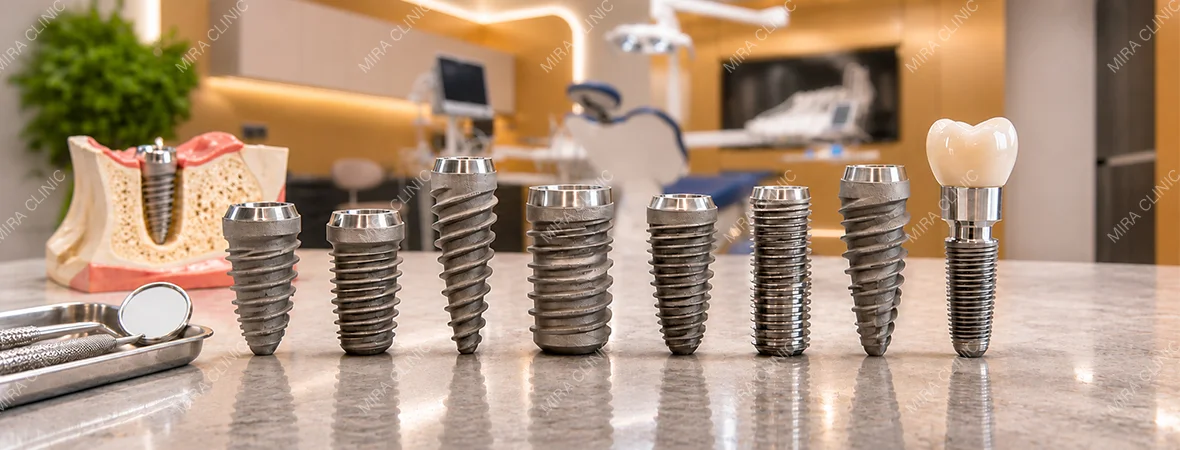
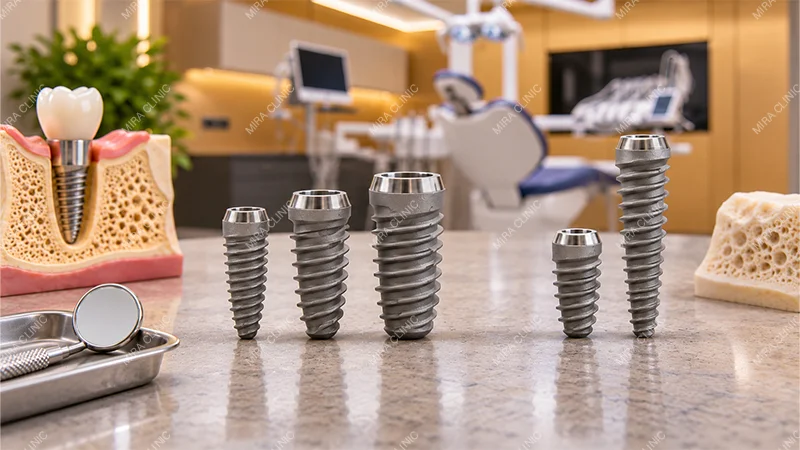
Dental implant shapes and designs influence how an implant achieves stability, interacts with the jawbone, and distributes chewing forces. The main implant body shapes are tapered (conical) and cylindrical (parallel-walled). Dental implants also differ in diameter, length, thread geometry, and the connection between the implant and abutment. Each feature has a specific mechanical function, and the most suitable design depends on the available bone and planned restoration.
Understanding these differences explains why dental implants are manufactured in different forms rather than using one universal design for every patient.
What Are the Main Dental Implant Shapes?
Dental implant shape refers to the external geometry of the implant body placed inside the jawbone.
Tapered Dental Implants
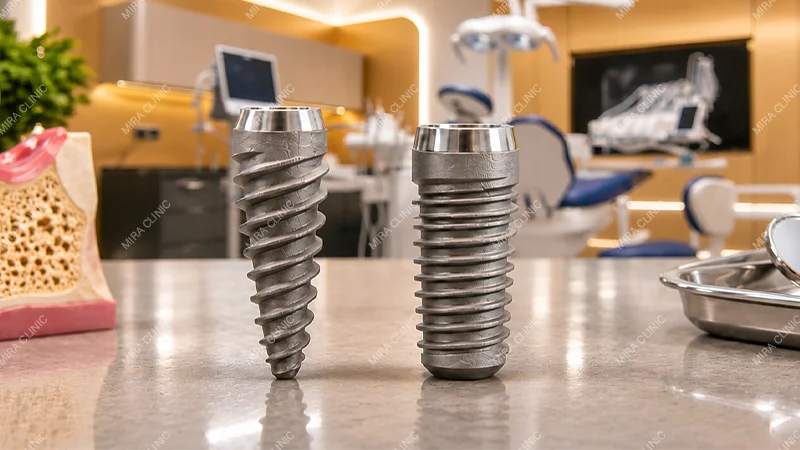
Tapered implants gradually narrow toward their lower end, resembling the shape of a natural tooth root.
Their geometry may help achieve primary stability through controlled engagement with the surrounding bone.
They can be useful in selected situations involving extraction sockets or limited anatomical space.
However, excessive compression of surrounding bone can be undesirable, making surgical preparation and bone quality important considerations.
Cylindrical Dental Implants
Cylindrical implants, also called parallel-walled implants, maintain a relatively consistent diameter along most of their body.
They engage the surrounding bone through their external surfaces and thread geometry.
Their design may offer advantages in selected bone conditions and surgical approaches.
Neither tapered nor cylindrical implants are universally superior. Both can achieve successful clinical outcomes when appropriately selected and placed.
How Do Implant Diameter and Length Affect Stability?
Dental implants are available in different diameters and lengths to accommodate anatomical and restorative requirements.
Dental Implant Diameter
Implant diameter determines the width of the implant body.
A wider implant can provide greater surface area and may influence how chewing forces are distributed to the surrounding bone.
However, wider implants require sufficient jawbone width and suitable spacing from adjacent anatomical structures.
Narrow-diameter implants may be considered where space is limited, but they must be appropriate for the expected mechanical demands.
Dental Implant Length
Implant length determines how far the implant extends into the jawbone.
Longer implants can provide additional bone contact when sufficient bone height is available.
Short implants may be considered in selected cases with limited vertical bone, potentially reducing the need for certain augmentation procedures.
However, longer or wider implants are not automatically better. Implant dimensions must match bone anatomy, surgical safety, and the planned restoration.
What Is the Role of Dental Implant Threads?
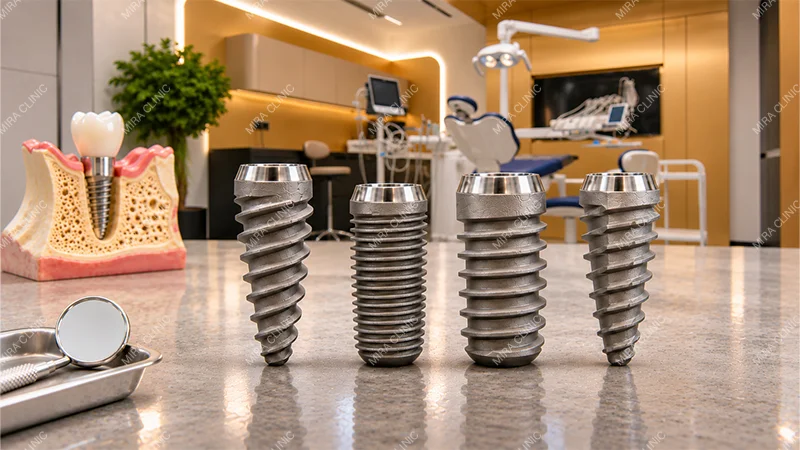
Most conventional dental implants have threads along their external surface.
These threads contribute to mechanical engagement with the jawbone during placement and influence how forces are transferred through the implant.
Thread Shape, Depth, and Pitch
Dental implant threads differ in several characteristics:
- Thread shape: Includes V-shaped, square, buttress, and other geometries.
- Thread depth: Describes how far the thread extends from the implant body.
- Thread pitch: Refers to the distance between adjacent threads.
- Thread distribution: Describes how threads are arranged along the implant surface.
These characteristics influence insertion mechanics, primary stability, and local stress distribution.
For example, deeper threads may provide different mechanical engagement in lower-density bone, while other thread configurations may be more appropriate for denser bone.
The optimal thread design depends on multiple factors rather than one feature alone.
How Do Dental Implant Connections Differ?
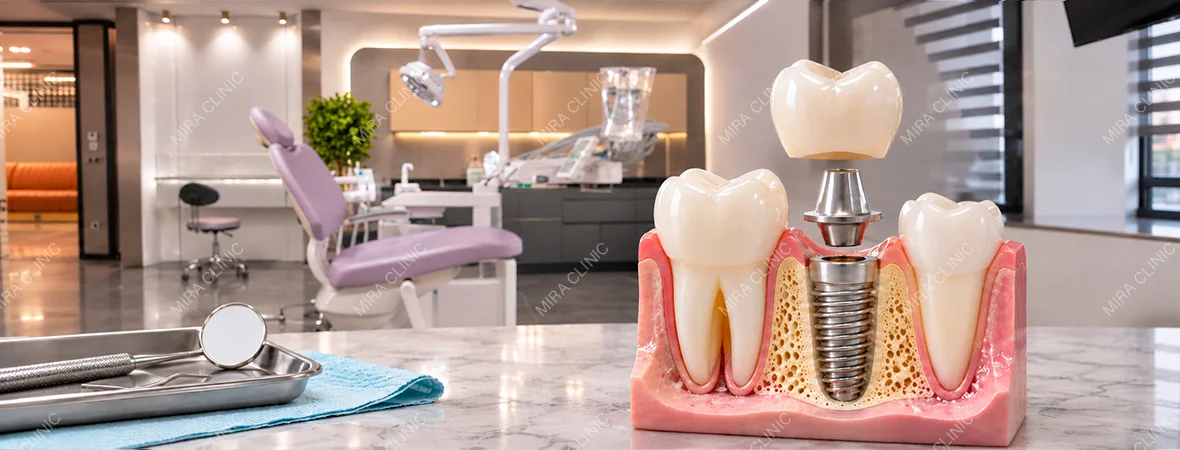
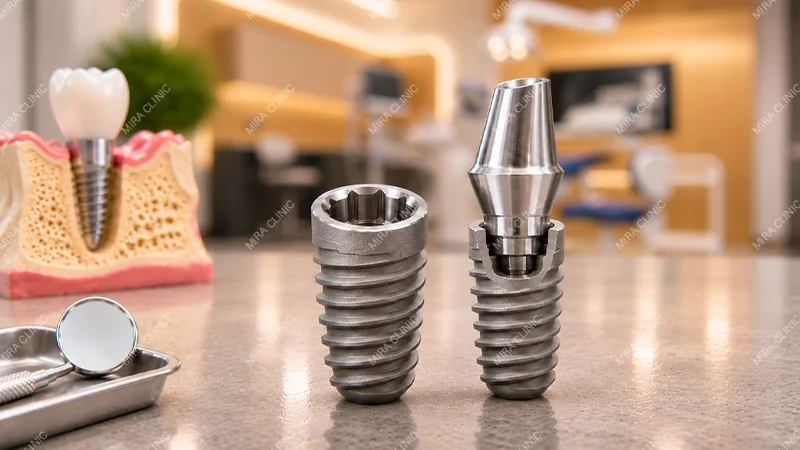
The implant connection is the interface between the implant body and the abutment that supports the final restoration.
Connection design affects component stability, positioning, and how mechanical forces pass through the restorative system.
External Connections
External connections use a connecting structure positioned above the implant platform.
They have a long history of clinical use but may have different mechanical behavior from modern internal connection systems.
Internal Connections
Internal connections position part of the abutment connection inside the implant body.
These designs can provide mechanical engagement and help resist certain rotational forces.
Conical Connections
Conical connections use matching tapered surfaces between the implant and abutment.
They are designed to create a stable interface and may help reduce micromovement under certain conditions.
However, connection performance also depends on manufacturing precision, screw preload, restorative design, and bite forces.
No connection type eliminates the possibility of prosthetic complications.
How Does Implant Design Affect Bone Interaction and Chewing Forces?
Implant design affects both primary stability and the mechanical environment around the surrounding bone.
Primary stability is the initial mechanical fixation achieved during surgery. It is influenced by implant geometry, bone characteristics, and the surgical technique.
After placement, biological healing establishes osseointegration, creating a stable connection between the implant surface and living bone.
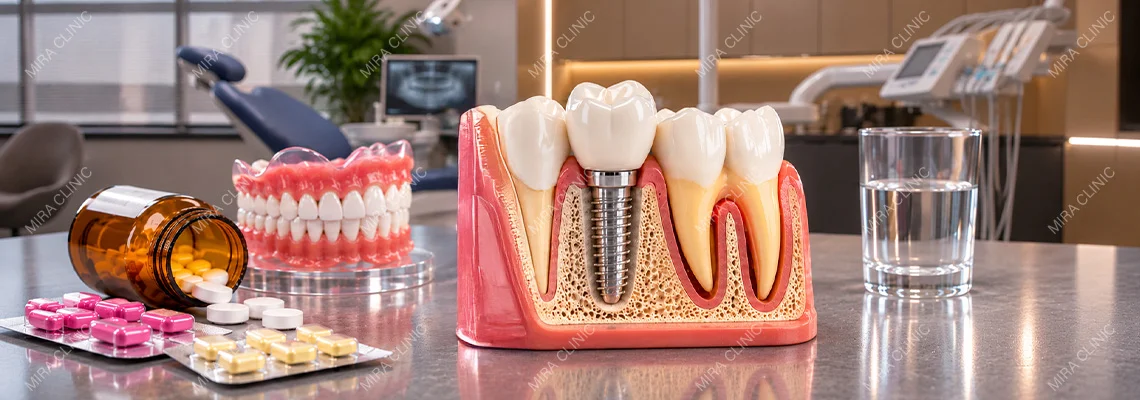
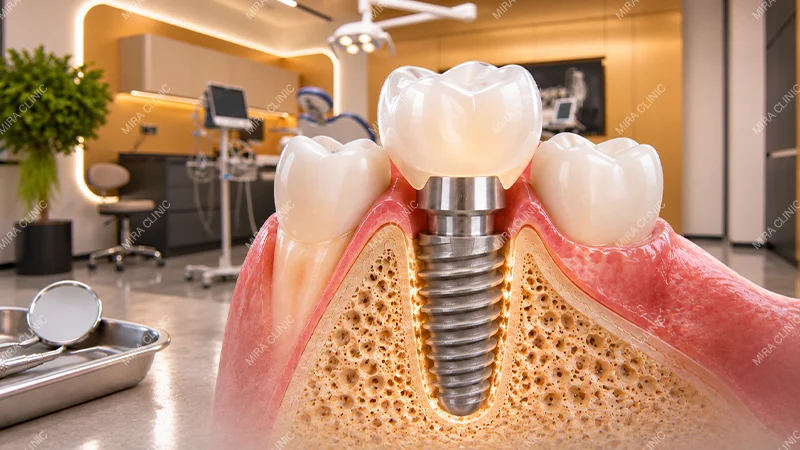
During chewing, forces travel through the crown, abutment, and implant into the jawbone.
The implant's shape, dimensions, threads, and connection contribute to how those forces are transmitted.
However, successful load distribution also depends on implant positioning, bone support, and the final prosthetic design.
Final Verdict: Why Dental Implant Design Matters
Dental implant shapes and designs serve different mechanical and anatomical purposes.
Tapered and cylindrical implants provide different approaches to bone engagement, while diameter, length, and thread geometry influence stability and force distribution. Implant connections determine how the implant and restoration function together.
The most suitable design is selected according to the patient's bone anatomy, surgical conditions, and restorative requirements.
In implantology, successful implant design is not defined by one shape or dimension, but by how its features work together with the surrounding bone and final restoration.
Read more: Implantology in Dentistry: The Science of Dental Implants