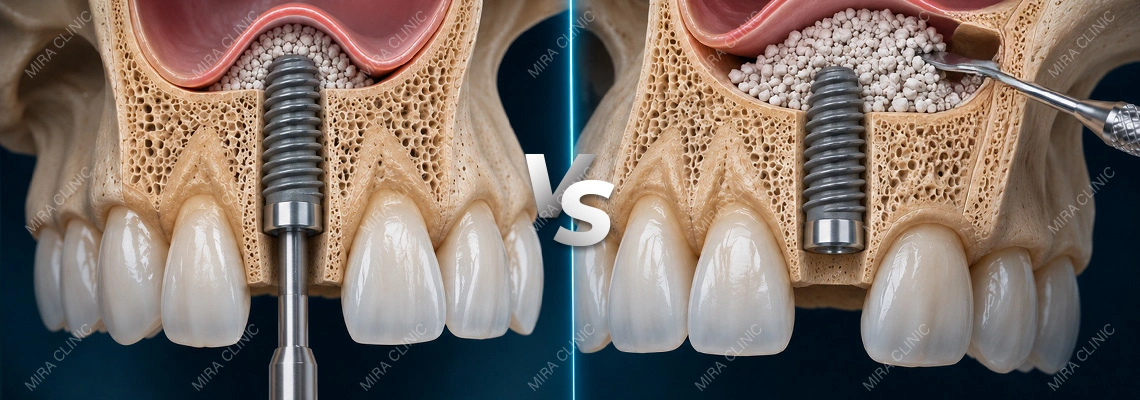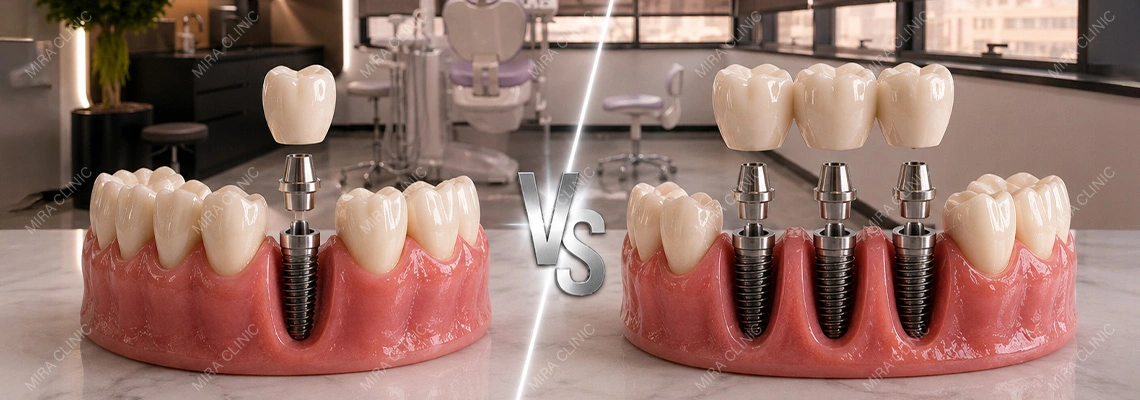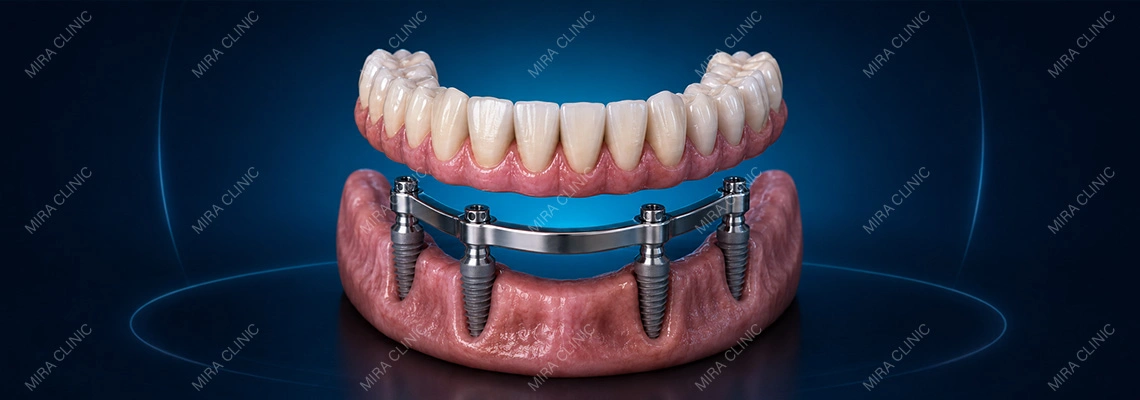
Patients may hear the term titanium bar during dental implant planning, especially when they are missing several teeth or need a full-arch restoration. The cost of dental implants with a titanium bar depends on the number of implants, implant brand, bone condition, final prosthesis type, and whether the restoration is fixed or removable. At Mira Clinic, dental implant options may range from around €320 to €1,000 per implant depending on the selected brand, while full-arch implant plans are priced according to the number of implants, abutments, final teeth, and case complexity.
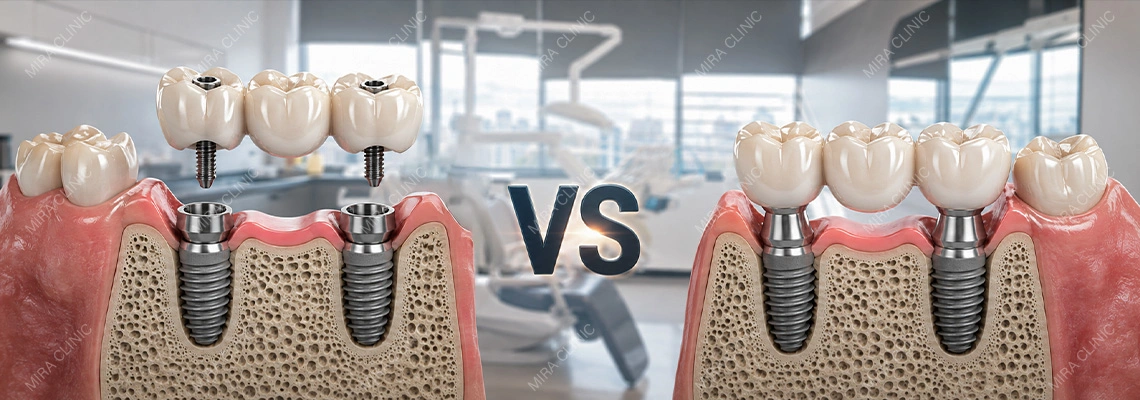
A titanium bar is not the dental implant itself. It is a custom-made support framework that may connect across several implants or abutments and help support the final denture, overdenture, or implant bridge. In simple terms, the implant is placed inside the bone, the abutment connects to the implant, the titanium bar may support the restoration, and the final teeth are placed above this system.
|
Part |
Simple Meaning |
Main Role |
|---|---|---|
|
Dental implant |
Root replacement |
Inside bone |
|
Abutment |
Connector |
Links implant to restoration |
|
Titanium bar |
Support framework |
Connects across implants |
|
Bridge or denture |
Final teeth |
Replaces missing teeth |
|
Final cost |
Case-based |
X-ray and plan |
This structure helps patients understand what is happening inside the mouth without making the treatment sound too technical.
- Dental Implants With a Titanium Bar
- What Is a Titanium Bar in Dental Implant Treatment?
- Why Is Titanium Used in Dental Implant Treatment?
- Benefits of Dental Implants With a Titanium Bar
- Who May Need a Titanium Bar?
- Fixed Bridge vs Bar-Retained Overdenture
- Titanium Bar vs Multi-Unit Abutment
- Is a Titanium Bar the Same as an Implant Bridge?
- How Is a Titanium Bar Made and Fitted?
- Can You See or Feel the Titanium Bar?
- Is a Titanium Bar Removable?
- Risks and Disadvantages of a Titanium Bar
- Cost of Dental Implants With a Titanium Bar
- Dental Implant Materials Used With a Titanium Bar
- Questions to Ask Your Dentist About a Titanium Bar
- Why Choose Mira Clinic for Dental Implants With a Titanium Bar?
Dental Implants With a Titanium Bar
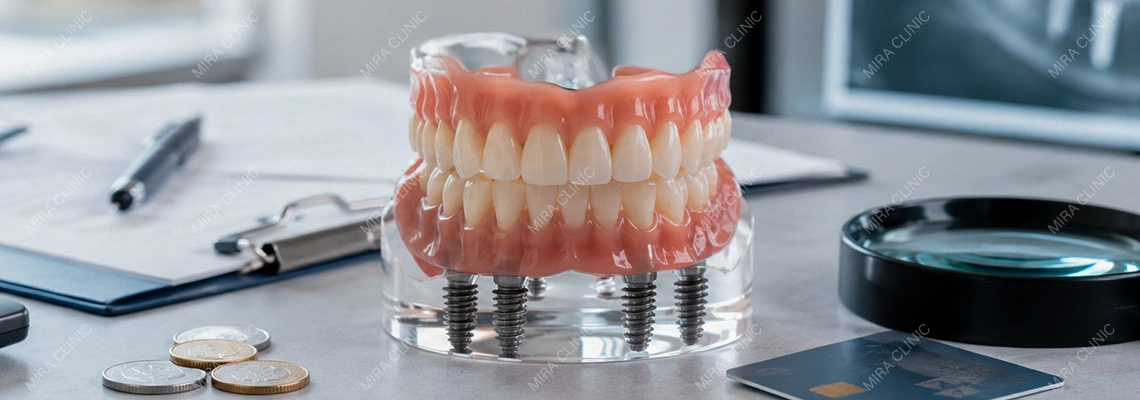
Dental implants with a titanium bar are usually used when several implants need to support a larger restoration. The titanium bar may connect across multiple implants or abutments to improve stability, retention, chewing comfort, and long-term support.
This design may be used with a removable overdenture, a bar-retained denture, or selected full-arch implant restorations. It is most common in larger cases, not single-tooth implant treatment.
|
Treatment Design |
Best For |
Removable? |
|---|---|---|
|
Titanium bar overdenture |
Full arch support |
Usually yes |
|
Fixed implant bridge |
Fixed teeth |
No |
|
Multi-unit abutments |
Screw-retained bridge |
No |
|
Traditional denture |
Basic replacement |
Yes |
The main purpose of the titanium bar is to make the final teeth more stable than a traditional removable denture.
What Is a Titanium Bar in Dental Implant Treatment?
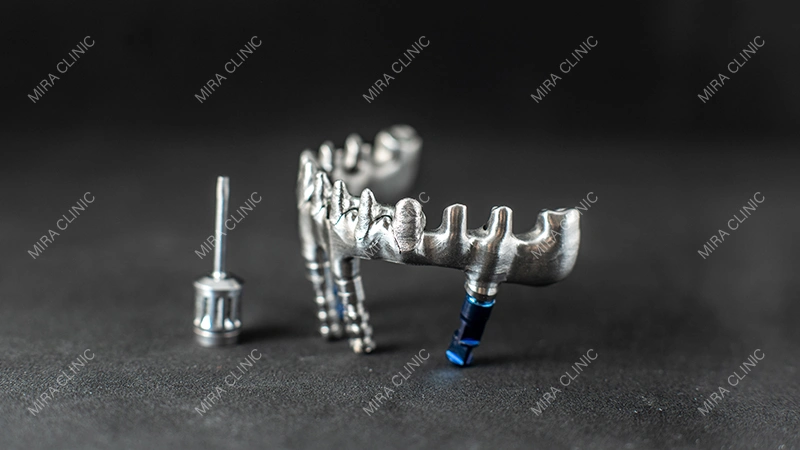
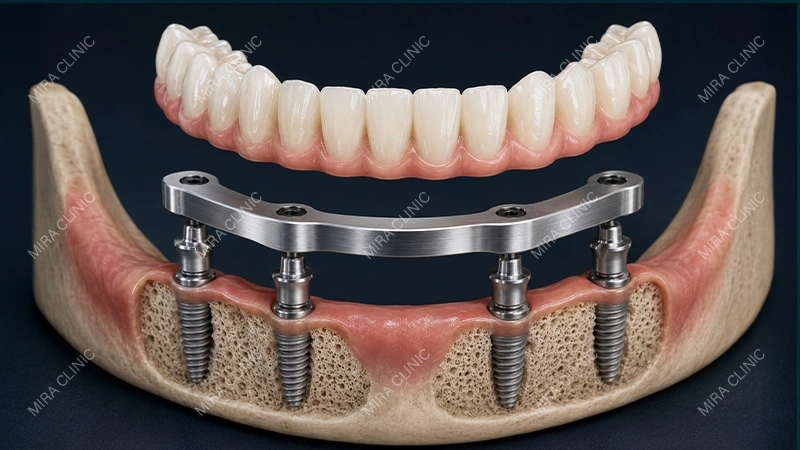
A titanium bar is a custom-made framework used in some dental implant treatments. It may connect several implants or implant abutments together and provide a stable base for the final prosthesis.
It is important to understand what the titanium bar is not. It is not the dental implant inside the bone. It is not the visible final tooth. It is not always used in every implant case.
A titanium bar may:
- Connect several implants
- Support a removable overdenture
- Help stabilize a full-arch restoration
- Improve denture retention
- Support chewing forces
- Make a removable prosthesis feel more secure
The patient usually does not see the titanium bar clearly because it sits under the final teeth, denture, or overdenture.
Where Is the Titanium Bar Placed?
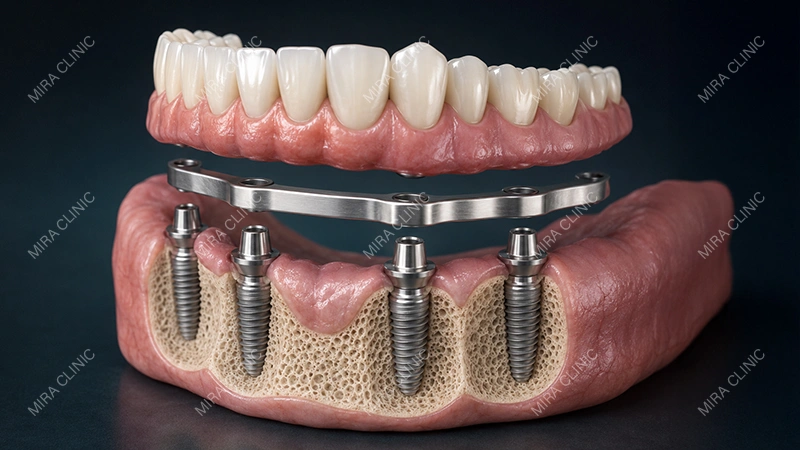
The titanium bar is placed above the gum level as part of the restorative system. It connects to implants or abutments that are already attached to implants inside the jawbone.
The treatment can be understood from the bone upward:
|
Level |
Part |
Role |
|---|---|---|
|
Inside bone |
Dental implant |
Replaces root |
|
Above implant |
Abutment |
Creates connection |
|
Across implants |
Titanium bar |
Supports prosthesis |
|
Above gum |
Bridge or denture |
Replaces teeth |
This means the implant is not the same as the bar. The implant is inside the jawbone, while the titanium bar is part of the support structure for the final teeth.
Why Is Titanium Used in Dental Implant Treatment?
Titanium is commonly used in dental implant treatment because it is strong, lightweight, durable, and well tolerated in the mouth. It can support chewing forces while allowing the framework to remain thin enough to fit under the final restoration.
For patients, the practical reason is simple: titanium can help create a stable support structure without making the final teeth feel bulky when the case is planned correctly.
The success of the restoration does not depend on titanium alone. It also depends on implant position, bone condition, bite force, bar fit, final prosthesis design, and patient hygiene.
Why Do Dentists Use a Titanium Bar?
Dentists may use a titanium bar when the final restoration needs stronger support across several implants. This is especially relevant when a patient is missing many teeth or needs full-arch stability.
A titanium bar may help to:
- Connect several implants
- Support a full-arch prosthesis
- Improve denture retention
- Reduce movement while chewing
- Spread bite forces
- Stabilize removable overdentures
- Support selected full-mouth implant designs
The main goal is to make the final teeth feel more stable, secure, and functional than a traditional removable denture.
Benefits of Dental Implants With a Titanium Bar
Dental implants with a titanium bar may offer several benefits, especially for patients who need more support than a conventional denture can provide.
Better Stability
The bar can help the denture or prosthesis stay more stable during chewing and speaking. This may reduce the movement that many patients experience with traditional removable dentures.
Improved Chewing Comfort
Because the restoration is supported by implants, the patient may feel more secure while eating. This can make chewing feel more controlled compared with a denture that rests mainly on the gums.
Better Retention
A bar-retained overdenture can attach to the titanium bar, which helps reduce looseness. This can be useful for patients who struggle with unstable dentures.
Support for Full-Arch Cases
A titanium bar can be helpful when many or all teeth are missing in one jaw. It can help connect the implants into a more stable restorative system.
Maintenance Access
In many bar-retained designs, the overdenture can be removed for cleaning and maintenance. This may make hygiene easier for selected patients compared with some fixed designs.
These benefits depend on correct implant planning, accurate bar fit, bite adjustment, and the patient’s ability to clean around the restoration.
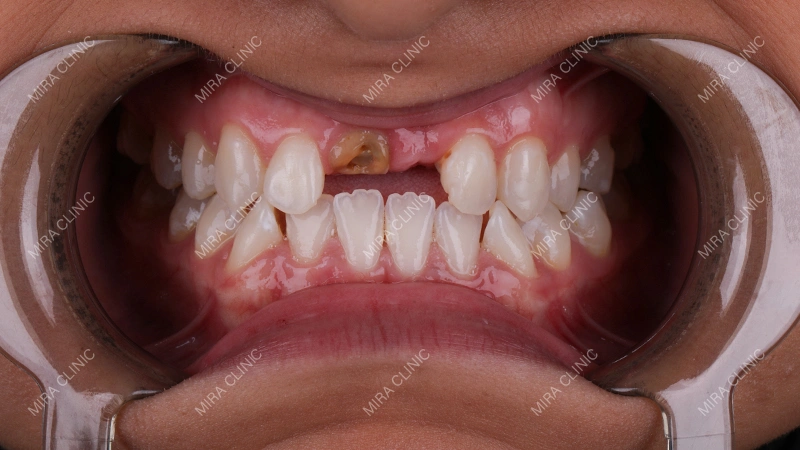
Who May Need a Titanium Bar?
A titanium bar may be considered for patients who need support across several implants. It is usually used in larger implant cases rather than single-tooth replacement.
A patient may need a titanium bar if they:
- Are missing all teeth in one jaw
- Have unstable traditional dentures
- Need better denture retention
- Have several implants supporting one prosthesis
- Want more stability but still need a removable option
- Need a full-arch restoration
- Need improved chewing support
A titanium bar is not necessary for every dental implant patient. It is usually considered when the dentist is planning a larger restoration that needs stability, retention, and long-term support.
When Do Dentists Recommend a Titanium Bar?
Dentists recommend a titanium bar only after evaluating the full implant and restoration plan. The decision is not based on one factor alone.
The dentist may check:
- Number of missing teeth
- Number of implants
- Bone condition
- Implant positions
- Gum support
- Bite force
- Prosthetic space
- Cleaning ability
- Fixed or removable preference
- Budget and maintenance expectations
The recommendation depends on how the final teeth will be supported, not only on how many implants are placed.
Fixed Bridge vs Bar-Retained Overdenture
Patients often confuse fixed implant bridges with bar-retained overdentures. Both can involve dental implants, but they do not work the same way.
|
Feature |
Fixed Implant Bridge |
Bar-Retained Overdenture |
|---|---|---|
|
Patient removes it? |
No |
Usually yes |
|
Support |
Implants/abutments |
Implants + bar |
|
Feel |
Fixed teeth |
Stable removable teeth |
|
Cleaning |
Around bridge |
Remove and clean |
|
Best for |
Fixed solution |
Stability + removability |
A fixed implant bridge stays in the mouth and is removed only by the dentist if needed. A bar-retained overdenture usually attaches to a titanium bar but can often be removed by the patient for cleaning.
The better option depends on bone condition, implant number, bite force, cleaning ability, budget, and whether the patient prefers fixed or removable teeth.
Read more: What Is the Difference Between a Titanium Bar and a Multi-Unit Abutment?
Titanium Bar vs Multi-Unit Abutment
A titanium bar and a multi-unit abutment are not the same thing. Both may be used in dental implant treatment, but they have different roles.
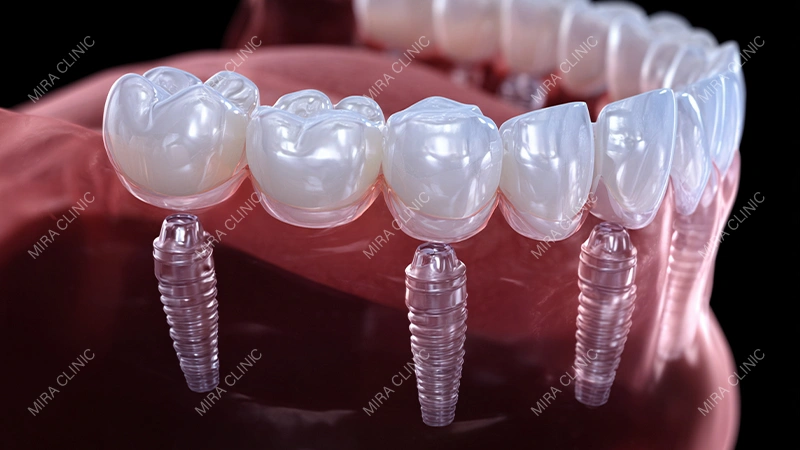
The implant is placed in the bone. The multi-unit abutment connects to the implant. The titanium bar may connect across several implants or abutments. The bridge or denture is then supported by the restorative system.
|
Part |
Where It Is |
Main Role |
|---|---|---|
|
Implant |
Inside bone |
Replaces root |
|
Multi-unit abutment |
Above implant |
Connector |
|
Titanium bar |
Across implants |
Framework |
|
Bridge or denture |
Above gum |
Final teeth |
A multi-unit abutment is usually a connector. A titanium bar is usually a larger framework. In some cases, both may be used in the same treatment plan.
Is a Titanium Bar the Same as an Implant Bridge?
No. A titanium bar is not the same as an implant bridge.
A titanium bar is usually a supporting framework. An implant bridge is the visible final restoration that replaces the missing teeth.
The difference is simple:
- Titanium bar = support structure
- Implant bridge = final visible teeth
- Bar overdenture = removable prosthesis attached to a bar
- Fixed implant bridge = non-removable teeth attached to implants or abutments
This distinction matters because patients may hear the term “bar” and think it is the final teeth. In most cases, the bar supports the restoration, while the bridge or denture replaces the teeth.
Read more: Crown vs Bridge for Back Teeth: Damaged or Missing Tooth?
How Is a Titanium Bar Made and Fitted?
A titanium bar is custom-made for the patient. It must match the implant positions, bite, gum shape, and final restoration design.
Step 1: Digital Scan or Impression
The dentist records the position of the implants or abutments using a digital scan or impression.
Step 2: Bar Design
The bar is designed based on implant positions, available space, bite force, and the type of final prosthesis.
Step 3: CAD/CAM Manufacturing or Milling
The titanium bar may be digitally manufactured or milled to improve precision and fit.
Step 4: Clinical Fit Verification
The dentist checks that the bar fits accurately in the mouth without pressure, rocking, or misfit.
Step 5: Fixation to Implants or Abutments
The bar is attached to the implant system according to the treatment plan.
Step 6: Final Restoration Placement
The final denture, overdenture, or bridge is placed over the bar and checked for stability.
Step 7: Bite and Hygiene Checks
The dentist checks chewing comfort and shows the patient how to clean around the restoration.
The goal is not only to make the bar strong. It must also fit accurately and work with the final teeth.
Read more: What Happens in Your Mouth After Dental Implants? From the Implant and Abutment to the Final Bridge
Can You See or Feel the Titanium Bar?
Usually, the titanium bar is hidden beneath the final bridge, denture, or overdenture. The patient may feel the stability of the restoration, not the bar itself.
If the prosthesis is removable, the bar may be visible when the patient removes the overdenture. Visibility depends on the design of the restoration.
A patient should contact the dentist if they feel:
- Pressure
- Pain
- Movement
- Looseness
- Food trapping
- Gum irritation
- Unusual bite changes
These signs do not always mean the bar has failed, but they should be checked before the problem becomes more serious.
Is a Titanium Bar Removable?
The titanium bar itself is usually fixed to the implants and removed only by the dentist. However, some overdentures attach to the bar and can be removed by the patient.
The distinction is important:
- Bar: usually fixed
- Overdenture: often removable
- Fixed bridge: not removable by patient
- Dentist: can remove or service components when needed
When a patient hears the word “removable,” it may refer to the denture or overdenture, not the titanium bar itself.
Risks and Disadvantages of a Titanium Bar
A titanium bar can improve stability, but it is not necessary for every dental implant patient. Like any implant-supported restoration, it has possible risks and maintenance needs.
Possible disadvantages may include:
- Cleaning may be more demanding
- Food may collect beneath some restorations
- Screws or attachments may need maintenance
- Acrylic, ceramic, or other materials may wear or fracture
- Poor fit may place stress on implants
- Repair can be complex
- Cost may be higher than simpler restorations
- Not every patient needs this design
A titanium bar can be a strong support option, but it requires correct planning, good hygiene, and follow-up care.
Cost of Dental Implants With a Titanium Bar
The cost of dental implants with a titanium bar depends on the number of implants, implant brand, bar design, final restoration type, material of the teeth, bone condition, temporary teeth, and maintenance needs.
|
Cost Factor |
Impact |
|---|---|
|
Number of implants |
High |
|
Implant brand |
High |
|
Bar/framework design |
High |
|
Fixed bridge or overdenture |
High |
|
Final teeth material |
Medium-high |
|
Bone grafting or sinus lift |
Case-based |
|
Temporary restoration |
Case-based |
|
Final cost |
X-ray based |
At Mira Clinic, implant brands may range from around €320 to €1,000 per implant, depending on the selected system. A titanium bar treatment is not priced like a single implant because it is part of a larger prosthetic plan.
The final cost is confirmed after X-ray evaluation, implant planning, and prosthetic design. This is because a removable bar-retained overdenture, a fixed full-arch bridge, and a multi-implant restoration can have very different treatment requirements.
Dental Implant Materials Used With a Titanium Bar
Patients often ask about the best materials used in dental implant treatment. In a titanium bar case, the treatment may include several materials, not only one.
Common material-related parts include:
|
Part |
Common Material Direction |
Purpose |
|---|---|---|
|
Implant |
Titanium-based implant system |
Root support |
|
Bar/framework |
Titanium |
Support and stability |
|
Abutments |
Titanium or compatible components |
Connection |
|
Final teeth |
Acrylic, composite, zirconia, or ceramic options |
Visible restoration |
|
Screws/attachments |
Implant-system components |
Fixation and retention |
The best material depends on the number of missing teeth, bite force, esthetic expectations, hygiene ability, and whether the final restoration is fixed or removable.
The dentist should explain which material is used for the implants, the framework, and the final teeth because each part affects strength, maintenance, appearance, and cost.
Is a Titanium Bar Right for You?
A titanium bar may be right for patients who are missing several teeth or a full arch and need more stability than a traditional removable denture. The dentist evaluates the number of missing teeth, bone volume, implant positions, gum health, bite strength, cleaning ability, preference for fixed or removable teeth, medical history, smoking, budget, and maintenance expectations before recommending this design.
The best way to know whether this treatment is suitable is to review the X-ray and final restoration plan with the treating dentist. The goal is not to choose the most complex option, but the option that fits the patient’s mouth, function, and long-term needs.
Read more: Full Mouth Dental Implants Turkey Price: Costs, Packages, and Candidate Guide
Questions to Ask Your Dentist About a Titanium Bar
Patients can ask:
- Why are you recommending a titanium bar in my case?
- Will my restoration be fixed or removable?
- How many implants will support it?
- What implant brand will be used?
- What material will be used for the final teeth?
- How will I clean underneath it?
- Can the bridge or denture be removed for repairs?
- What parts may require maintenance?
- What alternatives are available?
- What is included in the treatment cost?
These questions help patients understand whether the titanium bar is being used for stability, retention, maintenance, or full-arch support.
Read more: Dental Implant Patient Experience | From Chicago to Istanbul
Why Choose Mira Clinic for Dental Implants With a Titanium Bar?
Mira Clinic in Istanbul evaluates implant-supported restorations based on X-rays, bone condition, implant number, implant brand options, bite pressure, prosthetic space, gum health, and the patient’s preference for fixed or removable teeth.
For patients who hear the term titanium bar during treatment planning, the clinic explains how the bar works, where it is placed, whether the final prosthesis is removable, which materials may be used, and how to maintain it after treatment.
The goal is to create a stable implant-supported solution that improves chewing comfort, supports the smile, and remains maintainable over time.
Read more: Dental Crowns in Turkey: Costs, Treatment Options and What to Expect Before Booking