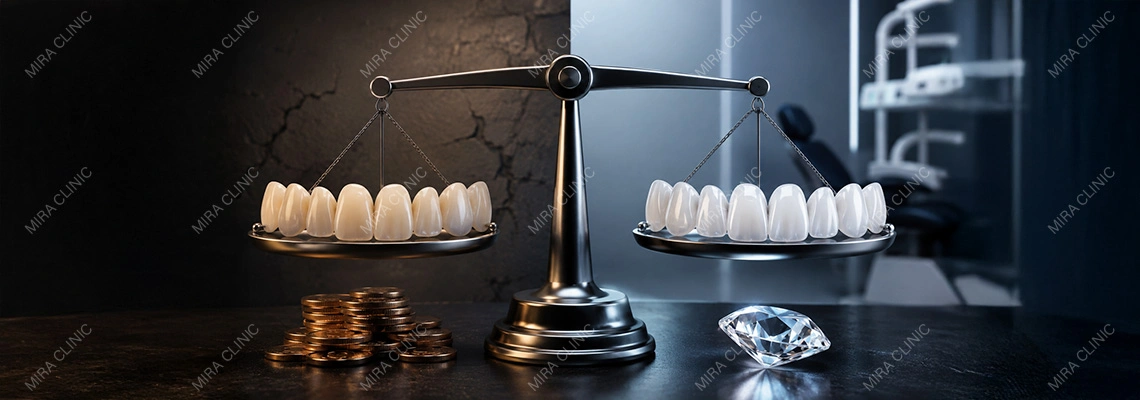
Patients comparing veneer price vs quality often assume that expensive veneers always create a better smile. The direct answer is: not always. A higher veneer price may reflect better planning, enamel-preserving preparation, smile design, dentist experience, and laboratory quality, but price alone does not guarantee a natural or long-lasting result.
At the same time, very cheap veneers can be a warning sign if the low price comes from rushed planning, poor preparation, weak materials, limited lab work, or little follow-up.
|
Factor |
Why It Affects Veneer Quality |
|---|---|
|
Veneer material |
Strength, translucency, appearance |
|
Tooth preparation |
Enamel preservation and fit |
|
Smile design |
Shape, size, color balance |
|
Dentist experience |
Planning and precision |
|
Lab quality |
Natural anatomy and margins |
|
Bite adjustment |
Prevents pressure and chipping |
|
Follow-up |
Helps comfort and longevity |
The best veneer result is not about paying the highest price. It is about choosing a treatment plan that protects the teeth, fits the face, and uses enough clinical and laboratory time to create a smile that looks natural.
- Veneer Price vs Quality: Quick Answer
- Does Veneer Price Affect Quality?
- Cheap vs Expensive Veneers: What Is the Real Difference?
- Veneer Cost and Quality: What Actually Changes the Result?
- Are Expensive Veneers Worth It?
- Affordable Veneers Without Compromising Quality
- How Enamel Preservation Affects Veneer Quality
- Why Smile Design Matters More Than a White Shade
- The Role of the Dental Lab and Technician
- How Bite and Function Affect Veneer Longevity
- Choosing the Best Clinic for Veneers in Turkey
- Final Thought: Higher Price Does Not Guarantee Better Veneers
Veneer Price vs Quality: Quick Answer
Veneer price can affect quality when it reflects better materials, careful tooth preparation, enamel preservation, digital smile design, experienced dentists, and skilled laboratory work. However, a higher price does not automatically mean better veneers if the planning is weak or the smile design does not suit the patient.
|
Question |
Better Quality Veneers Usually Need |
|---|---|
|
Natural shape? |
Smile design and lab skill |
|
Long-term fit? |
Precise preparation |
|
Less sensitivity? |
Enamel preservation |
|
Better color? |
Material and shade planning |
|
Stronger result? |
Bite adjustment |
|
Better comfort? |
Follow-up and refinements |
A low price may still be acceptable if the treatment is transparent and well-planned. The risk begins when the price is low because important steps are removed from the process.
Does Veneer Price Affect Quality?
Yes, veneer price can affect quality, but not in a simple way. The price of veneers may reflect the time, skill, material, and laboratory work needed to create a stable and natural-looking smile.
Veneer quality depends on:
- How the teeth are examined
- How the smile is designed
- How much enamel is preserved
- How accurately the teeth are prepared
- How well the veneers fit
- How natural the ceramic work looks
- How the bite is adjusted
- How carefully the final result is checked
A lower price may be possible in some countries because clinic and lab costs are lower. That does not automatically mean lower quality. But a very low price can become a problem if it reduces the time spent on diagnosis, preparation, temporary veneers, lab communication, fitting, or follow-up.
Price matters most when it tells you what level of planning and execution is included.
Cheap vs Expensive Veneers: What Is the Real Difference?
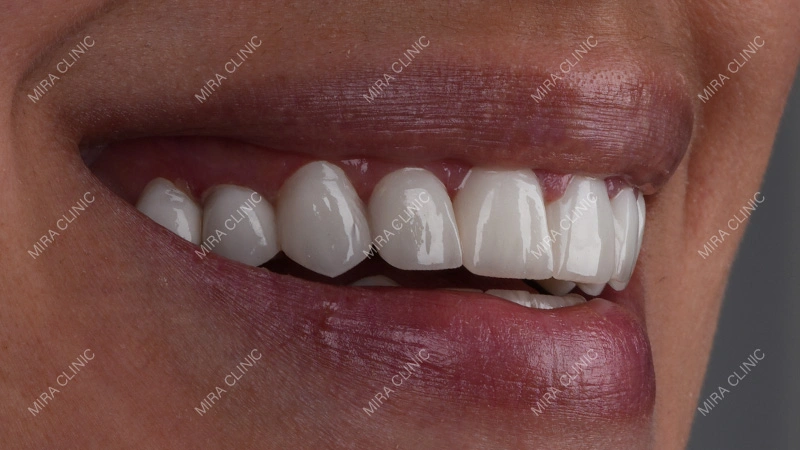
When comparing cheap vs expensive veneers, patients should look beyond the price per tooth. The real difference may be in the details that are not visible in the advertisement.
Cheap veneers may be risky when they involve:
- No detailed smile design
- No bite evaluation
- Excessive tooth shaving
- Poor gum margin fit
- Weak shade planning
- Rushed laboratory work
- Limited trial stage
- Little adjustment time
- No follow-up
Expensive veneers may offer better value when they include:
- Careful consultation
- Face-based smile design
- Conservative preparation
- High-quality ceramic
- Skilled dental technician
- Temporary smile preview
- Detailed fitting
- Bite adjustment
- Follow-up refinements
However, expensive veneers can still disappoint if they look bulky, too white, too uniform, or disconnected from the patient’s face. The price should support quality, not replace clinical judgment.
Veneer Cost and Quality: What Actually Changes the Result?
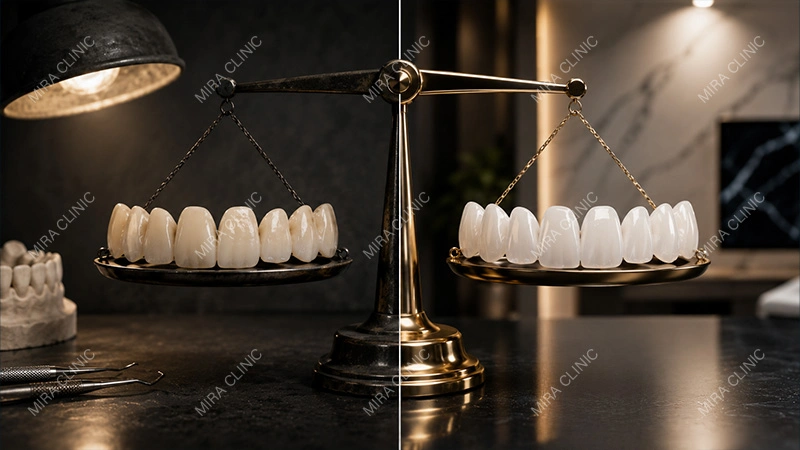
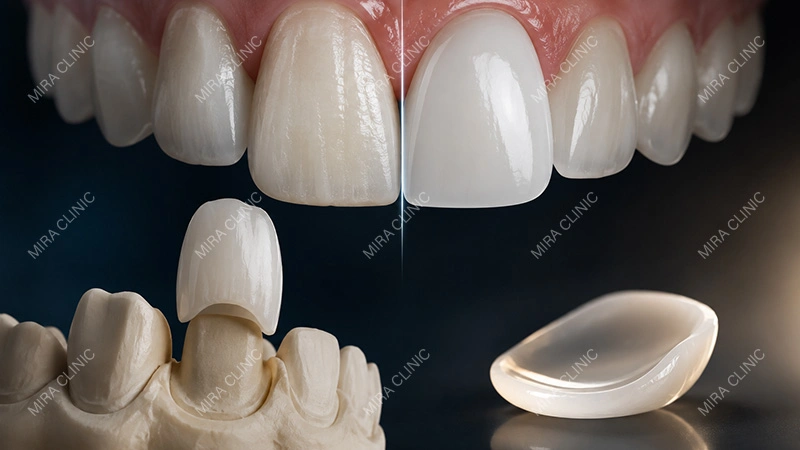
The relationship between veneer cost and quality depends on what the patient is paying for. A veneer is not just a thin shell placed on the tooth. It is the final result of planning, preparation, material selection, lab design, and fitting.
Important quality factors include:
Material Selection
Different veneer materials can affect translucency, strength, thickness, and final appearance. High-quality ceramic veneers can reflect light more naturally and create a smile that does not look flat or artificial.
The material should be chosen according to tooth color, enamel condition, bite, smile goals, and how much correction is needed.
Tooth Preparation
Preparation quality is one of the most important parts of veneer treatment. Good preparation should remove only what is necessary, preserve enamel where possible, and create enough space for a natural veneer shape.
Poor preparation can cause:
- Bulky veneers
- Gum irritation
- Sensitivity
- Poor fit
- Weak bonding
- Unnatural edges
- Higher risk of replacement
A veneer should not be judged only by how it looks on the first day. It should also fit properly and protect the tooth underneath.
Laboratory Quality
The dental laboratory plays a major role in veneer quality. A skilled technician shapes the veneers, controls translucency, designs texture, builds the edges, and creates a natural color gradient.
Good lab work helps avoid veneers that look too thick, too opaque, too square, or too identical.
Bite Adjustment
Even beautiful veneers can chip or feel uncomfortable if the bite is not checked properly. Back teeth, grinding habits, jaw movement, and front-tooth guidance can all affect veneer longevity.
A quality veneer plan should include bite evaluation before and after fitting.
Are Expensive Veneers Worth It?
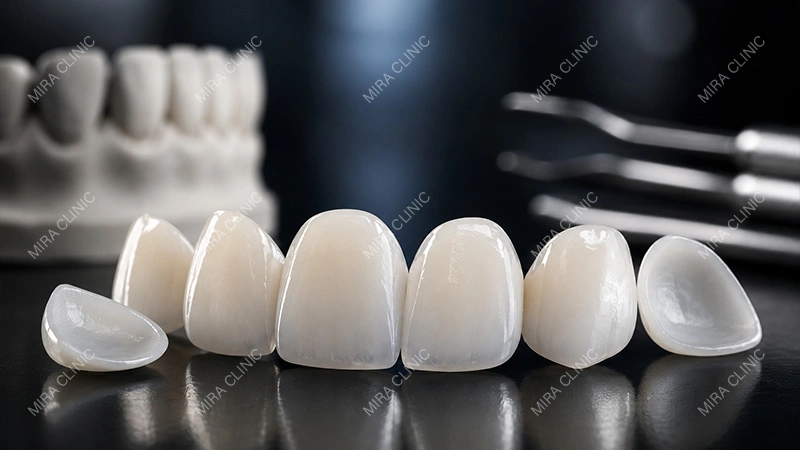
Are expensive veneers worth it? They may be worth it when the higher price reflects better planning, more conservative preparation, higher-quality ceramic, experienced clinicians, skilled laboratory work, and proper follow-up.
Expensive veneers may be worth considering when:
- The case requires major smile design
- Teeth are uneven, worn, or discolored
- The patient wants a natural aesthetic result
- Enamel preservation is a priority
- Bite pressure needs careful management
- The laboratory work is customized
- The dentist provides a detailed treatment plan
Expensive veneers may not be worth it when the price is high only because of branding, location, or marketing, without clear explanation of materials, preparation method, lab quality, and follow-up.
The question should not be “Are expensive veneers better?” The better question is: “What clinical and laboratory value is included in the price?”
Affordable Veneers Without Compromising Quality
It is possible to find affordable veneers without compromising quality when the treatment is planned well and the lower price comes from efficient systems, lower local costs, or package structure rather than cutting clinical corners.
Affordable veneers can still be high quality when:
- The dentist evaluates the bite
- Tooth preparation is conservative
- Veneer material is clearly explained
- The lab work is customized
- Temporary veneers are used when needed
- Shade and shape are planned carefully
- The final fit is checked properly
- Follow-up adjustments are included
Affordable veneers become risky when the clinic focuses only on speed, number of teeth, or a very low package price without explaining how the teeth will be protected.
A lower price can be good value. A rushed plan is not.
Read more: E-max Veneers Price in Turkey: Cost, Benefits, and Best Candidates
How Enamel Preservation Affects Veneer Quality
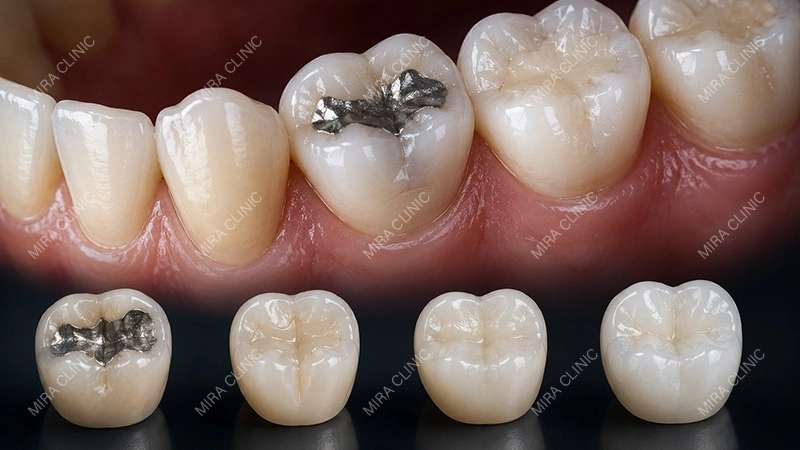
Enamel preservation is one of the biggest quality markers in veneer treatment. Veneers usually bond better to enamel than to deeper tooth layers, so preserving enamel can help improve bonding strength and reduce sensitivity risk.
A careful veneer plan should consider:
- Existing enamel thickness
- Tooth position
- Previous fillings
- Tooth color
- Desired shade change
- Tooth alignment
- Smile design goals
- Bite force
Some teeth need more preparation than others. Very dark, rotated, crowded, or bulky teeth may require more reshaping. But unnecessary aggressive shaving can weaken the tooth and make future replacement more difficult.
Quality veneer treatment is not about making every tooth the same. It is about preparing each tooth only as much as the final design requires.
Why Smile Design Matters More Than a White Shade
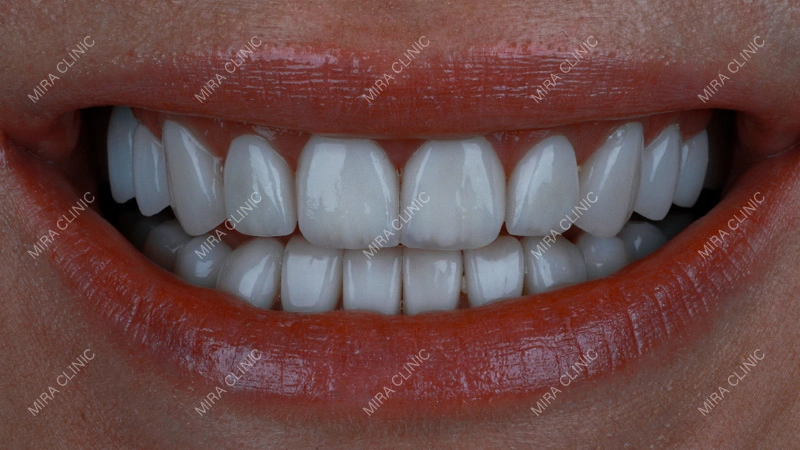
Many patients think veneer quality means a very white smile. In reality, a high-quality smile depends on proportion, symmetry, tooth length, gum balance, lip movement, facial features, and natural texture.
Smile design affects:
- Tooth size
- Tooth shape
- Midline
- Smile curve
- Gum display
- Color transition
- Edge shape
- Facial harmony
- Masculine or feminine tooth forms
- Natural character
A cheap veneer result may look artificial if every tooth is made the same size and color. A better veneer result usually has small natural differences that make the smile look real.
The best smile is not always the whitest smile. It is the smile that fits the patient’s face.
The Role of the Dental Lab and Technician
The dental technician is one of the most important people in veneer treatment, even though the patient may never meet them. The technician creates the final veneers based on the dentist’s preparation, impressions or scans, shade instructions, photos, and smile design.
Lab quality affects:
- Veneer thickness
- Edge shape
- Tooth texture
- Color depth
- Translucency
- Margin precision
- Surface polish
- Natural reflection
A low-cost veneer offer may reduce lab time, use standard shapes, or limit customization. This can make the veneers look flat, bulky, or too identical.
A strong dentist-lab relationship can improve the final smile because both sides understand the desired result and technical limitations.
Read more: The Connection Between Oral Health and Systemic Wellness: Mira Clinic’s Philosophy
How Bite and Function Affect Veneer Longevity
Veneers are aesthetic restorations, but they still function inside the bite. If the bite is not planned well, veneers may chip, debond, feel uncomfortable, or wear faster.
Bite-related risk factors include:
- Teeth grinding
- Strong clenching
- Deep bite
- Edge-to-edge bite
- Missing back teeth
- Uneven chewing pressure
- Old crowns or fillings
- Jaw movement patterns
A good veneer plan should not focus only on the front view of the smile. The dentist must check how the teeth touch during biting, speaking, and jaw movement.
This is where veneer quality becomes more than appearance. A smile must look good and function safely.
Read more: Can You Eat Normally with Veneers? A Practical Food and Drink Guide
Choosing the Best Clinic for Veneers in Turkey
Patients searching for the best clinic for veneers in Turkey Mira Clinic are usually not only looking for a low price. They are looking for a clinic that can balance beauty, tooth preservation, preparation quality, laboratory precision, and follow-up.
A strong veneer consultation should explain:
- Whether veneers are suitable
- How many teeth need treatment
- How much enamel may be prepared
- Which material is recommended
- How the smile shape will be designed
- How the bite will be checked
- How the lab will customize the veneers
- What follow-up is included
At Mira Clinic in Istanbul, veneer treatment planning should focus on natural smile design, enamel-conscious preparation, precise lab work, and patient-specific treatment rather than one standard smile for every case.
The right veneer plan should make the smile look better without making the teeth look artificial.
Read more: Cheap Dental Quote Warning Signs in Turkey: What Patients Should Check First
Final Thought: Higher Price Does Not Guarantee Better Veneers
A higher veneer price can reflect better materials, better planning, better preparation, and better laboratory work. But price alone does not guarantee a better smile.
The real quality of veneers depends on how the teeth are prepared, how much enamel is preserved, how the smile is designed, how skilled the lab work is, and how carefully the bite is adjusted.
Very cheap veneers may save money at first, but they can become expensive if they look unnatural, feel bulky, irritate the gums, or need early replacement.
The best value is not the cheapest smile or the most expensive smile. It is the smile that looks natural, protects the teeth, and is planned for long-term comfort.
Read more: Veneers Cost in Turkey: Full Set Prices, Packages, and Smile Makeover Options