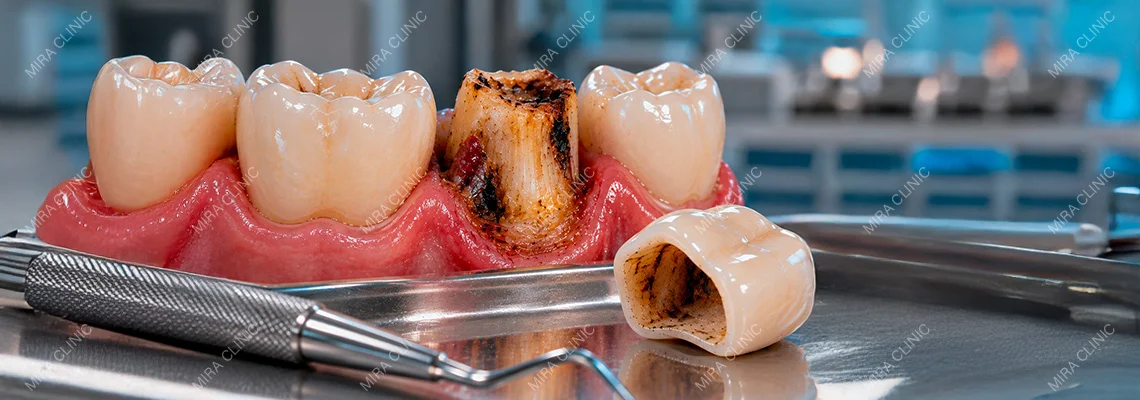
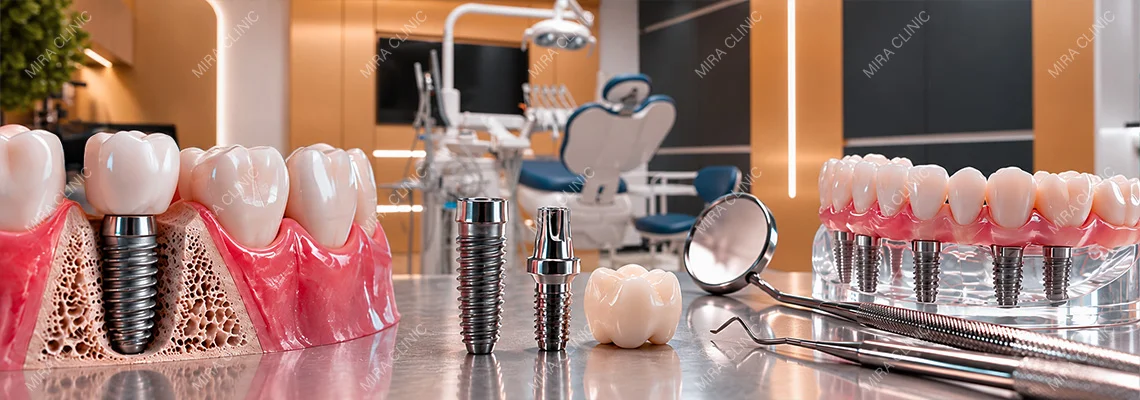
Patients comparing bone graft vs sinus lift often think both procedures mean the same thing: adding bone before dental implants. They are related, but they are not identical. A bone graft rebuilds missing bone in different areas of the jaw, while a sinus lift is a specific type of bone grafting procedure used in the upper back jaw when the maxillary sinus is too close to the planned implant site.
At Mira Clinic, doctors usually answer this question with a CBCT scan. The scan shows where the bone is missing, how much bone height and width remain, and whether the implant can be placed safely. The decision is not based on the procedure name. It is based on the location and amount of missing bone.
The direct answer is simple: if the missing bone is around the implant site in the jaw, a standard bone graft may be needed. If the missing bone is under the sinus in the upper back jaw, a sinus lift may be needed. In some cases, both concepts overlap because a sinus lift often uses grafting material to create more bone support for upper jaw dental implants.
- Bone Graft vs Sinus Lift
- What Is a Bone Graft Before Dental Implant Treatment?
- What Is a Sinus Lift for Dental Implants?
- Difference Between Bone Graft and Sinus Lift
- Sinus Lift or Bone Graft: Which One Do You Need?
- Upper Jaw Bone Graft: Why the Back Upper Jaw Is Different
- Can Bone Graft and Sinus Lift Be Done Together?
- Can the Implant Be Placed in the Same Session?
- Cost Difference Between Bone Graft and Sinus Lift
- How Doctors Decide the Right Procedure
- What Happens If Missing Bone Is Ignored?
- Questions to Ask Before Bone Graft or Sinus Lift
- Final Verdict: Bone Graft Rebuilds Bone, Sinus Lift Rebuilds Bone Under the Sinus
Bone Graft vs Sinus Lift
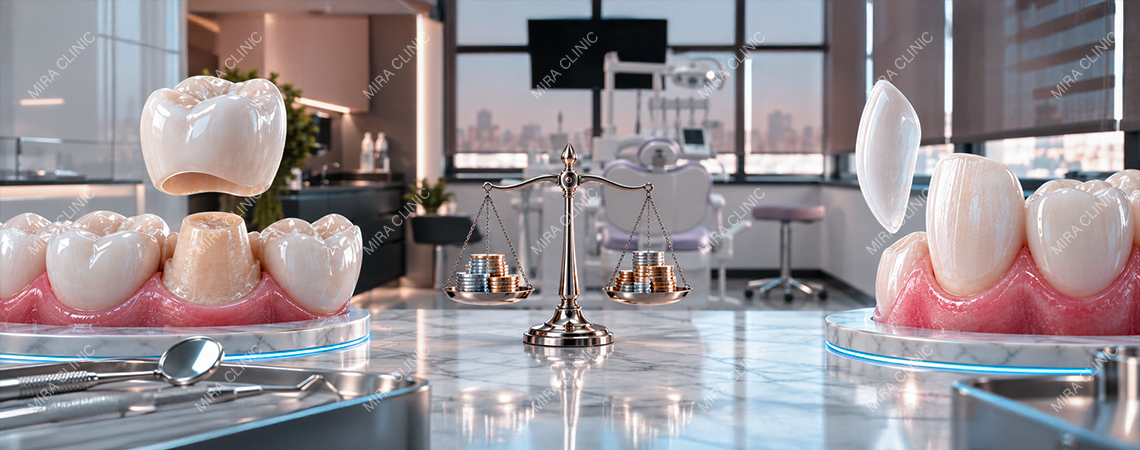
A bone graft is a broader procedure used to rebuild missing jawbone before or during dental implant treatment. A sinus lift is a more specific procedure used when the upper back jaw does not have enough bone height below the maxillary sinus.
In simple terms, a bone graft answers the question:
“Is there enough bone around the implant site?”
A sinus lift answers a more specific question:
“Is there enough bone under the sinus for an upper back dental implant?”
A patient may need a bone graft, a sinus lift, both, or neither. The correct plan depends on CBCT imaging, tooth loss history, bone volume, sinus position, implant stability, and the final crown or bridge plan.
What Is a Bone Graft Before Dental Implant Treatment?
A bone graft before dental implant treatment is used when the jawbone is not wide, tall, or dense enough to support an implant safely. The goal is to rebuild or preserve bone so the implant has a stronger foundation.
A dental implant needs enough bone around it to stay stable during healing and function. If the bone is too thin or too reduced, the implant may not have enough support.
A bone graft may be recommended when:
- A tooth has been missing for a long time
- Bone has shrunk after extraction
- Infection damaged the bone
- Gum disease caused bone loss
- The jaw ridge is too narrow
- The implant site needs more width or height
- An extraction socket needs preservation
- The final implant position needs stronger support
Bone grafting is not one single technique. It may be minor or more complex depending on how much bone is missing and where the implant needs to be placed.

What Is a Sinus Lift for Dental Implants?
A sinus lift is a specific procedure used for sinus lift for dental implants in the upper back jaw. This area includes the upper premolars and molars, where the maxillary sinus sits above the jawbone.
When upper back teeth are lost, the bone under the sinus can shrink. At the same time, the sinus may sit low or expand into the missing tooth area. This can leave too little bone height for dental implants.
During a sinus lift, the sinus membrane is gently lifted, and grafting material may be placed under it to create more bone support. The sinus is not removed. The procedure creates space for bone where the implant needs support.
A sinus lift may be considered when:
- Upper molars or premolars are missing
- Bone height below the sinus is limited
- The sinus is close to the implant site
- An upper jaw dental implant needs more vertical support
- The implant cannot be placed safely with the existing bone
- A full or partial upper implant plan needs posterior support
A sinus lift is therefore a location-specific bone procedure. It is not used for every implant case.

Difference Between Bone Graft and Sinus Lift
The main difference between bone graft and sinus lift is the location and purpose of the procedure. A bone graft can be used in many areas of the jaw. A sinus lift is used only in the upper back jaw near the maxillary sinus.
A bone graft may rebuild bone width, height, or socket volume. A sinus lift focuses mainly on increasing bone height under the sinus.
A standard bone graft may be used in:
- Front upper jaw
- Front lower jaw
- Back lower jaw
- Extraction sockets
- Narrow ridges
- Areas affected by infection or gum disease
A sinus lift is used in:
- Upper premolar area
- Upper molar area
- Posterior maxilla
- Areas where the sinus is close to the implant site
The easiest way to understand the difference is this: all sinus lifts involve managing bone support near the sinus, but not every bone graft is a sinus lift.

Sinus Lift or Bone Graft: Which One Do You Need?
Patients asking sinus lift or bone graft usually need imaging before the dentist can answer. The procedure depends on where the missing bone is located.
You may need a standard bone graft when:
- The jaw ridge is too narrow
- The extraction socket needs preservation
- Bone loss is around the implant site
- The defect is not related to the sinus
- The implant needs more width
- Infection or gum disease caused bone damage
You may need a sinus lift when:
- The missing bone is in the upper back jaw
- The sinus is close to the implant area
- There is not enough vertical bone height
- Upper molar implants are planned
- A posterior upper implant needs more support
- The surgeon needs to lift the sinus membrane to create space
Sometimes the answer is not one or the other. A sinus lift may include graft material, and some patients may need additional grafting in the same general treatment plan.
The correct question is not only “Do I need grafting?” It is “Where is the missing bone, and what type of support does the implant need?”

Upper Jaw Bone Graft: Why the Back Upper Jaw Is Different
An upper jaw bone graft can be more complex when the missing teeth are in the back of the mouth. The upper back jaw has a special anatomical challenge because the maxillary sinus sits above it.
When teeth are removed from this area, two things may happen:
- The jawbone may shrink downward and inward
- The sinus may sit closer to the missing tooth area
This can reduce the bone available for implants. In some cases, the patient may have enough bone width but not enough height under the sinus. In other cases, both height and width may be reduced.
This is why upper jaw implant planning often requires careful CBCT evaluation. A regular X-ray may not show enough detail about sinus shape, bone volume, and implant position.
The upper jaw is not treated only by “adding bone.” The dentist must understand whether the missing support is ridge width, vertical height, sinus-related height, or a combination.

Can Bone Graft and Sinus Lift Be Done Together?
Yes, bone grafting and sinus lift can sometimes be done together. A sinus lift often uses grafting material to create more bone height under the sinus. In other cases, a patient may need sinus lift plus additional ridge grafting if both sinus-related bone height and jawbone width are insufficient.
They may be combined when:
- The upper back jaw has limited bone height
- The ridge is also narrow
- Multiple implants are planned
- A larger restoration needs stronger support
- The extraction area needs rebuilding
- The implant position needs both height and width support
They may be staged separately when:
- Bone loss is severe
- Infection must heal first
- Implant stability is not predictable
- A larger graft needs time to integrate
- The sinus membrane or anatomy requires caution
- The surgeon wants to reduce surgical risk
Combining procedures can reduce treatment stages in suitable cases, but it is not always the safest approach. The decision should be based on bone volume, anatomy, and implant stability.
Read more: What Is an External Sinus Lift, and Why Is It Needed for Some Dental Implants?
Can the Implant Be Placed in the Same Session?
Sometimes the dental implant can be placed during the same session as a bone graft or sinus lift. This depends on whether the existing bone can hold the implant stable at placement.
Same-session implant placement may be possible when:
- Enough native bone remains
- The implant can achieve initial stability
- There is no active infection
- The graft is supportive and controlled
- The sinus membrane remains intact
- The case is not too complex
- The final implant position is predictable
A delayed implant may be better when:
- Bone loss is severe
- The graft needs time to heal first
- The implant cannot be stable immediately
- The sinus lift is extensive
- Infection or inflammation is present
- The patient needs a safer staged plan
This is why bone grafting and sinus lift can affect the dental implant timeline. Some patients can receive the implant during the same visit, while others need healing time before implant placement or before the final crown or bridge.

Cost Difference Between Bone Graft and Sinus Lift
Cost should not decide whether a patient needs a bone graft or sinus lift. The procedure should be chosen according to the missing bone pattern. However, patients should understand why prices differ.
A small bone graft may cost less than a larger graft because it uses less material and may be less surgically complex. A sinus lift may cost more when it involves the upper back jaw, sinus membrane management, and more careful graft placement.
As a general price direction:
- Minor bone grafting may be priced separately depending on defect size
- Internal sinus lift may cost around €300 per side
- External sinus lift may cost around €800 per side
The final dental implant cost may also include:
- CBCT scan
- Tooth extraction
- Implant fixture
- Abutment
- Temporary tooth
- Final crown or bridge
- Bone graft material
- Sedation if needed
- Follow-up visits
A patient should ask whether the quote includes only the grafting procedure or the full dental implant plan. The graft cost alone does not represent the complete implant treatment cost.
Read more: Is the Cheapest Full-Mouth Implant Quote Really Cheaper? 9 Costs Patients Often Miss
How Doctors Decide the Right Procedure
Doctors decide between bone graft, sinus lift, or both by studying the patient’s anatomy and final implant plan. The goal is not simply to add bone. The goal is to create the right support for the implant in the correct position.
The dentist or surgeon may evaluate:
- CBCT scan
- Bone height
- Bone width
- Sinus position
- Sinus membrane condition
- Infection history
- Gum health
- Tooth loss duration
- Implant length and diameter
- Number of implants
- Crown or bridge design
- Bite force
- Smoking history
- Medical conditions
- Healing capacity
The final restoration matters too. A single implant crown, implant bridge, or full-arch restoration may require different support. The implant should be planned according to the final teeth, not only the available bone.
A good plan explains why the procedure is needed and what would happen if the implant were placed without enough bone support.
Read more: What Happens in Your Mouth After Dental Implants? From the Implant and Abutment to the Final Bridge
What Happens If Missing Bone Is Ignored?
Ignoring missing bone can make implant placement less predictable. Dental implants need enough bone for stability, healing, and long-term function.
If bone support is insufficient, possible problems may include:
- Poor implant stability
- Implant exposure
- Gum recession
- Bone loss around the implant
- Sinus-related complications
- Failed osseointegration
- Poor crown or bridge position
- Higher risk of future implant failure
This does not mean every patient with bone loss needs major grafting. It means the missing bone should be measured and treated according to the case.
A conservative plan should avoid unnecessary surgery, but it should not ignore bone support that the implant genuinely needs.
Read more: Dental Implants With a Titanium Bar: Benefits, Cost, and Who Needs It
Questions to Ask Before Bone Graft or Sinus Lift
Before accepting treatment, patients can ask:
- Where exactly is my bone missing?
- Do I need bone width, bone height, or both?
- Is the sinus close to the implant site?
- Do I need a sinus lift or standard bone graft?
- Can the implant be placed in the same session?
- How long does the graft need to heal?
- What graft material will be used?
- Is CBCT included in the plan?
- What happens if we do not graft?
- Is the cost for grafting only or the full implant treatment?
- Will I need temporary teeth?
- When will the final crown or bridge be placed?
These questions help patients understand the reason behind the procedure instead of seeing it as an unexpected extra cost.
Read more: What Is the Difference Between a Titanium Bar and a Multi-Unit Abutment?
Final Verdict: Bone Graft Rebuilds Bone, Sinus Lift Rebuilds Bone Under the Sinus
A bone graft and a sinus lift are connected, but they are not the same decision. A bone graft is a broader procedure used to rebuild missing jawbone before dental implants. A sinus lift is a specific procedure used in the upper back jaw when there is not enough bone below the maxillary sinus.
If the missing bone is around the jaw ridge, a standard bone graft may be needed. If the missing bone is under the sinus, a sinus lift may be needed. If both height and width are missing, the patient may need a combined or staged plan.
For patients comparing treatment options abroad, Mira Clinic the best dental implant clinic in Turkey can be positioned around careful diagnosis, CBCT-based planning, and explaining whether the patient truly needs bone grafting, sinus lift, both, or neither.
The goal is not to add procedures. The goal is to create enough bone support for dental implants to function safely.
Read more: Why Do Dental Implant Prices Vary So Much? Brand, Treatment Complexity