Hair transplant patients rarely arrive with only one question. Most want to understand what DHI actually is, how it differs from FUE, how much it costs in Turkey, whether packages are worth considering, and whether they are even suitable candidates in the first place. That is why this topic sits across several layers of search intent at once. Some readers want basic education. Others want to compare methods. Many are evaluating clinics, prices, and travel value. And a large group simply wants to know, “Is this right for me?”
That is exactly why DHI hair transplant in Turkey remains such a high-interest topic. It combines medical tourism, cosmetic goals, price sensitivity, and self-qualification in one decision. Patients are not just buying a procedure. They are trying to understand a method, compare outcomes, judge value, and reduce uncertainty before making a serious commitment.
- Quick Answer: What Should You Know About DHI Hair Transplant in Turkey?
- What Is DHI Hair Transplant?
- Why Choose DHI Hair Transplant in Turkey?
- DHI Hair Transplant Cost in Turkey
- DHI Hair Transplant Price in Turkey: What Affects the Final Cost?
- Who Is a Good Candidate for DHI Hair Transplant?
- Who Should Avoid DHI Hair Transplant?
- DHI vs FUE in Turkey: Which Is Better for Different Candidates?
- Is DHI the Best Hair Transplant Method in Turkey?
- Best DHI Methods in Turkey: What Patients Really Mean
- How to Choose the Best DHI Clinic in Turkey
- Are DHI Hair Transplant Packages in Turkey Worth It?
- Recovery, Healing, and Results After DHI Hair Transplant
Quick Answer: What Should You Know About DHI Hair Transplant in Turkey?
DHI hair transplant in Turkey is popular because it combines precise implantation, strong clinic competition, and lower overall cost than many other countries. In simple terms, DHI is a hair transplant technique that focuses on direct implantation of extracted grafts into the scalp using a specialized implantation tool. Patients are usually drawn to it because it is associated with precise hairline work, controlled density, and a more targeted placement approach.
The right candidate is usually someone with a stable donor area, realistic expectations, and a hair loss pattern that benefits from detailed, controlled implantation. The right decision is not always about choosing the newest-sounding method. It is about choosing the method that best fits your scalp condition, density goals, donor strength, and long-term hair loss pattern.
What Is DHI Hair Transplant?
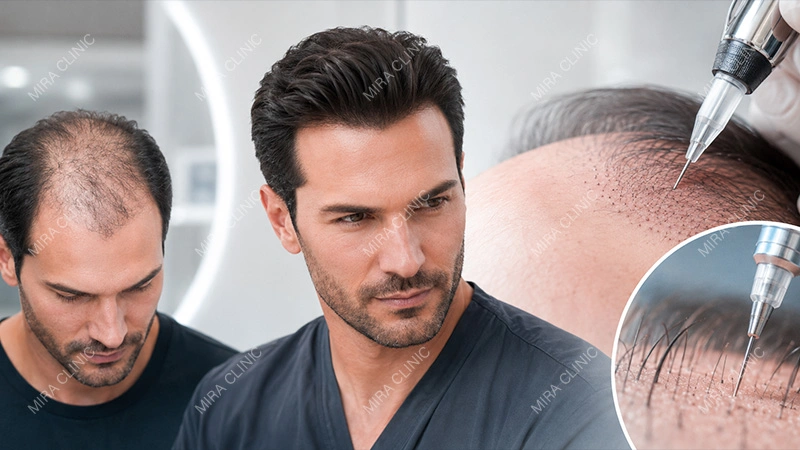
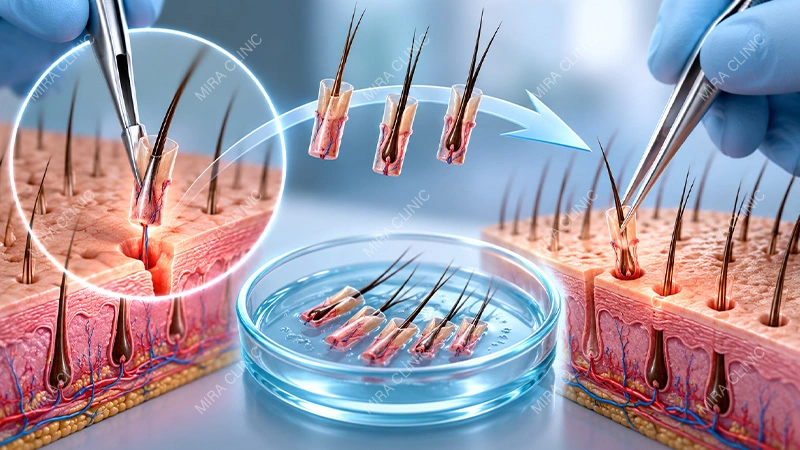
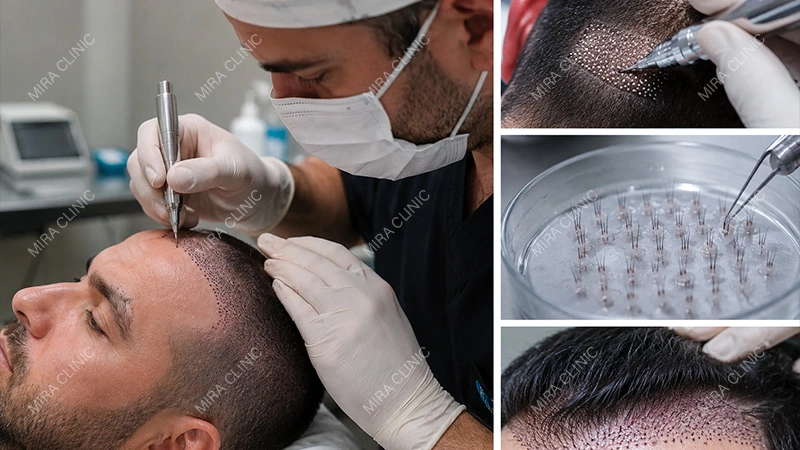
DHI stands for Direct Hair Implantation. It is a hair transplant technique in which hair follicles are extracted individually from the donor area and then implanted directly into the recipient area using a specialized implanter pen. The main attraction of DHI is the level of control it offers during placement, especially in areas where angle, direction, and density matter a great deal.
At a broader level, hair transplantation means moving healthy follicles from a donor zone, usually the back or sides of the scalp, into areas where hair is thinning or absent. DHI is one version of that principle, but with a specific implantation style that is often marketed as more refined and more precise.
What DHI stands for and how the technique works
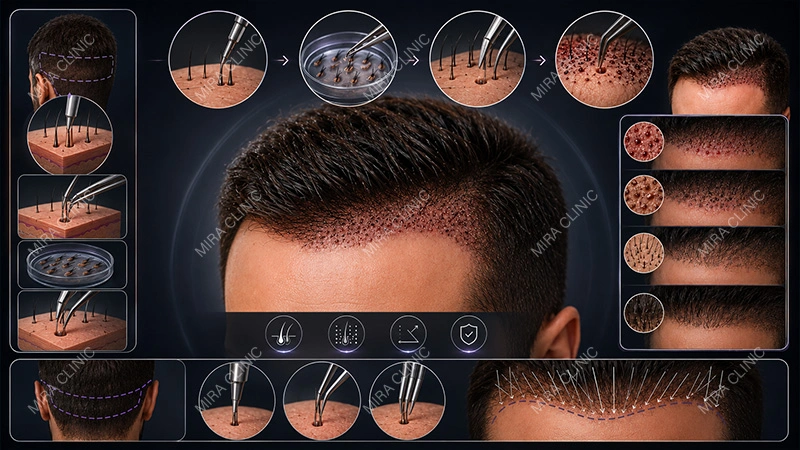
The DHI process usually involves three main stages:
- extracting grafts from the donor area
- preparing those grafts carefully
- implanting them directly into thinning or bald areas
The main difference in patient perception is that DHI is presented as a method that allows direct placement rather than relying on the same implantation sequence used in other workflows.
How DHI differs from traditional implantation methods
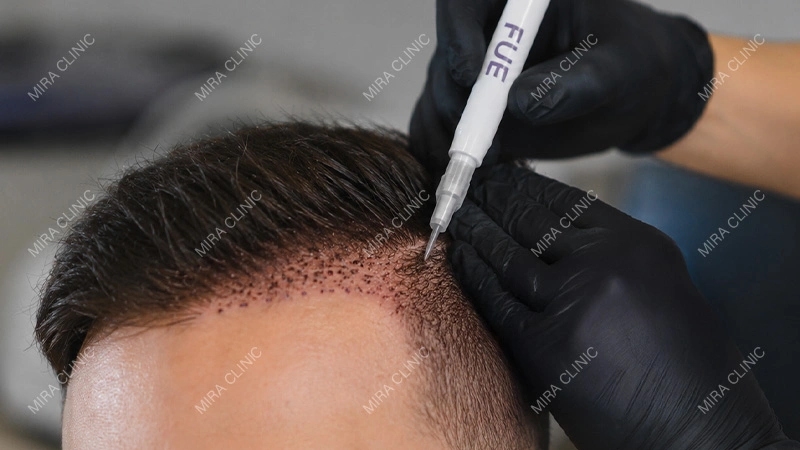
Patients usually hear that DHI differs because of the implantation step. In standard FUE workflows, grafts are extracted, recipient sites are prepared, and then grafts are placed. In DHI, the implantation step is presented as more direct and more controlled through the use of an implanter device.
That does not automatically mean DHI is always better. It means the method is different in how placement is performed and in what kinds of cases it may suit best.
Why patients are attracted to DHI as a modern hair restoration option
Patients are often drawn to DHI because it is associated with:
- precise hairline design
- controlled implantation angles
- dense placement in selected areas
- a more advanced or premium-sounding technique
For many people, the attraction is not only medical. It is also psychological. DHI sounds more exact, more current, and more tailored, which is why it performs strongly in patient searches.
Why Choose DHI Hair Transplant in Turkey?
Turkey has become one of the most recognized destinations for hair restoration because it combines high treatment volume, competitive pricing, international patient coordination, and a strong cosmetic-treatment market. For DHI specifically, Turkey appeals to patients who want a more specialized method without paying the much higher fees often seen in other countries.
Another reason is treatment accessibility. Patients can often find many clinics offering DHI within the same city, which creates strong competition and a wide range of package models. That gives international patients more options, but it also means they need to evaluate quality more carefully.
Turkey also fits well into the short-stay medical travel model. Many patients are looking for a treatment journey that is efficient, coordinated, and practical. DHI hair transplant in Turkey is often marketed within exactly that framework.
Why Turkey became a global center for hair transplant treatment
Turkey became a major center because it developed a strong ecosystem around cosmetic medical travel. That includes:
- high clinic density
- international patient services
- structured travel packages
- multilingual coordination
- broad experience with overseas patients
What makes DHI hair transplant in Turkey especially attractive to international patients
For international patients, the appeal often comes down to three things:
- cost
- convenience
- choice
DHI in Turkey is often much more affordable than equivalent private treatment in many Western countries, while still being packaged in a way that feels accessible and organized.
How Istanbul combines medical tourism, clinic density, and treatment convenience
Istanbul is especially visible in this market because it brings together:
- airport access
- hotel infrastructure
- translation support
- treatment density
- short medical-travel logistics
That makes it easier for patients to imagine the whole journey, not just the procedure itself.
DHI Hair Transplant Cost in Turkey
DHI hair transplant cost in Turkey generally sits in the low-to-mid thousands of dollars rather than in the much higher ranges often seen elsewhere. The exact number varies widely, because patients are not buying a standard item with one fixed price. They are paying for a combination of:
- graft count
- clinic level
- surgeon involvement
- package structure
- treatment complexity
Some cases are relatively small and focused on a hairline. Others involve larger coverage and more complex planning. That is why there is no single honest universal figure that fits everyone.
What patients usually mean when they search for DHI hair transplant cost in Turkey
Most patients are really asking three things at once:
- What is the starting price?
- What does that price actually include?
- How much will I really pay in total?
This is important because the marketed number and the final number are not always the same.
Average pricing logic for DHI hair transplant in Turkey
Prices usually increase based on:
- number of grafts
- scale of hair loss
- whether the case is shaven or unshaven
- surgeon role in the case
- hotel and transfer inclusions
- aftercare support
Why DHI often costs more than standard FUE
DHI is often priced above standard FUE because it is marketed as a more precise and time-intensive method. In many clinics, it is positioned as a premium technique, especially for:
- frontal hairlines
- higher-density areas
- patients seeking a more detail-driven result
DHI Hair Transplant Price in Turkey: What Affects the Final Cost?
The final cost of DHI hair transplant in Turkey is shaped by much more than the label on a website. Two patients can both book “DHI,” but pay very different amounts because the real treatment burden is different.
Number of grafts and coverage area
This is usually the biggest price factor. A smaller hairline case does not cost the same as a broader frontal and midscalp reconstruction. The more coverage required, the more labor and time are involved.
Clinic reputation, surgeon involvement, and treatment planning
Some clinics position themselves around:
- high volume
- lower pricing
- package convenience
Others position themselves around:
- more selective case planning
- greater surgeon visibility
- more personalized execution
These differences affect price significantly.
Technique complexity, technology, and package inclusions
The final number may also change depending on whether the package includes:
- accommodation
- airport transfers
- medication
- aftercare products
- first wash
- follow-up support
- translation assistance
Why cheap pricing should be interpreted carefully
A very low price can be attractive, but patients should look beyond it. The important question is not only “How cheap is it?” but also:
- Who is performing the key parts of the procedure?
- How is the case planned?
- How many grafts are actually included?
- What happens if something needs follow-up?
Who Is a Good Candidate for DHI Hair Transplant?
A good candidate for DHI is usually someone whose hair loss pattern, donor quality, and goals align with a precision-based implantation approach. DHI is often most attractive in patients who want detail, especially in visible zones.
Patients with localized hair loss and good donor quality
Patients with a strong donor area and a clearly defined recipient zone are often stronger candidates than those with very poor donor reserves or extremely advanced diffuse loss.
Patients seeking dense, precise hairline work
DHI is especially attractive for patients whose biggest concern is:
- frontal detail
- hairline refinement
- visible density in key zones
Patients who want a more targeted implantation approach
Some patients are not looking for maximum area coverage. They are looking for more controlled placement in a smaller or more strategic region. That is often where DHI becomes especially appealing.
Why realistic expectations matter as much as candidacy
A good candidate is not only someone with the right scalp. It is also someone with the right expectations. DHI can improve density and design, but it cannot create unlimited hair or erase the biological limits of donor supply.
Who Should Avoid DHI Hair Transplant?
Not every patient is an ideal DHI candidate. In some cases, another method or a staged plan may be more appropriate.
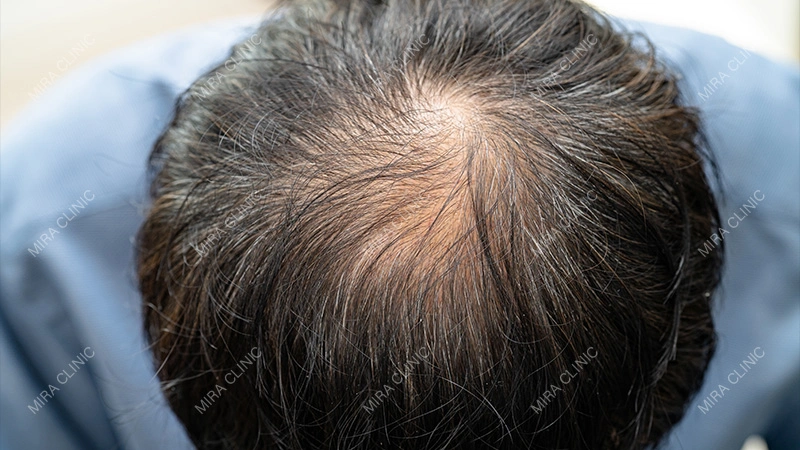
Patients with weak donor reserves
If donor hair is weak, limited, or unstable, the priority may not be a premium implantation style. It may be donor preservation and a more strategic long-term plan.
Patients with unstable or very advanced hair loss
If hair loss is rapidly progressing or very extensive, DHI may not be the most efficient first choice, especially if the patient’s real need is larger-area planning rather than detail-first implantation.
Patients expecting unrealistic density in one session
Patients who want full density across a large bald area in a single session may be disappointed if they do not understand the real limits of graft numbers and scalp coverage.
Why some patients may need a different method or staged plan
In some cases, the better answer is:
- standard FUE
- a hybrid plan
- medical stabilization first
- or a staged transplant strategy
Read more: How to Secure Grafts After Hair Transplant: Best Vitamins, Shampoos, and Post-Op Care Essentials
DHI vs FUE in Turkey: Which Is Better for Different Candidates?
This is one of the most important questions in the entire topic, because many patients do not really want “DHI.” They want the method that is best for them.
The technical difference between DHI and FUE
In simplified patient language:
- FUE refers mainly to follicle extraction
- DHI refers more specifically to the implantation style after extraction
That is why the comparison is often presented as DHI versus standard FUE workflow, even though the terms overlap in real practice.
When DHI may be the better choice
DHI may be the stronger option for:
- detailed hairline work
- targeted dense placement
- smaller or moderate recipient areas
- patients prioritizing precision over maximum area coverage
When FUE may be more practical
FUE may be more practical when the goal is:
- wider coverage
- greater graft efficiency
- simpler workflow
- broader restoration needs rather than dense detail in one visible zone
Why the best method depends on hair loss pattern, density goals, and scalp condition
The strongest answer is not “DHI is better” or “FUE is better.” It is that the best method depends on:
- donor strength
- recipient pattern
- hair caliber
- density goals
- long-term loss forecast
Read more: DHI vs FUE for Hair Density: Which Technique Gives Thicker Results in Turkey
Is DHI the Best Hair Transplant Method in Turkey?
DHI is one of the strongest methods in the Turkish market, but calling it “the best” without qualification is too simplistic. The right medical answer is that DHI is the best option for some patients, not all patients.
Why “best” depends on the patient, not only the method
Patients often search “best DHI hair transplant in Turkey” because they want certainty. But the reality is that the best method is the one that matches the patient’s anatomy, donor pattern, and goals, not the one with the strongest marketing.
Where DHI performs especially well
DHI tends to perform especially well in cases that benefit from:
- hairline precision
- controlled implantation direction
- dense work in visible frontal areas
Where DHI may be oversold in marketing language
Some clinics present DHI as if it automatically guarantees:
- better survival
- better density
- better healing
- better naturalness
That kind of promise should be treated carefully. Technique matters, but execution matters more.
How doctors evaluate whether DHI is truly the right option
A serious medical evaluation should consider:
- donor quality
- scalp characteristics
- pattern of loss
- future progression
- density goals
- whether detail or coverage is the bigger priority
Best DHI Methods in Turkey: What Patients Really Mean
This phrase sounds catchy, but it is not medically precise. When people search for the best DHI methods in Turkey, they usually do not mean one exact scientific category. They usually mean: what is the best DHI approach, clinic, planning style, and execution model for my case?
Why patients use the phrase “best DHI methods”
Patients often use this phrase when they are really trying to understand:
- which DHI style is best
- which clinic is best
- which doctor is best
- which plan is best for their hair loss
The difference between best technique, best clinic, and best treatment plan
These are not the same thing. A clinic may advertise a strong technique, but the real question is whether the plan suits the patient’s needs.
How the right DHI approach changes from one patient to another
The best approach changes depending on:
- hairline design needs
- number of grafts
- hair texture
- donor limitations
- whether the patient is seeking density, correction, or broad restoration
Why customization matters more than buzzwords
Buzzwords attract clicks. Custom planning creates better outcomes. That is the safer principle for patients to remember.
How to Choose the Best DHI Clinic in Turkey
Choosing the clinic is often more important than choosing the slogan. Patients should evaluate the clinic as a medical provider, not as a travel package seller.
What to look for in the surgeon and medical team
Patients should try to understand:
- who performs the consultation
- who designs the hairline
- who extracts the grafts
- who implants them
- how much physician oversight is present
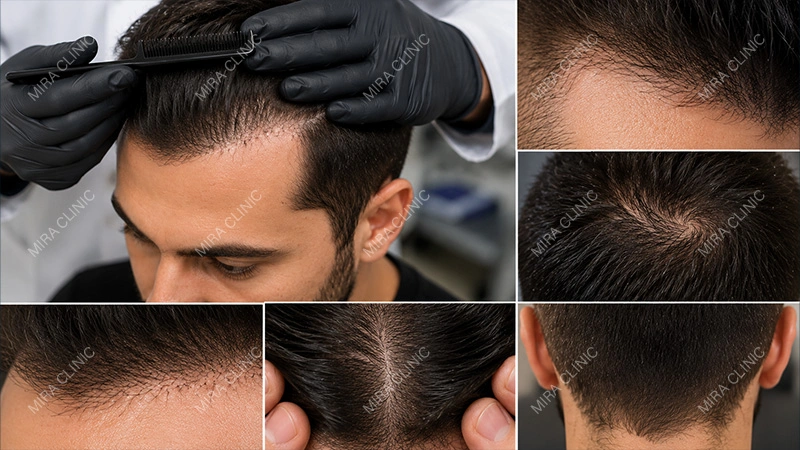
Why before-and-after cases matter more than generic marketing
Photos should show:
- hairline realism
- density quality
- consistency across cases
- results in patients with similar hair loss patterns
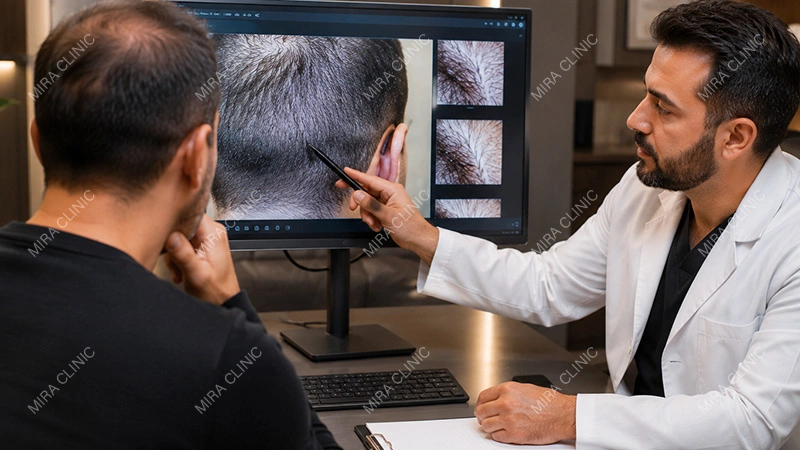
How to evaluate consultation quality and treatment transparency
A good consultation should explain:
- whether you are a candidate
- what method is recommended and why
- how many grafts are expected
- what the limits are
- what recovery and timeline look like
Red flags in pricing, promises, and package offers
Patients should be cautious if they see:
- guaranteed outcomes
- extremely low prices without detail
- no clear explanation of who performs the procedure
- vague graft claims
- pressure to book quickly without proper evaluation
Read more: Why Do Hair Transplants Fail? 5 Critical Mistakes to Avoid Before Flying to Turkey
Are DHI Hair Transplant Packages in Turkey Worth It?
Packages can be practical, especially for international patients, but their value depends on what they actually include and what they distract from.
What is usually included in DHI hair transplant packages
Typical inclusions may involve:
- hotel stay
- airport transfers
- medication
- aftercare kit
- translator support
- first wash
- local transport
When packages are practical for international patients
Packages are most useful when the patient wants:
- simpler travel logistics
- a single organized itinerary
- less uncertainty around arrival and recovery basics
What patients should check before accepting a package deal
Patients should still ask:
- What is included medically?
- Who performs the procedure?
- Are graft numbers clear?
- Is aftercare real or just packaged wording?
- What happens if there is a complication or concern later?
Why medical quality should matter more than hotel and transfer extras
A package may look attractive because of convenience, but the real value still lies in:
- diagnosis
- planning
- execution
- follow-up
A better hotel does not compensate for weaker medical decision-making.
Read more: The True Cost of Hair Transplants in Turkey (2026): Beyond the “All-Inclusive” Buzzword
Recovery, Healing, and Results After DHI Hair Transplant
Recovery is one of the biggest anxiety points for patients because expectations are often unclear before treatment.
What the first days after DHI usually look like
In the early period, patients usually experience:
- redness
- small crusts
- tenderness
- mild swelling in some cases
- sensitivity in donor and recipient areas
The shedding phase and why it causes anxiety
One of the most stressful parts of recovery is shock loss or shedding after the transplant. Many patients panic here because they feel the new hair is disappearing. In reality, this phase is common and does not mean failure.
When new growth begins and when density becomes visible
Patients usually begin to see early new growth after the initial rest period, but meaningful density takes longer. Hair restoration is not an instant cosmetic result. It develops gradually.
What patients should expect at 3, 6, and 12 months
A realistic timeline often looks like this:
- around 3 months, early visible growth may begin
- around 6 months, density starts to look more meaningful
- around 12 months, the result is much closer to its mature form
Read more: Hair Transplant Timeline in Turkey: Month-by-Month Recovery and Growth