Titanium dental implants are widely used in implantology because of their biocompatibility, mechanical strength, corrosion resistance, and established clinical history. Titanium forms a protective oxide layer that helps it interact with living tissues and supports osseointegration, the biological process that creates a stable connection between an implant and the surrounding jawbone.
These properties make titanium a commonly selected material for replacing missing teeth. However, its performance also depends on implant design, bone quality, surgical placement, and long-term oral health.
What Are Titanium Dental Implants Made Of?
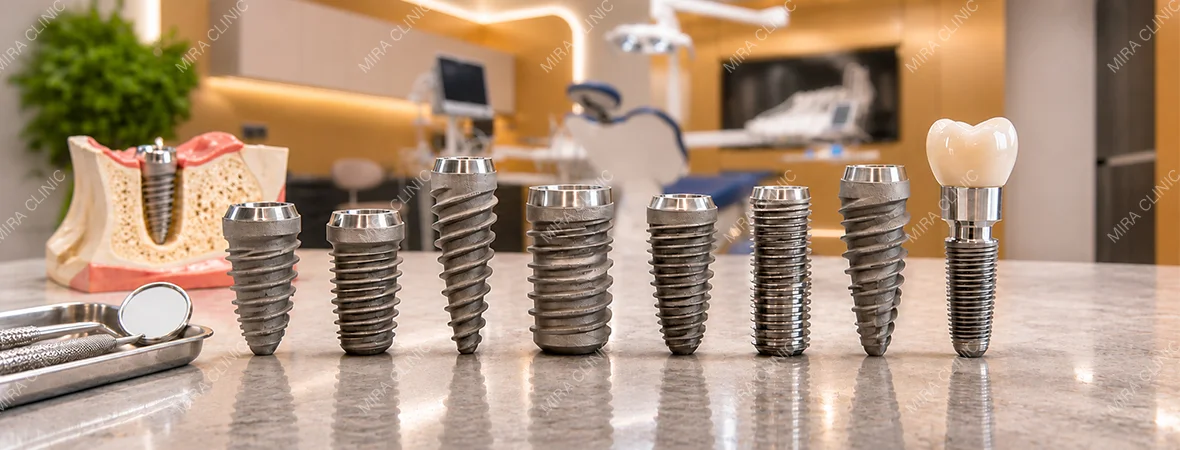
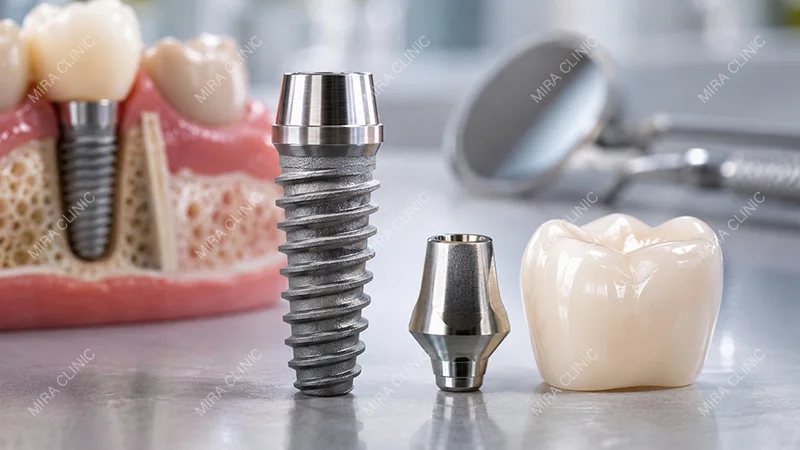
Titanium dental implants are manufactured from commercially pure titanium or titanium-based alloys.
Commercially pure titanium contains small amounts of other elements within defined material specifications. Titanium alloys combine titanium with additional elements to modify properties such as strength and fatigue resistance.
Both materials have established applications in dental implantology.
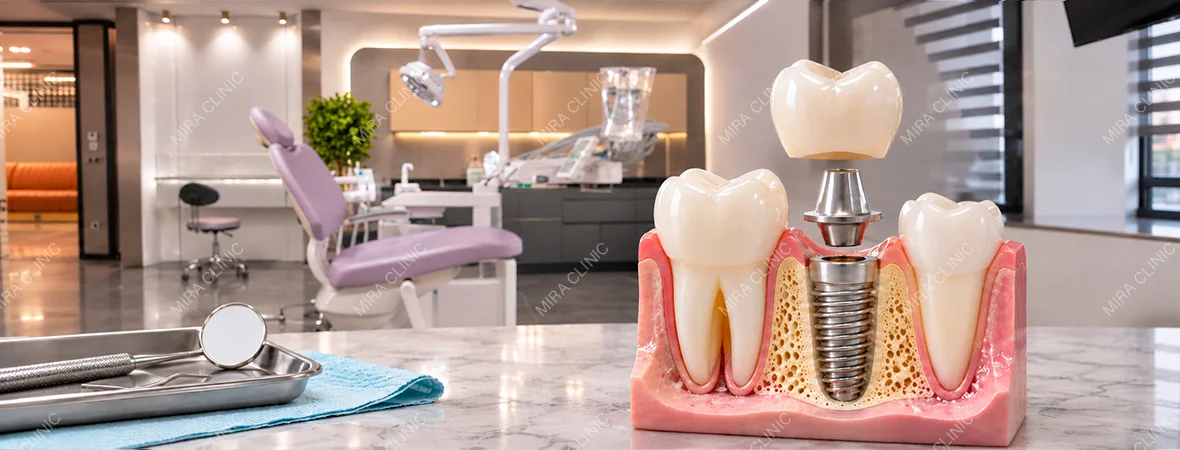
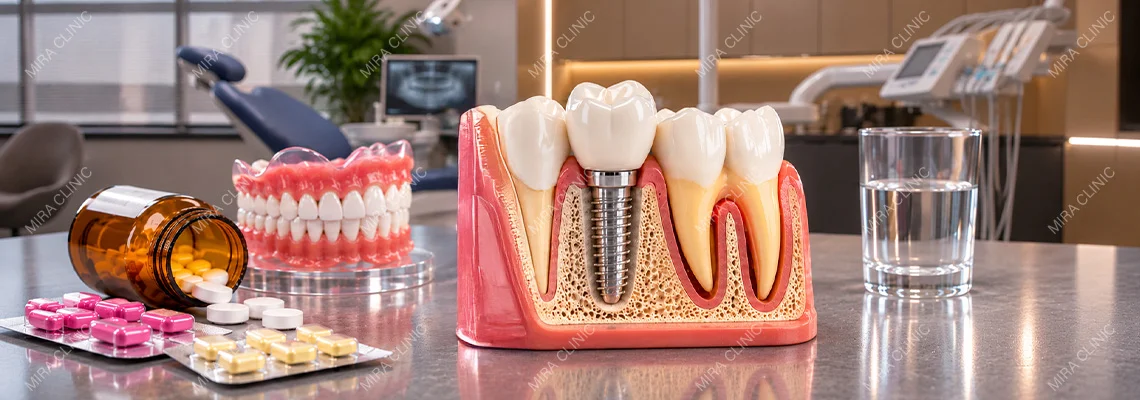
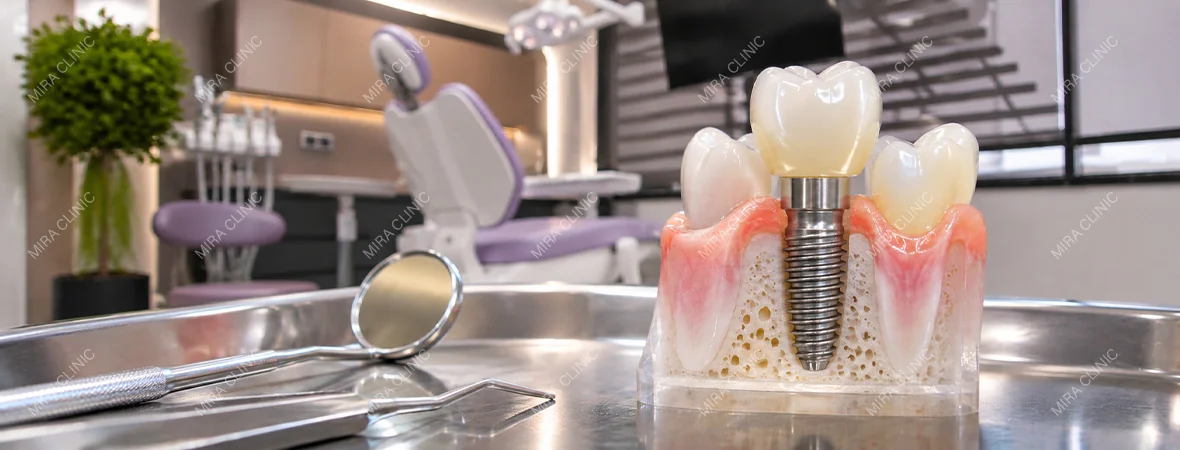
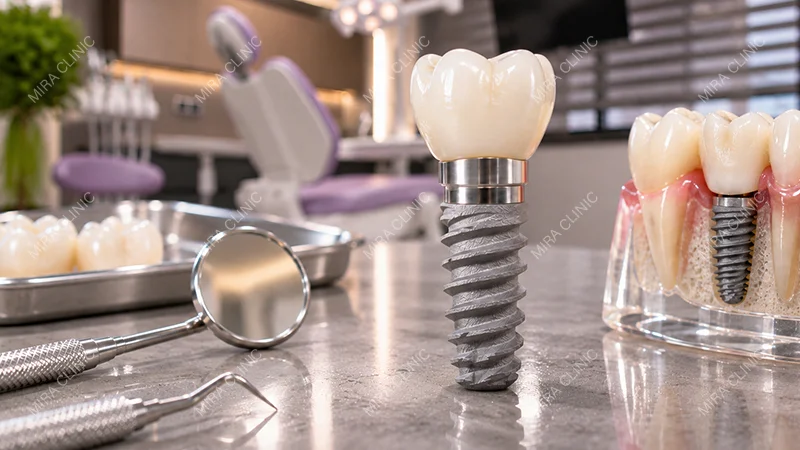
The implant body is inserted into the jawbone and provides support for an abutment and a final dental restoration.
Why Is Titanium Biocompatible With Bone?
Biocompatibility describes how a material interacts with living tissues without causing an unacceptable biological response.
Titanium naturally develops a thin protective layer of titanium dioxide when exposed to oxygen.
This oxide layer contributes to corrosion resistance and influences how proteins and cells interact with the implant surface.
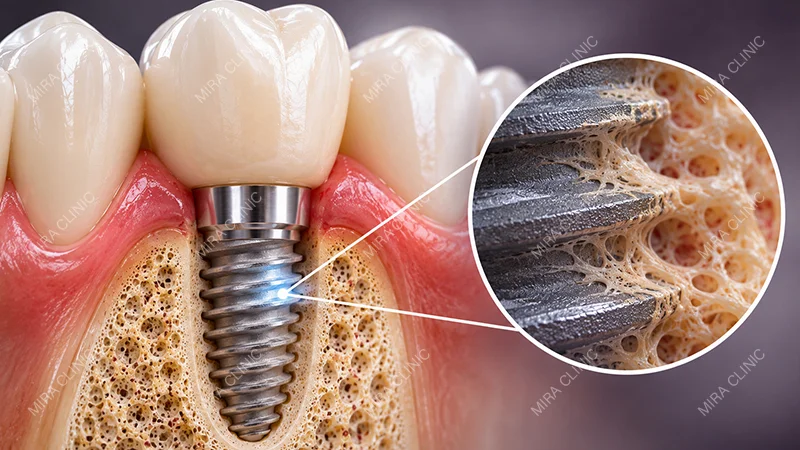
Following surgical placement, the surrounding bone undergoes healing and remodeling.
During osseointegration, new bone forms a stable connection with the implant surface, allowing the implant to support an artificial tooth.
However, titanium does not automatically integrate with bone. Implant stability, surgical technique, infection control, and patient health also influence healing.
What Are the Main Benefits of Titanium Dental Implants?
Titanium offers several properties that support its use in implant dentistry.
Mechanical Strength and Durability
Titanium and its alloys provide mechanical properties suitable for implant-supported restorations.
They can tolerate repeated chewing forces when the implant dimensions, positioning, and prosthetic design are appropriate.
Corrosion Resistance
The titanium oxide layer protects the underlying material against many chemical interactions in the oral environment.
However, this protection is not absolute. Wear, mechanical stress, and certain environmental conditions can contribute to surface degradation.
Established Clinical History
Titanium implants have been used for decades, providing substantial clinical experience and long-term research.
This history helps dentists understand their applications, performance, and potential complications.
Together, these advantages explain why titanium remains a frequently selected material for dental implant systems.
Are There Any Limitations to Titanium Dental Implants?
Despite their advantages, titanium implants are not suitable for every clinical situation.
Possible limitations include:
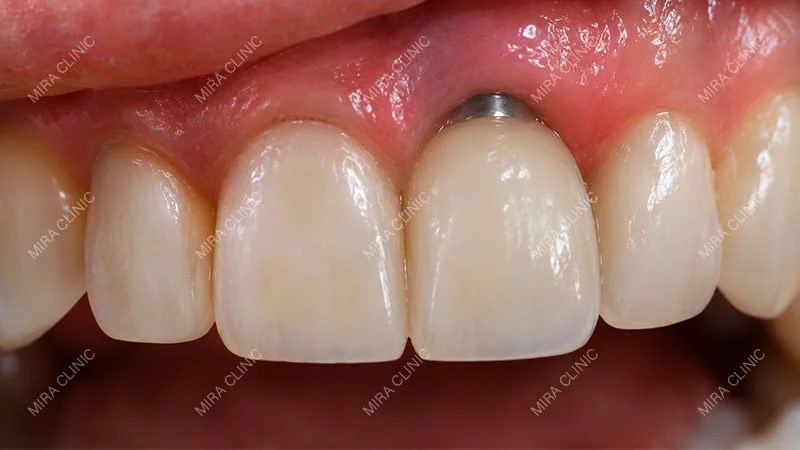
- Metallic appearance: Gray coloration may affect aesthetics in selected cases with thin surrounding gum tissue.
- Material sensitivity: Suspected titanium-related hypersensitivity is uncommon but may require evaluation.
- Corrosion and wear: Mechanical and chemical interactions can release small amounts of metallic particles or ions.
- Biological complications: Inflammation and peri-implantitis can affect the tissues surrounding titanium implants.
These limitations do not mean titanium implants are generally unsafe. They highlight why material selection and long-term maintenance remain important.
Where Are Titanium Dental Implants Used?
Titanium implant systems support several forms of tooth replacement.
Single-Tooth Replacement
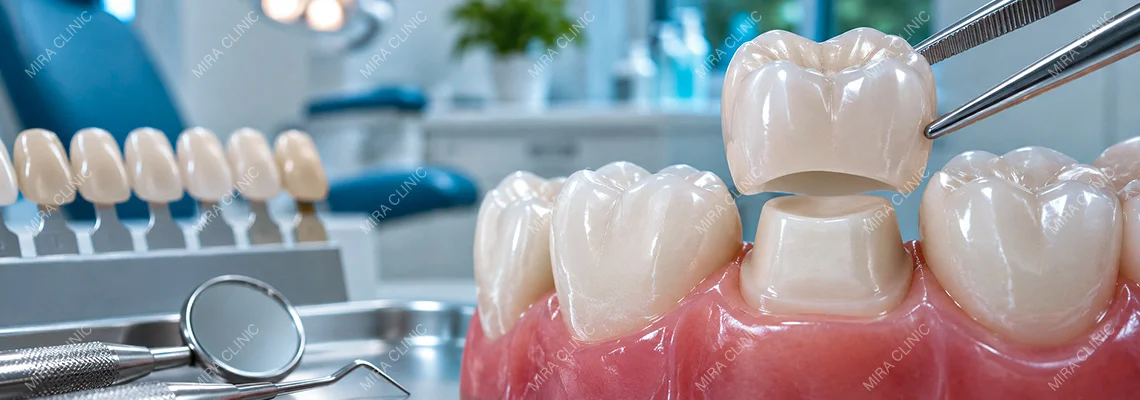
One titanium implant can support an individual dental crown without necessarily preparing neighboring natural teeth.
Implant-Supported Bridges
Multiple missing teeth may be replaced using a bridge supported by appropriately positioned titanium implants.
Full-Arch Restorations
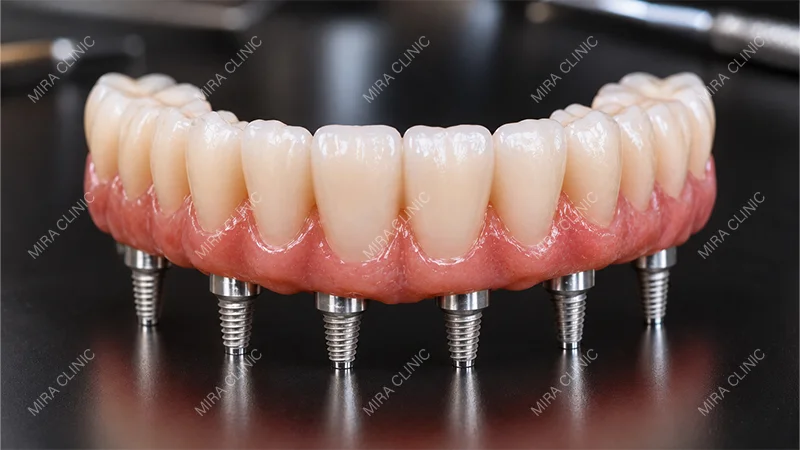
Titanium implants can also support full-arch prostheses, including selected All-on-4 and All-on-6 treatments.
The number and distribution of implants depend on bone anatomy, chewing forces, and restorative requirements.
Why Is Titanium Frequently Selected in Implantology?
Titanium combines biological compatibility with mechanical properties and extensive clinical experience.
Its protective oxide layer supports favorable tissue interaction, while its strength allows different implant designs to support single crowns, bridges, and full-arch restorations.
However, successful treatment depends on more than the implant material. Bone support, implant positioning, prosthetic planning, and maintenance remain essential.
Titanium remains a widely used dental implant material because its biological and mechanical characteristics support predictable tooth replacement when the clinical conditions are appropriate.
Read more: Implantology in Dentistry: The Science of Dental Implants